How to Choose a Grass Silage Cutter for Dense Forage and High-Pressure Cutting
December 15, 2025
Managing the daily nutritional requirements of a herd involves far more than simply growing quality crops; it requires the precise extraction of that feed from the storage clamp without compromising its aerobic stability or nutritional value. When farmers face the challenge of extracting tall, fibrous grass and high-density forage clumps, standard machinery often meets its match, creating significant resistance that leads to ragged cuts, equipment strain, and eventual mechanical failure. The physics of cutting through a dense mat of interwoven grass stems is fundamentally different from handling maize or wholecrop, requiring shear force and structural rigidity that many general-purpose cutters lack. It turns out that using inadequate equipment doesn’t just frustrate the operator; it actively degrades the feed quality by introducing air deep into the clamp face.
Inefficient cutting introduces oxygen into the compacted silage, triggering rapid aerobic spoilage and heating that can ruin feed quality within hours. This secondary fermentation burns off valuable sugars and proteins that should be fueling milk production or liveweight gain, effectively costing farms thousands in lost nutrition and reduced yield over a single winter season. The resulting mould and mycotoxins pose genuine health risks to livestock, turning a machinery savings into a massive veterinary expense. Implementing a specialised grass silage cutter engineered specifically for high-density forage ensures a perfectly sealed face, preserves nutrient integrity, and streamlines daily feeding operations. By utilising hydraulic systems and blade geometries designed for fibrous material, farmers can transform a chore into a precise, value-adding process.
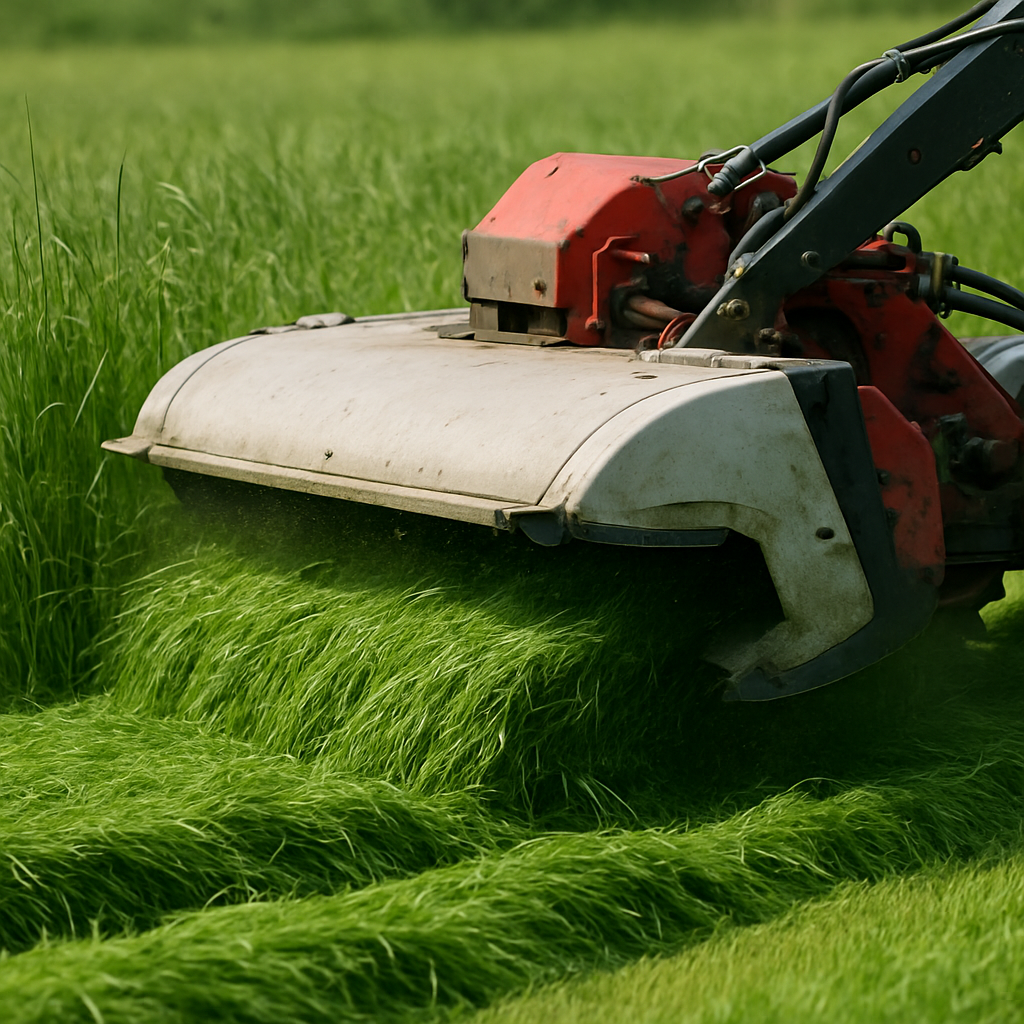
The structural differences between a standard silage block cutter and one explicitly designed for dense vegetation lie in the frame engineering and the metallurgy of the cutting blades. Standard cutters are often designed with a “one size fits all” mentality, primarily optimised for maize, which has a brittle stem that snaps easily under pressure. However, tall grass silage creates a fibrous, interwoven mat that acts more like a heavy fabric; it requires a shearing action rather than a snapping one. A dedicated grass cutter features a reinforced box-section steel frame that resists the immense torsional stress applied when the hydraulics force the blade through the dense mat. Without this rigidity, the frame flexes, causing the blades to misalign and tear the silage rather than cutting it cleanly. This distinction is critical because even a millimetre of flex can result in a ragged face that catches air. For operations processing massive tonnage, utilising high-capacity silage processing equipment is the only way to ensure the machine withstands the daily punishment of high-density clamps.
Shear force requirements for fibrous stems are significantly higher than those for granular crops, necessitating a hydraulic system capable of delivering sustained high pressure without fading. When a blade encounters a dense knot of grass, the resistance spikes instantly; if the cutter lacks sufficient power reserves, the blade stalls or drags, pulling the silage out of the face rather than slicing through it. Here is the deal regarding static pressure: the cutter must maintain a constant downward force that exceeds the tensile strength of the grass stems. If the pressure fluctuates, the cut becomes uneven. This is why superior grass cutters utilise larger-bore cylinders and optimised leverage ratios to multiply the force exerted by the tractor’s hydraulic pump, ensuring the blade continues to move smoothly regardless of the density encountered.
The frame materials used in constructing a grass silage cutter dictate its longevity and its ability to maintain a sharp edge over thousands of cycles. Manufacturers utilising high-grade box-section steel and reinforced gussets at high-stress pivot points ensure the cutter’s geometry remains true. You might be wondering why weight matters in this equation. A heavier, more robust frame absorbs the vibration and shock loads generated during the cutting process, preventing them from being transferred to the tractor loader boom. Lightweight frames eventually fatigue and crack under the repetitive stress of shearing dense grass, leading to costly downtime. The best cutters also feature hardened wear plates and replaceable bushings, acknowledging that friction is an unavoidable reality in forage handling.
There is a direct and non-negotiable relationship between hydraulic pressure consistency and the cleanliness of the final cut on the clamp face. A system that experiences pressure drops will leave a jagged surface, increasing the surface area exposed to oxygen. High-density grass cutters are often equipped with flow-control valves that regulate the cutting speed relative to resistance, ensuring the blade does not rush through soft spots and slam into hard spots. This controlled descent is vital to preserving the blade’s sharp edge. Furthermore, the integration of check valves prevents the cutter from creeping open or closed during transport, a critical safety feature when moving heavy silage blocks around a busy farmyard.
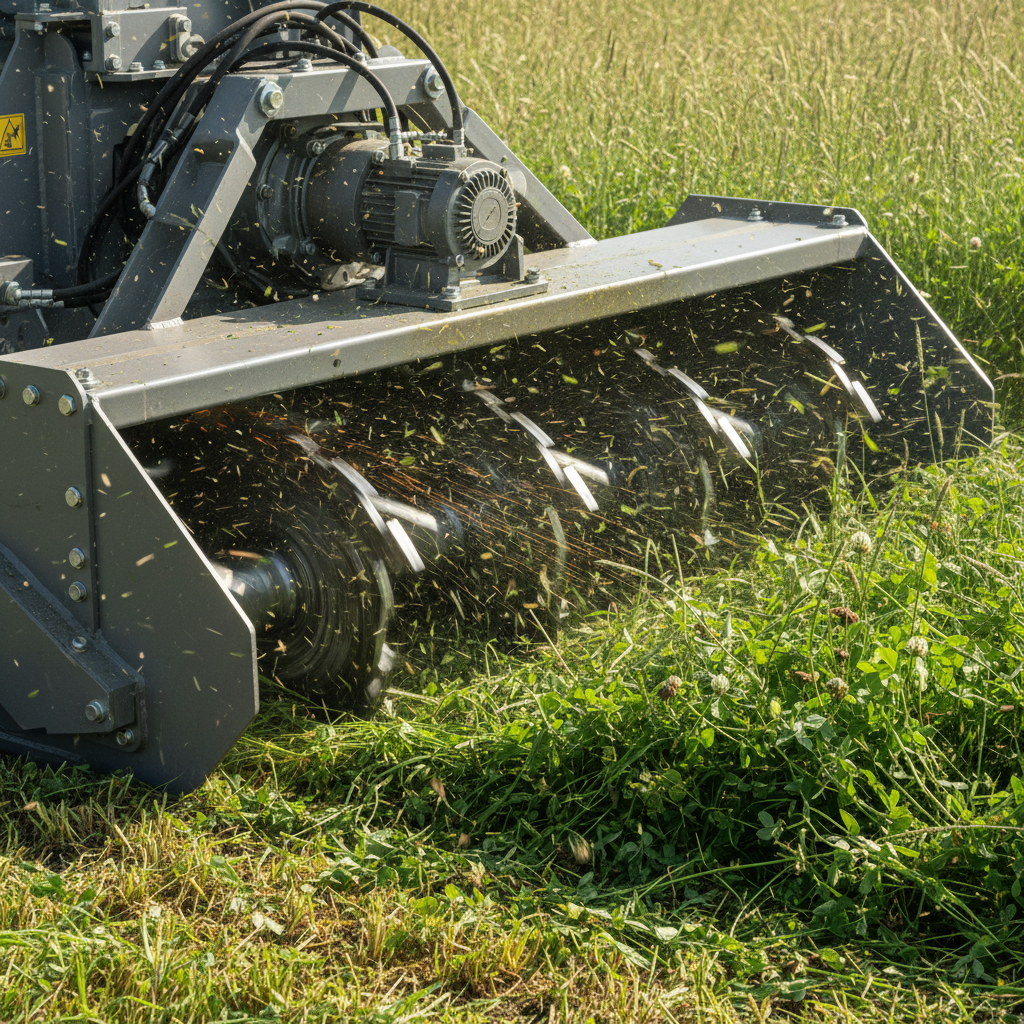
Hydraulic power plays a central role in maintaining continuous pressure during the cut cycle, acting as the lifeblood of the machine’s performance in harsh conditions. In the context of grass silage, the hydraulic system must do more than just open and close the jaw; it must actively manage the force being applied to prevent staling. Advanced cutters utilise flow dividers and accumulators to buffer the hydraulic circuit, smoothing out the pulses from the tractor’s pump. This ensures that the knife moves with a relentless, smooth motion, akin to a hot knife through butter, rather than a hacking motion. But here is the kicker regarding oil flow: if the flow rate is too high without sufficient pressure, the oil overheats, causing seal failure and reducing the system’s overall lifespan. Therefore, a well-engineered grass cutter balances flow and pressure to maximise cutting power while keeping the hydraulic fluid within optimal operating temperatures.
Fluctuating pressure is the primary enemy of a clean silage face because it causes the knife to hesitate and tear the material. When the pressure drops, the blade stops shearing and starts tearing, pulling clumps of grass away from the stack and creating pockets where air can infiltrate. This tearing action disrupts the compaction of the remaining silage, leading to the “shredded wheat” effect often seen on poorly managed faces. Consistent hydraulic pressure ensures that every inch of the cut is executed with the same force, leaving a sealed, glass-like surface that is impervious to air. This level of precision is only possible with high-quality hydraulic cylinders and valves that are rated for the extreme pressures required to sever dense grass mats.
It turns out speed is not everything when it comes to cutting silage; in fact, a slower, more forceful cut often yields better results than a fast, aggressive one. The optimal setting for dense forage involves a high-pressure, medium-speed approach that allows the blade to shear the stems cleanly without generating excessive heat or friction.
Operators who attempt to force the cutter through the block too quickly often find that they damage the shear grab or the loader, as the resistance of the grass overcomes the structural limits of the metal before the cut is complete.
Efficient hydraulics on the implement side significantly reduce the strain on the tractor’s pump and engine, saving fuel and reducing mechanical wear over the long term. A cutter that struggles requires the tractor operator to rev the engine high to maintain hydraulic flow, burning unnecessary diesel and generating heat. In contrast, a cutter designed with efficient hydraulic geometry can operate effectively at lower engine RPMs, utilising the tractor’s torque rather than just raw flow. This efficiency translates to lower operating costs and a quieter, more comfortable working environment for the operator. Over the machine’s lifespan, the fuel savings alone can be substantial, justifying the investment in a superior hydraulic design.
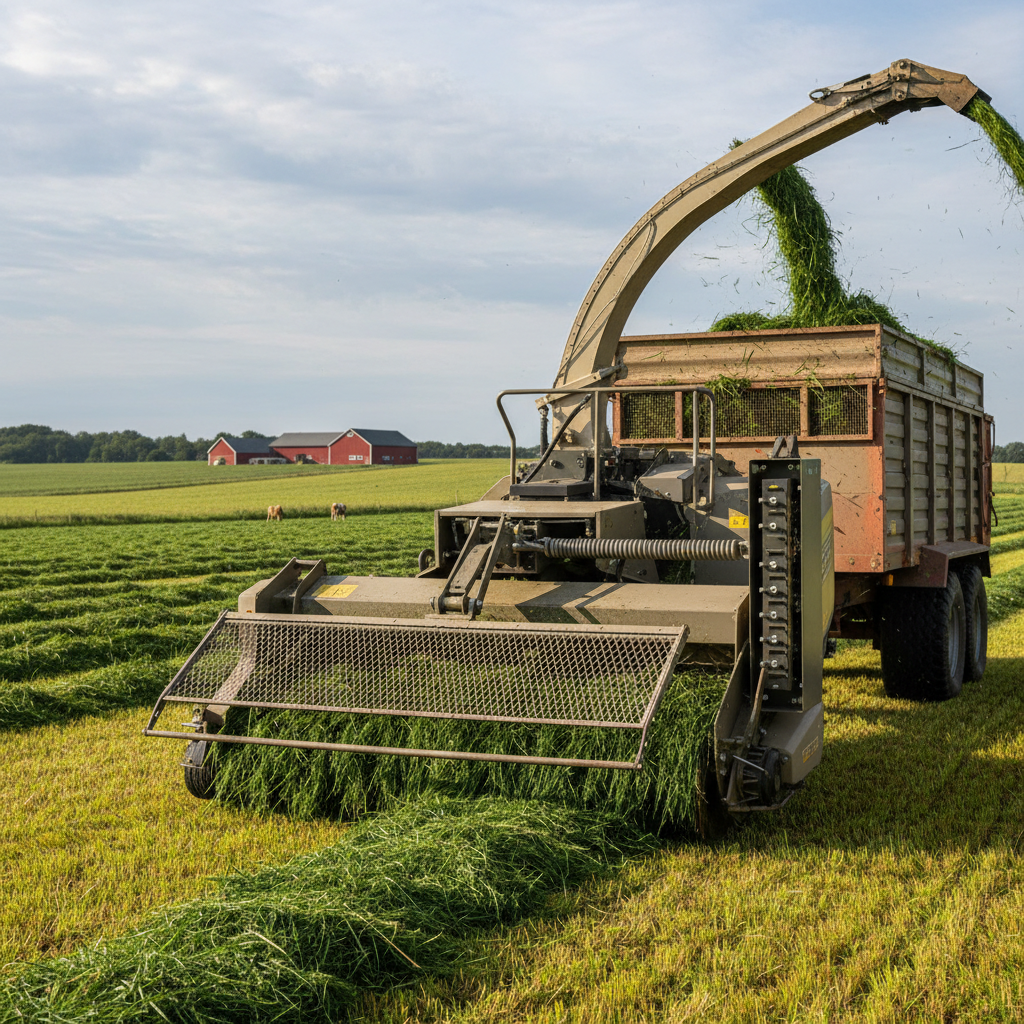
The debate between serrated and smooth blades is settled quickly when the subject turns to fibrous grass silage; serrated blades are scientifically superior for this application. A smooth blade relies entirely on downward pressure to sever the material, which works fine for crisp vegetables or brittle maize but fails with grass, which tends to slide away from the edge. A serrated blade, however, bites into the stems, trapping them between the teeth and the shear bar to ensure a clean cut. Let me be clear about blade choice: if you are cutting grass, you need serration. The material hardness is equally critical, with Hardox steel or similar abrasion-resistant alloys being the standard for professional equipment. These materials can hold a razor-sharp edge significantly longer than standard carbon steel, reducing the frequency of sharpening and ensuring the cutter performs as well on day 100 as on day one.
The cutting action on tall grass stems requires a mechanism that prevents the material from slipping out of the jaw as the pressure increases. Serrated blades function like a saw, initiating thousands of micro-cuts along the length of the blade that severely compromise the structural integrity of the grass mat. This allows the blade to penetrate deeper with less force. Conversely, smooth blades often compress the block significantly before the cut begins, which can squeeze valuable juice from the silage and deform the block structure. The geometry of the serration—specifically the angle and depth of the teeth—is engineered to match the typical diameter of grass stems, maximising the shearing efficiency.
The longevity of a blade is directly tied to the quality of the steel used in its manufacture, particularly in abrasive environments such as silage clamps, where dirt and stones may be present.
Think about this for a moment: replacing blades is not just a parts cost; it is a labour cost and a safety risk. Investing in high-grade steel blades means fewer blade changes, less downtime, and a consistently sharper edge that protects the quality of your feed.
Some advanced grass silage cutters feature self-sharpening technologies in which the interaction between the moving blade and the fixed shear bar hones the edge during each cycle. This maintains a “lethal edge” automatically, ensuring cutting performance does not degrade over time, a common issue with standard blades. As the blade wears, the hard facing on one side wears more slowly than the softer base metal, exposing a continuously sharp cutting edge. This technology ensures the block cutter maintains peak efficiency throughout the season without requiring the operator to grind daily, saving valuable time during the morning feed rush.
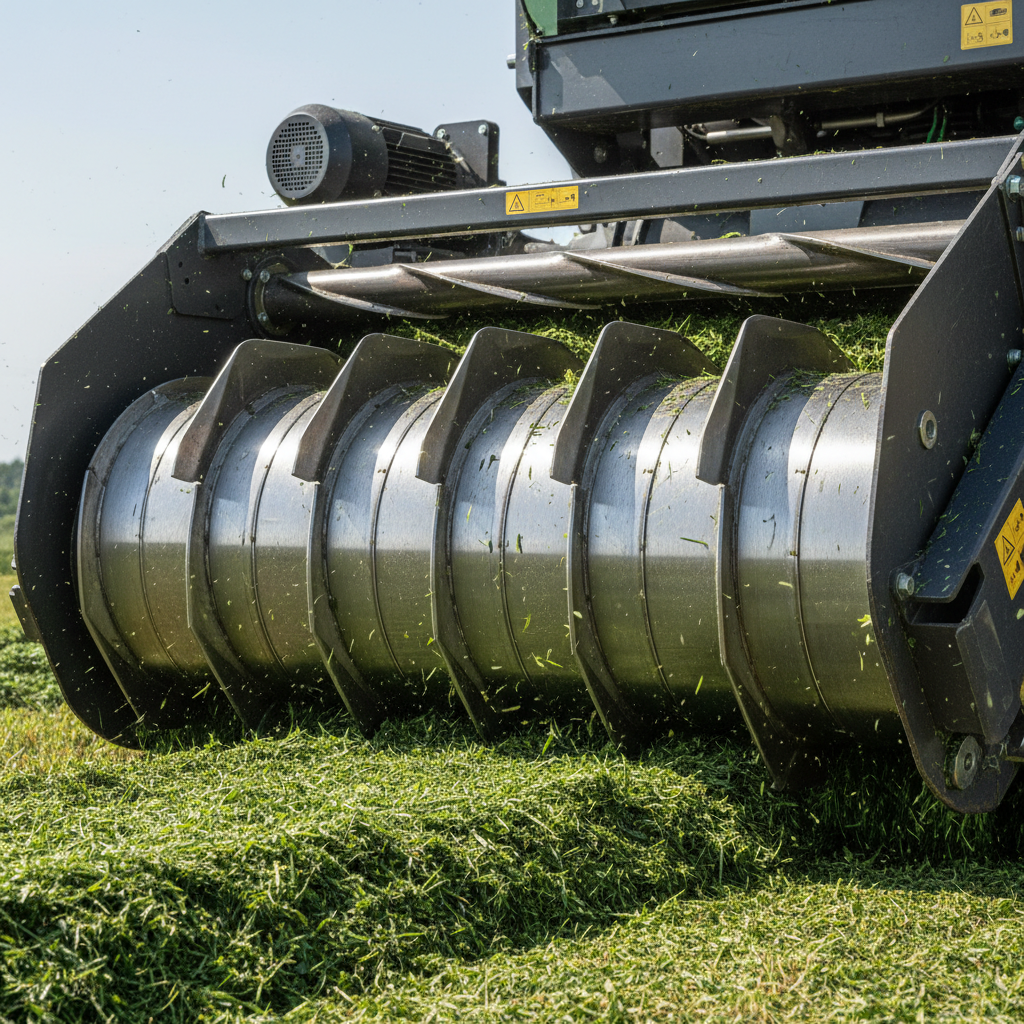
Smaller farms with dense clamps often assume they are excluded from high-performance equipment, but modern engineering has proven that size does not always dictate cutting power. Compact grass silage cutters are now designed with the same high-pressure hydraulic geometry as their larger counterparts, scaled down to fit smaller loaders and tractors. These units are essential for navigating tight yards and lower buildings while still delivering the shear force necessary to handle tall grass. For operations looking to move away from fossil fuels or operate indoors, electric-powered forage solutions provide a viable alternative, delivering instant torque and silent operation. The key is in the leverage ratios; a compact cutter can exert massive force if the pivot points are correctly calculated.
Engineering techniques that maximise force in small footprints rely on high-tensile steel to reduce frame thickness without sacrificing strength, allowing more weight to be dedicated to the hydraulic system and blades. Here is the truth about compact models: they often cut cleaner than large models because the force is concentrated over a smaller surface area (PSI). This higher pressure per inch of blade length allows a small 60HP tractor to shear through dense grass that would stall a larger, less efficient cutter. Manufacturers achieve this by optimising the “jaw” geometry to ensure the angle of attack remains aggressive throughout the entire cutting arc.
What is the bottom line? You need a machine that your tractor can lift safely when it is full of wet silage.
Choosing the correct class ensures stability. A cutter that is too heavy for the loader reduces the silage payload that can be carried, increasing the number of trips required to fill the wagon.
Navigating tight clamp spaces without losing performance is the primary advantage of a compact cutter. In older farm buildings with narrow feed passages or low roofs, a compact cutter allows the operator to extract silage from the face and turn tightly without striking walls or stanchions. This manoeuvrability reduces the risk of collision damage to both the machine and the farm infrastructure. Furthermore, a compact unit is often easier to position precisely on the clamp face, allowing the operator to follow the contours of the stack and minimise waste at the edges and corners where spoilage is most likely to occur.
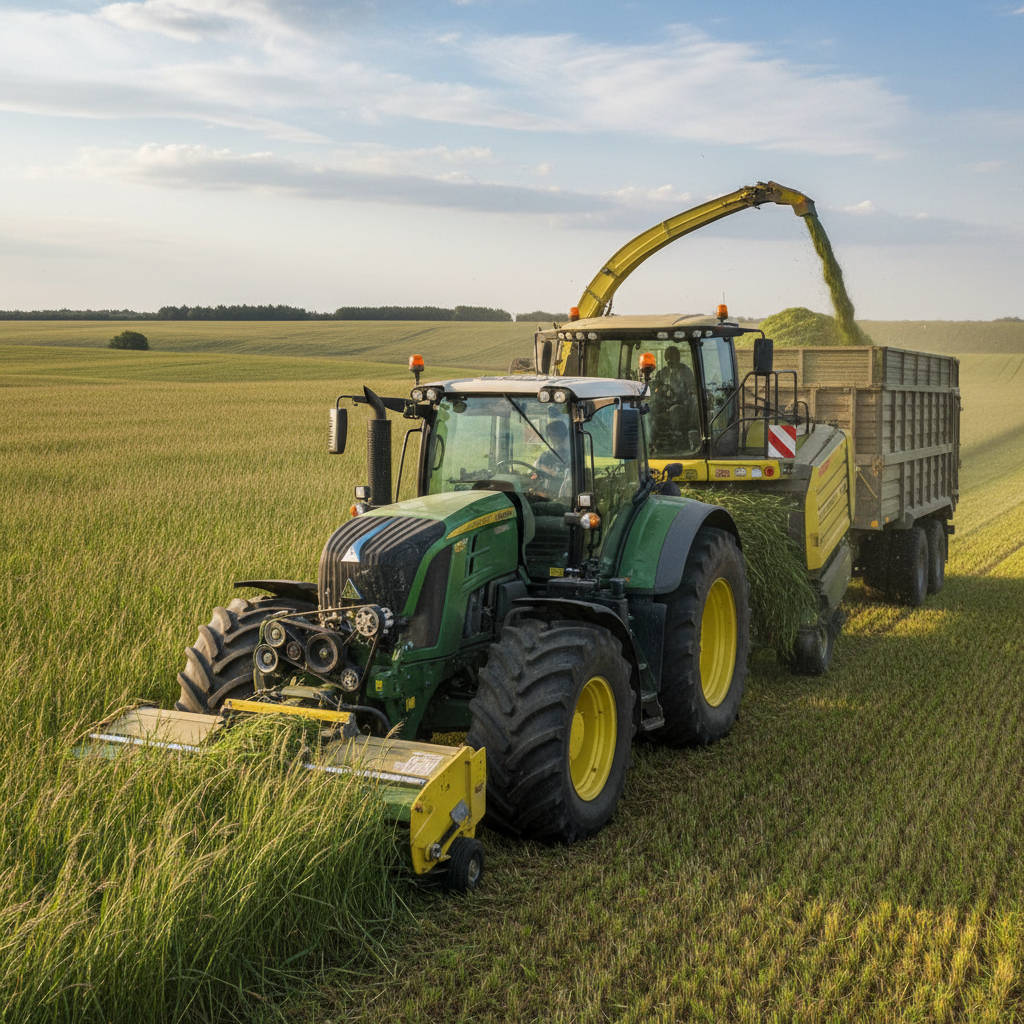
The biological impact of a clean cut on the clamp face is the most critical factor in preventing aerobic instability and secondary fermentation. When a block is removed cleanly, the remaining face is smooth and sealed, drastically reducing the surface area available for oxygen to penetrate. A torn face, by contrast, is porous and allows air to travel deep into the stack, awakening yeasts and moulds that consume the lactic acid, preserving the silage. This process generates heat—a sure sign that energy is being lost. Utilising a precision grass silage cutter acts as a preventative health measure for the herd, ensuring that the feed they consume is cool, stable, and pathogen-free.
This is crazy but true: a perfectly cut silage face can remain stable for days, whereas a torn face can begin to heat within hours. The smooth action of the cutter acts almost like a polish, compressing the cut ends of the grass stems and sealing the capillaries. This prevents the “chimney effect,” where warm air rises through the loose silage, drawing in fresh oxygen at the bottom. By maintaining this seal, farmers can progress across the face at a slower rate without risking spoilage, which provides greater flexibility in feed management.
Loose material falling from the face is a primary vector for spoilage, as this aerated silage rots quickly on the floor and can contaminate fresh feed if scooped up later.
Why does this matter? Because every shovel of waste is money thrown away. A block cutter that retains the entire block without dropping debris keeps the clamp apron clean and hygienic.
Calculating the cost of spoiled feed per season reveals the true ROI of a quality block cutter. If a farm loses just 5% of its silage to aerobic spoilage due to poor face management, that equates to 50 tons on a 1000-ton clamp. At current production costs, that is a direct loss of thousands of dollars, not including the potential loss in milk yield or beef growth from feeding sub-optimal forage. A high-quality cutter eliminates this waste stream almost entirely, paying for itself often within the first two years of operation purely through feed preservation.
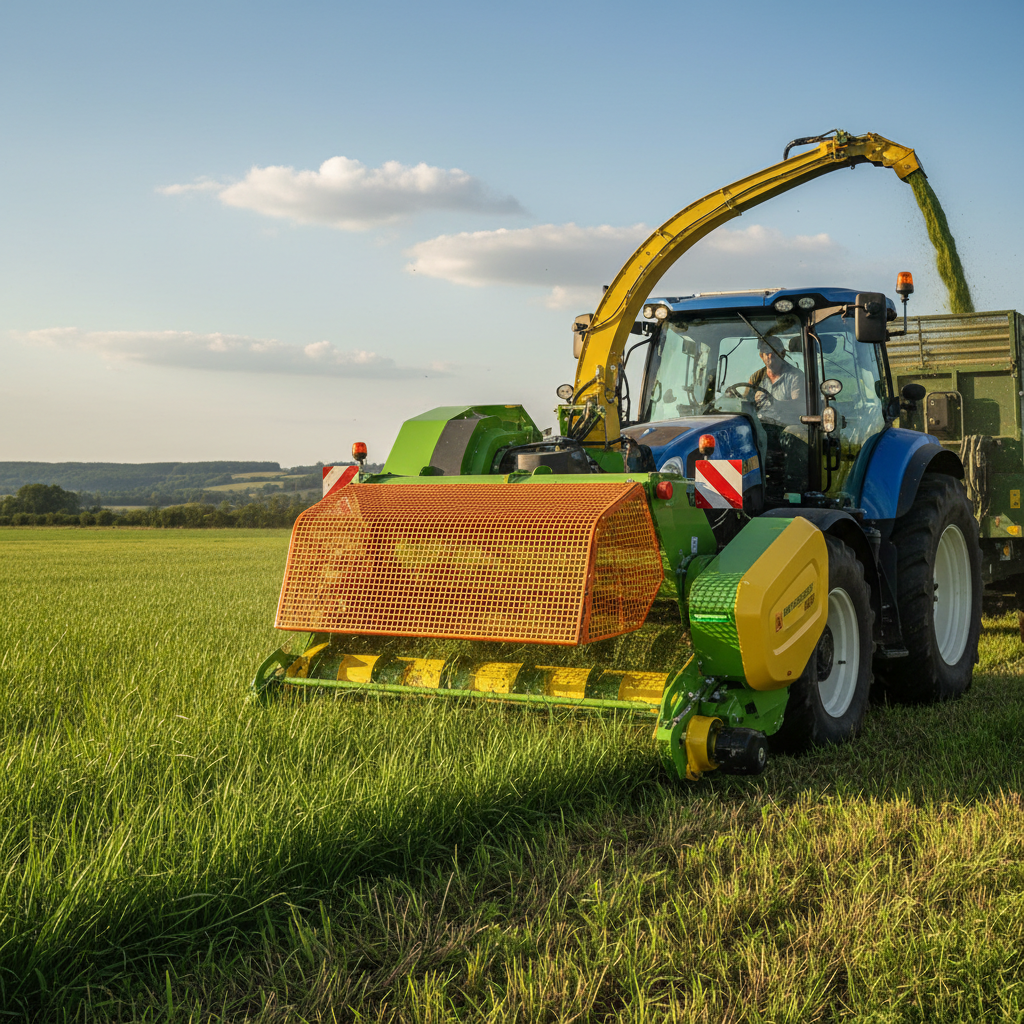
Evaluating when a farm needs to upgrade to industrial-grade equipment depends largely on the volume of throughput and the specific density of the forage being handled. While standard cutters are sufficient for once-a-day feeding on smaller units, farms that are feeding continuously or processing thousands of tons annually require the structural resilience of heavy-duty chaff cutters. These machines are built with thicker steel, larger pivot pins, and hydraulic cylinders rated for continuous duty cycles. Durability under daily high-volume stress means the difference between a machine that lasts ten years and one that cracks after two.
Let us face it: if you are moving 10 tons of silage a day, a light-duty cutter is on borrowed time. Thresholds for upgrading generally sit around the 5-ton-per-day mark. Above this, the fatigue life of standard steel components is reached much faster. Large dairy units or biogas plants, which may run 24/7, require equipment that is essentially over-engineered to prevent downtime. The cost of a breakdown on a large farm—where hundreds of animals are waiting to be fed—far outweighs the initial price premium of a heavy-duty model.
Here is the best part about upgrading: the resale value holds. Heavy-duty cutters feature replaceable wear pads, greaseable pivot points with bronze bushings, and bolted blades rather than welded ones.
These features ensure that the machine can be rebuilt rather than scrapped after years of hard use.
Long-term savings analysis favors the heavy-duty option for any serious producer. While the upfront cost is higher, the “cost per ton” of silage moved is lower over the machine’s life due to reduced repair costs and longer service intervals. Furthermore, professional gear often works faster, saving man-hours and diesel every single day. When factored over a 10-year lifespan, the heavy-duty cutter is often the cheapest option.
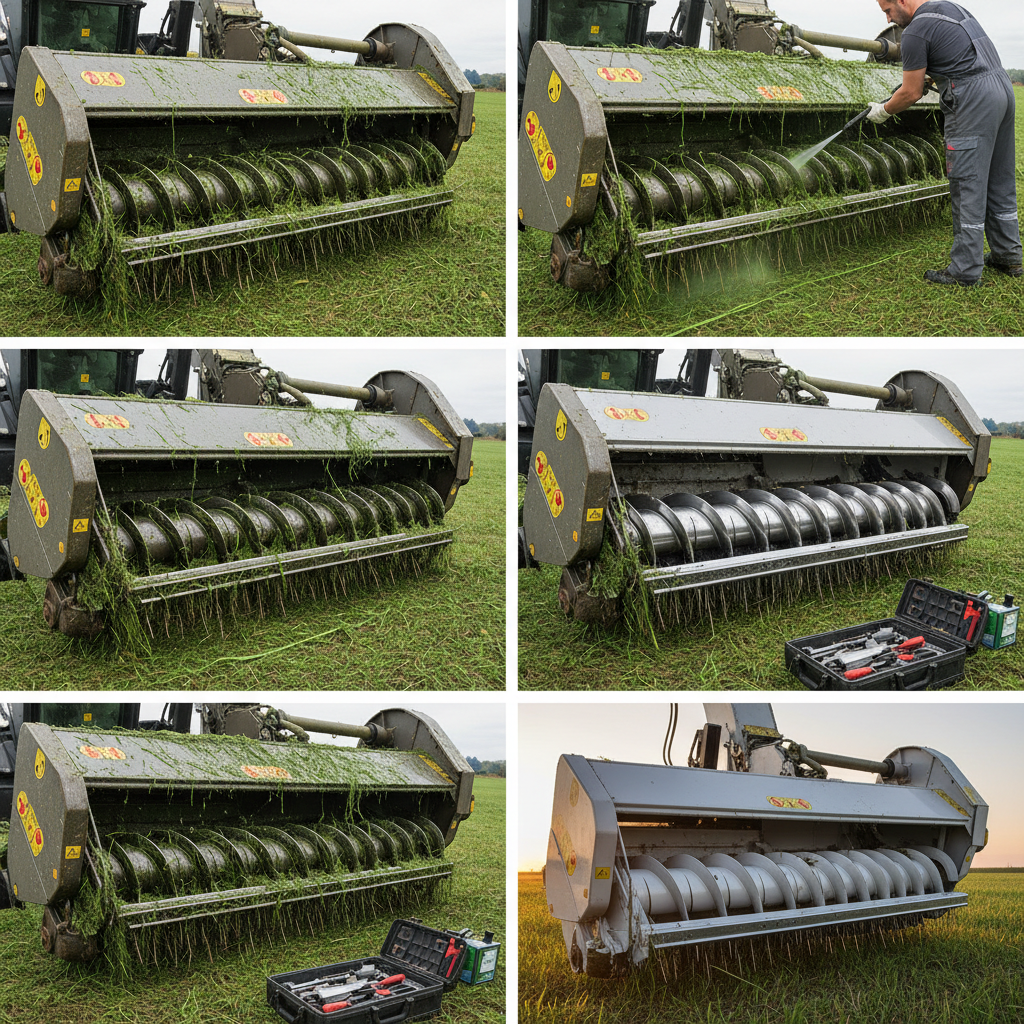
Outlining critical maintenance steps for longevity is essential, as even the most robust machine will fail if neglected. The primary focus must be on blade care and hydraulic seal protection, as these are the active components doing the hard work. Adhering to manufacturing quality standards regarding maintenance schedules ensures the warranty remains valid and the machine operates safely. A strict maintenance regime is the trademark of a professional operator.
Do not forget the basics. A five-minute walk-around before the machine starts work can save hours of downtime.
This simple routine ensures that small issues are caught before they become catastrophic failures that stop feeding.
Here is a secret to efficiency: a sharp blade protects your tractor. A dull blade requires up to 50% more hydraulic pressure to cut, which heats the oil and stresses the loader boom.
Sharpening should be done with a grinder or file, maintaining the original angle of the bevel. Never let the blade get so hot it turns blue, as this ruins the temper of the steel.
Preventing contamination is paramount. When coupling and uncoupling the cutter, ensure the quick-release tips are wiped clean. Dirt entering the hydraulic circuit can score the cylinder walls or jam the valve block. Regularly checking the condition of the hydraulic hoses for chafing or UV damage prevents unexpected bursts that can spray high-pressure oil over the silage, ruining the feed and creating an environmental hazard.
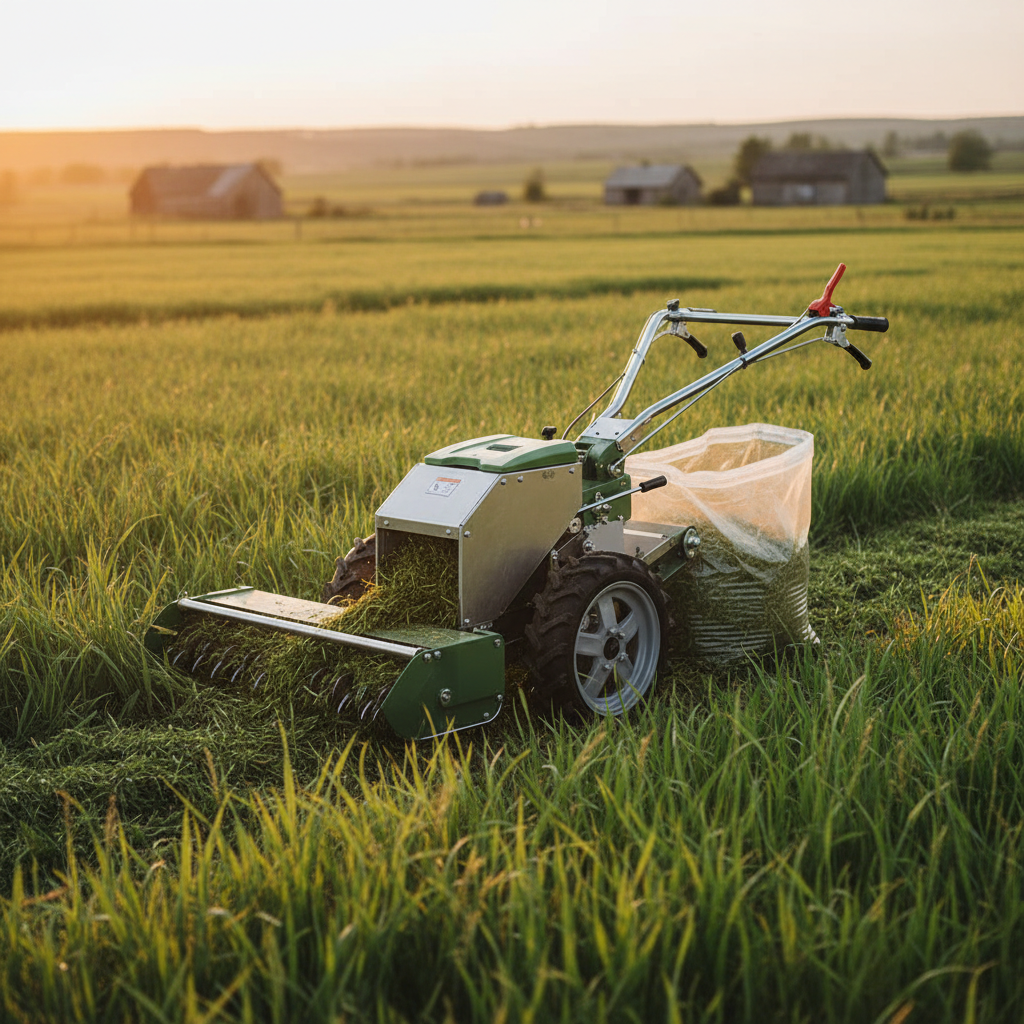
Analyzing tine spacing and shape is critical for penetrating dense mats of grass without causing the cutter to “ride up” over the material. The problem of “drag” when withdrawing the cutter is also solved by intelligent tine geometry. Tines are the foundation of the cut; if they cannot hold the block securely, the blade cannot shear it cleanly.
You might be asking why tines matter so much. Tapered tines reduce friction significantly. As the tine enters the silage, the wider base provides strength, but the narrower tip pierces the mat with minimal resistance. This shape also aids in withdrawal; once the block is discharged, the tapered shape releases from the silage easily, preventing the cutter from pulling the stack apart as it backs away. Polished or chromed tines further reduce this friction.
Here is the deal on grip: grass requires tighter tine spacing than maize to prevent the material from sagging between the forks.
Optimal spacing supports the bottom of the block fully, ensuring that the cut block retains its shape during transport to the feeder wagon.
Why heat-treated steel prevents bending is a matter of metallurgy. High-tensile spring steel allows the tine to flex slightly under load and return to its original shape, whereas mild steel would bend permanently. This resilience is vital when hitting hard spots or uneven concrete floors. The best tines are forged from a single piece of steel, eliminating weld points that could serve as weak spots for fracture.
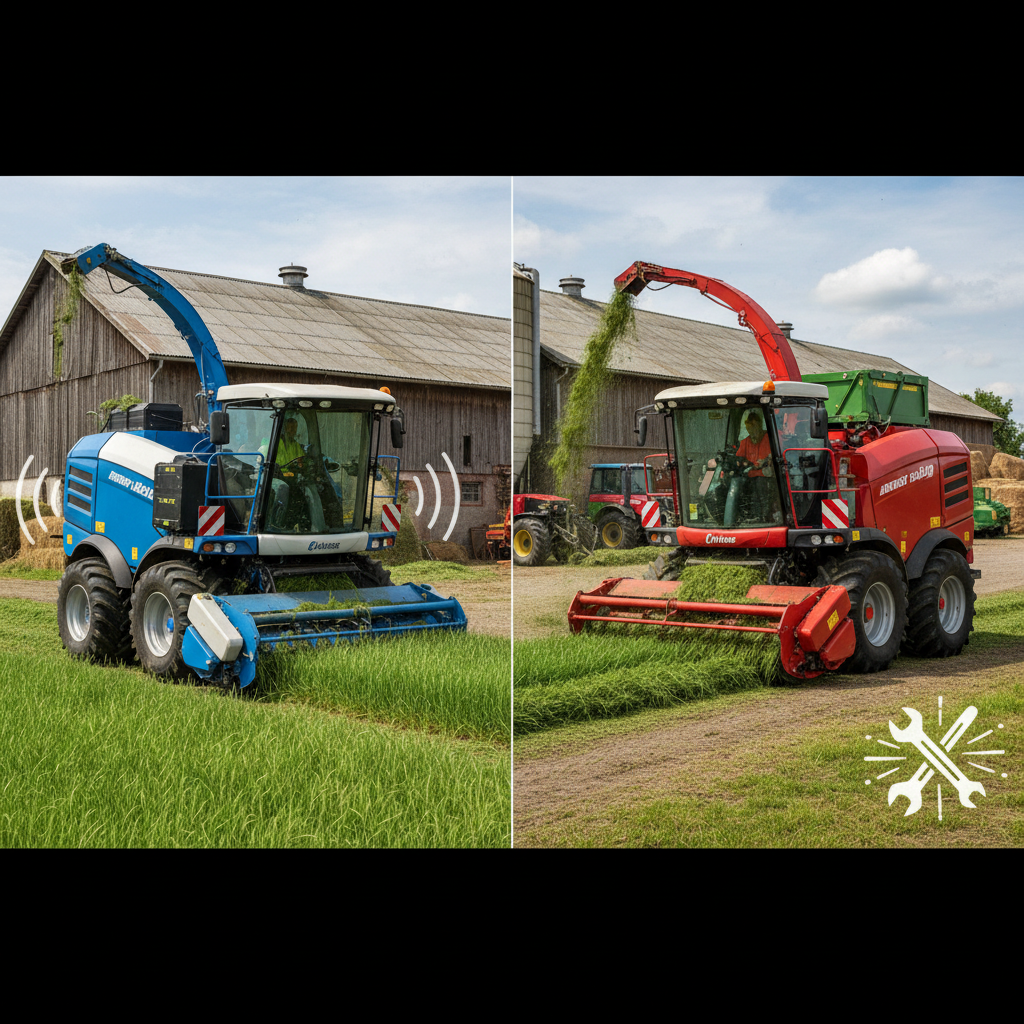
Exploring ISOBUS compatibility and load sensing reveals the future of forage handling. Modern cutters are no longer just “dumb iron”; they are becoming smart implements that communicate with the tractor. Automated depth control features allow the operator to set a specific block size, and the machine handles the rest, ensuring consistency in ration formulation.
Seamless communication between the tractor and implement allows for programmable buttons on the joystick and automated sequences. It gets better with data. The tractor can record exactly how many blocks were cut, the time taken, and even the hydraulic pressure used, providing a map of the clamp’s density. This integration simplifies the operator’s job, reducing fatigue and error.
Think about it this way: the machine knows how hard it is working. Load sensing hydraulics adjust the flow rate to match the resistance. If the cutter hits a particularly dense patch, the system instantly increases pressure while slowing the speed to maintain a clean cut. This protects the components from shock loads and prevents the operator from inadvertently abusing the machine.
Using feed data to adjust cutting strategies allows for precision farming at the clamp face. By tracking the weight of each block (via loader scales) against the volume cut, farmers can calculate the exact density of their silage. This data informs ration formulation in real-time, allowing the nutritionist to adjust the diet based on the actual dry matter intake, leading to more consistent milk yields and reduced feed waste.
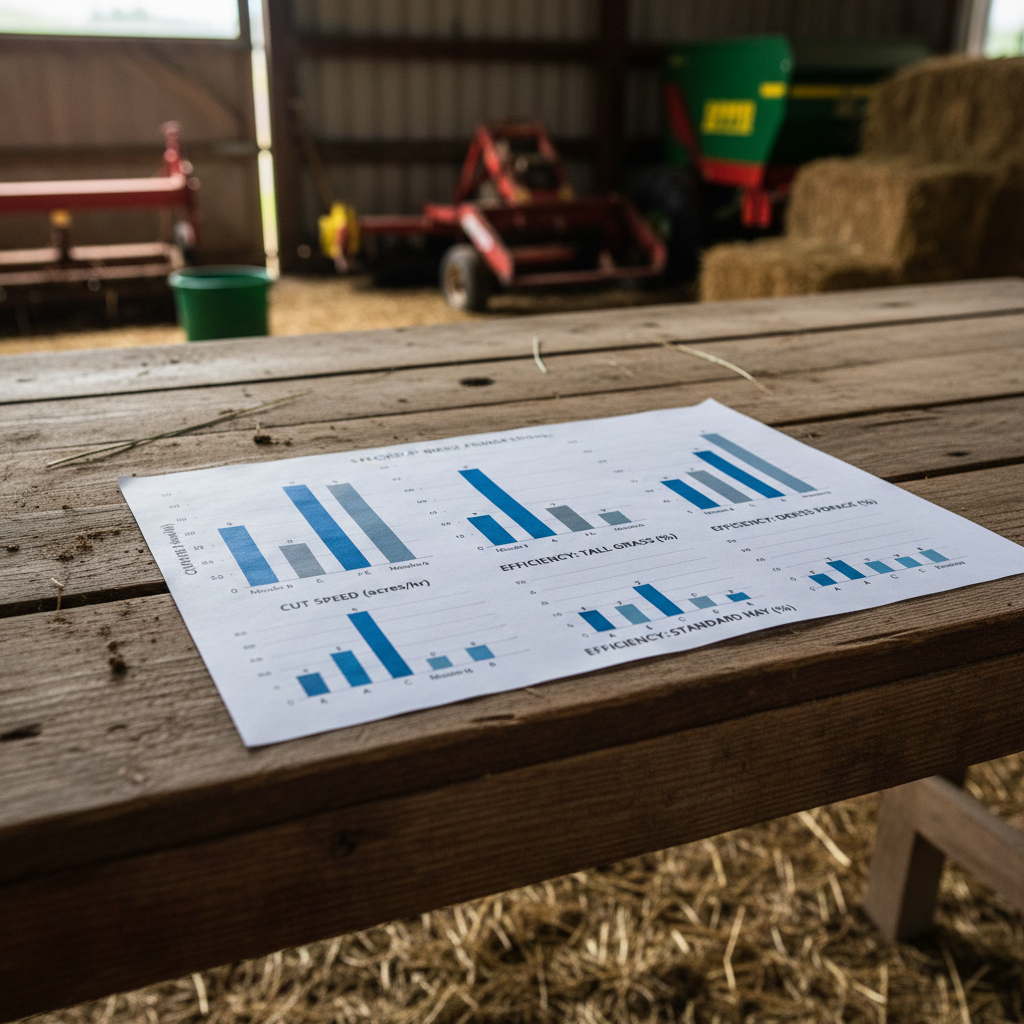
Summarizing the selection process based on specific farm needs requires balancing immediate budget constraints with long-term operational costs. Providing a final decision matrix helps clarify this choice. It is not just about buying the cheapest metal; it is about buying the lowest cost per ton of feed moved.
Balancing cost, capacity, and durability is the trifecta of purchasing. Here is the kicker on price: a cheap cutter that wastes 5% of your silage costs far more than a premium cutter that wastes nothing. Durability metrics—such as steel grade, cylinder size, and warranty terms—should be weighted heavily.
To sum it up quickly: Buy the machine that fits your worst-case scenario (tall, wet, dense grass), not your best-case one.
| Feature | Compact Cutter | Heavy Duty Cutter | Electric/Hybrid |
|---|---|---|---|
| Suitability | Small farms (<500kg/day) | Large Dairy/Biogas (>2T/day) | Indoor/Eco-farms |
| Pros | Low cost, maneuverable, light | Extreme durability, high speed | Low noise, instant torque |
| Cons | Lower capacity, less rigid | Heavy, requires large loader | Higher upfront cost |
Analytical Conclusion: For the majority of professional livestock farmers dealing with grass silage, the Heavy Duty option offers the best ROI due to its ability to prevent spoilage through superior cutting action and its extended lifespan. While the initial investment is higher, the preservation of feed quality and reduction in replacement parts make it the financially sound choice.
Successfully managing tall grass and dense forage relies heavily on the machinery chosen for the task. Matching the cutter to the forage density is not merely a matter of convenience; it is a critical factor in maintaining feed hygiene and operational efficiency. By selecting a robust, hydraulic-powered block cutter designed with serrated blades and a rigid frame, farmers can ensure a clean, sealed clamp face that preserves the nutritional value of their harvest.
For those ready to upgrade their feeding operations, contact us today for expert technical consultation to find the specific model that fits your farm’s output requirements. For more insights on optimizing your farm’s efficiency, check our blog for more tips on forage management.