How to Use a Silage Cutting Machine to Improve Chop Quality and Fermentation Speed
December 15, 2025
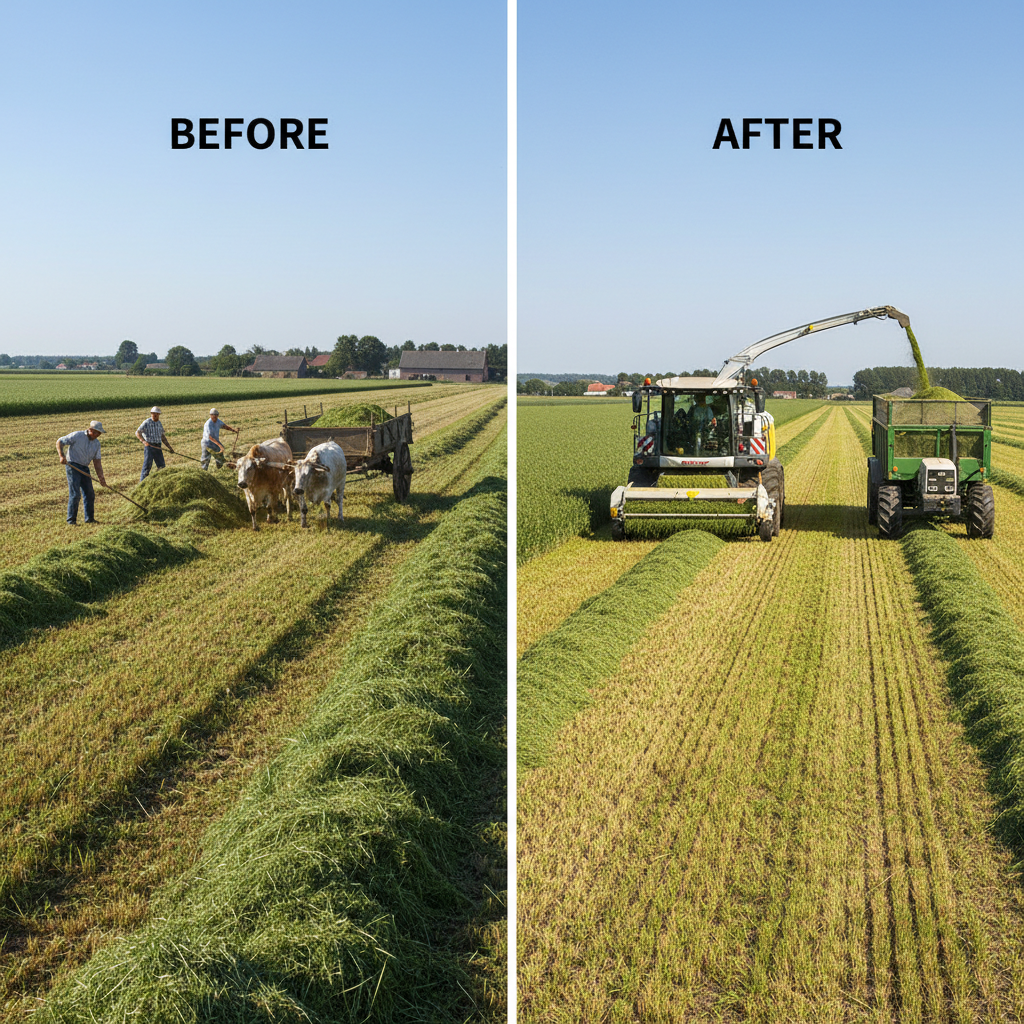
Managing a livestock operation often feels like a race against time, especially during harvest season. You watch your high-quality forage deteriorate in the field or spoil in the silo due to poor compaction, draining your potential profits with every passing hour. But here is the kicker… inefficient processing can result in up to 30% nutrient loss, directly impacting your herd’s health and milk production. The Silage Cutting Machine stands as the definitive solution to this problem, transforming raw crops into perfectly chopped, fermentable feed that locks in nutritional value for months. With over fifteen years of experience in agricultural mechanics, we understand that precision equipment is not just a luxury; it is the backbone of a profitable farm.
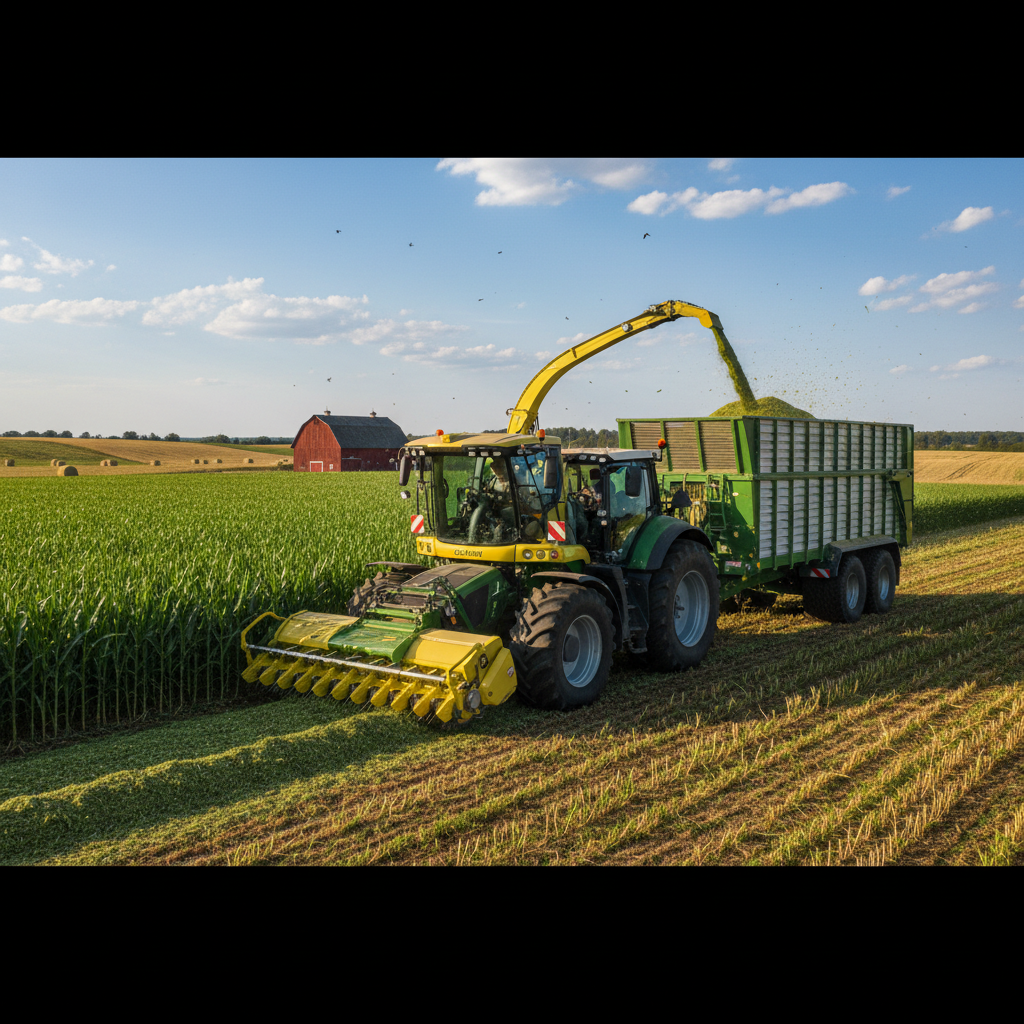
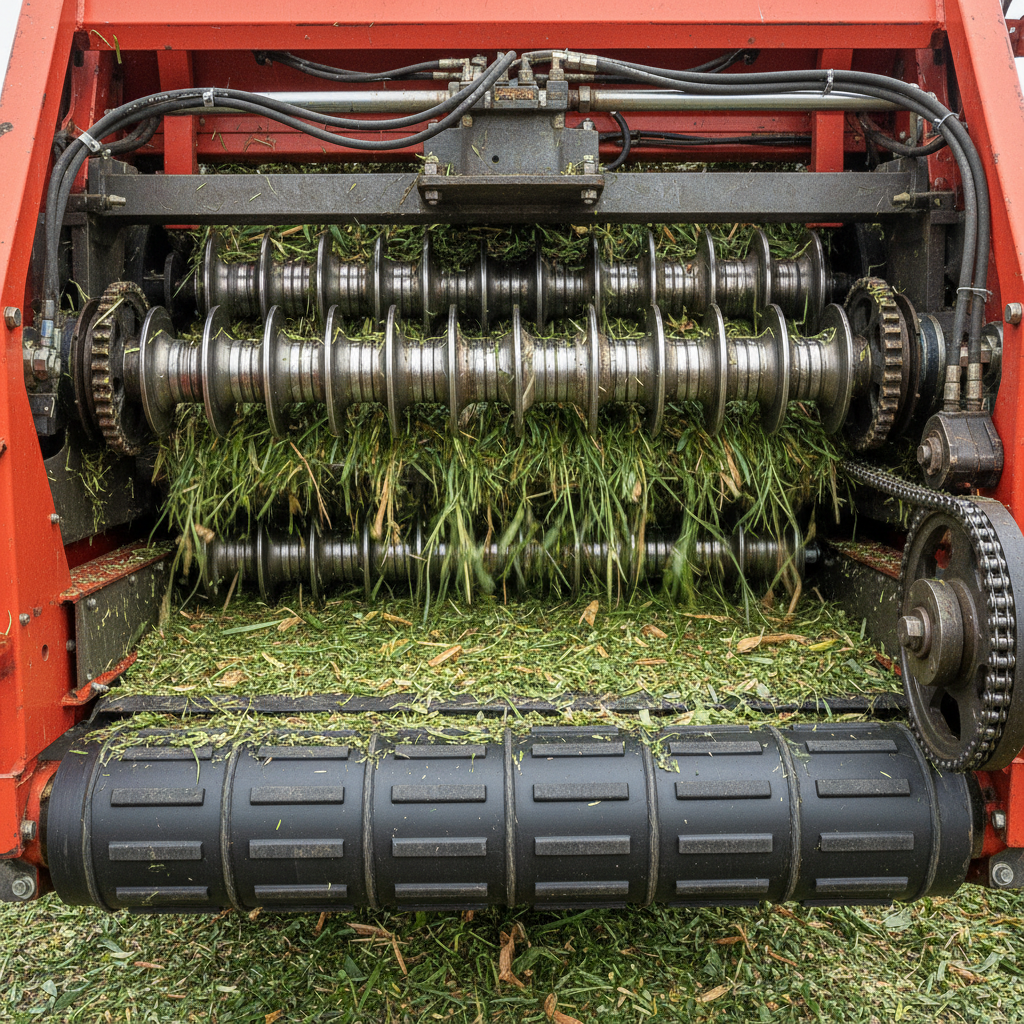
A Silage Cutting Machine operates by synchronizing intake velocity with high-speed shearing action. As agricultural machinery manufacturing experts, we engineer these systems to draw crops into a compression chamber before slicing them against a stationary bar. This mechanical process ensures every stem is cut to a precise length rather than torn or shredded.
Intake rollers grip the plant material and compress it into a dense, uniform mat. This compression is vital because it stabilizes the crop before it reaches the knives. You might be wondering… why does this matter? Without this tight grip, stems would shift during cutting, leading to ragged ends and inconsistent particle sizes that resist packing.
The shear bar acts as the stationary anvil against which the rotating knives strike. It must be set with extreme precision—often within millimeters of the cutterhead—to function like a pair of scissors. If this gap widens, the machine begins to mash the crop, which spikes fuel consumption and degrades the cut quality.
Once chopped, the material must be evacuated instantly to prevent back-feeding. Paddles or blowers generate a powerful airstream that propels heavy, wet silage up the chute. We design these chutes with smooth, low-friction liners to handle the sticky sap common in green chop.
Precision shearing reduces engine load and fuel consumption by up to 15% compared to dull or poorly adjusted systems.
Key Takeaway: The core efficiency of a silage cutter relies on the precise interaction between the compressed feed mat and the shear bar. Maintaining this tolerance ensures uniform particle size, which is critical for downstream fermentation and animal digestion.
| Component | Function | Critical Adjustment |
|---|---|---|
| Feed Rolls | Compresses crop mat | Spring tension |
| Shear Bar | Stationary cutting edge | Gap clearance (0.5mm) |
| Cutterhead | Carries rotating knives | Knife torque |
| Blower | Ejects material | Paddle clearance |
Proper synchronization of these elements guarantees high throughput and minimal downtime.
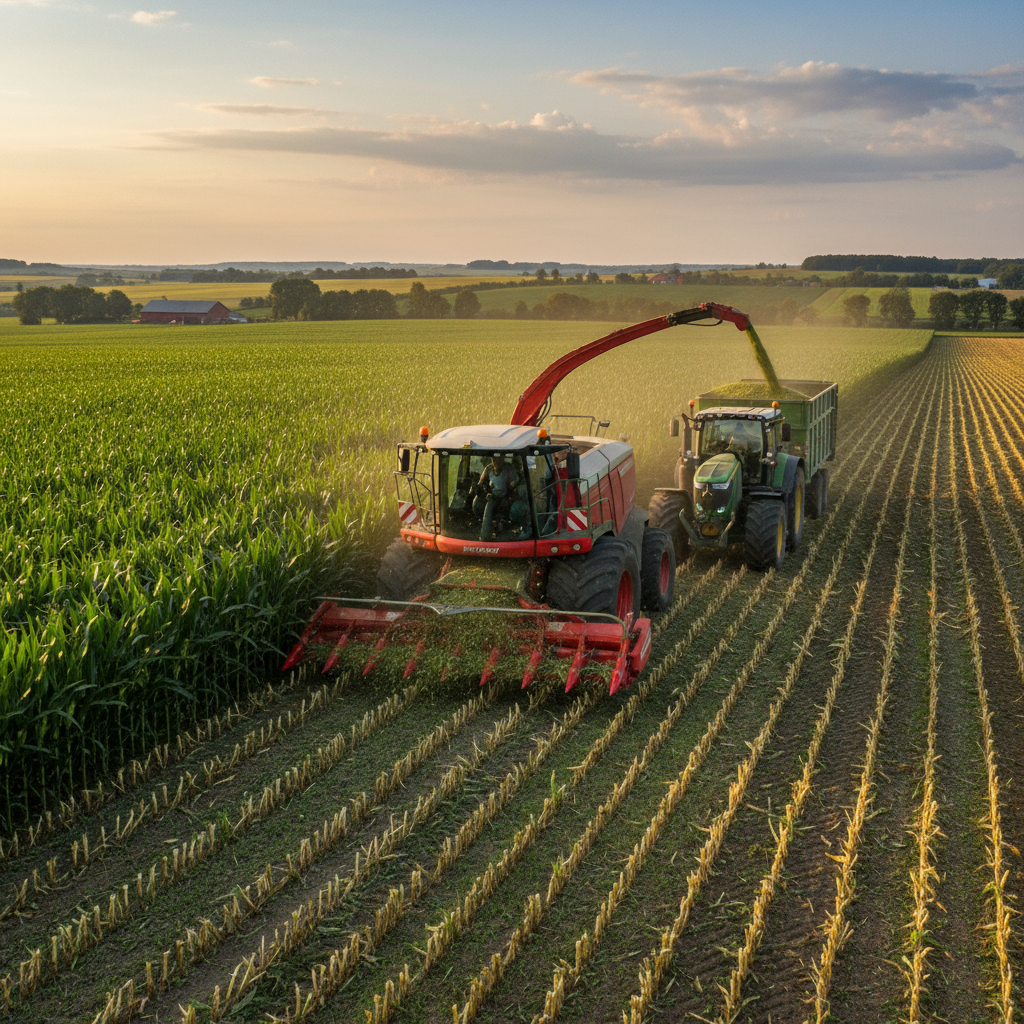
Fermentation relies entirely on the rapid exclusion of oxygen and the production of lactic acid. Precision chopping increases the surface area of the crop, giving bacteria immediate access to plant sugars. Here is the deal: faster bacterial colonization leads to a quicker drop in pH, which stabilizes the forage and prevents spoilage organisms from taking hold.
Lactic acid bacteria need fuel to work, and that fuel comes from the plant’s cell contents. Chopping stems into uniform, short lengths exposes these inner nutrients. Ragged or long pieces hide these sugars, slowing down the fermentation process and allowing bad bacteria to multiply.
Long, uneven stalks create springy pockets that trap air inside the bale or silo. Oxygen is the enemy of silage; it allows yeast and mold to burn through your feed’s energy reserves. Finely chopped material packs together like a puzzle, squeezing out air and creating the anaerobic environment necessary for preservation.
Yes, absolutely. A finer chop allows the silage mass to collapse and densify rapidly. This density traps the heat generated by initial respiration, which accelerates the fermentation cycle. Farmers who switch to precision cutters often see their silage reach stable pH levels days faster than before.
Key Takeaway: Uniform chop length is the single most important factor in determining how well your silage packs and ferments. Consistent particles eliminate air pockets, ensuring your feed retains its caloric value and stays fresh until feeding time.
| Cut Quality | Air Pocket Risk | Fermentation Speed | Spoilage Potential |
|---|---|---|---|
| Precision Cut | Low | Fast (Ideal) | Minimal |
| Ragged Cut | Medium | Slow | Moderate |
| Long/Uneven | High | Very Slow | High |
Investing in cut quality directly correlates to reduced dry matter loss in storage.
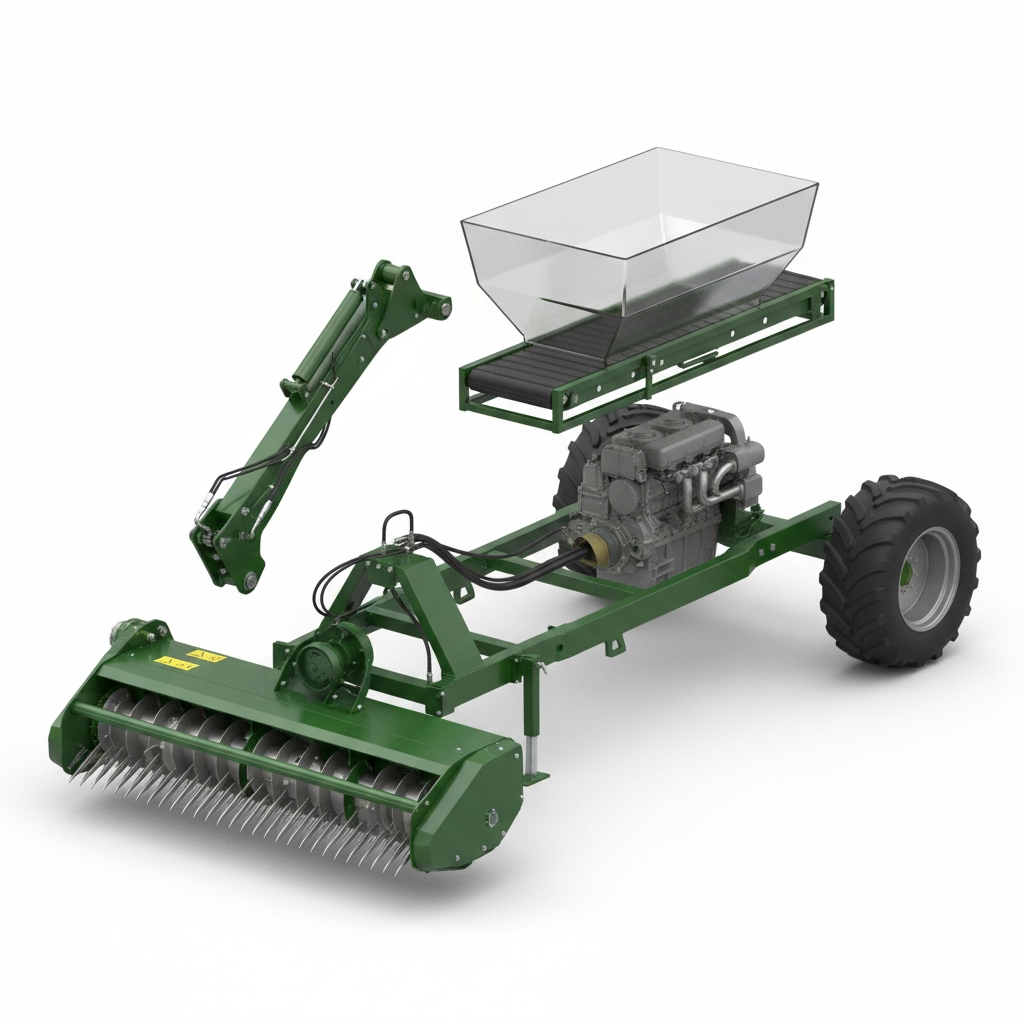
Modern units are sophisticated systems composed of high-stress alloys and hydraulic drives. Our heavy-duty chaff cutter models integrate reinforced cutterheads that can withstand the impact of stones and foreign objects. Understanding these components helps operators identify wear points before they cause a breakdown.
The cutterhead serves as the heavy flywheel that carries the knives. Its mass provides the inertia needed to power through dense clumps of crop without stalling the engine. Ready for the good part? Balanced cutterheads reduce vibration, which protects bearings and extends the lifespan of the entire machine.
The transmission governs the speed of the intake rolls, which directly determines the length of the cut. Variable transmissions allow operators to change cut length on the fly without swapping gears. This flexibility is essential when moving between different crops, such as corn and alfalfa, on the same day.
Dull blades are the primary cause of poor fuel economy and ragged cuts. Integrated sharpening stones allow operators to hone the knives without stopping the harvest for hours. A quick touch-up every few hours keeps the edge razor-sharp and maintains peak efficiency.
Key Takeaway: The cutterhead and transmission form the heart of the machine, dictating both capacity and versatility. Features like onboard sharpening and hydraulic reversing protect these expensive components and drastically reduce daily maintenance downtime.
| Component | Material Specs | Maintenance Focus |
|---|---|---|
| Knives | Hardened Tungsten Steel | Daily sharpening |
| Shear Bar | Reversible Alloy | Weekly gap check |
| Feed Rolls | Serrated Steel | Scraper cleaning |
| Chute | Polymer Liner | Wear inspection |
High-quality components withstand the abrasive nature of silage crops and reduce long-term ownership costs.

Power source selection depends heavily on your facility’s layout and mobility needs. PTO models utilize the immense torque of your tractor, making them perfect for mobile field work. Electric models, however, offer unmatched efficiency for stationary processing near the feed bunk.
PTO units generally require a tractor with 50 to 100 HP to handle the load spikes of heavy wet forage. Electric motors provide constant torque and can often do the same work with lower rated horsepower ratings. This is where it gets interesting… electric motors handle momentary overloads better than diesel engines, recovering speed instantly.
If you harvest across multiple scattered fields, a PTO unit is your only viable option. It travels with the tractor, processing crops right at the windrow or stack. Electric units are anchored to a power supply, restricting them to barn or shed use.
Diesel fuel is expensive and engines require regular oil changes and filter replacements. Electric motors are virtually maintenance-free and electricity is often cheaper per kilowatt-hour than diesel. For daily feeding operations, an electric cutter often pays for itself in fuel savings within two years.
Key Takeaway: Choose PTO for field flexibility and electric for stationary, daily processing efficiency. While PTO offers raw power and mobility, electric motors significantly lower the cost per ton of processed feed.
| Feature | PTO Model | Electric Model |
|---|---|---|
| Source | Tractor Engine | 3-Phase Grid |
| Mobility | Excellent | Poor (Stationary) |
| Op. Cost | High (Fuel) | Low (Electric) |
| Noise | Loud | Moderate |
Aligning the power source with your workflow prevents operational bottlenecks.
Blades are consumable items, but their life can be doubled with proper care. We recommend checking our agricultural machinery guides for detailed protocols, but the basics involve sharpening and clearance. Running dull blades is like cutting steak with a spoon; it takes more force and leaves a mess.
During peak harvest, knives should be sharpened at least once or twice a day. Light, frequent sharpening removes less metal than waiting for a dull edge to round over. Think about it this way: a sharp edge slices cleanly, while a dull edge hammers the crop, stressing the bearings.
The gap between the rotating knife and the stationary bar determines the “scissor” effect. As knives are sharpened, they become shorter, widening this gap. You must adjust the shear bar forward to maintain the critical tolerance, usually the thickness of a business card.
High-speed cutterhead bearings and feed roll universals operate under extreme pressure. They require high-grade lithium grease daily to flush out contaminants and reduce heat. Automatic lube systems are a great investment, ensuring no zerk is missed during the rush of harvest.
Key Takeaway: Proactive blade maintenance is cheaper than repairing a blown transmission. Keeping knives sharp and the shear bar tight reduces fuel consumption and protects the entire drivetrain from destructive vibration.
| Task | Frequency | Benefit |
|---|---|---|
| Sharpening | Every 4-8 hours | Reduces fuel use |
| Gap Check | Daily | Improves cut quality |
| Greasing | Daily | Prevents bearing failure |
| Cleaning | End of shift | Prevents corrosion |
A well-maintained cutter consumes less power and produces superior silage.
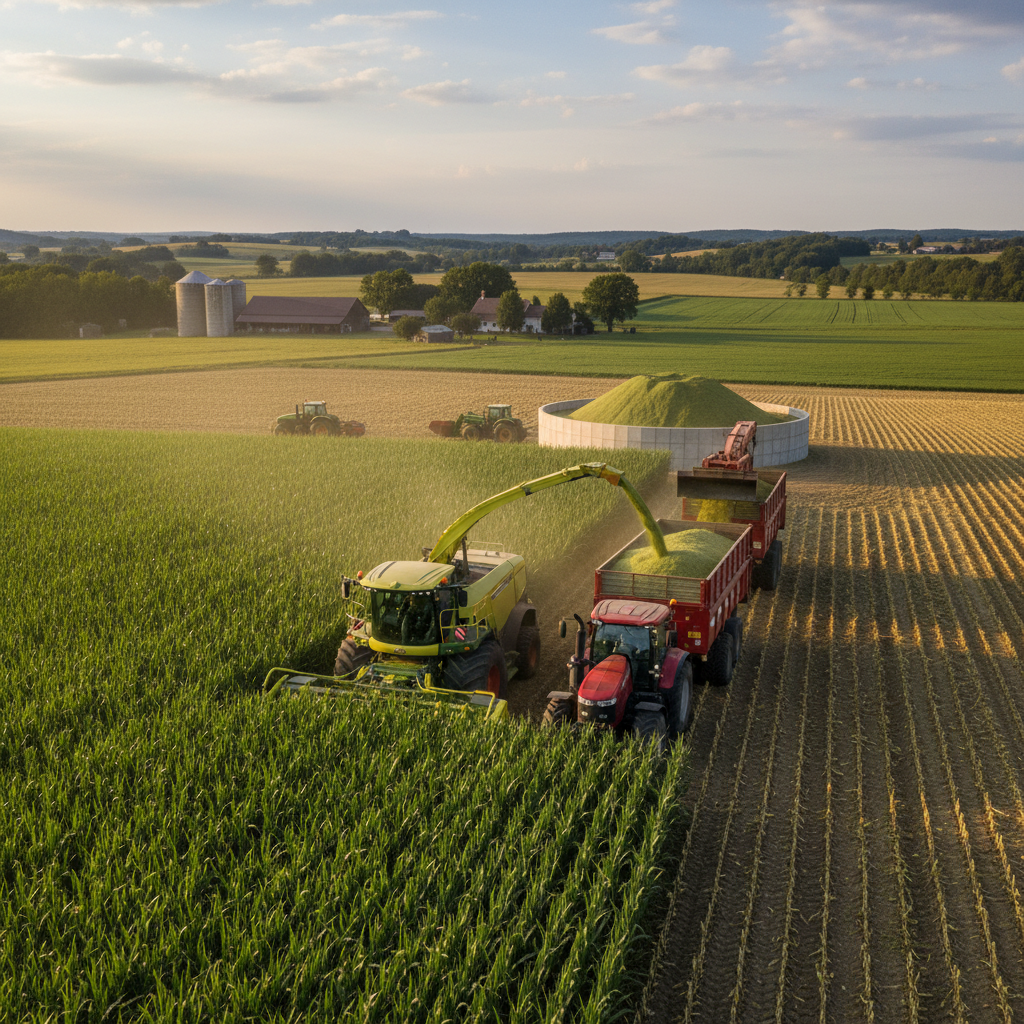
Combining cutting and baling into one machine revolutionizes harvest logistics. Material flows directly from the cutterhead into a compression chamber, eliminating the need for transport wagons. This integration drastically reduces leaf loss, which is where most of the protein lives.
A conveyor or throat mechanism catches the chopped material the instant it leaves the chute. Sensors monitor the flow, pausing the intake if the baler chamber is full. But wait, there is more… this closed-loop system prevents material from ever touching the ground, keeping ash and dirt content to a minimum.
Hydraulic cylinders squeeze the chopped forage into a tight cylinder or rectangle. The operator sets the pressure limit, ensuring bales are dense enough to exclude air but not so heavy they break equipment. High-density bales ferment better because there is less trapped oxygen.
For silage, net wrapping or plastic film is superior to twine. It covers the entire surface area, holding leaves in place and providing a smooth surface for the outer stretch wrap. Plastic-on-plastic binding creates a tighter air seal than twine ever could.
Key Takeaway: Integrated machines save labor and preserve feed quality by reducing handling steps. The immediate compaction and wrapping of fresh chop lock in nutrients before oxidation can begin.
| Step | Traditional Method | Integrated Method |
|---|---|---|
| Cutting | Machine 1 | Combined Unit |
| Transport | Wagon/Truck | Direct Conveyor |
| Baling | Machine 2 | Combined Unit |
| Losses | High (Handling) | Very Low |
Automation turns a multi-person operation into a single-operator task.
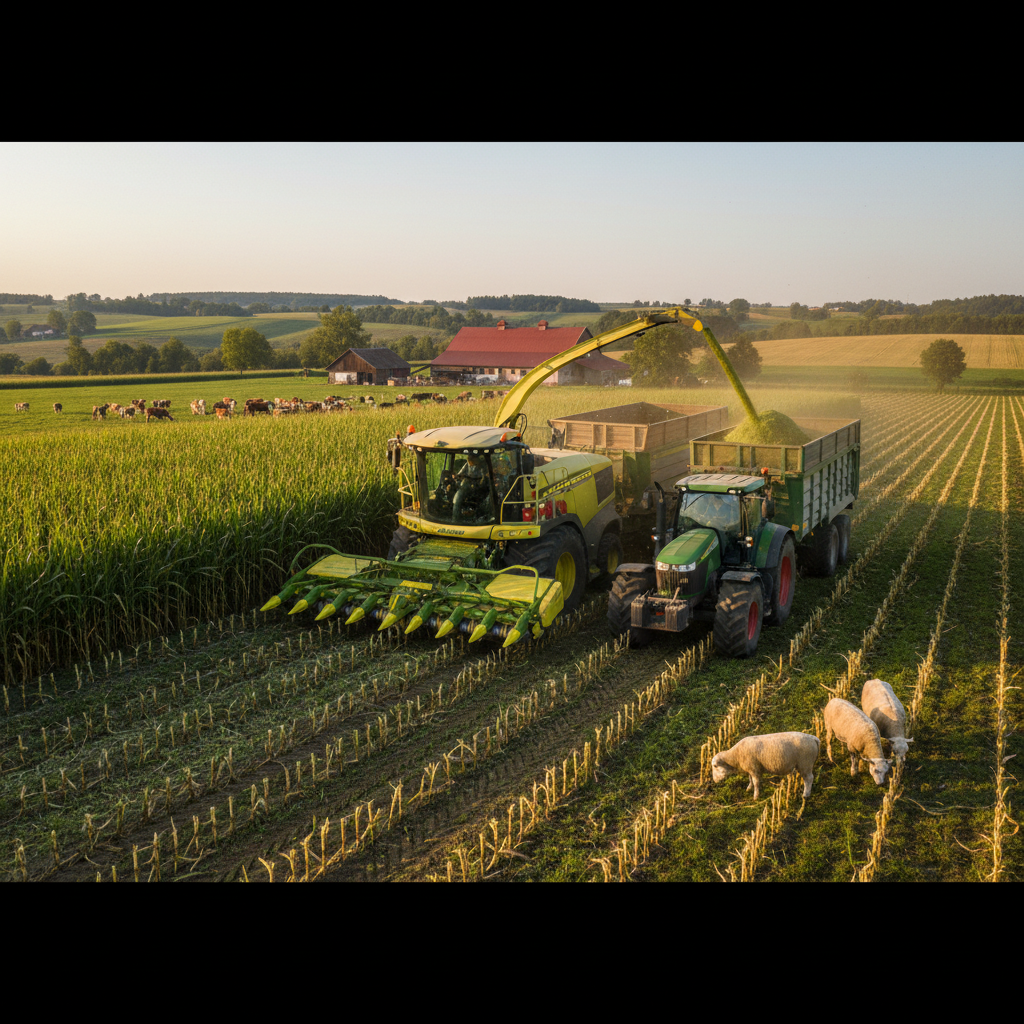
Moisture acts as a lubricant at moderate levels but becomes a glue at high levels. We have documented numerous successful silage harvesting cases where adjusting for moisture meant the difference between a smooth day and a plugged chute. Wet crops are heavy and sticky, requiring more blower power to move.
When crops exceed 70% moisture, plant sugars create a gummy residue on the chute. Operators must slow the forward speed to reduce the volume entering the machine. Increasing the blower speed or ensuring paddles are adjusted tight to the housing helps throw this heavy material clear.
Yes, drier crops are lighter and prone to shattering. Slowing down the cutterhead slightly can reduce the amount of dust and leaf loss. However, you often need to increase ground speed to keep the machine full, as a full machine cuts more consistently than an empty one.
Blockages usually happen when the airflow drops below the critical transport velocity. Keeping the engine RPM high, even under light loads, maintains the air blast needed to scour the chute. Water injection kits can also spray a mist into the blower, lubricating the path for sticky crops.
Key Takeaway: Crop moisture dictates the machine’s throughput limit. Respecting these physical limits and adjusting ground speed or blower settings prevents frustrating downtime caused by chute plugs.
| Moisture % | Condition | Operational Adjustment |
|---|---|---|
| >70% | Wet/Sticky | Slow ground speed, Max RPM |
| 60-70% | Optimal | Normal operation |
| <50% | Dry/Light | Check particle length |
Testing moisture before harvest allows you to calibrate the machine for the specific field conditions.
Silage cutters are inherently dangerous due to their intake rolls and high-speed blades. Manufacturers effectively layer active and passive safety systems to mitigate these risks. The most vital component is the feed intake safety bar, which gives the operator immediate control over the aggressive rollers.
The safety bar, usually a large metal hoop around the intake, has three positions: forward, neutral, and reverse. Here is the bottom line: if an operator’s arm or clothing gets snagged, bumping this bar instantly reverses the rolls, ejecting the object. This split-second reaction is the difference between a close call and a tragedy.
E-stop buttons are strategically placed on the control panel and near maintenance access points. Hitting any of these kills the engine or disengages the PTO clutch immediately. We train all users to test these buttons every morning to ensure the electrical interlocks are functioning.
Every moving belt, chain, and shaft is covered by a steel guard. Electronic sensors often monitor these guards; if a shield is opened while the machine is running, the system cuts power. This prevents operators from tempted “quick fixes” while the cutterhead is still spinning.
Key Takeaway: Safety features are non-negotiable and must never be bypassed. The reverse feed bar and interlocked shields provide a necessary barrier between the human operator and the machine’s destructive power.
| Feature | Action | Protection Target |
|---|---|---|
| Reverse Bar | Reverses rolls | Limb entrapment |
| E-Stop | Kills power | General emergency |
| Shields | Covers drives | Entanglement |
| Lockout | Prevents start | Maintenance safety |
A safe harvest is a productive harvest; never disable these life-saving mechanisms.
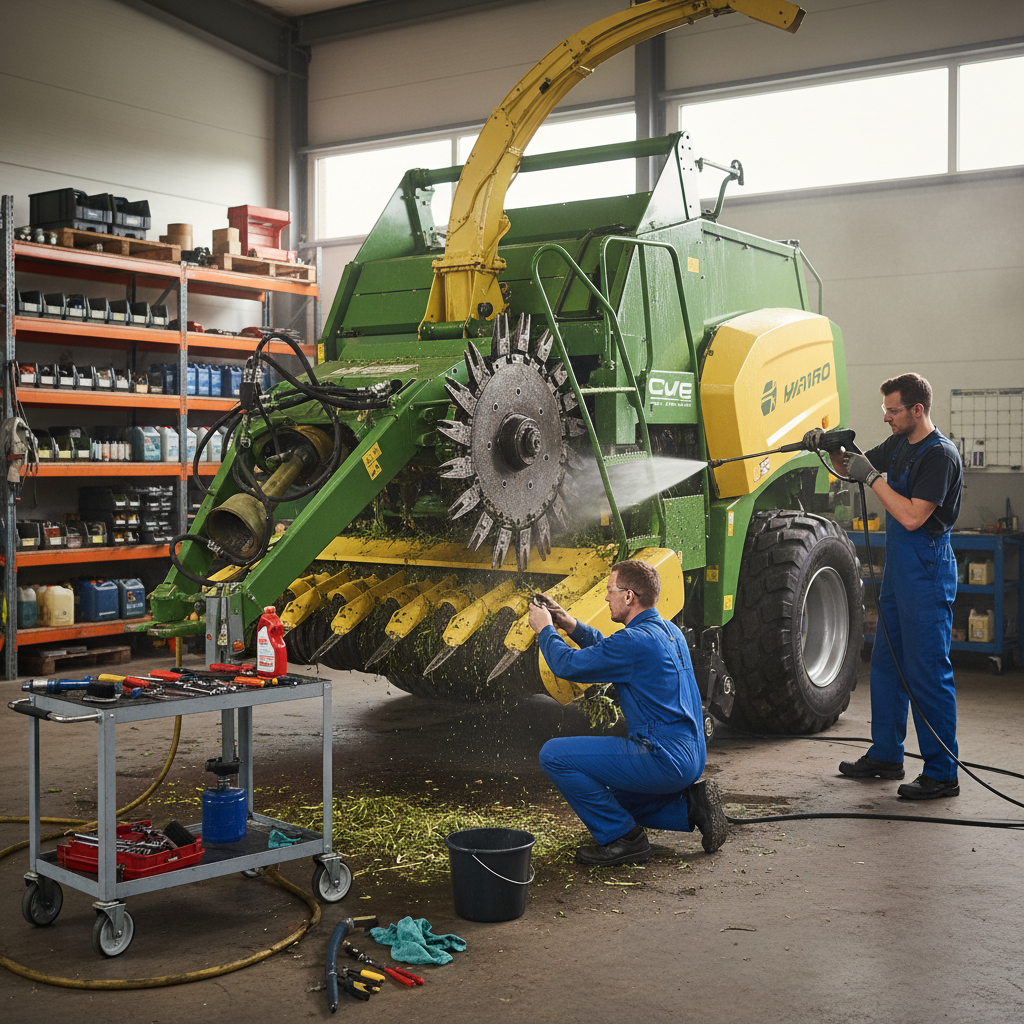
The shape of the cutting edge changes how the plant stem is severed and fractured. When you request a factory-direct quote, specifying the right blade for your crop is crucial. Some blades slice cleanly, while others are designed to macerate and shred.
Straight knives are cheaper and easier to sharpen but can act like a fan, creating air turbulence. Curved or helical knives slice across the shear bar at an angle. You might not expect this: this slicing action requires less horsepower and produces a smoother cut, preserving the leaf structure.
Serrated blades are aggressive and ideal for tough, fibrous crops like mature sorghum or dry corn stalks. The teeth grab the smooth stems, preventing them from slipping out. This shredding action also opens up the fiber, allowing rumen bacteria faster access to the cellulose.
For corn silage, slicing the stalk is not enough; you must crush the grain. Kernel processors (rollers with teeth) sit behind the cutterhead. They crack every kernel, ensuring the starch is available to the cow. Without this, the grain would pass through undigested, wasting valuable energy.
Key Takeaway: Blade selection is a nutritional decision, not just a mechanical one. Matching the blade profile to the crop type optimizes the physical structure of the feed for the animal’s digestive system.
| Blade Type | Best For | Effect on Crop |
|---|---|---|
| Smooth/Curved | Grass/Alfalfa | Clean cut, low dust |
| Serrated | Corn/Sorghum | Aggressive shredding |
| Flail | Green Chop | Impact cutting (rough) |
The right blade unlocks the full nutritional potential of your harvest.
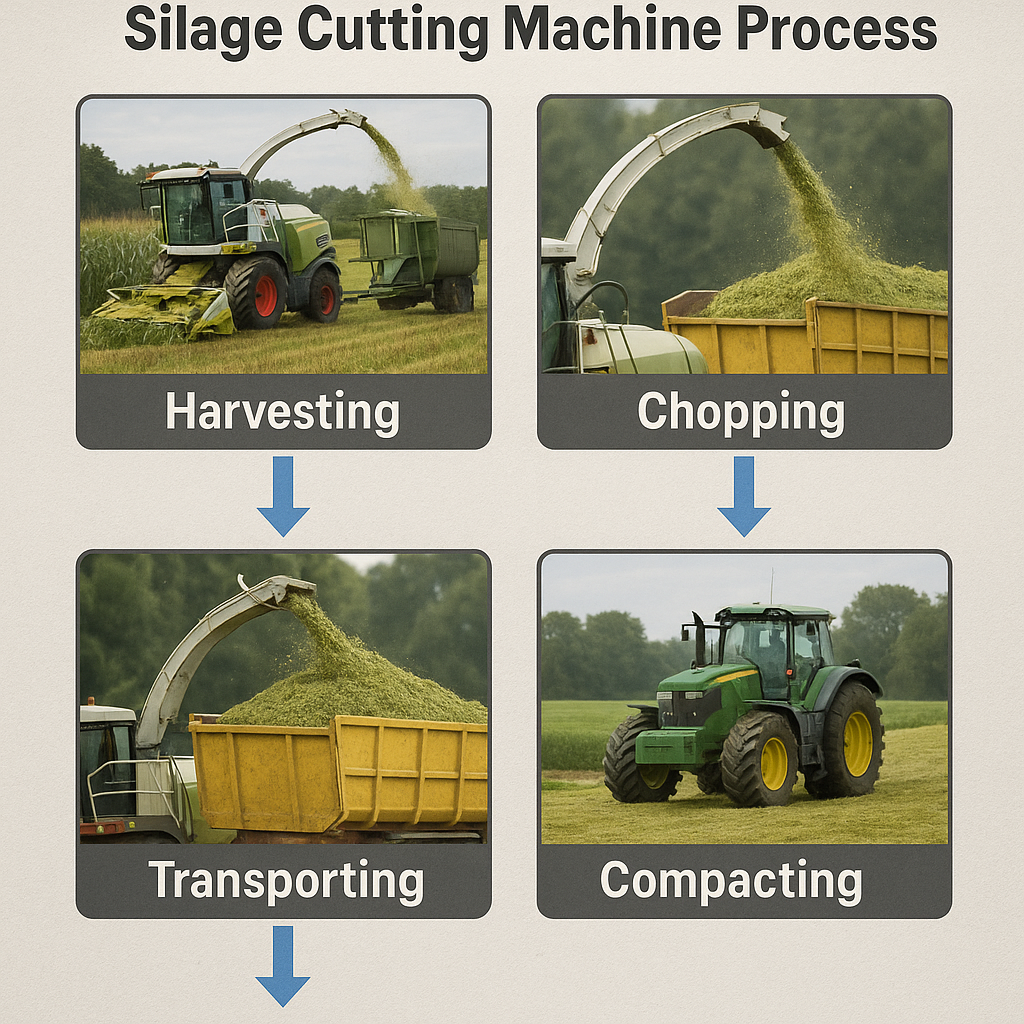
High-capacity machines carry a higher price tag, but their ROI is realized through speed and feed quality. Reducing the harvest window means crops are cut at their peak nutritional value. Furthermore, labor savings from automation accumulate rapidly over the machine’s life.
A modern high-capacity cutter can do the work of three smaller units or a manual crew of ten. Let’s break it down: saving two operator wages over a 30-day harvest season adds up to thousands of dollars annually. These savings alone often cover the financing payments for the new equipment.
Higher density bales and better fermentation mean you lose less feed to mold. If a precision cutter saves 10% of your silage from spoilage, that is 10% less feed you have to buy or grow next year. For a 200-head dairy, this efficiency gain is worth significant capital.
Quality machinery holds its value. A well-maintained branded cutter can be resold for 40-50% of its new price after five years. Cheaper, low-quality units often have zero resale value. Buying quality is an investment in an asset, not just an operational expense.
Key Takeaway: The true cost of a machine is not its purchase price, but its cost per ton of quality feed produced. Efficiency, speed, and resale value make high-capacity cutters a financially sound choice for growing operations.
| Factor | Annual Savings (Est.) | Long-Term Benefit |
|---|---|---|
| Labor | $15,000+ | Reduced mgmt load |
| Feed Loss | $8,000+ | Better herd health |
| Fuel | $2,500+ | Lower carbon footprint |
Smart investments in machinery yield compound returns through operational efficiency.
Silage cutting machines are more than just steel and hydraulics; they are the gatekeepers of your farm’s feed quality. By ensuring precise chopping, you facilitate better packing, faster fermentation, and ultimately, healthier livestock. We have explored how the mechanics of shear bars, moisture management, and blade selection all converge to create a superior product.
What is the next step? Don’t let another harvest season pass with inefficiencies eating into your margins. Visit our homepage to explore solutions that fit your specific acreage. We believe that with the right tools, you can turn your forage into a powerhouse of productivity.
Q1: Can I process dry hay with a silage cutter?
Yes, but you must monitor the moisture carefully. While silage cutters can handle dry material, it often causes more dust and leaf shatter than wet crops. You should lower the cutterhead speed to minimize the pulverization of delicate leaves.
Q2: What is the best way to prevent the chute from clogging?
The most effective method is to maintain a steady, high engine RPM. This keeps the blower fan spinning fast enough to generate the air velocity needed to eject the crop. Additionally, ensure knives are sharp and the shear bar gap is tight to prevent roping.
Q3: How do I know if my shear bar needs adjustment?
You will notice the machine using more power and making a louder “hammering” noise. Visually, the cut forage will look ragged or strung together rather than cleanly sliced. A simple gauge check will confirm if the gap has exceeded the recommended tolerance.
Q4: Is an electric model powerful enough for corn silage?
Yes, provided you have a sufficient 3-phase power supply. Electric motors have high torque curves and can handle the load of corn silage very effectively. They are often preferred for stationary setups due to their reliability and lower operating costs.
Q5: Do serrated blades last longer than smooth ones?
Generally, yes. The serrated points protect the recessed cutting edge from immediate wear, allowing them to stay effective longer in abrasive crops. However, they are more difficult to sharpen and are typically replaced rather than honed when dull.