
Animal Feed Processing Equipment
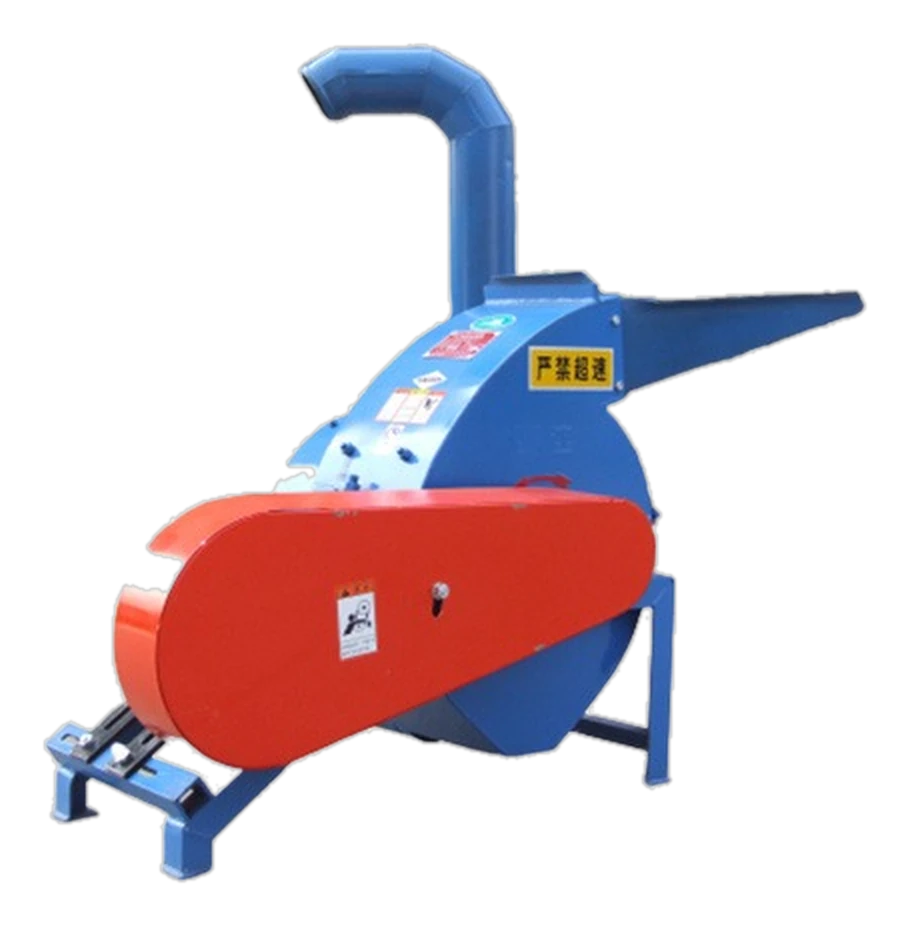
Feed Crusher Machine for Consistent Animal Feed Grinding
Grind corn, wheat, and suitable dried feed materials to your required particle size. Designed to support practical feed preparation for livestock farms, feed workshops, and small-to-medium processing plants.
- 600–1,400 kg/h corn output
- 5.5–28 kW Electric or diesel
- 3 Sizes FG-36 · FG-45 · FG-50
Tell us your raw material, required capacity, and power supply. We’ll help you select a suitable crusher configuration.
 Factory Direct
Product Overview
What Is a Feed Crusher Machine?
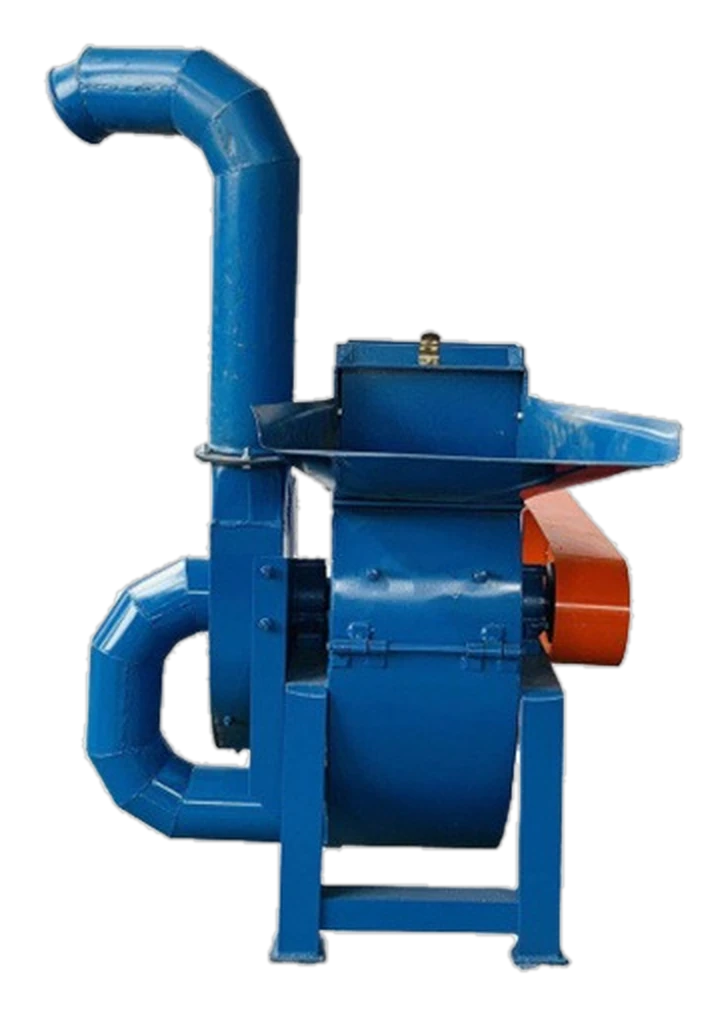
A feed crusher machine is a hammer-mill grinder that breaks corn, wheat and other suitable dry feed ingredients into smaller, more uniform particles for livestock and poultry feed.
Fast-rotating hammers strike the material inside the grinding chamber, and an interchangeable screen sets the final particle size — from coarse meal for ruminants to fine mash for poultry. It works as a standalone grinder on the farm, or as the first size-reduction step before mixing and pelleting.
Raw Materials
What Materials Can a Feed Crusher Machine Process?
Cereal grains grind with the standard setup. Protein meals, forage and crop residues need the right hammer and screen configuration — we confirm it before you order.
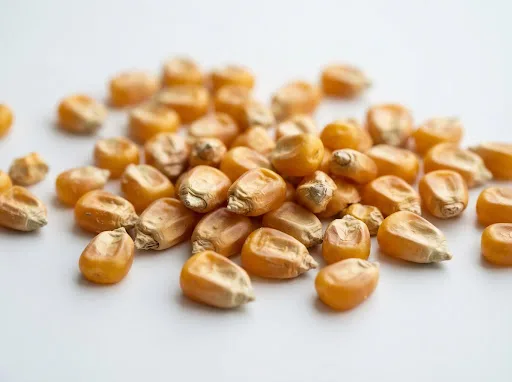
Corn / Maize
The main energy grain in most rations. Ground into a uniform meal ready for mixing and pelleting.
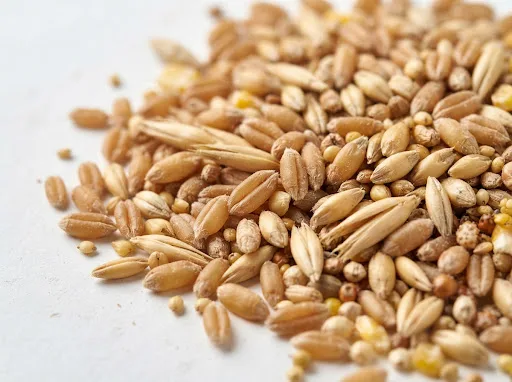
Wheat
Ground to a fine or medium texture by screen choice, for young-animal and balanced rations.
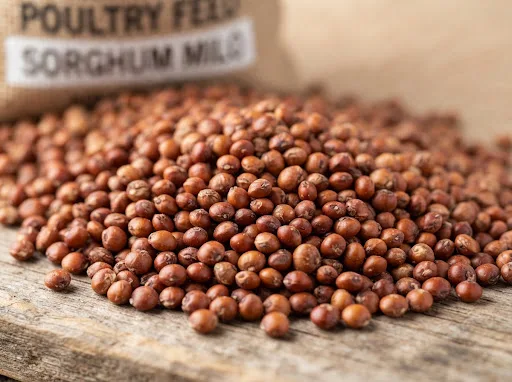
Sorghum
Common in poultry diets. Hammer impact breaks the hard seed coat for better digestion.
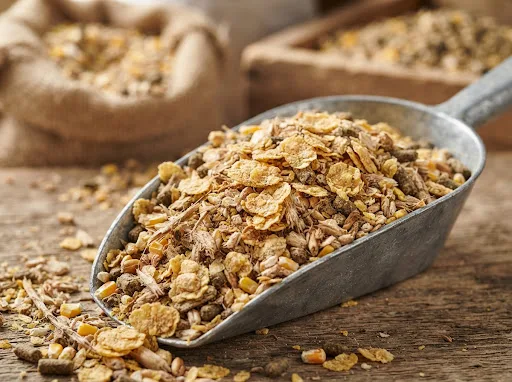
Soybean Meal
Cakes and flakes reduced to a finer size before mixing, depending on thickness and moisture.
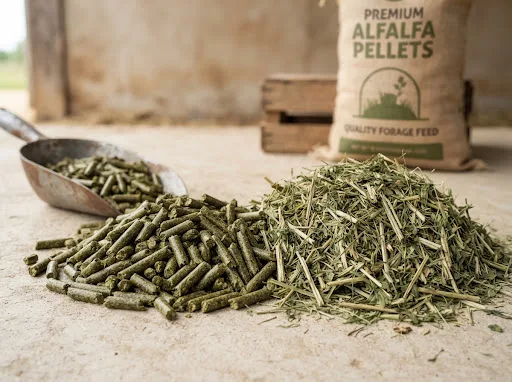
Dried Alfalfa & Forage
Dried forage, or stalks softened by a straw kneading machine, milled into roughage meal.
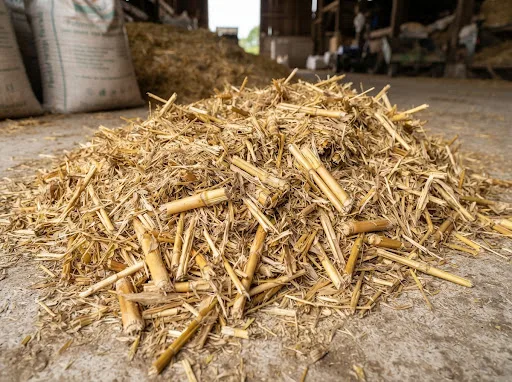
Prepared Straw & Crop Residues
Stalks and straw pre-cut by a chaff cutter, then ground into fiber feed.
Applications
Where Is a Feed Crusher Machine Used?
Livestock Farms
Fresh on-farm rations for beef cattle, dairy cows, sheep and goats.
Poultry Farms
Uniform mash for broilers, layers, ducks and turkeys.
Farm Feed Workshops
Batch grinding for cooperatives and feed workshops.
Feed Mills & Pellet Lines
Primary size reduction ahead of mixers, conditioners and pellet mills.
Not Sure Your Material Can Be Crushed?
Suitability depends on moisture, fiber toughness, starting size and screen choice. Send us a photo and the moisture level of your material — our engineers will recommend the right hammer and screen setup.
Feed Grinding Challenges
Common Feed Grinding Problems — and How We Solve Them
Most grinding problems come from a setup that doesn’t match the material or the workload. Here is how we fix the four we see most often.
01
Uneven Particle Size
Problem
Coarse and fine particles in the same batch make mixing uneven and rations inconsistent.
Our Solution
We match the screen opening and feed rate to your material and target particle size.
02
Different Materials, Different Results
Problem
Corn, wheat and forage differ in hardness, fiber and moisture, so one setup rarely suits all.
Our Solution
We check your material first, then set the hammers, screen and feeding to suit it.
03
Capacity That Doesn’t Match Demand
Problem
An undersized machine slows daily feed prep; an oversized one wastes investment and power.
Our Solution
We size the crusher to your hourly output, material moisture and daily working hours.
04
Downtime from Worn Parts
Problem
Worn hammers and screens lower output, coarsen the grind and interrupt daily feeding.
Our Solution
Quick-release housings let you change hammers and screens fast and get back to work.
Tell us your raw material, moisture, target particle size and hourly output — we’ll recommend the right configuration.
Talk to an Engineer
Grinding Results
From Whole Grain to Uniform Feed Meal
One pass through the hammer chamber turns hard corn kernels into an even meal. The screen you install sets how fine it gets.
Before
Whole Corn Kernels
Hard outer hull that animals struggle to digest.
One PassHammer impact + screen
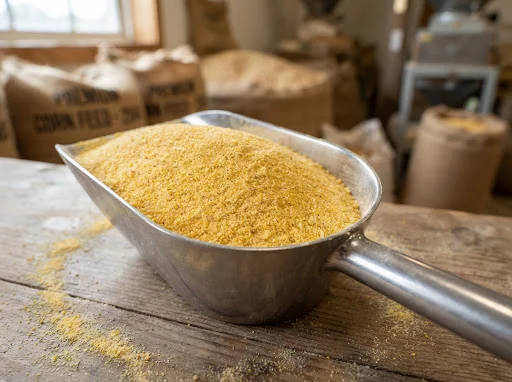 After
After
Uniform Corn Meal
Even particles, ready for mixing or pelleting.
Even Particle Size
Consistent meal mixes evenly, so every ration carries the same nutrition.
Flexible Discharge
Bag the meal at the outlet, or send it by cyclone pipe to your mixer.
Better Digestibility
Breaking the hard hull exposes the starch, so animals use more of the feed.
Grinding your own feed is one of the easiest ways to cut costs. Read: Grass Crusher Machine: A Practical Way to Save Money
Structure & Working Principle
How Does a Feed Crusher Machine Work?
Six main parts work together: grain goes in at the hopper, hammers break it, the screen sets the size, and a fan carries the meal out.
1
2
3
4
5
6
-
1
Feed Hopper
Wide intake with a flow-control gate to meter grain in steadily.
-
2
Hammer Rotor
Balanced rotor; manganese-steel hammers with four usable corners.
-
3
Screen
Interchangeable curved screen, held by a quick-release latch for fast changes.
-
4
Fan & Cyclone Discharge
Airflow pulls meal through the screen and carries it up the pipe to collection.
-
5
V-Belt Drive
Multi-groove belts absorb shock loads and are fully enclosed by a guard.
-
6
Base Frame
Welded steel frame with anti-vibration mounts keeps the machine stable.
The Grinding Process in 4 Steps
-
01
Feed
Grain enters the hopper; the gate keeps the flow steady.
-
02
Impact
Hammers at up to 4,600 r/min strike the kernels and break the hulls.
-
03
Screen
Fine particles pass the screen; coarse pieces are hit again.
-
04
Discharge
The fan blows the meal up the cyclone pipe into bags or a mixer.
See It Running
Get a Running Video — or Test Your Own Material
We’ll send you footage of this machine grinding corn, and on request we can run your own material and record the result.
What a good test video should show- The material and its moisture level
- Continuous running, not short clips
- The finished particle size, close up
- Screen size, output and power draw
Models & Specifications
Feed Crusher Machine Specifications
Three sizes for small and medium farms. Each size comes with an electric motor (E) or a diesel engine (D), so it works with or without grid power.
FG-36
Compact and light — the entry size for small family farms.
600kg/h corn
- Electric (FG-36E)5.5–7.5 kW
- Diesel (FG-36D)12–15 kW
- Hammers14
- Weight145–225 kg
Most Popular
FG-45
More than double the corn output of FG-36, still compact.
1,400kg/h corn
- Electric (FG-45E)11 kW
- Diesel (FG-45D)18–22 kW
- Hammers24
- Weight220–280 kg
FG-50
Widest 500 mm chamber and the most power in the range.
1,400kg/h corn
- Electric (FG-50E)15 kW
- Diesel (FG-50D)28 kW
- Hammers24
- Weight350–395 kg
Output by Material
Different materials grind at different rates because of their moisture, hardness and shape.
Swipe to see all models →| Material | FG-36 | FG-45 | FG-50 |
|---|---|---|---|
| Corn | 600 kg/h | 1,400 kg/h | 1,400 kg/h |
| Small grains (wheat, sorghum, millet) | 800 kg/h | 1,800 kg/h | 1,800 kg/h |
| Fine flour | 200 kg/h | 350 kg/h | 400 kg/h |
| Dry crop straw | 200 kg/h | 350 kg/h | 400 kg/h |
Figures are for dry material. Actual output also depends on moisture, the screen fitted and how evenly the machine is fed — tell us your material and we’ll confirm the output for your setup.
Full Technical Data
E = electric motor · D = diesel engine
Swipe to see all models →| Model | FG-36EElectric | FG-36DDiesel | FG-45EElectric | FG-45DDiesel | FG-50EElectric | FG-50DDiesel |
|---|---|---|---|---|---|---|
| Power (kW) | 5.5–7.5 | 12–15 | 11 | 18–22 | 15 | 28 |
| Main shaft speed (r/min) | 4,600 | 3,300 | ||||
| Structure type | Hammer type | |||||
| Number of hammers | 14 | 24 | ||||
| Rotor working diameter (mm) | 230 | 268 | 280 | |||
| Crushing chamber width (mm) | 360 | 450 | 500 | |||
| Dimensions L×W×H (mm) | 1220×660×1100 | 1220×650×1200 | 1480×850×1350 | 1510×950×1410 | 1560×900×1450 | 1620×1380×1550 |
| Weight (kg) | 145 | 225 | 220 | 280 | 350 | 395 |
Not Sure Which Model Fits Your Farm?
Tell us your material, daily output and power supply. We’ll recommend the right size and send a price for your model, electric or diesel.
FAQ
Feed Crusher Machine FAQ
Quick answers to the questions farmers ask us most before buying a feed crusher.
Have Another Question?
Send us your material, power supply and daily output — our engineers reply with a model suggestion and price.
Ask Our EngineersWhat can a feed crusher machine grind?
It grinds corn, wheat, sorghum, millet and other dry grains into feed meal. With the right screen it can also grind soybean meal, dried alfalfa and pre-cut crop straw. See the full list of suitable materials.
Electric or diesel — which should I choose?
Choose the electric (E) model if you have stable grid power: it is quieter, lighter and cheaper to run. Choose the diesel (D) model if your farm has no reliable electricity or you need to move the machine between sites. Every size, FG-36, FG-45 and FG-50, comes in both versions.
Can it grind crop straw and dry forage?
Yes. Dry straw grinds at about 200–400 kg/h depending on the model. For best results, cut long stalks first with a chaff cutter, or soften them with a straw kneading machine. Keep the material dry: wet straw grinds slowly and wears the hammers much faster.
How often do the hammers need replacing? Are spare parts easy to get?
There is no fixed interval — it depends on wear, not just hours. When grinding corn, a set of manganese-steel hammers typically lasts around 100–150 working hours per edge. Each hammer has four working corners: when one wears, turn or flip it to use the next. Replace the whole set only when all four corners are worn, and always change every hammer at the same time to keep the rotor balanced.
Spare parts are easy: for every crusher bought from us, we supply quality spare parts at fair prices for the life of the machine.
Can you send a running video or test my material?
Yes. We can send a video of the machine grinding corn, and on request we can run your own material and record the output and finished particle size before you order.
How is the machine shipped, and how long is delivery?
Production and delivery take 3–4 weeks. Each machine is packed in a seaworthy wooden case for safe ocean shipping.
Factory-Direct Quotation
Get Your Feed Crusher Price
Tell us what you grind, how much you need per day and your power supply. Our engineers will recommend the right model and send your quotation within 12 hours.
-
Factory-Direct Price
Buy straight from the manufacturer, with no trading-company markup.
-
Lifetime Spare Parts
Quality spare parts at fair prices for the life of your machine.
-
Ships in 3–4 Weeks
Packed in a seaworthy wooden case, ready for ocean freight.
Request a Quote
Fill in the form and we’ll reply by email or WhatsApp. We never share your details.