
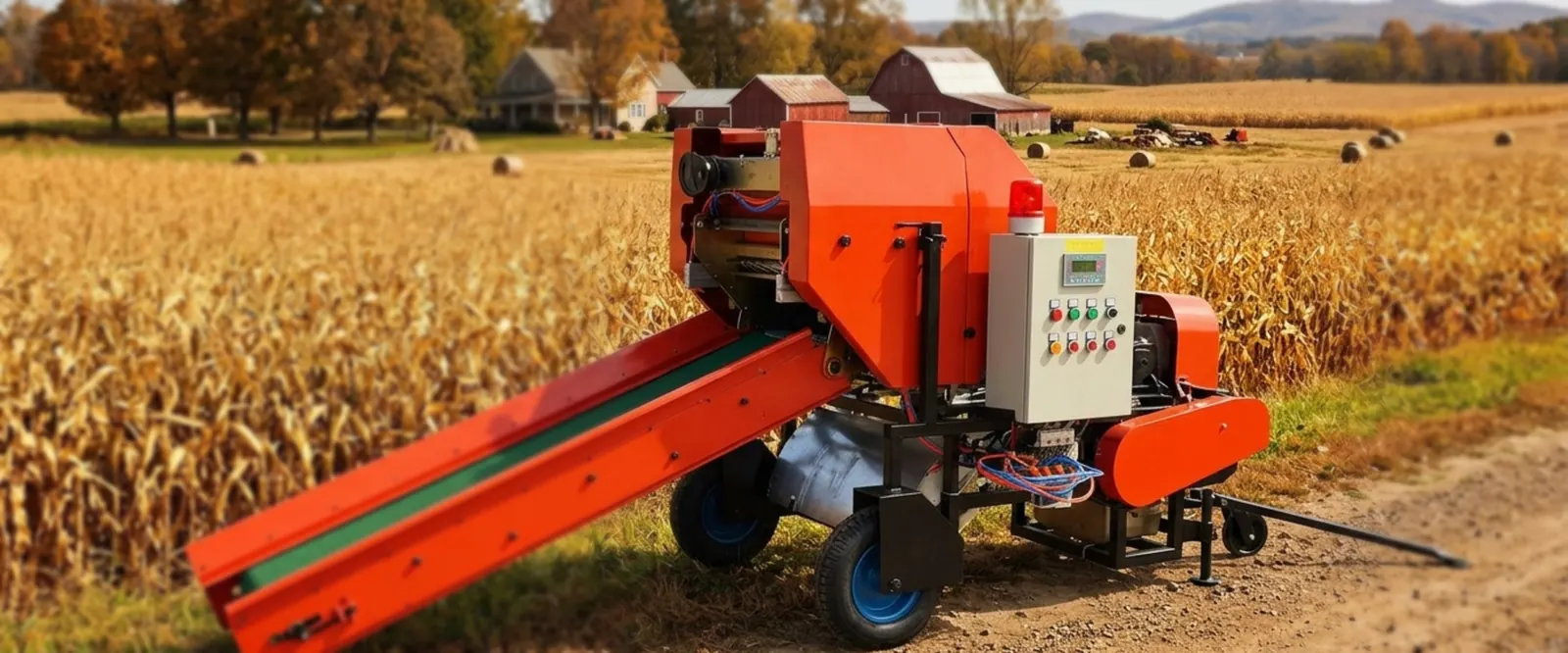
Bale, Bind & Wrap in One Machine
Silage Baler Machine FC-585 Mini Round Baler & Wrapper
Feed chopped corn, grass or alfalfa onto the conveyor and the FC-585 rolls it into a dense 55 cm round bale, binds it and seals it in stretch film on the spot. Each 70 kg bale is sealed as soon as it leaves the chamber, ready to ferment, store through the dry season or sell.
- 70 kgPer sealed bale
- 45–120 sPer bale
- 3 drivesElectric · diesel · tractor
Product Introduction
What Is the FC-585 Silage Baler Machine?
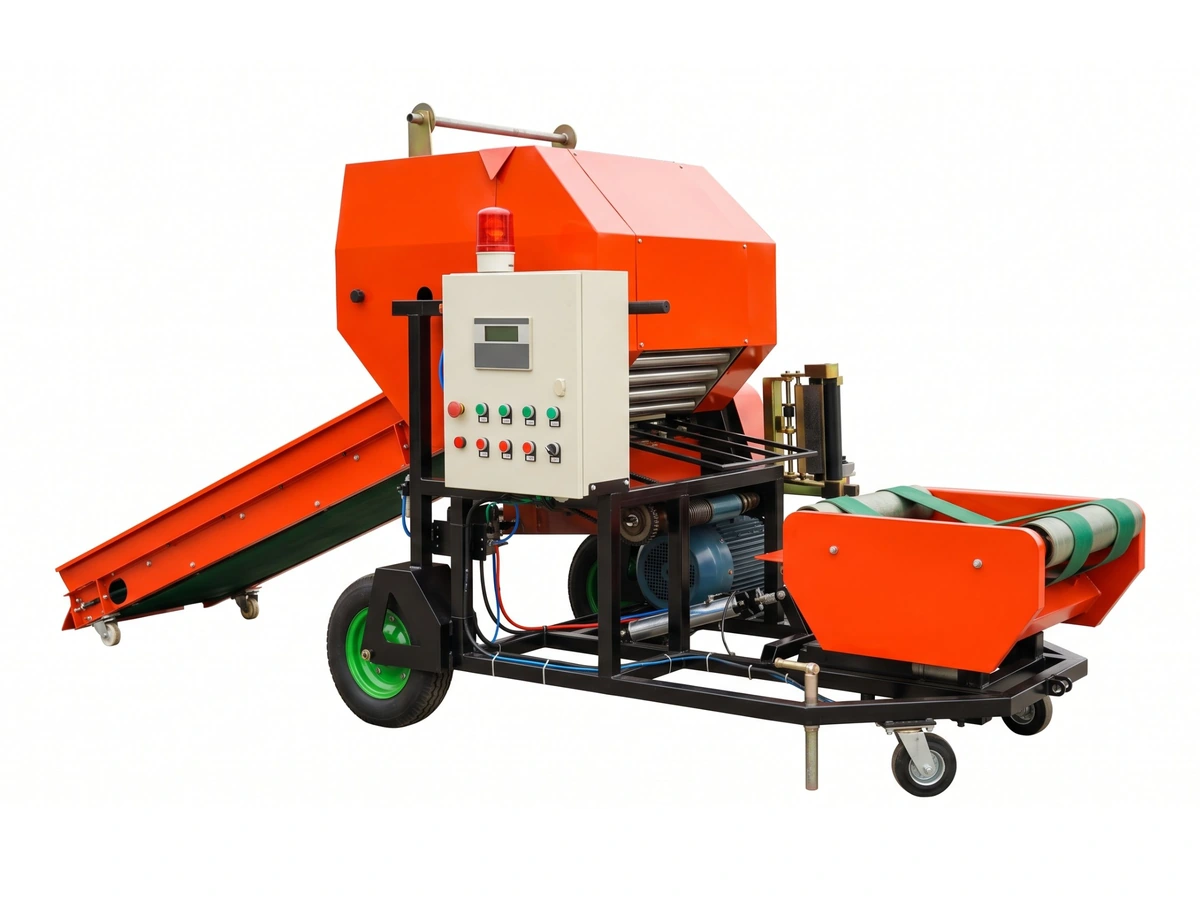
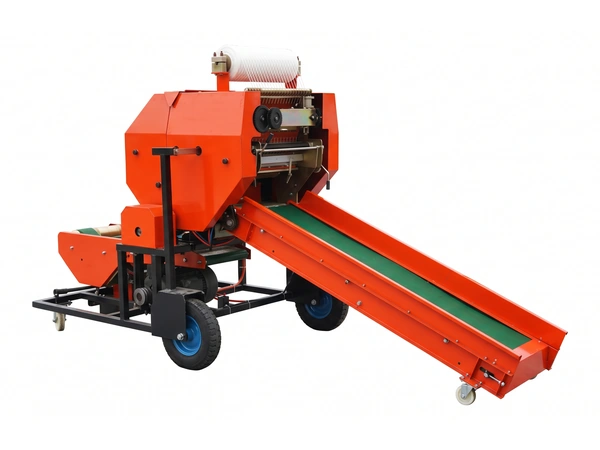
The FC-585 is a stationary mini round silage baler with a built-in film wrapper. It takes forage that has already been chopped or kneaded — whole-plant corn, corn stalks, alfalfa, Napier grass, reed or straw — and presses it into a firm 55 cm round bale, binds it, discharges it onto the wrapping table and seals it in stretch film. One compact machine does the work of a baler and a separate bale wrapper, and you no longer need a silage pit to store the crop.
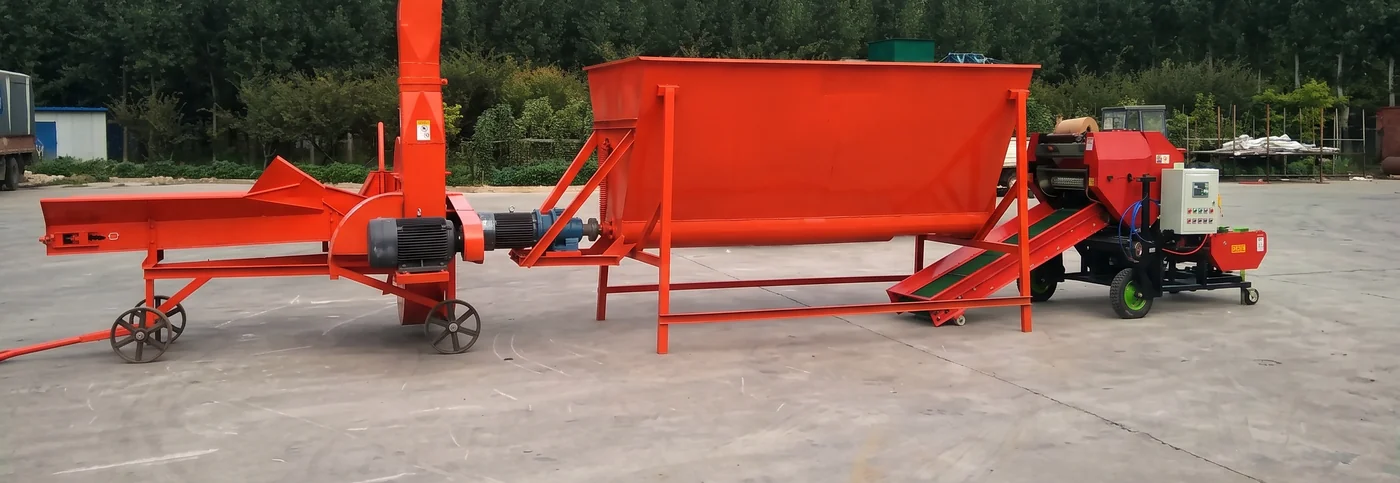
Because it works from a pile rather than a windrow, it sits naturally after our chaff cutter machine or straw kneading machine: chop or shred the crop, feed the conveyor, and roll out sealed 70 kg bales that two people can lift, stack, truck and sell.
Dense Bales That Don’t Rot
Tight compaction squeezes out air, so the film seals a solid bale instead of a soft one that moulds after wrapping.
Wrapped the Moment It’s Formed
No waiting for a second machine or tractor — the bale moves straight to the wrapper and fermentation starts sealed.
Electric, Diesel or Tractor Power
Run it from mains power, its own diesel engine or your tractor’s PTO — whatever your site already has.
Built for Daily Silage Work
Why Farmers Choose the FC-585
Every detail is aimed at one result: heavy, tightly packed bales that keep their quality under the film, made with as few hands as possible.
Reinforced Main Frame
A strengthened chassis keeps the whole machine rigid under full compaction load, so structural parts stay aligned and last for many seasons of daily baling.
Heavy-Duty Pressing Rollers
Thickened aluminium-alloy rollers, reinforced with steel rollers in the high-wear positions, roll wet forage firmly every turn and hold their shape far longer than plain sheet rollers.
Denser, Heavier Bales
Enlarged bearings and thicker shafts carry higher pressing force, so each 55 cm bale reaches 70 kg. More feed per bale means less film and twine per tonne of silage.
Reliable Screw-Rod Binding
A reciprocating screw-rod winder lays twine evenly across the full bale width, giving consistent, secure ties without needing premium-grade twine.
Easy-Clean Open Base
Extra space under the chamber lets you clear fallen chaff and wet residue in minutes, protecting chains and bearings and keeping the machine hygienic between batches.
Integrated, Labour-Saving Design
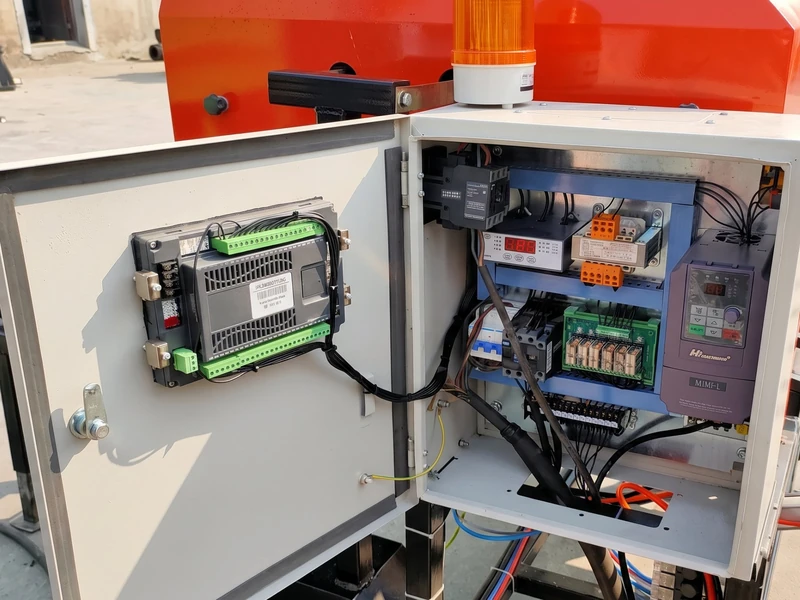
Conveyor, baler and wrapper work as one unit run from a single control cabinet, so a small crew produces more bales a day and the cost of each bale falls.
Working Principle
How the Silage Baler Works
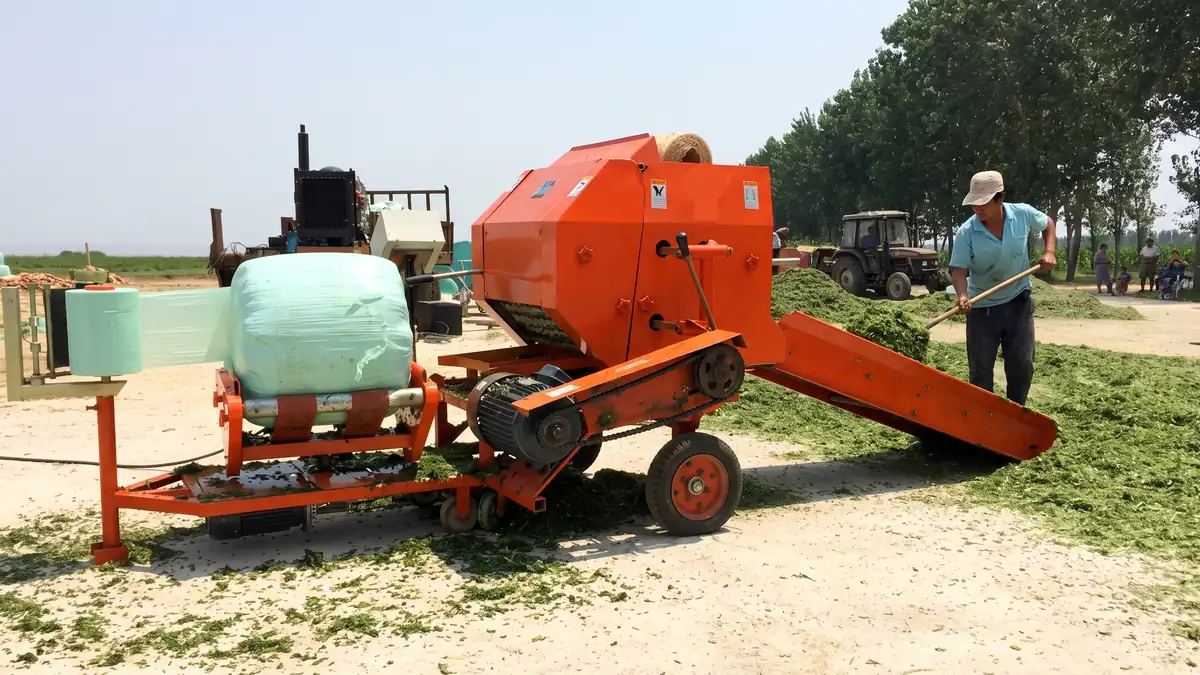
Four steps, one operator at the control cabinet: loose chopped forage goes in at one end and an airtight, film-wrapped bale comes out at the other.
- 1
Feed the Conveyor
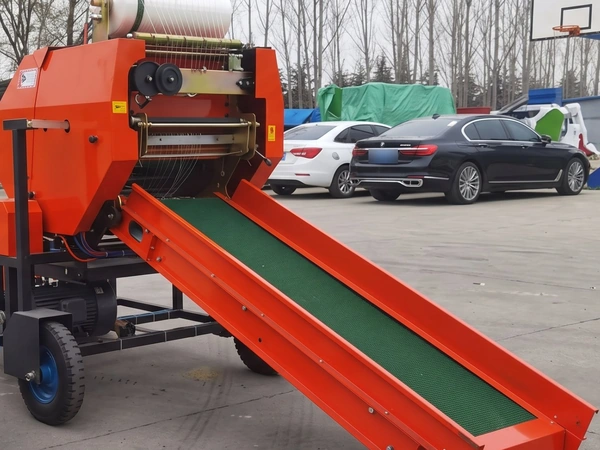
Shovel or fork chopped forage onto the inclined belt. It carries an even flow into the baling chamber, so nobody has to stand at the rollers.
- 2
Roll & Compress
The ring of pressing rollers turns the forage into a cylinder and keeps squeezing until the 55 cm chamber is full and the bale is firm.
- 3
Bind & Discharge
Net or twine is wound around the bale to hold its shape, then the chamber opens and the bale drops onto the wrapping rollers.
- 4
Wrap & Seal
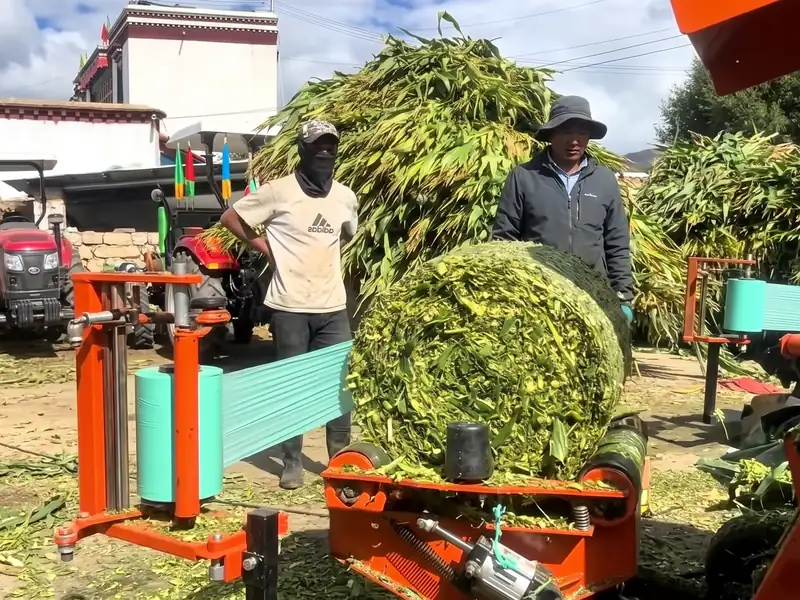
The bale turns on the rollers while the pre-stretch dispenser lays overlapping stretch film over it. Cut, unload, and the next bale is already forming.
Three Power Options
Electric, Diesel or Tractor PTO — Your Choice
The baling and wrapping unit is the same on every FC-585. Choose the drive that matches the power you already have on site, and the machine fits straight into your routine.
Electric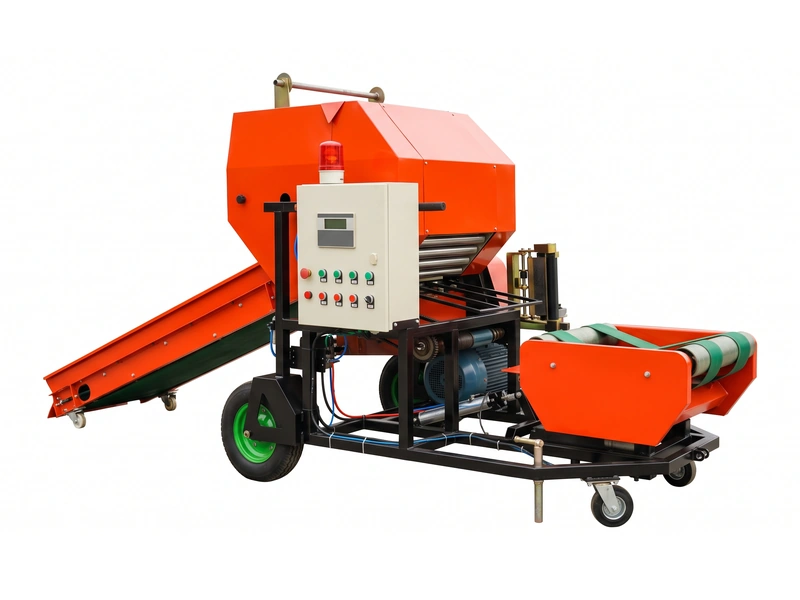
Electric Motor Drive
5.5 kW motor
Quiet, clean and usually the lowest running cost per bale, with simple push-button control. If you already run an electric chaff cutter, the same supply powers the whole chop-and-bale line.
- Farms and yards with reliable mains power
- Fixed silage-making stations under a shed
- Can also run from a 10 kW generator
Diesel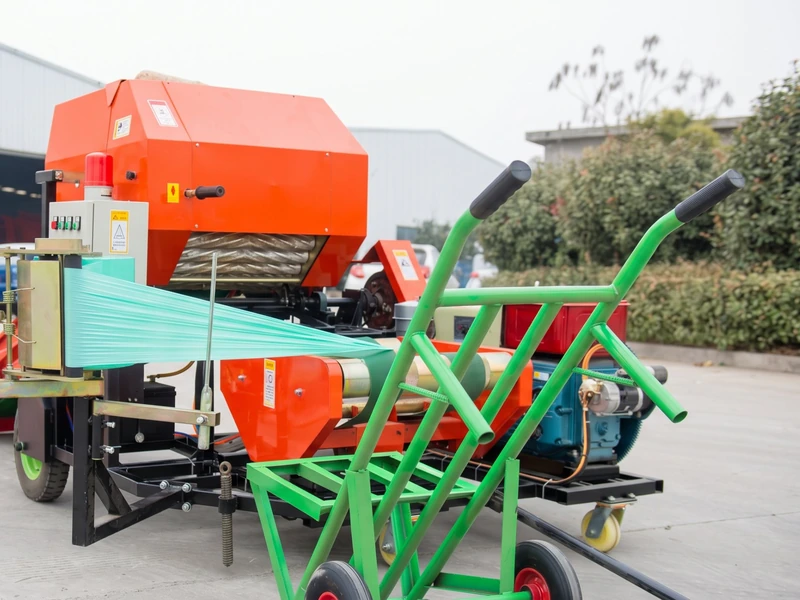
Diesel Engine Drive
22 HP diesel
An on-board diesel engine makes the baler fully independent of the grid. Roll it to the field edge or the forage heap and bale wherever the crop is, at harvest speed.
- Off-grid farms and remote villages
- Contractors baling for several farms
- Areas with frequent power cuts
Tractor PTO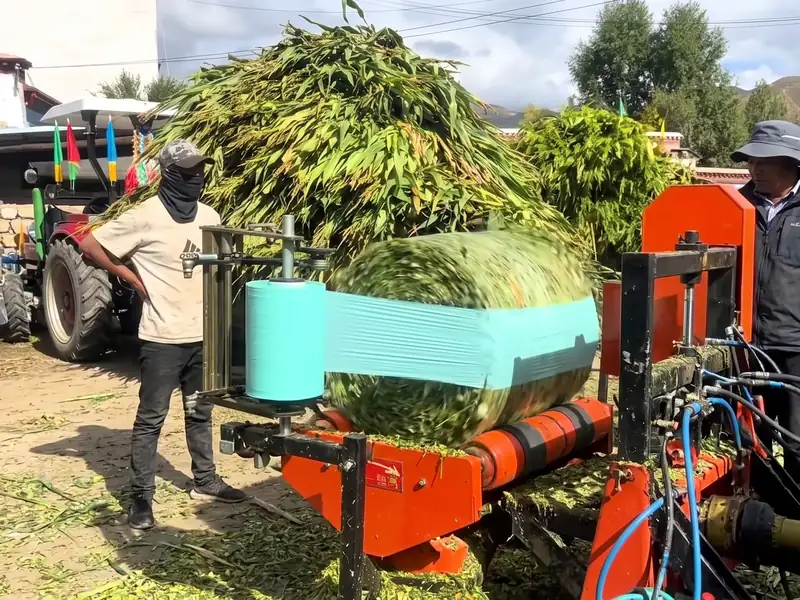
Tractor PTO Drive
30 HP tractor
Use the tractor you already own — no extra engine to buy or service. Farms running a tractor chaff cutter can chop and bale with the same tractor.
- Farms that already own a 30 HP+ tractor
- Seasonal silage campaigns
- Works wherever your tractor can go
Not sure which drive suits you? Tell us your power supply (voltage and phase, or tractor model) and how many bales you need a day. We will match the drive and confirm everything in your quotation.
For Field Baling
Match a Baler to My Tractor
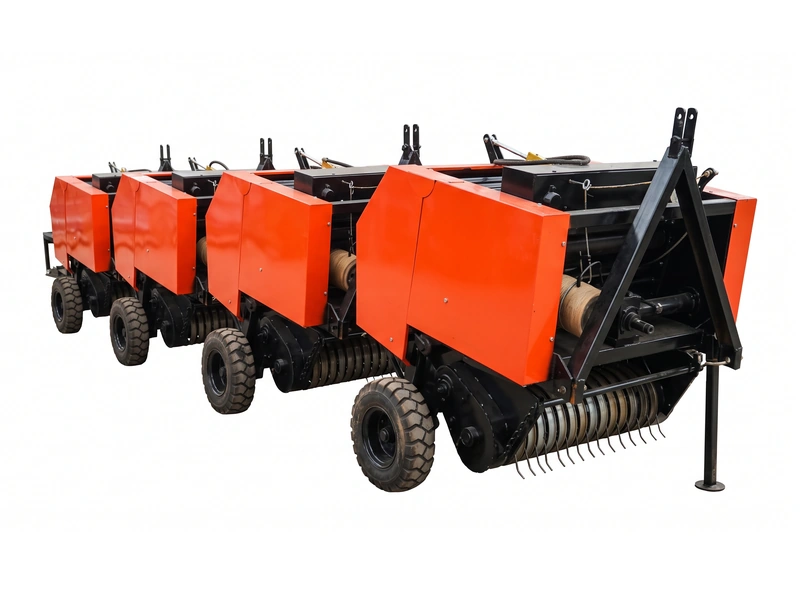
Tractor PTO Pickup Round Baler
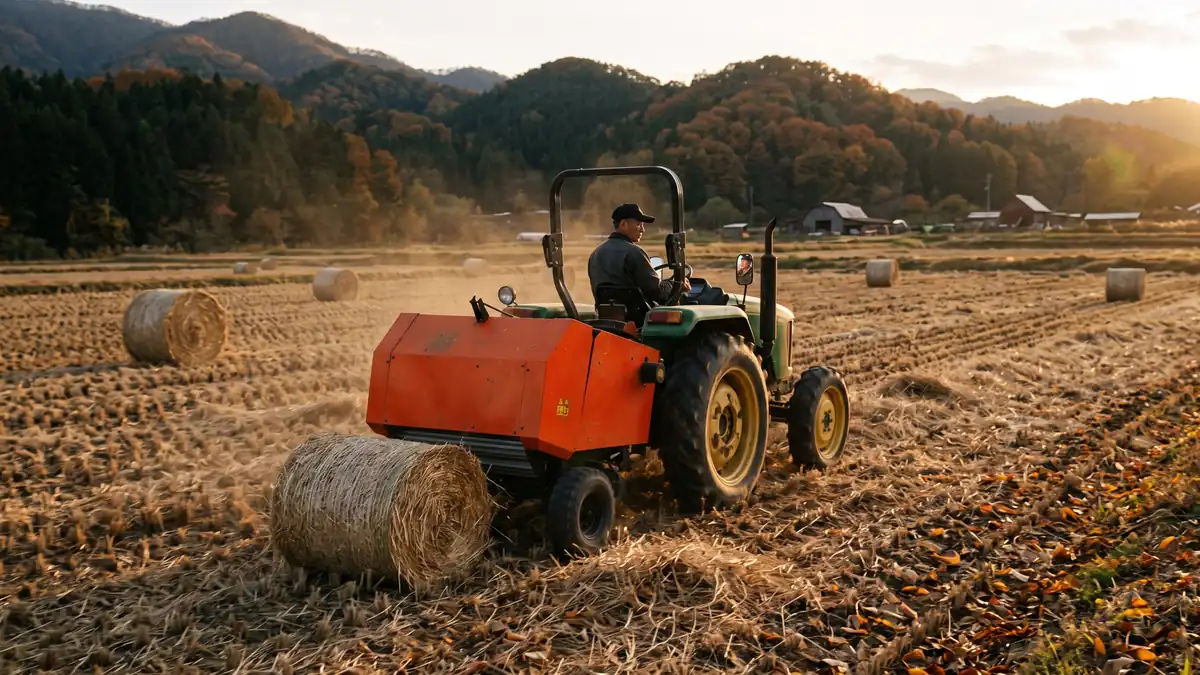
Baling dry straw or hay straight off the field? Our pickup round baler hitches to your tractor’s three-point linkage and runs from the PTO. Spring tines lift the windrow as you drive, the chamber rolls it into a compact round bale, and the bale is tied with twine and dropped behind you — no gathering by hand.
It makes neat, easy-to-carry bales of wheat straw, rice straw and hay for winter feed, bedding or sale. If you also want silage, chop the green crop and bale it on the FC-585, which wraps every bale in film.
| FC-585 Baler & Wrapper | Pickup Round Baler | |
|---|---|---|
| Works | Stationary, fed by conveyor | Moving, picks up the windrow |
| Material | Chopped or kneaded green forage | Dry straw and hay |
| Finish | Bound and film-wrapped silage bale | Twine-tied dry bale |
| Power | Electric, diesel or tractor PTO | Tractor PTO, three-point hitch |
From Field to Feed Trough
Where the Silage Baler Fits in Your Silage Line
Baled silage is only as good as the forage going in. Here is the full chain we supply, from standing crop to sealed bale. For a complete plan sized to your herd, see our silage preparation solution.
- Step 1
Harvest
Cut whole-plant corn, sorghum or grass at the right maturity and moisture.
Forage harvester - Step 2
Chop
Cut stalks and grass into short, even pieces that pack tightly in the bale.
Chaff cutter - Step 2 · Option
Knead
Shred tough, dry stalks into soft silk forage for straw silage that animals eat completely.
Straw kneading machine - Step 3 · This machine
Bale & Wrap
The FC-585 compresses, binds and film-wraps each 70 kg bale on the spot.
See specifications - Step 4
Stack & Store
Lift and stack wrapped bales gently with a bale grab so the film stays intact.
Grass loader
Materials & Applications
What You Can Bale — and Who Bales It
The FC-585 bales chopped or kneaded forage at 50–70% moisture, and it handles dry or fresh grass too. Crop residues that used to be burned or left to rot become saleable, storable feed.
- Whole-plant corn silage
- Green corn stalks
- Alfalfa
- Napier / elephant grass
- Reed
- Straw for treated (microbial) silage
- Fresh & dry grass
- More forage materials
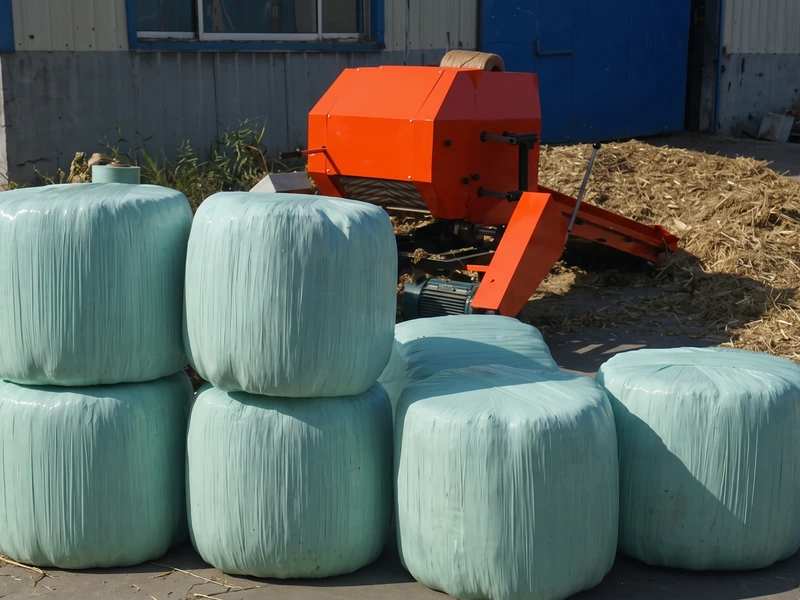
Dairy & Beef Farms
Make silage when the crop is green and feed the same quality all through the dry season. Bales are opened one at a time, so there is no exposed pit face going off. Plan the rest of your ration with our dairy farm feed preparation guide.
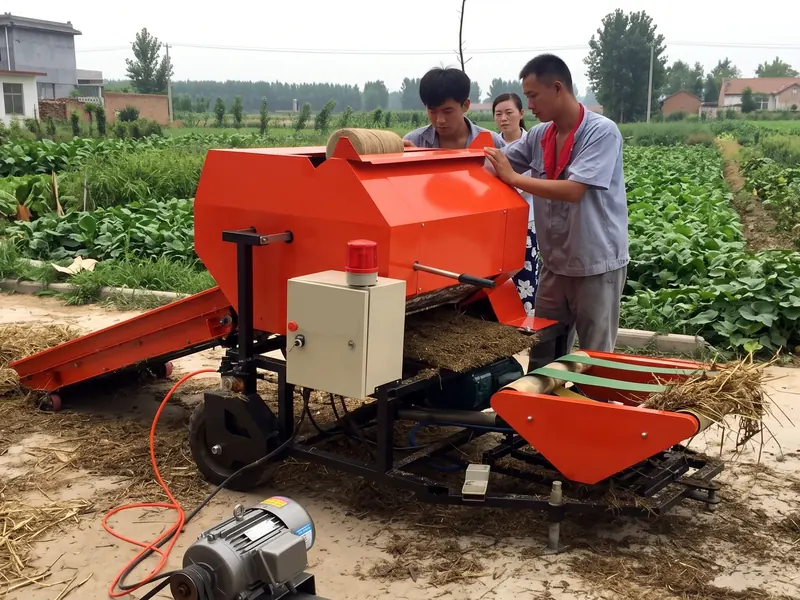
Silage Bale Business
A 70 kg sealed bale is easy to weigh, load on a pickup and sell to smallholders who cannot make their own silage. One FC-585 is a practical way to start a village silage business.
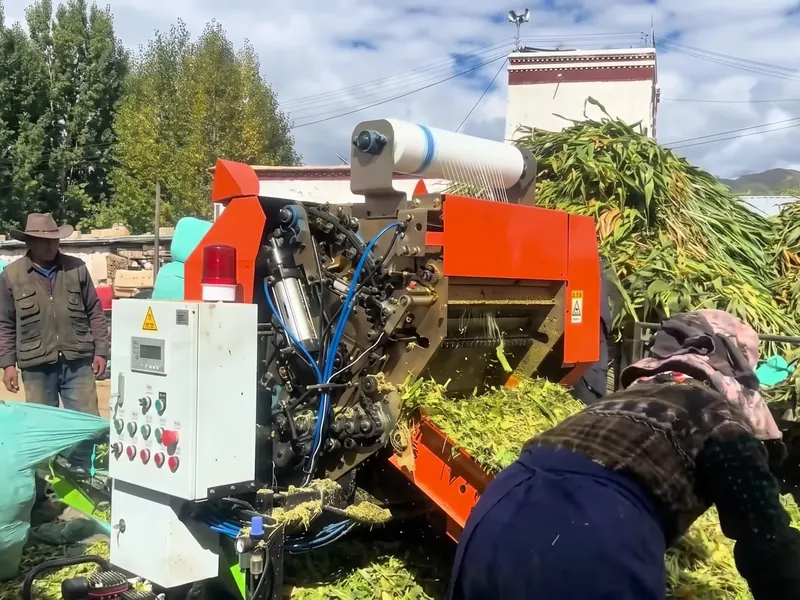
Cooperatives & Contractors
On its own wheels, the baler moves between members’ farms or sits at the field edge during harvest, turning each farm’s crop into bales the same day it is cut.
Technical Parameters
FC-585 Silage Baler Specifications
The key figures for planning your power supply, daily output and floor space, all in one place.
- Ø550 mmRound bale size
- 70 kgBale weight
- 45–120 sTime per bale
- 50–70%Forage moisture
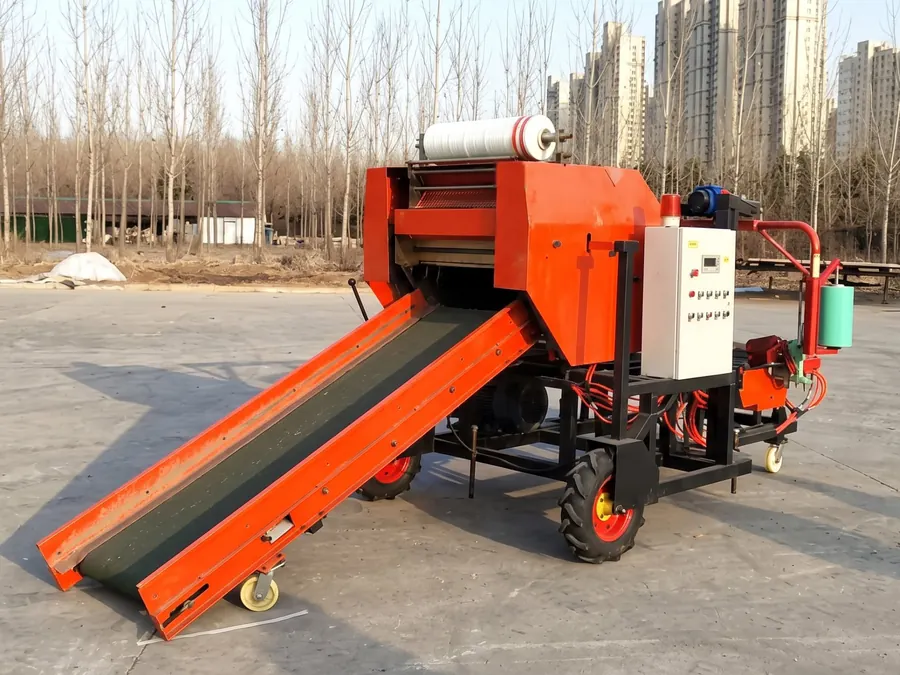
FC-585 Baler & Wrapper
Baling chamber, net or twine binder, film wrapper and feed conveyor on one wheeled frame, controlled from a single cabinet. Supplied with electric motor, diesel engine or tractor PTO drive.
Get the Full Spec SheetFC-585 Technical Parameters
| Bale & Output | |
|---|---|
| Model | FC-585 |
| Machine type | Stationary round silage baler with film wrapper |
| Bale size | 550 × 550 mm (round) |
| Bale weight | 70 kg |
| Baling time | 45–120 s per bale (about 30–80 bales per hour) |
| Forage moisture | 50–70% |
| Binding / wrapping | Net or twine binding; stretch-film wrapping |
| Power Options | |
| Electric motor | 5.5 kW (or run from a 10 kW generator) |
| Diesel engine | 22 HP |
| Tractor PTO | 30 HP tractor |
| Dimensions & Weight | |
| Overall dimensions (L × W × H) | 1800 × 1150 × 1000 mm |
| Machine weight | 380 kg |
| Supply | |
| Delivery time | 3–4 weeks |
| Packing | Seaworthy wooden case |
Baling time depends on the forage type, chop length and moisture. Specifications may be refined as we improve the design; your quotation confirms the exact configuration.
Get Better Silage Bales
Four Rules for Bales That Keep
A good baler does half the job; the rest is how you prepare and handle the forage. These points follow university forage extension advice. New to silage? Start with our guide on how to make silage.
50–70%
Bale at the Right Moisture
Stay inside the FC-585’s working range. Very wet forage leaks and ferments poorly, while forage much drier than about 40% moisture packs loosely and may not ferment at all.
Short
Chop Short & Even
Evenly chopped or kneaded forage packs into a heavier, tighter bale with less trapped air. Keep the chaff cutter blades sharp for a clean, even cut.
4+
Use Enough Film
Apply at least four layers of stretch film, pre-stretched about 50–70%. Use six or more layers if bales will be moved or trucked after wrapping, or the forage is stemmy.
Fast
Wrap Without Delay
Every hour a bale waits unwrapped, air keeps it heating. The FC-585 wraps each bale as soon as it is formed, so fermentation starts sealed.
Sources: University of Kentucky Forage Extension – How much plastic needs to be applied? · University of Georgia Extension – Baled Silage FAQ · Dairy Australia – Reducing silage waste in wrapped bales
Factory, Shipping & Support
Built in Our Workshop, Delivered to Your Farm
Every baler is assembled and run-tested before it leaves, packed for the sea and backed by spare parts for as long as you use it.
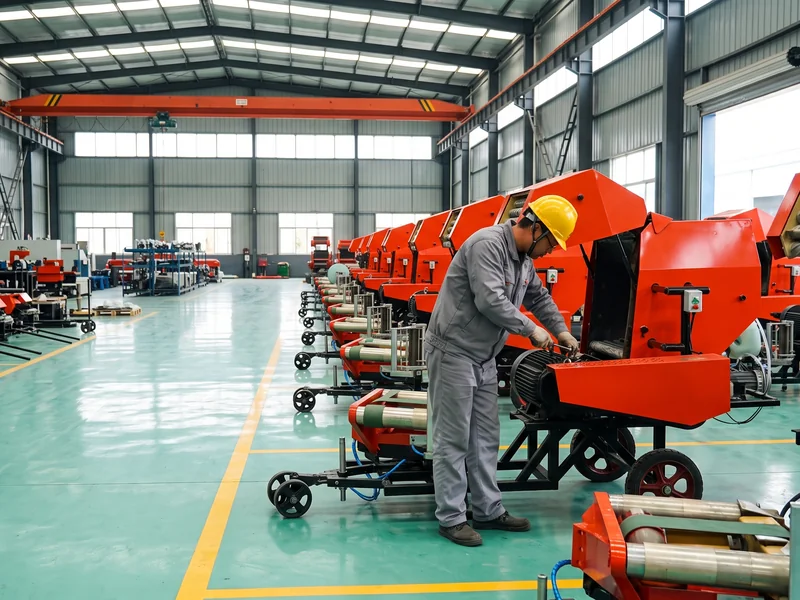
Assembled & Inspected
Drives, chains and rollers are checked and adjusted on the line before each machine is signed off.
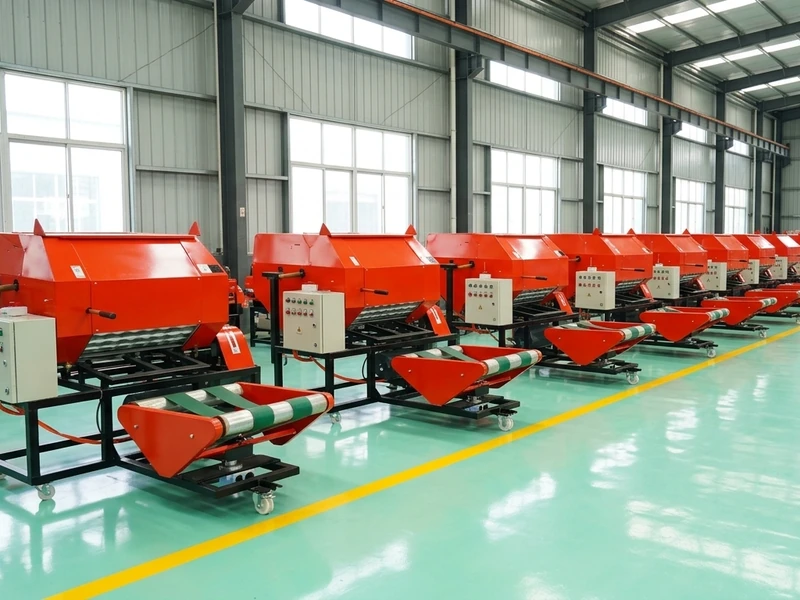
Batch Production
Balers are built in batches, so dealers and cooperatives can receive several units on one schedule.
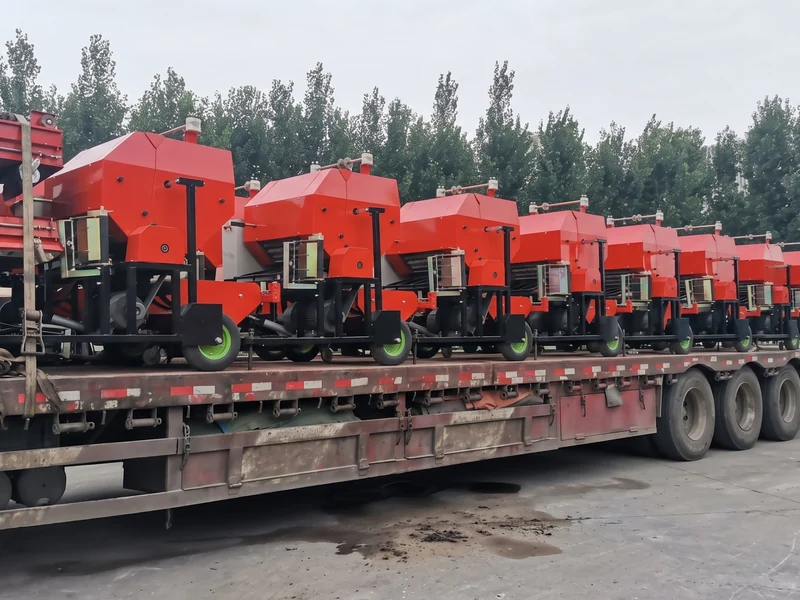
Dispatched to Port
Machines leave in seaworthy wooden cases and are tracked until they reach your destination port.
- 3–4 Weeks
Typical delivery time from order confirmation.
- Seaworthy Packing
Wooden-case packing protects the machine on long sea routes.
- Lifetime Spare Parts
Quality, fairly priced parts for every machine bought from Golden Machinery.
FAQ
Silage Baler FAQ
Straight answers to the questions buyers ask before ordering a silage baler and wrapper.
What does the FC-585 silage baler machine do?
It is a stationary mini round baler with a built-in wrapper. Chopped forage fed onto the conveyor is rolled into a 550 mm round bale, bound with net or twine, then wrapped in stretch film on the same machine, so each bale is sealed and ready to ferment as soon as it is made.
What materials can it bale?
Whole-plant corn silage, green corn stalks, alfalfa, Napier grass, reed and straw for treated (microbial) silage, as well as fresh or dry grass. For silage, keep forage moisture at 50–70%. See what a chaff cutter can process for preparing each material.
How heavy is each bale, and how many bales per hour?
Each bale is 550 × 550 mm and weighs about 70 kg. One bale takes 45–120 seconds depending on the forage, which works out at roughly 30–80 bales per hour.
Do I need to chop the forage before baling?
Yes. The FC-585 is fed from a pile, so whole stalks should first be cut with a chaff cutter machine or shredded with a straw kneading machine. Short, even pieces pack into heavier, airtight bales.
Should I choose the electric, diesel or tractor PTO version?
Choose the 5.5 kW electric motor if you have reliable mains power, the 22 HP diesel engine for off-grid sites or contract work, and the PTO drive if you already own a tractor of 30 HP or more. The baling and wrapping unit is identical on all three. Compare them in power options.
How many layers of film should each bale get?
Forage extension specialists recommend at least four layers of stretch film, pre-stretched about 50–70%, and six or more layers if bales will be transported after wrapping or the forage is stemmy. See our bale quality rules.
What is the difference between the FC-585 and the pickup round baler?
The FC-585 stands still and bales chopped green forage, then wraps it for silage. The pickup round baler is pulled by a tractor, collects dry straw or hay from the windrow and ties it with twine, without film wrapping.
How is it shipped, and what support do I get?
Every machine is tested before dispatch and packed in a seaworthy wooden case. Typical delivery time is 3–4 weeks, and Golden Machinery supplies quality, fairly priced spare parts for as long as you run the machine.
Complete Your Line
Machines That Work Before and After the Baler
Prepare the forage, bale it, then move the bales. Source the whole silage line from one manufacturer, with one point of contact for parts and support.
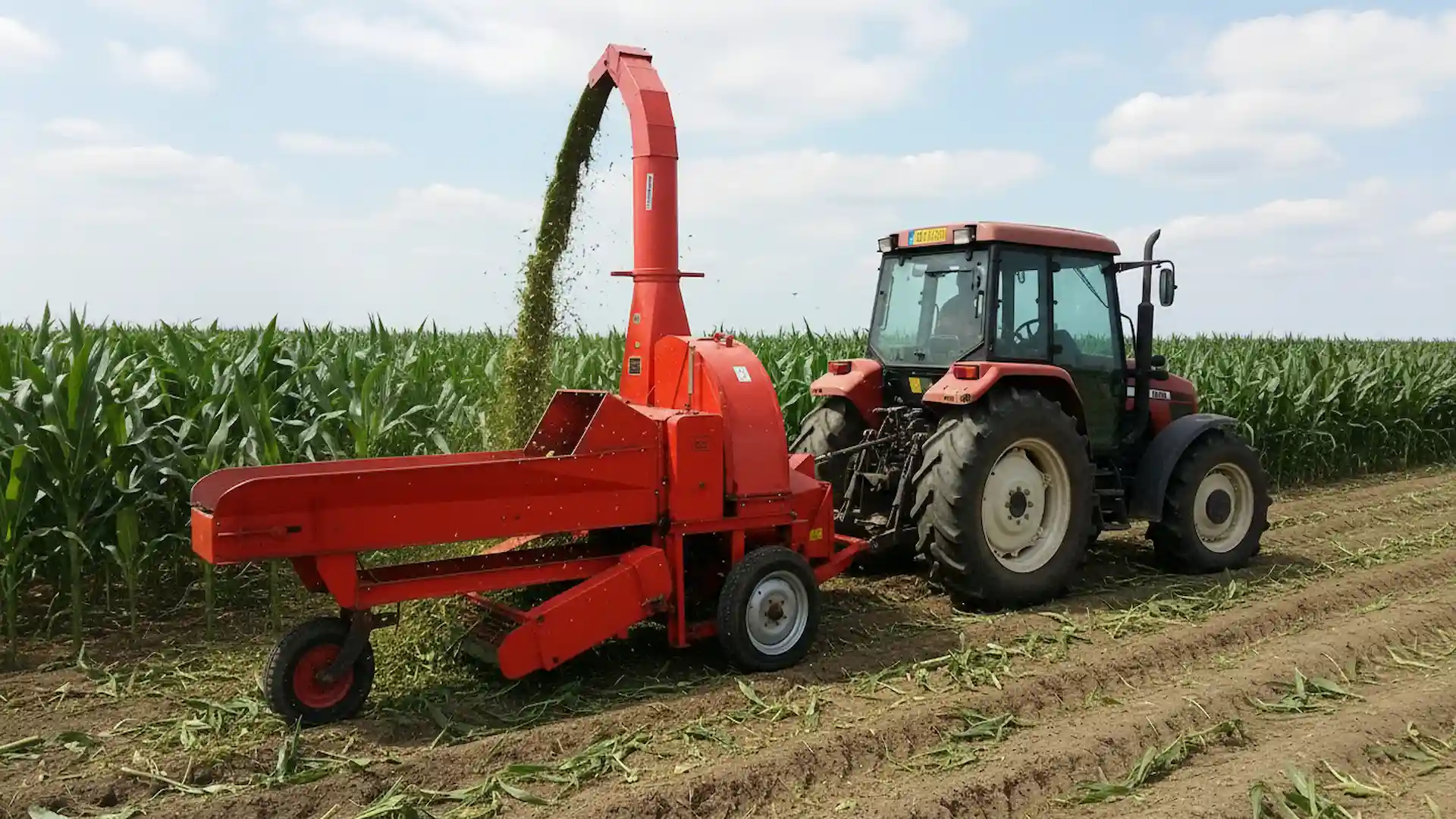
Chaff Cutter Machine
Chop corn, grass and alfalfa into short, even pieces that pack into dense silage bales.
View chaff cutters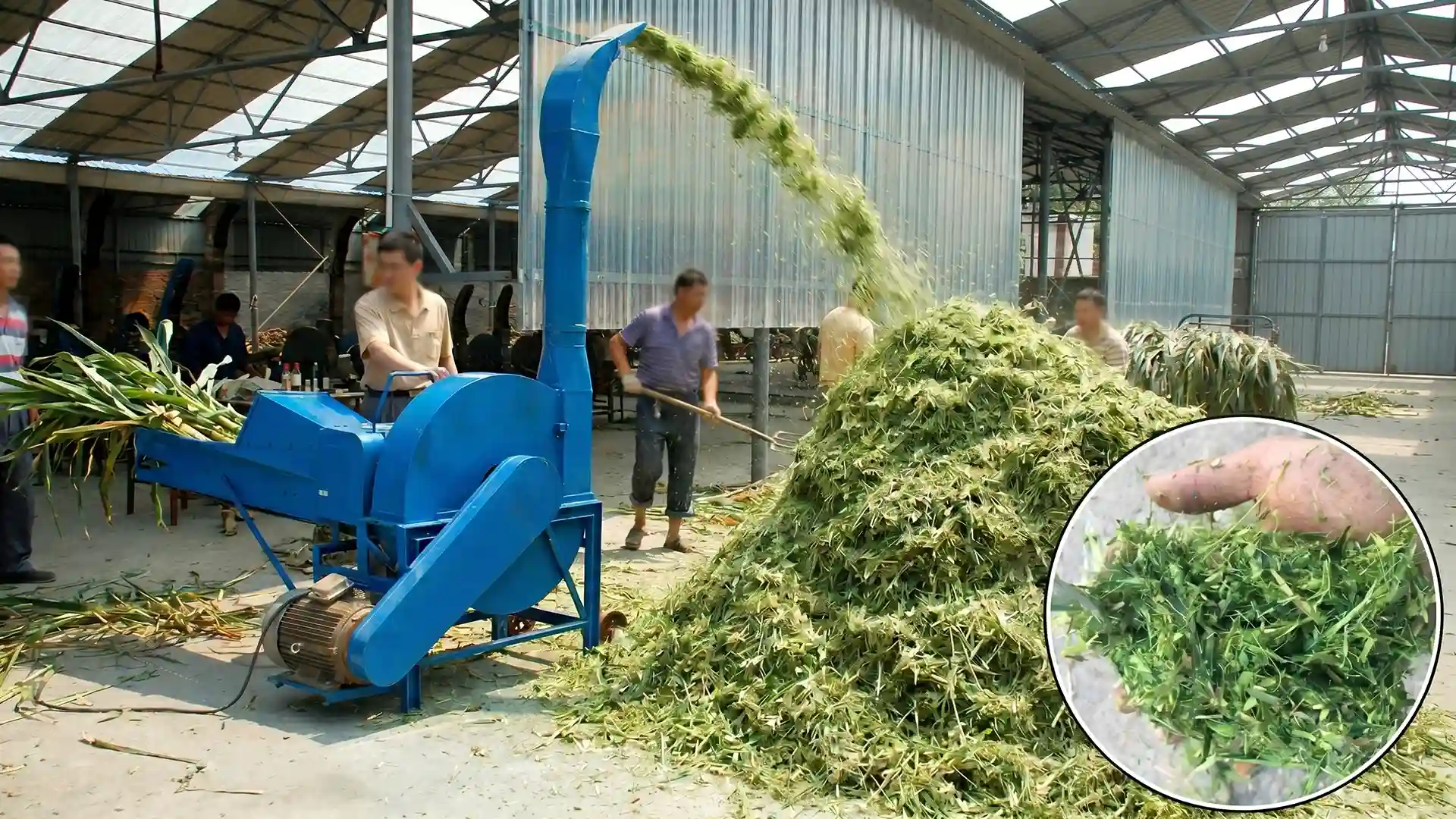
Straw Kneading Machine
Shred hard corn stalks into soft silk forage, ready to bale as straw silage.
View kneading machines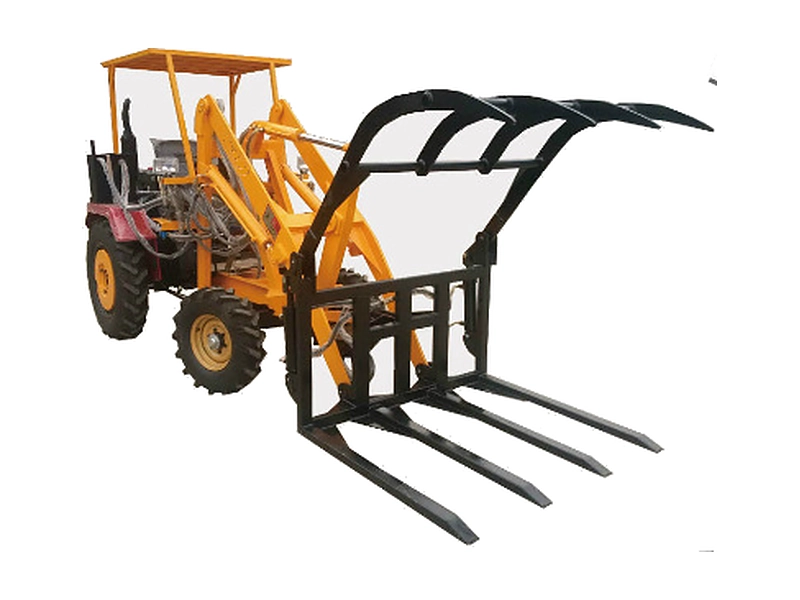
Grass Loader
Fit the bale grab to stack and load wrapped bales without tearing the film.
View grass loader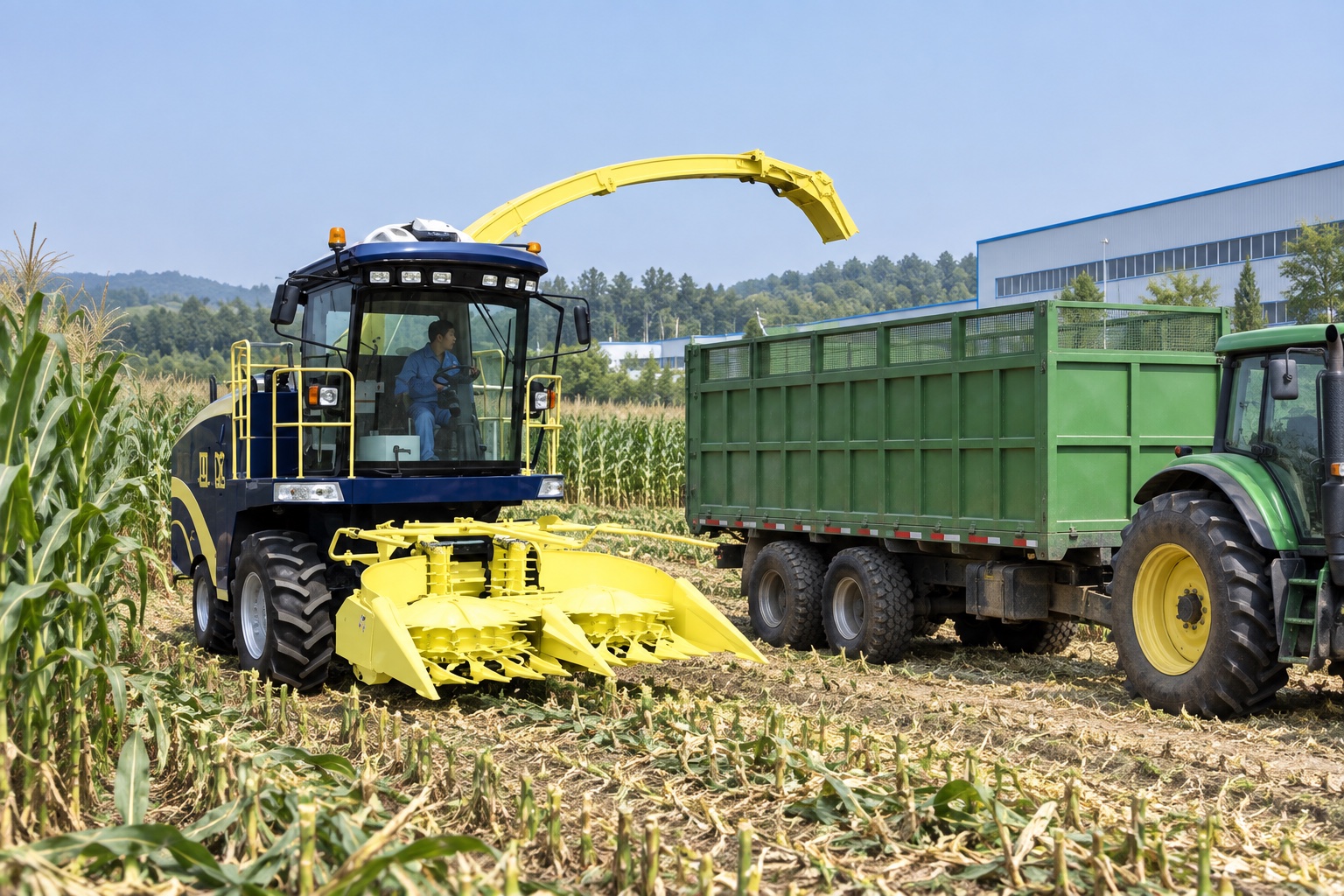
Forage Harvester Machine
Cut and chop standing corn in one pass, then bale the chopped crop on the FC-585.
View forage harvester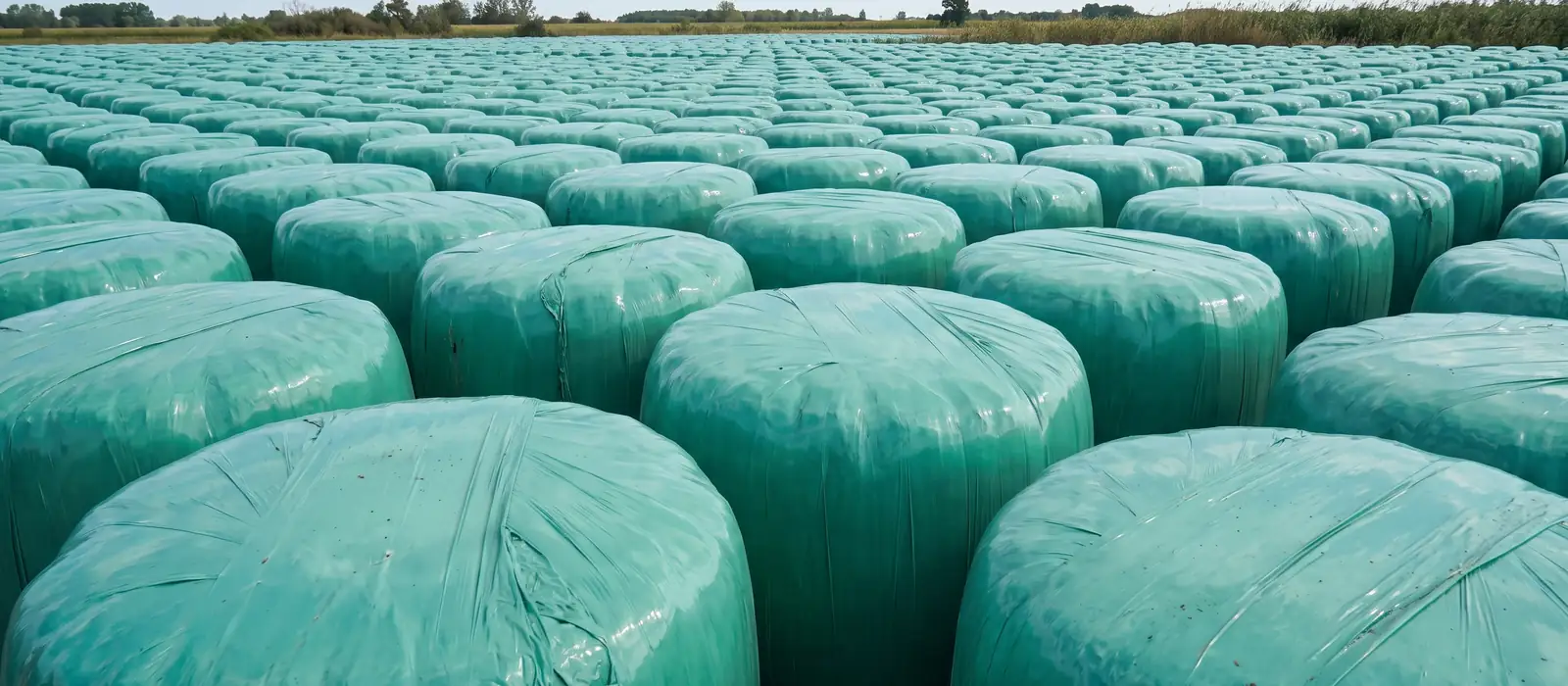
Contact Our Export Team
Turn This Season’s Crop Into Year-Round Feed
Tell us what you want to bale, how many bales a day you need and what power you have on site. A Golden Machinery engineer will recommend the right FC-585 configuration and send a clear, itemised quotation.
Reply within 1 working day
Direct contact with an engineer, not a sales script.
3–4 week delivery
Factory-tested and packed in a seaworthy wooden case.
Lifetime spare parts
Quality, fairly priced parts for as long as you run the machine.
Request Your Quotation
Fields marked * are required.