
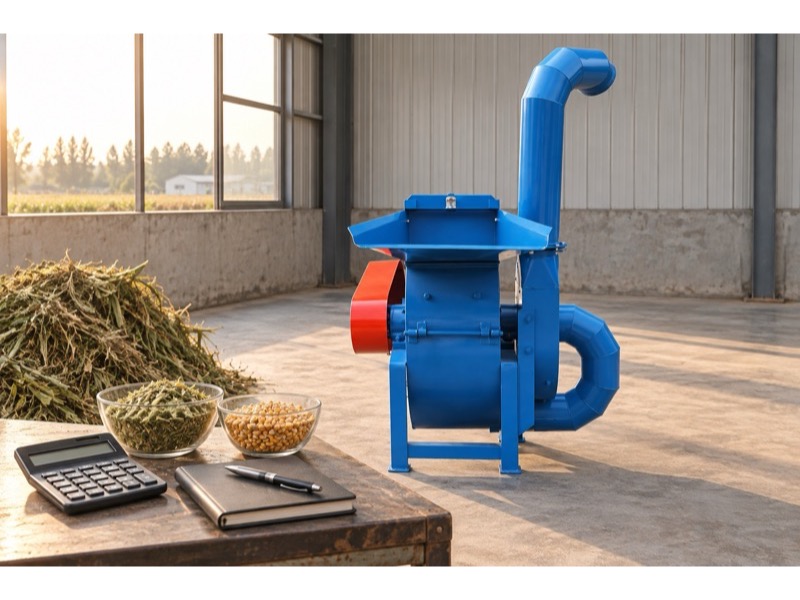
Grass Crusher Machine: A Practical Way to Save Money
A Grass Crusher Machine can lower daily feeding costs when verified labor and feed savings exceed added processing expenses. Confirm whether your job needs forage chopping, grain grinding, or both; each requires verified machine functions.
At evening feeding, workers may still be cutting stalks while spilled forage collects beside full baskets. Faster equipment looks appealing, but its electricity, cleaning, and wear parts also cost money. Measure your current routine, test suitable equipment, and compare complete daily costs before deciding what you will save.
Where can a Grass Crusher Machine cut daily costs?
A Grass Crusher Machine can reduce preparation labor, avoidable feed losses, or purchased processing services when its output suits your farm. Count each saving against a documented starting point rather than applying a general percentage to your feed bill.
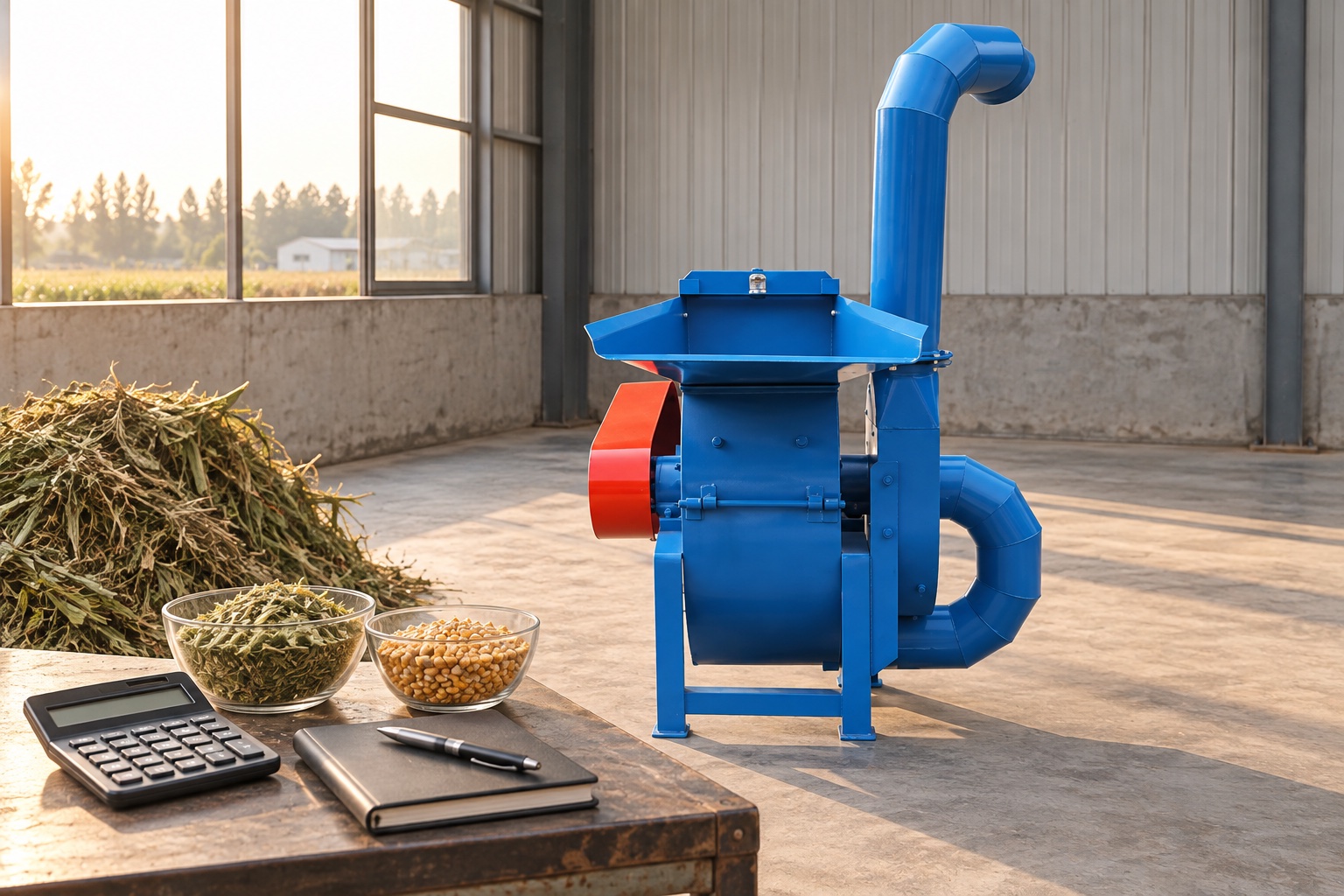
Which expenses can processing realistically change?
Start with costs you can measure. Record preparation time, material lost during handling, outside milling charges, and routine processing expenses. Keep animal numbers and feeding conditions comparable when reviewing a change.
- Identify which task currently costs money.
- Record actual forage and grain quantities.
- Separate avoidable losses from planned feed refusals.
- Track additional power, cleaning, and maintenance.
Which Grass Crusher Machine savings need separate records?
Keep time released for other work separate from cash no longer spent. Likewise, a better-looking feed sample does not establish lower purchases or improved animal performance.
| Potential benefit | Evidence needed |
|---|---|
| Lower labor spending | Fewer paid hours for equivalent work |
| Less feed purchased | Documented reduction without underfeeding |
| Reduced outside processing | Charges actually displaced |
Key Takeaway: Name the expense before claiming a saving. A machine can improve your routine while producing less cash benefit than a quick sales calculation suggests.
How do you measure forage losses worth reducing?
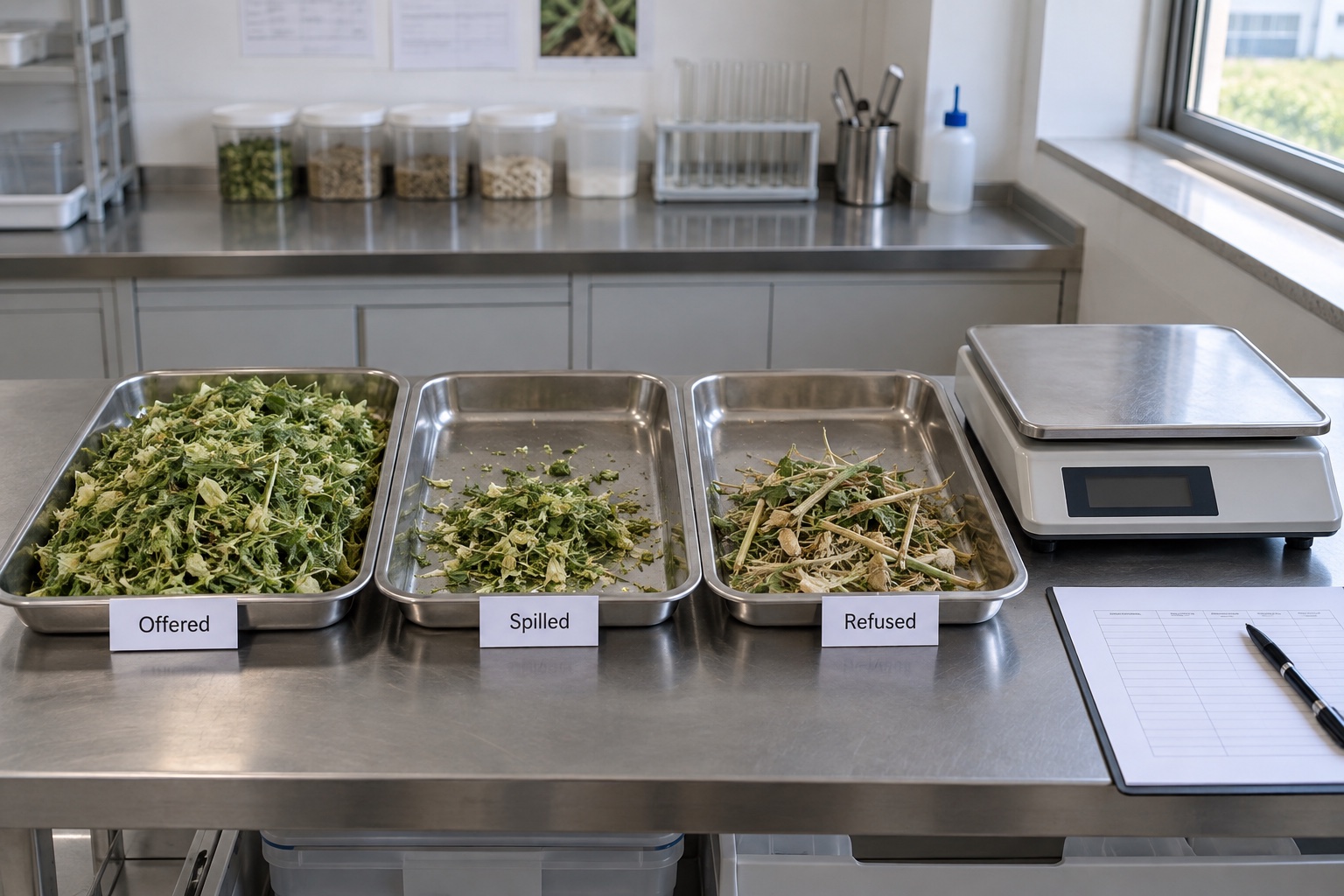
Your Grass Crusher Machine savings estimate should use measured avoidable losses, with moisture differences accounted for when comparing forage. Track offered feed, recovered refusals, and spillage separately so you do not count the same material twice.
What belongs in a useful feed-loss record?
Weigh losses before assigning a value. Use comparable observation periods and note crop condition, animal group, and feeding method. Our material compatibility guide explains why fresh grass and dry stalks need different processing checks.
- Record feed offered and what remains.
- Measure spillage separately from trough refusals.
- Use a consistent moisture or dry-matter basis.
- Note spoilage and handling problems requiring other fixes.
Does every refusal represent recoverable money?
No; some feeding systems intentionally leave a controlled amount of feed, and spoilage requires its own investigation. Value only a defensible reduction in costs, with your feeding adviser checking that intake and ration provision remain suitable.
| Observation | Question before counting savings |
|---|---|
| Long stems remain | Is sorting contributing to refusal? |
| Feed spills during transfer | Would a collection change help? |
| Feed spoils in storage | Does storage need correction? |
Key Takeaway: Match each loss with its cause. Cutting equipment may address handling or particle size, while poor storage and unsuitable feeding arrangements need separate attention.
What should a Grass Crusher Machine produce for cattle and sheep?
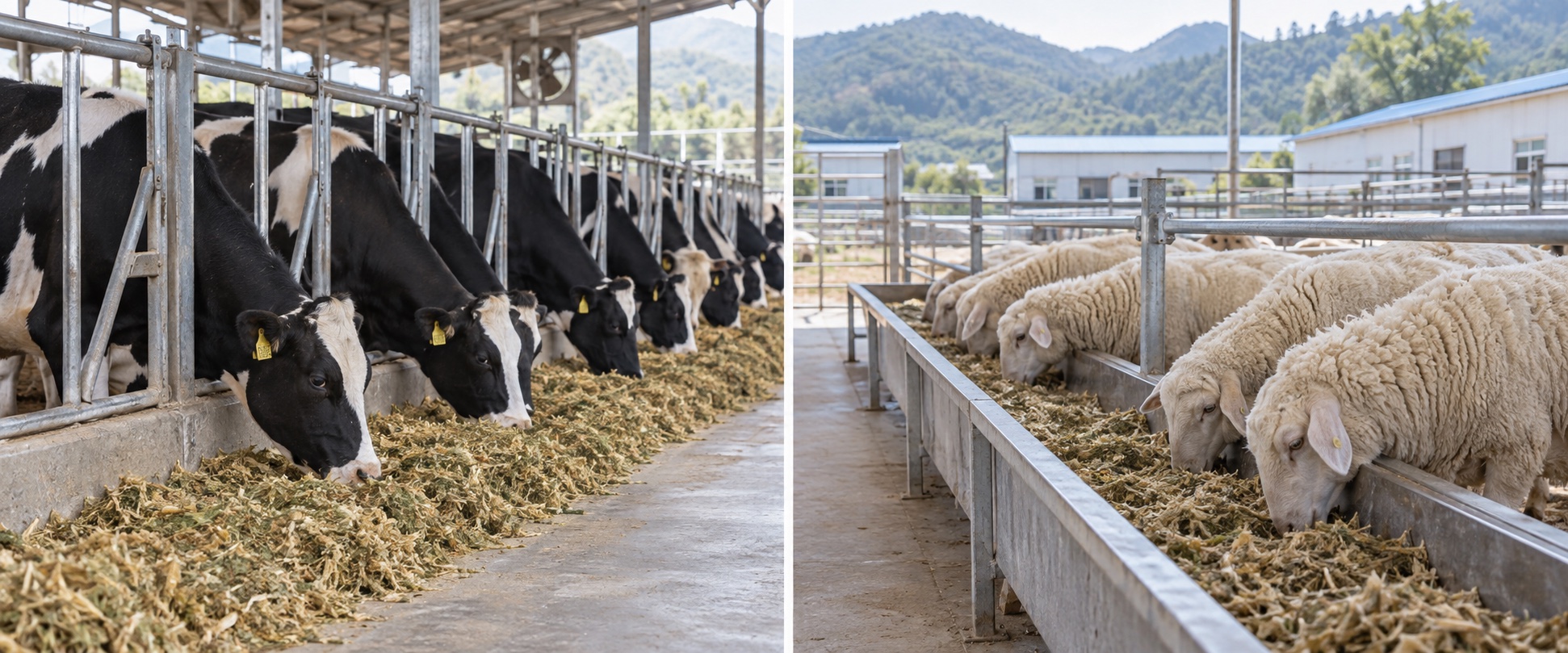
A Grass Crusher Machine should produce forage that meets your cattle or sheep ration requirements, with enough useful fiber remaining. Agree output criteria with your feeding adviser rather than treating finer particles as an automatic improvement.
Why does particle distribution matter?
Check what animals receive after mixing. Penn State’s forage particle guidance explains how particle distribution affects dairy-cow rumination and ration sorting. A suitable setting depends on your whole feeding system, including subsequent handling and mixing.
- Inspect samples from several points in a batch.
- Record long pieces and excessive fines.
- Compare offered feed with remaining material.
- Keep cattle and sheep ration specifications separate.
Can processing replace a balanced feeding plan?
No; size reduction does not supply missing protein, minerals, or energy. Crop quality, animal age, production stage, and total ration still govern whether feed meets your animals’ needs.
| Review area | Practical check |
|---|---|
| Physical output | Suitable fiber and particle distribution |
| Ration suitability | Species and production-stage requirements |
| Farm result | Intake, refusals, and adviser review |
Key Takeaway: Ask for useful feed quality before chasing throughput. Shorter forage earns a place in your cost calculation only when it supports an appropriate feeding program.
Can a Grass Crusher Machine prepare feed for pigs?
A Grass Crusher Machine can contribute to pig-feed preparation if its approved functions produce suitable processed ingredients for a formulated ration. Chopping grass alone does not produce complete pig feed or justify replacing balanced feed with forage.
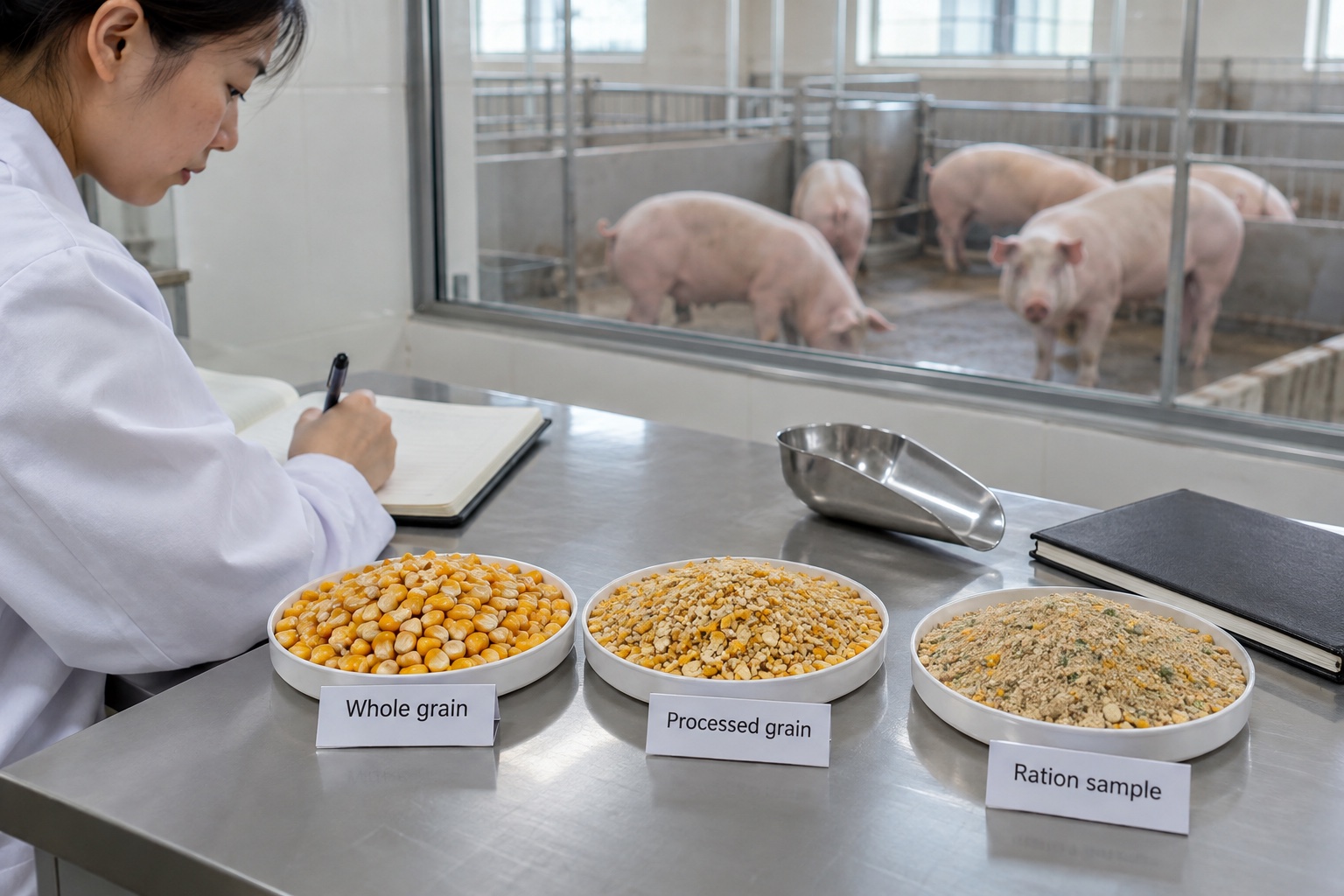
Which function matters when you process cereal grains?
Confirm grinding capability in writing. University of Minnesota guidance on mixing swine feed distinguishes grain processing, ingredient measurement, and proper mixing. Those tasks require appropriate equipment and a formulation suited to your pigs.
- Confirm approved grain types and operating setup.
- Request measured particle-size information where needed.
- Use accurate ingredient weighing and mixing procedures.
- Obtain professional guidance before changing your ration.
Should pig feed always be ground more finely?
No; finer grinding can create handling problems and animal-health concerns discussed in the same guidance. Agree an appropriate particle-size target with your nutrition adviser instead of choosing a screen by appearance.
| Pig-feed requirement | What to establish |
|---|---|
| Processed grain | Verified grinding function and output |
| Complete ration | Suitable formulation and ingredient control |
| Consistent batches | Weighing, mixing, and sampling procedure |
Key Takeaway: Evaluate pig-feed work as a separate application. A successful grass trial cannot demonstrate grain-grinding capability or prove that your resulting ration meets pig requirements.
Can one Grass Crusher Machine chop forage and crush grain?
A Grass Crusher Machine needs explicit approval for both functions before you rely on it for forage chopping and grain crushing. Equipment names and compact size do not establish a second processing capability.
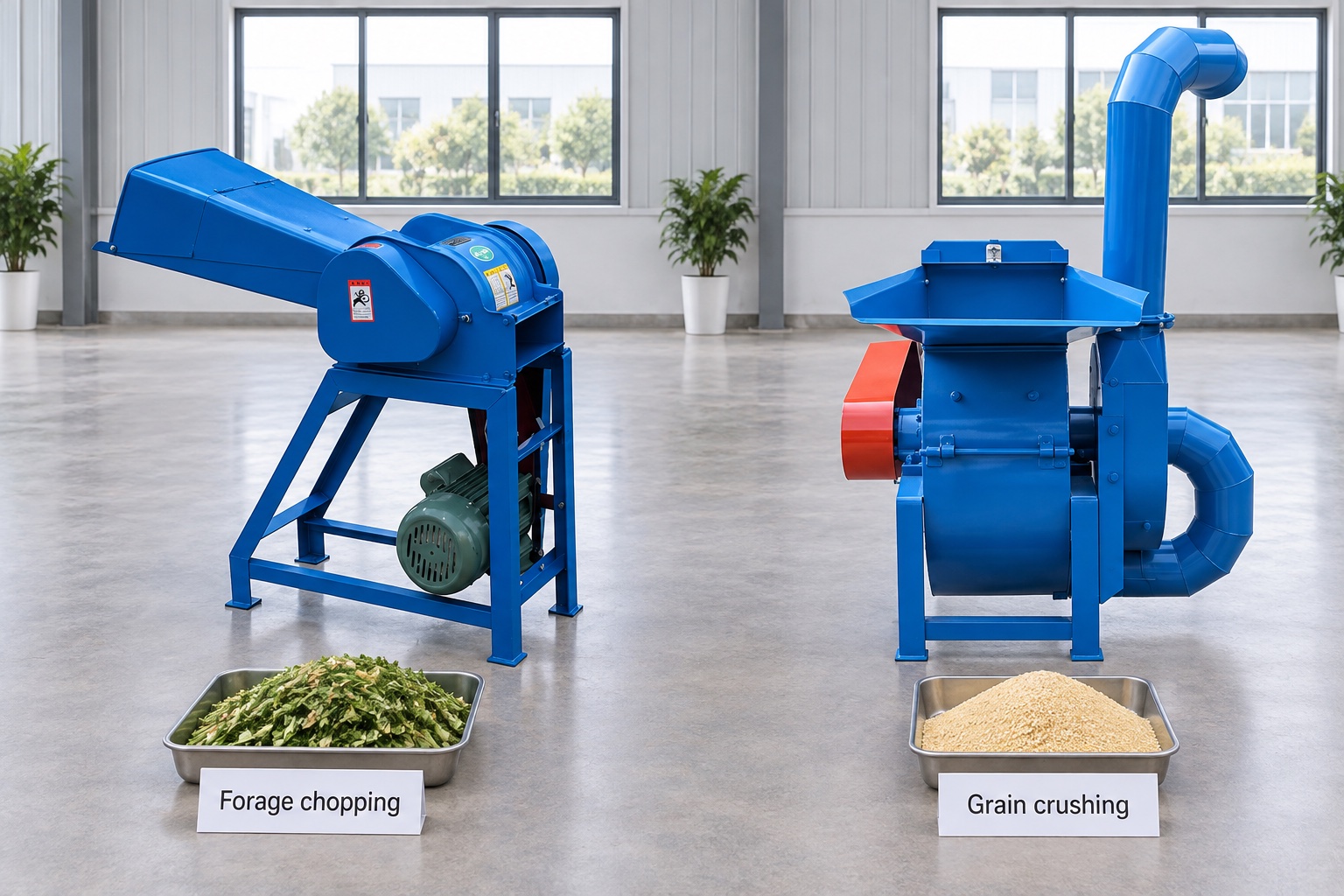
What should you test on a combined machine?
Run each job with its own sample. Some configurations offer multiple functions, while others require separate equipment. Ask about permitted materials, output requirements, changeover, cleaning, and how each function operates.
- Demonstrate your usual forage and grain separately.
- Identify supplied chambers, screens, and accessories.
- Record changeover time and cleaning requirements.
- Confirm instructions for each approved operating mode.
What should a Grass Crusher Machine quotation confirm?
Request a clear list of included components and functions, together with the configuration used during demonstrations. Do not assume a pictured chopper includes a grinding chamber or a suitable motor package.
| Supplier statement | Confirmation to request |
|---|---|
| Chops forage | Representative material and output sample |
| Crushes grain | Approved grain, setup, and trial result |
| Performs both jobs | Included parts and changeover instructions |
Key Takeaway: Buy documented functions, with separate evidence for each task. Combining equipment can simplify a routine only when capacity, cleaning, and scheduling also fit your farm.
How much labor can a Grass Crusher Machine save?
Your Grass Crusher Machine labor saving equals a measured reduction in total person-hours for equivalent preparation work. Include fetching material, loading, collection, changeover, and cleanup when comparing your old and proposed routines.
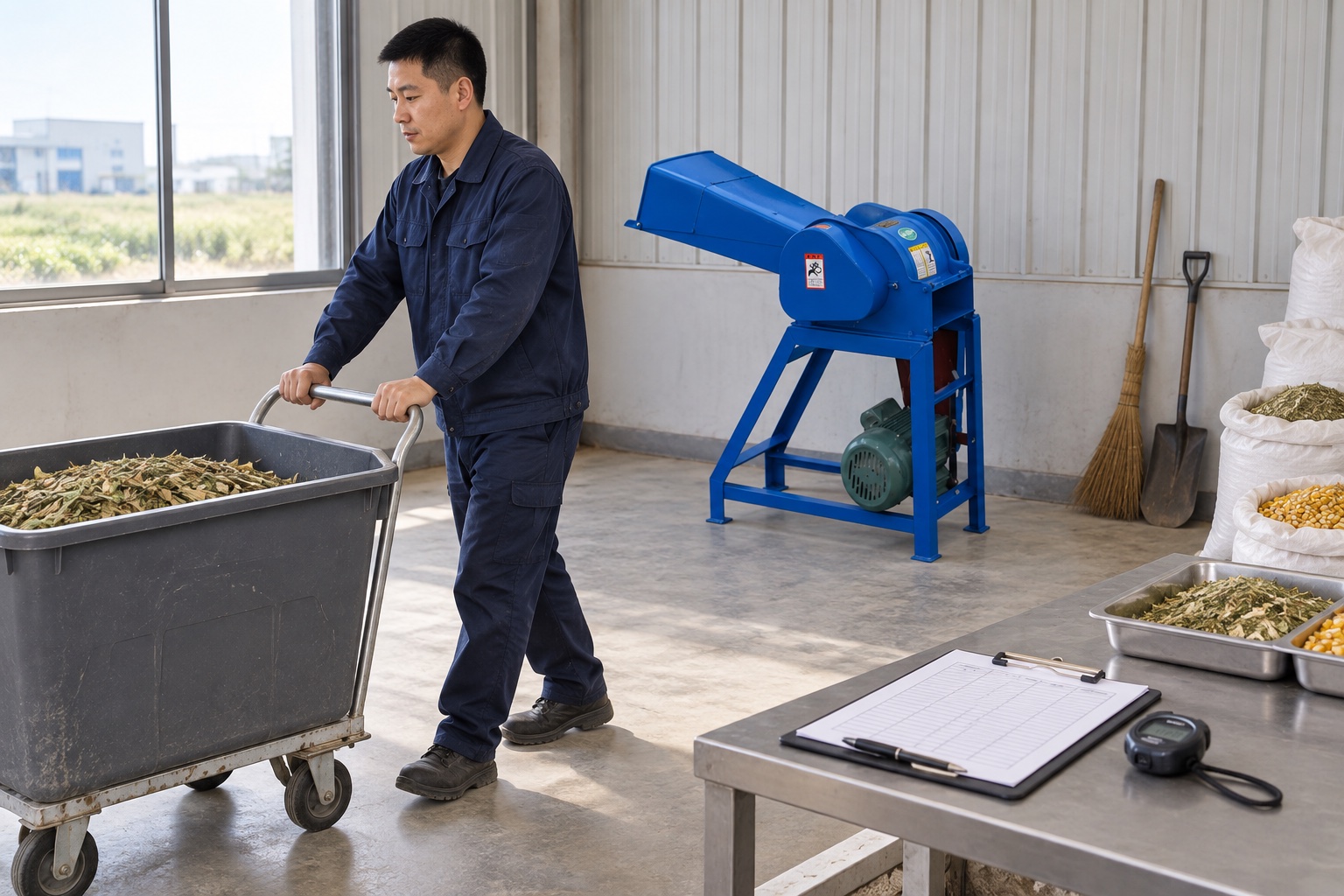
Why should you time more than cutting?
Follow a batch from storage to delivery. Faster chopping may leave basket handling or cleanup unchanged. A practical farm feeding plan helps you identify which stages need attention before buying extra capacity.
- Count everyone helping with each batch.
- Include time spent waiting and transferring feed.
- Record cleanup and equipment changeover.
- Repeat observations under normal working conditions.
When does saved time reduce cash spending?
It reduces cash spending when paid hours or outside service charges actually fall. Time released for other farm jobs has value, but keep that opportunity benefit separate from payroll savings.
| Change observed | How to record it |
|---|---|
| Fewer paid hours | Verified labor-cost reduction |
| Same pay, shorter task | Time available for other work |
| Another helper required | Additional person-hours and cost |
Key Takeaway: Compare complete work routines using person-hours. A fast machine with awkward collection arrangements may deliver less labor benefit than its cutting demonstration suggests.
What does a Grass Crusher Machine cost to run?
A Grass Crusher Machine adds costs for energy, wear parts, servicing, cleaning, and any extra handling it requires. Estimate these alongside ownership costs before comparing your proposed setup with current practice.
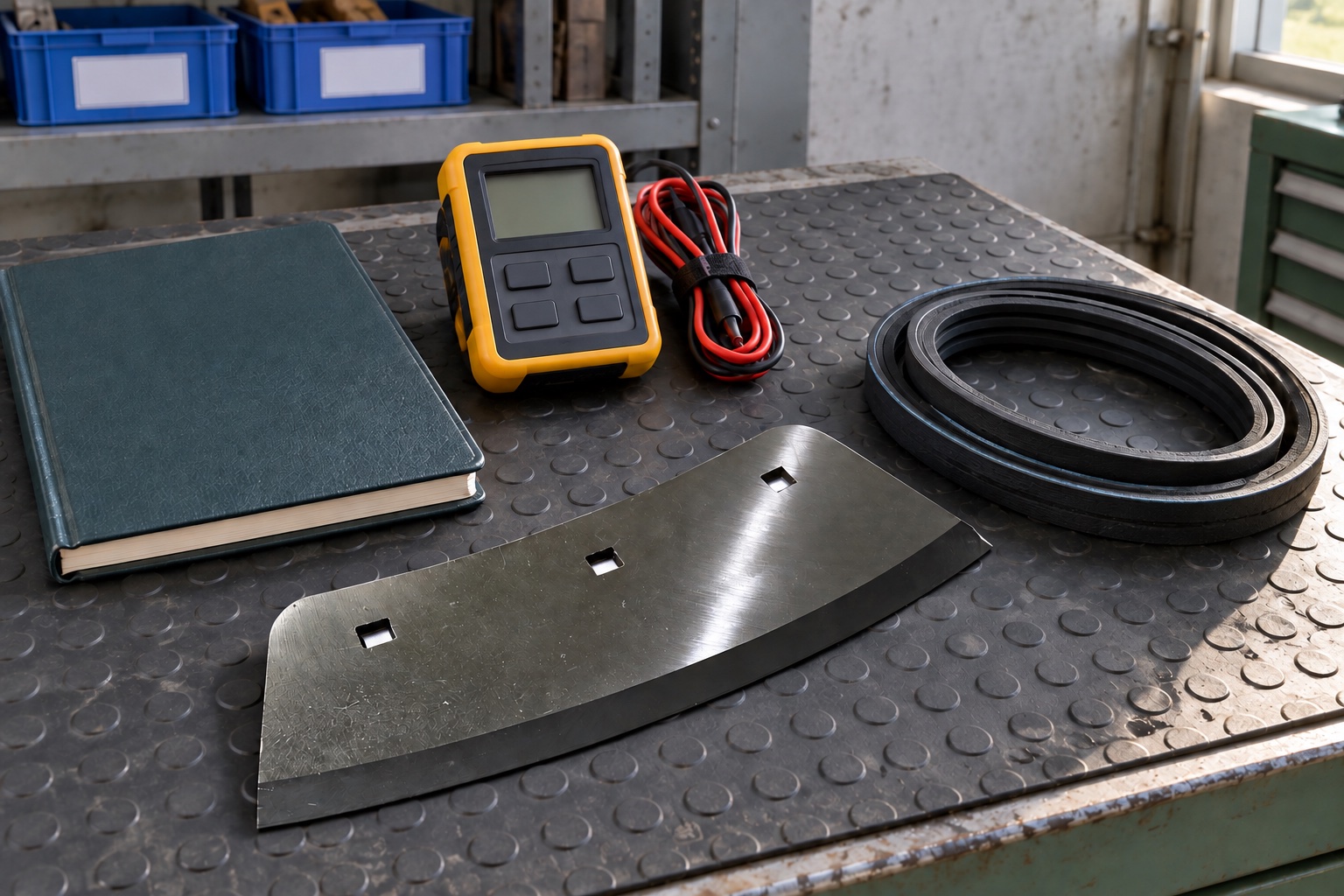
How should you separate daily and ownership expenses?
Keep purchase cost outside your daily running subtotal. Iowa State’s machinery-cost guidance separates operating expenses from ownership costs. Compare alternatives over a stated working period and include costs common to both sides consistently.
- Use measured energy consumption where practical.
- Apply your actual electricity or fuel price.
- Allow for planned servicing and replacement parts.
- Obtain installation, transport, and support costs separately.
Which Grass Crusher Machine parts need a budget?
Ask for prices and maintenance instructions for your model’s knives, hammers, screens, belts, or bearings, as applicable. Record which items it actually contains instead of copying a parts budget from another machine.
| Cost group | Useful input |
|---|---|
| Energy | Measured consumption and local unit price |
| Maintenance | Applicable parts, service schedule, and quotations |
| Ownership | Installed cost and expected working period |
Key Takeaway: Estimate costs for your exact configuration and workload. A low purchase price offers little reassurance when power, accessories, or routine replacement parts remain unspecified.
How do you calculate Grass Crusher Machine payback?
Calculate Grass Crusher Machine simple payback by dividing installed investment by verified net operating savings per working day. A positive result requires savings after added costs; it does not follow automatically from a shorter cutting time.
What does a transparent example look like?
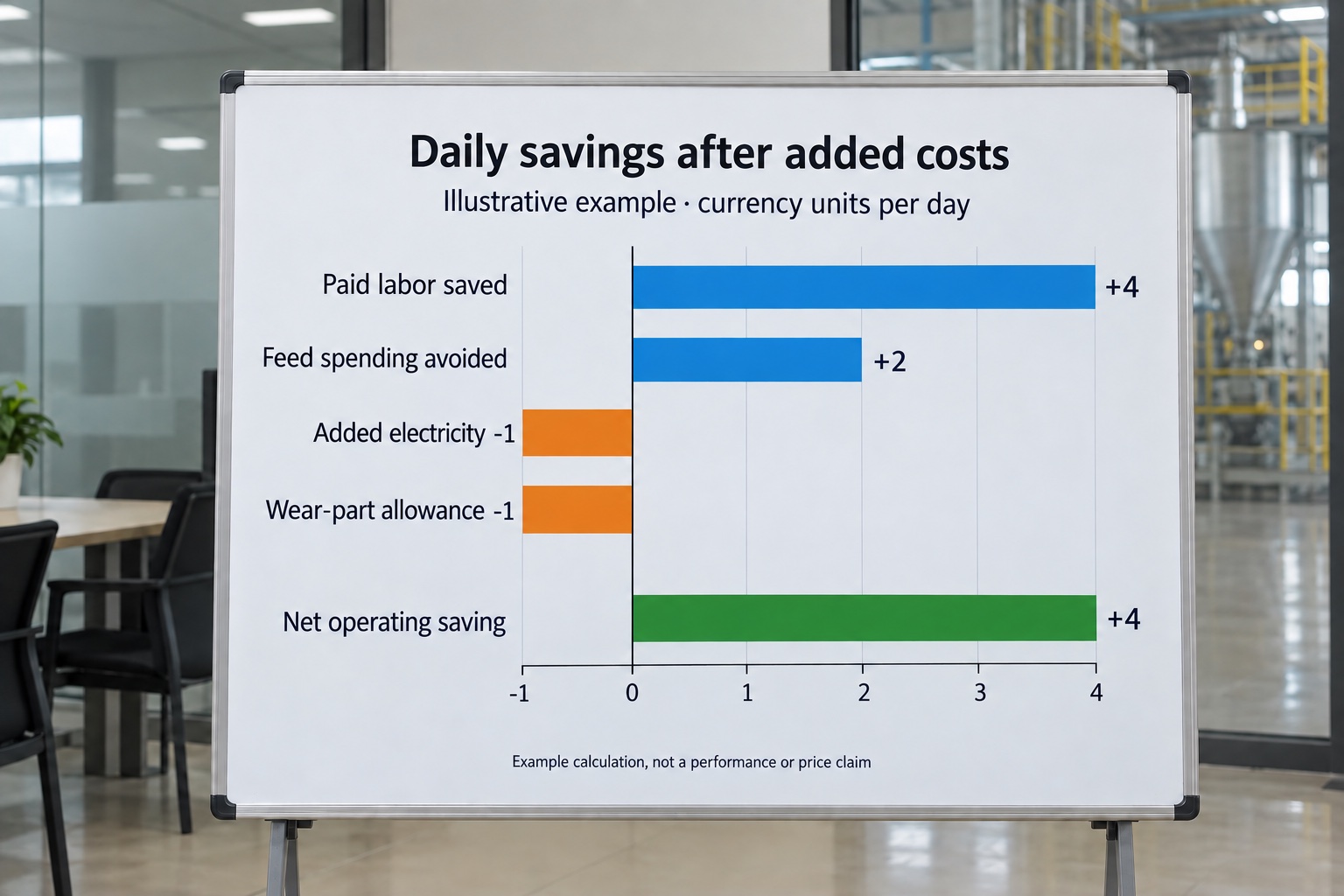
Make every assumption visible before calculating. The example below uses fictional currency units, including four units of reduced paid labor and two units of avoided feed spending. Added electricity and wear-part allowances each cost one unit daily, leaving four units of estimated operating savings.
- Replace example figures with your own records.
- Count only savings you can justify.
- Keep unpaid time benefits outside cash payback.
- Test fewer working days and higher operating costs.
What can a short payback calculation leave out?
An illustrative installed cost of 1,200 units divided by four units daily gives 300 operating days, not calendar days. This simple calculation excludes financing, taxes, resale value, and changing costs; our equipment comparison guide supports a fuller review.
| Illustrative daily change | Currency units |
|---|---|
| Reduced paid labor | +4 |
| Avoided feed spending | +2 |
| Added electricity | −1 |
| Wear-part allowance | −1 |
| Net operating saving | +4 |
Key Takeaway: If paid labor stays unchanged in this example, estimated cash savings fall to zero. Recheck that assumption before treating 300 operating days as an achievable payback.
When should you buy a Grass Crusher Machine?
Buy a Grass Crusher Machine when representative trials, a suitable livestock feeding plan, and a complete cost comparison support your decision. Keep the investment provisional until you confirm required functions, working capacity, and support for your actual materials.
What evidence should accompany an order?
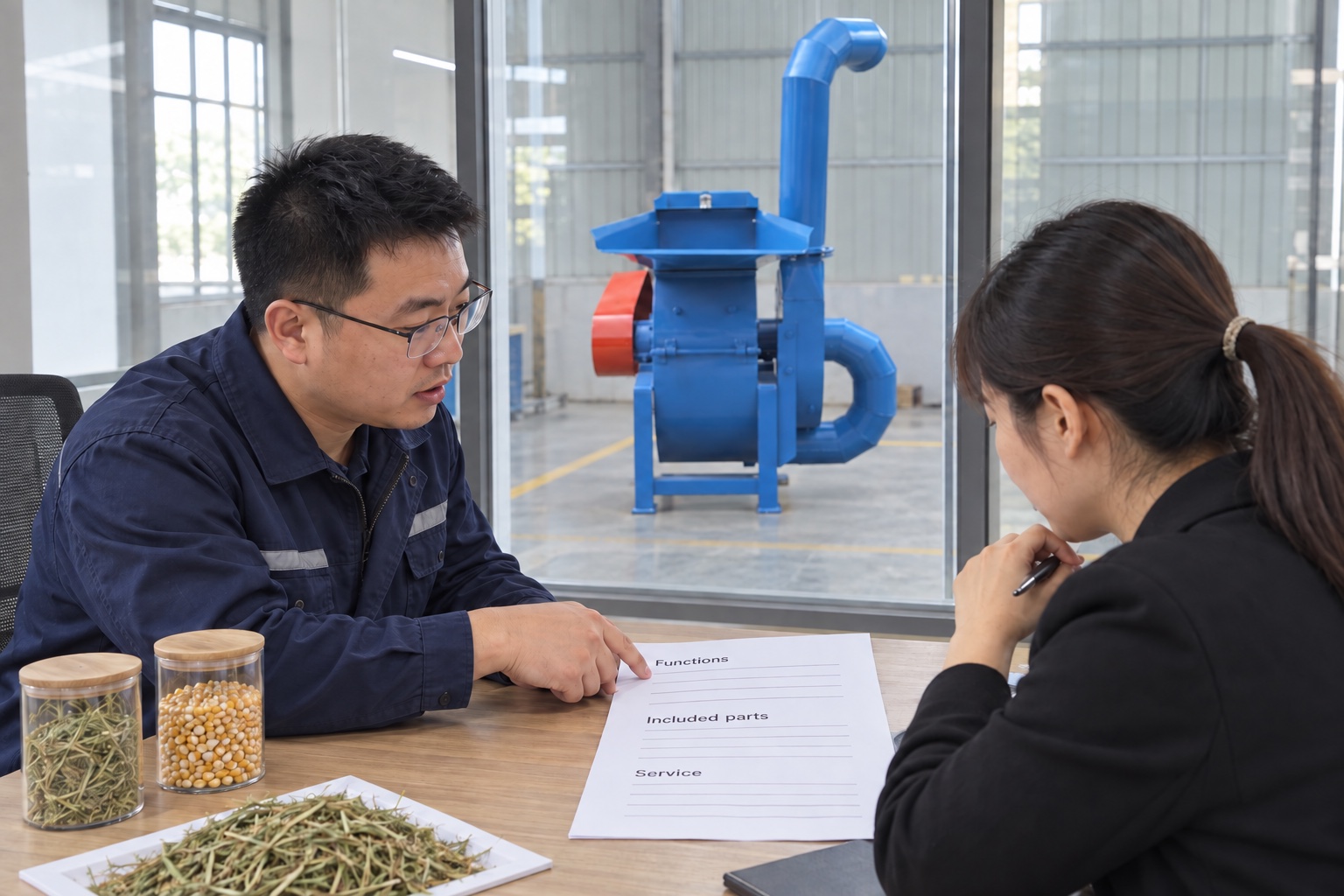
Bring your feeding records into the discussion. Send crop and grain details, daily quantities, available power, and photographs of your preparation area. Ask suppliers to identify limitations and document how their proposed equipment addresses your measured cost problem.
- Request separate trials for each processing function.
- Agree useful output criteria before comparing rates.
- Confirm included drive, guards, and accessories.
- Obtain operating instructions and current parts quotations.
What should your final decision achieve?
| Decision requirement | Evidence to keep |
|---|---|
| Suitable livestock feed | Adviser-approved output requirements |
| Practical daily operation | Representative trials and handling plan |
| Defensible savings | Before-and-after costs using clear assumptions |
| Continued service | Instructions, parts details, and support contact |
Key Takeaway: You can now separate forage losses, animal requirements, labor changes, and running costs when evaluating equipment. Resolve uncertain functions and savings assumptions before approving a purchase.
To discuss equipment for your forage or grain preparation work, contact us today with your livestock groups, ingredients, quantities, and available power. We can review those requirements and prepare a proposal identifying the intended processing functions. We believe lower feeding costs should come from useful output and costs you can verify.
What else should you check before buying? (FAQ)
Your Grass Crusher Machine decision should rest on your livestock needs, documented equipment functions, and measured farm costs. These questions address common gaps between an attractive demonstration and a workable daily investment.
Which unanswered points can change your decision?
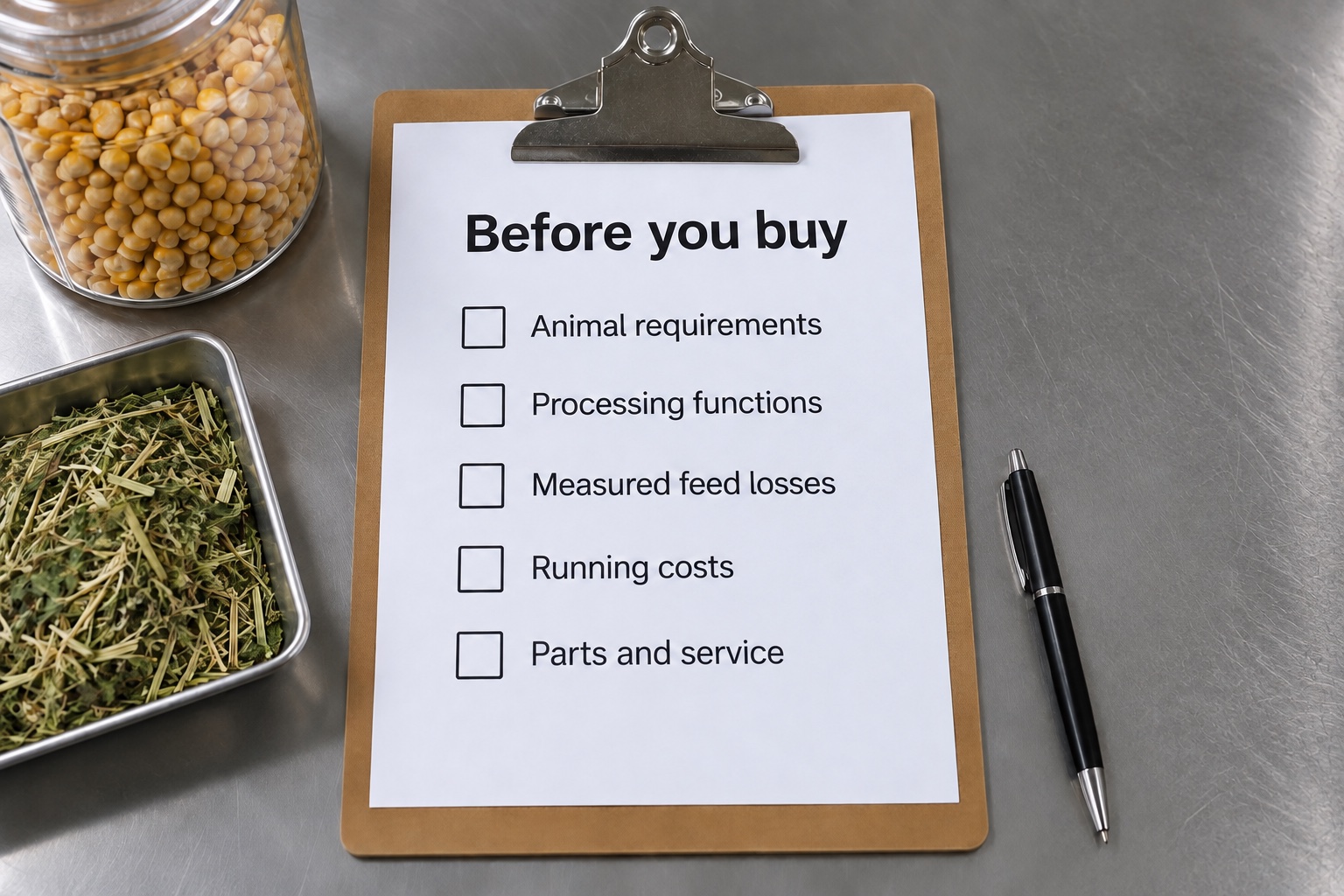
Keep these questions beside your quotation. Obtain clear answers for your selected configuration and feeding plan before committing.
- Check processing functions against actual ingredients.
- Confirm who approves ration changes.
- Separate verified savings from hoped-for improvements.
Q1: Can I use the same processed feed for cattle, sheep and pigs?
No; their nutritional requirements and suitable rations differ. Equipment may prepare ingredients for several species, but formulation and particle-size requirements need separate approval.
Q2: What’s the best way to prove daily savings?
Compare equivalent work using recorded feed costs, paid labor, energy, and maintenance. Keep animal groups, material condition, and feeding standards comparable so changes have a meaningful baseline.
Q3: How do I know if a machine also crushes grain?
Check written specifications and request a grain trial using its approved setup. A grass-cutting video or an additional opening does not establish grinding capability.
Q4: Can I count family labor as a cash saving?
Only when the change reduces actual paid spending. Otherwise, record released family time as an opportunity benefit rather than money available for repaying equipment costs.
Q5: What’s the best choice for a small seasonal workload?
Compare ownership with suitable hired processing or another arrangement available locally. Limited operating days can spread investment costs across too little work, even when a machine performs well.
