
Standard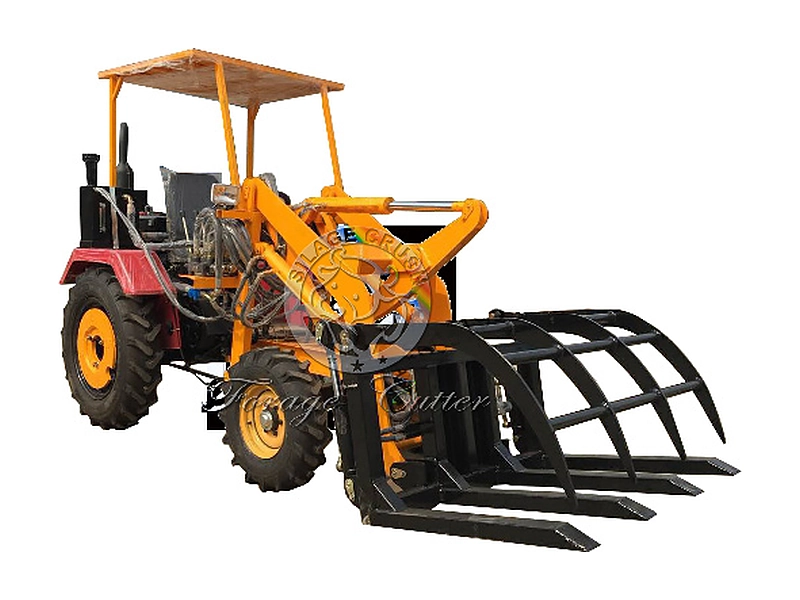
Hay & Straw Grapple
Curved upper tines close over straw, grass, corn stalks and branches across a 1200 mm gripping head, so loose material stays put while you drive and nothing drops on the way to the truck.
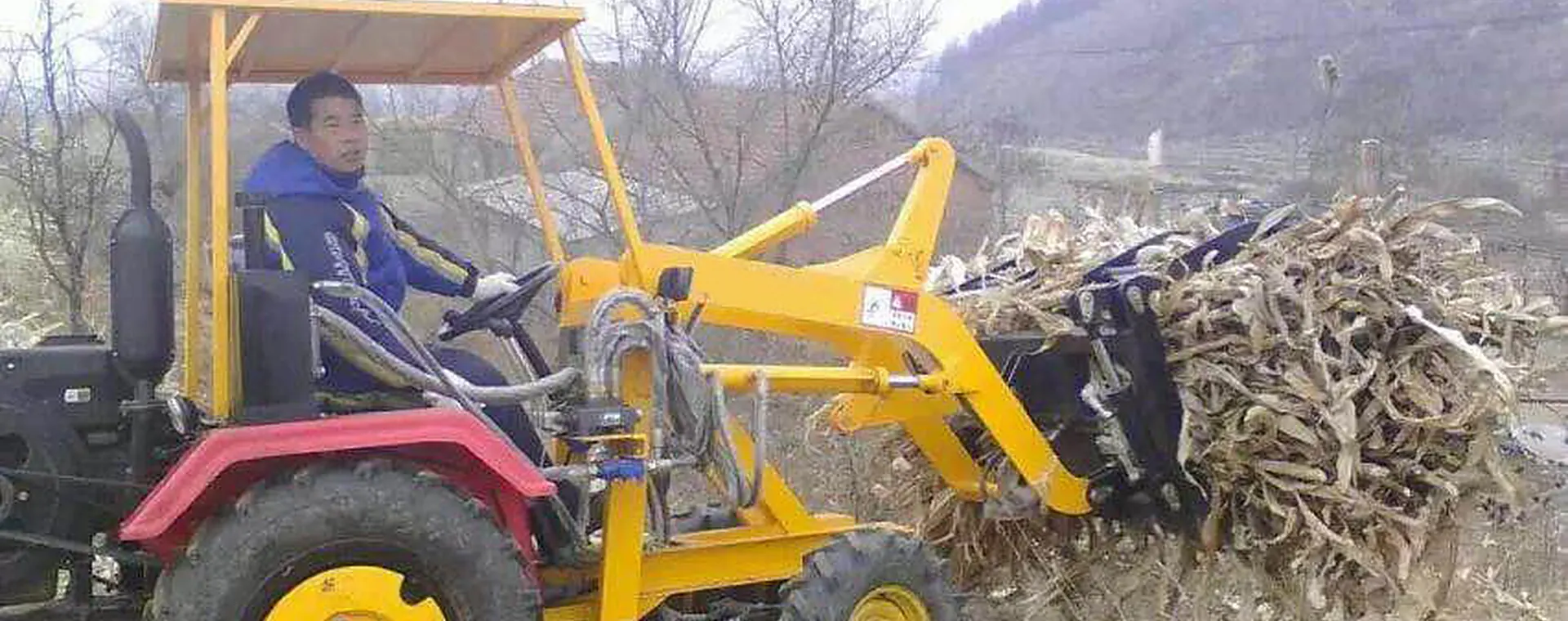
Shovel & Grasp All-in-One Loader
A compact diesel wheel loader fitted with a hydraulic grapple and auxiliary oil circuit. It clamps loose straw, forage, logs, bark and biomass fuel that a bucket only pushes away, then loads your truck in seconds — doing the work of 10–12 labourers.
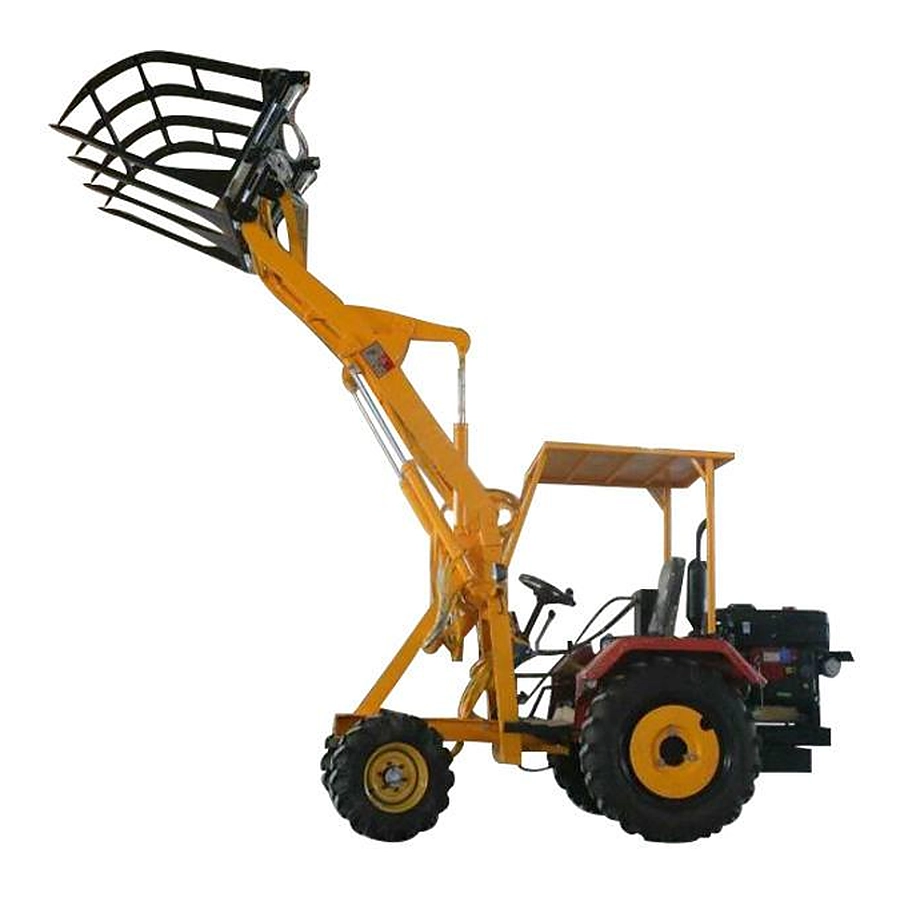
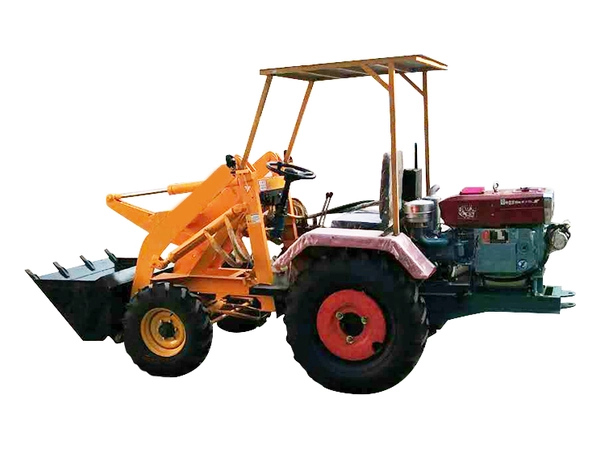
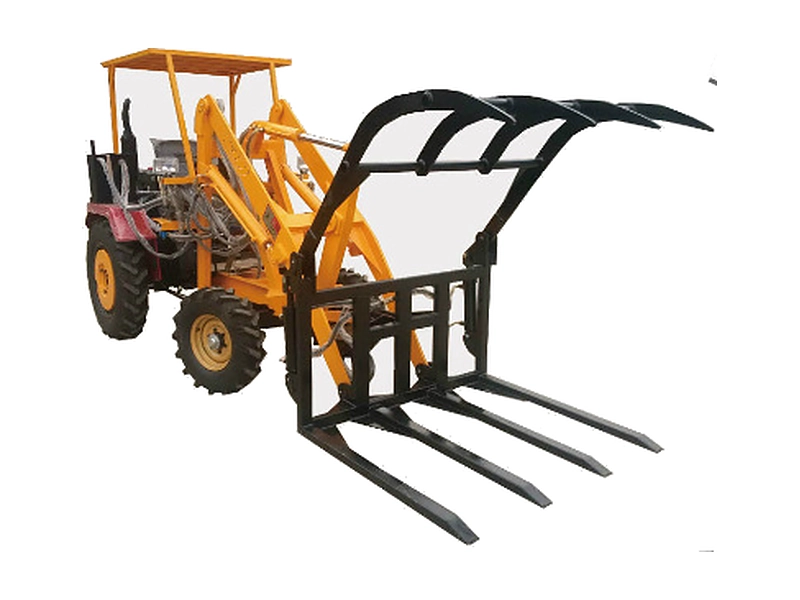
Our GC-06 grass loader — also called a grass grabber or grasping machine — is a single-bucket, front-unloading mini wheel loader rebuilt for loose, bulky material. We add a hydraulic grapple and an auxiliary oil circuit to a proven loader chassis, so the machine can clamp and carry unbroken straw, forage, wood, tree roots and bark instead of pushing them around the yard.
Swap the grapple back to the bucket and it shovels sand, gravel, manure and feed like any compact loader. One shovel-and-grasp machine replaces two, and it is the natural partner for our chaff cutter machine and straw kneading machine: it feeds raw stalks straight to the infeed instead of a team of labourers.
A reversing mechanism that delivers an extraordinary lift and strong breakout force on every bite.
A rear-mounted famous-brand engine puts weight and power over the drive wheels, so a full grapple never leaves you short of traction.
A cleaner oil circuit keeps the grapple and lift cylinders working reliably through dusty straw and bark handling.
Light, simple and flexible to drive, so new operators are productive after a short training session.
Comfortable to drive, reliable to run and quick on every cycle — built from high-quality materials for daily loading work, not occasional use.
Wear- and pressure-resistant wide-base tyres grip soft ground and climb slopes of ≥20°, keeping the loader steady with a full grapple so you lose fewer loads and less time.
An ergonomic, shock-absorbing seat and a wide field of vision keep the operator fresh and alert, so long loading shifts stay safe and productive.
A famous-brand 22 HP diesel with split engine and gearbox gives long service life, strong pulling power and fast travel. Prefer a different engine? We fit domestic or imported brands to order.
Bucket teeth and guard plates are cut from thickened steel plate, so each cycle moves up to 600 kg with strength to spare and the edges outlast daily digging.
The Z-type connecting rod levels the bucket automatically at height and the tipping cylinder works in one direction, giving tremendous shovelling and digging force with fewer spills.
Full hydraulic steering and a 4.5 m minimum turning radius let you work between barns, stacks and trucks, while simple lever controls keep maintenance quick.
Every grab, lift and dump comes from one hydraulically driven working device hinged to the frame — simple enough to learn in a day, strong enough for full-shift loading.
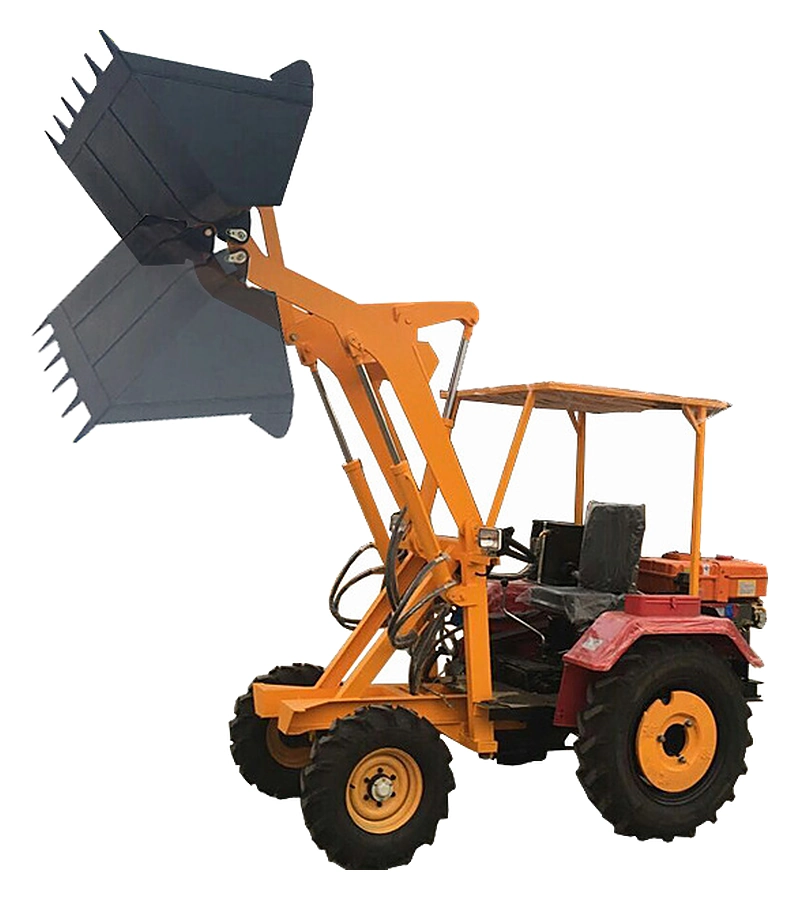
The working device consists of the grapple or bucket, boom (moving arm), connecting rod, rocker arm, tipping cylinder and boom cylinder. The bucket is hinged to the tipping cylinder through the rod and rocker arm; the boom is hinged to the frame and its own cylinder. Both tipping and lifting are hydraulic.
Drive to the pile in first gear with the grapple flat. About 1–1.5 m out, lower the boom so the tines enter the material at a shallow 3–7° angle — you fill fully without ploughing the ground.
Alternate the lift and tilt levers with a steady throttle: lift the boom first, then close the grapple. The Z-linkage turns that rhythm into maximum breakout force and a full bite on every pass.
Reverse out, carry the load low for stability and drive to the truck, stack or chaff cutter infeed. Tip at up to 1900 mm discharge height with a ≥45° dump angle — the grapple empties cleanly.
In 33 seconds, see the hydraulic grapple clamp corn stalks, carry logs and lift 600 kg to 2500 mm, then switch to the bucket, fork, auger and sweeper. It shows how one operator handles a loading job that once needed a crew.
GC-06 grass loader: grapple handling, 600 kg / 2500 mm lift, Z-type linkage, multi-purpose attachments and export packing.
The quick-change front frame accepts a range of tools, so a single mini multifunctional loader covers feeding, stacking, yard work and site preparation all year round.
Curved upper tines close over straw, grass, corn stalks and branches across a 1200 mm gripping head, so loose material stays put while you drive and nothing drops on the way to the truck.
A top clamp locks round and square bales or bundled timber onto long fork tines, letting one operator stack, unstack and load bales without a second man on the ground.
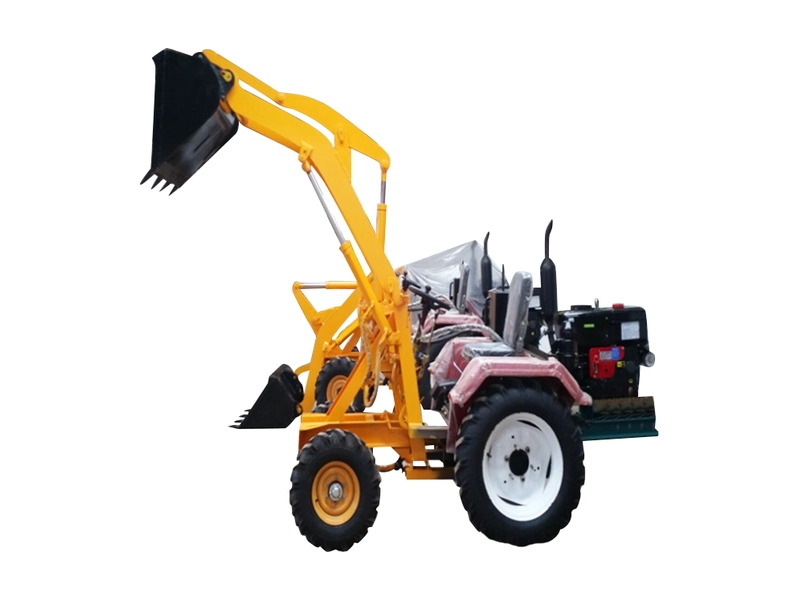
A 1000 mm wide, 0.3 m³ toothed bucket turns the machine back into a mini wheel loader for sand, gravel, manure, grain and feed — and doubles as a blade for levelling and dozing.
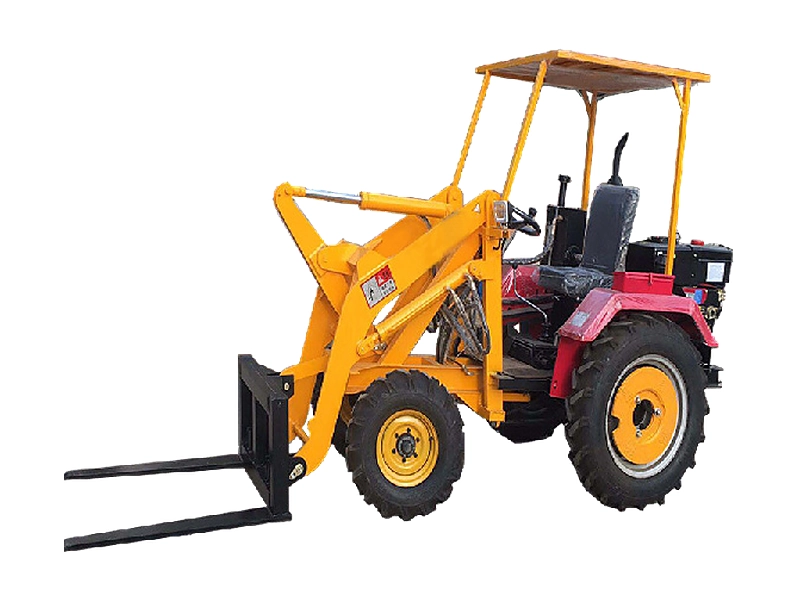
Lift palletised feed bags, fertiliser, bricks and spare parts around the farmyard or warehouse, saving the cost of a separate forklift.
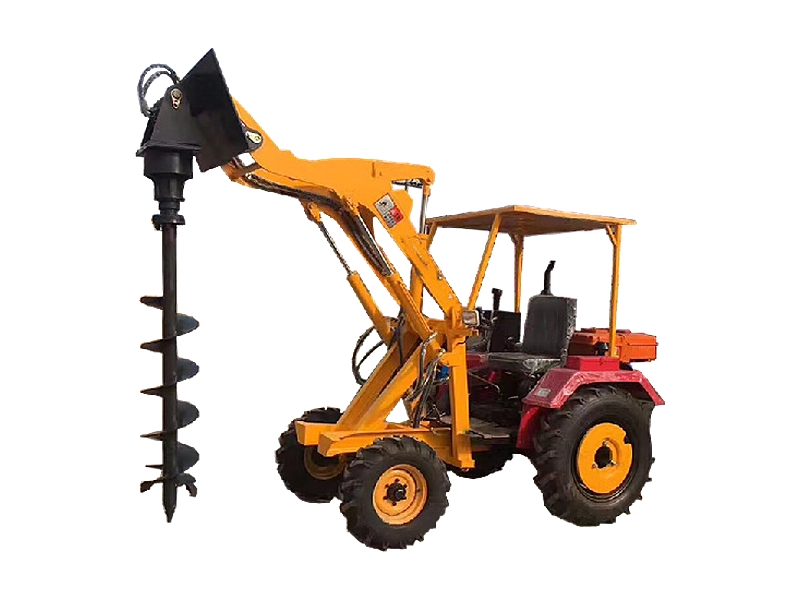
A hydraulic auger drills fence-post and tree-planting holes in seconds, so orchards, plantations and fencing crews finish in a day what used to take a week by hand.
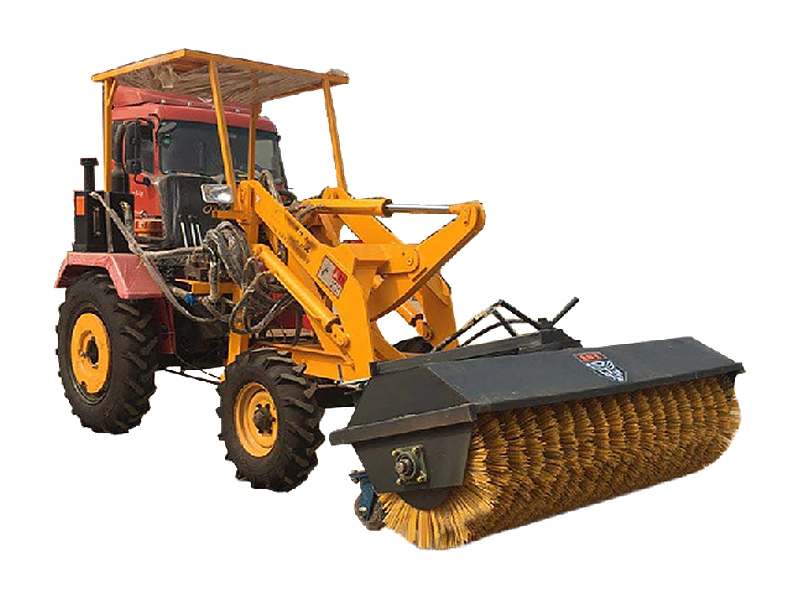
A rotary brush clears straw, dust, mud and snow from yards, barn alleys and roads, keeping work areas clean and safe between loading jobs.
Flexible and highly mobile, it handles loose, light and bulky material that wheelbarrows and pitchforks struggle with — unloading, scraping, stacking, mixing and loading in one machine.
Shovel and grab rice husk, cotton hulls, broken bark and twigs at high speed — the loader is particularly suited to fuel-yard work. See our biomass project.
Move straw, hay and forage from stack to chaff cutter and from silage clamp to feed alley. Explore our dairy farm feed preparation solution.
Load and unload logs, tree roots and bark at wood processing centres and farm timber stacks, without cranes or manual rolling.
Feed bales of waste paper and fibre raw material to the line and keep storage areas organised with one compact operator-driven machine.
Clear prunings and green waste in urban and rural parks, and help out on brick yards, construction sites and logistics depots.
Grab scrap iron, stones and pipe offcuts that buckets cannot hold, keeping recycling and steel yards moving safely.
One operator, one loader, and a job that used to need a crew. Flexible and manoeuvrable, the grass loader saves 10–12 workers on typical loading jobs.
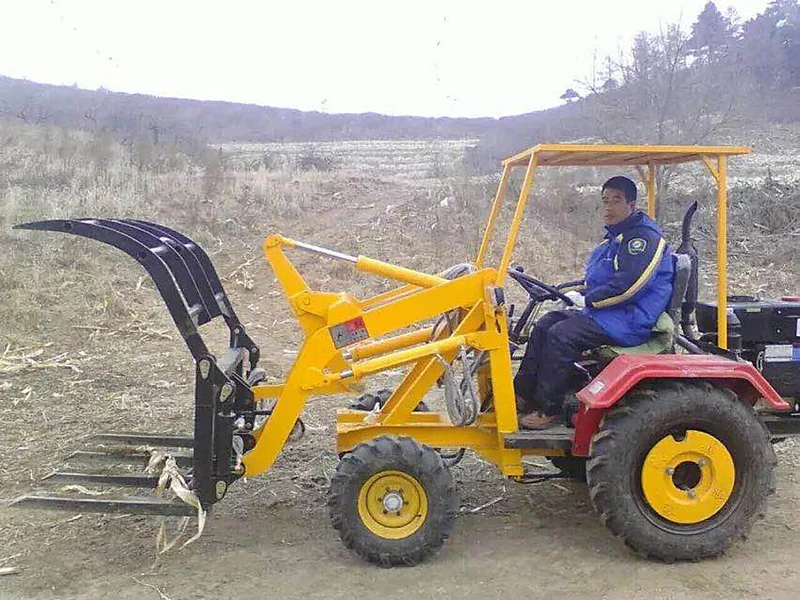
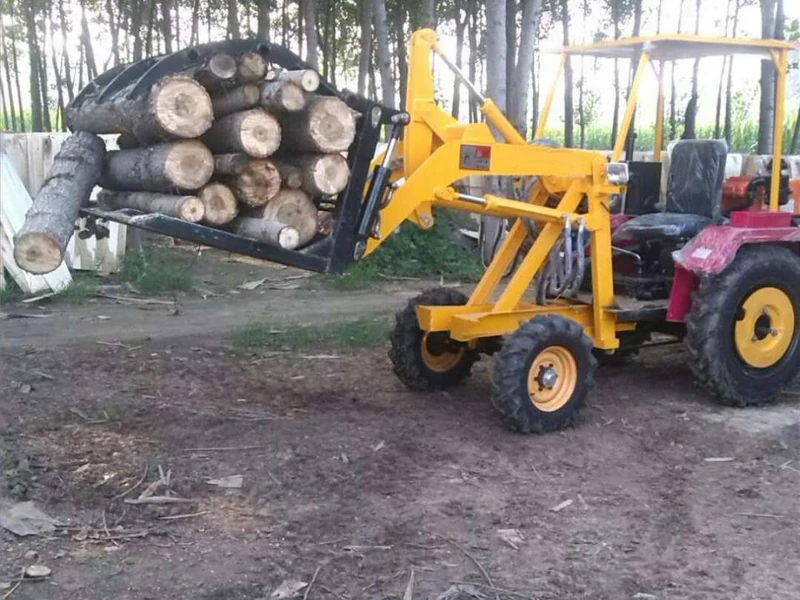
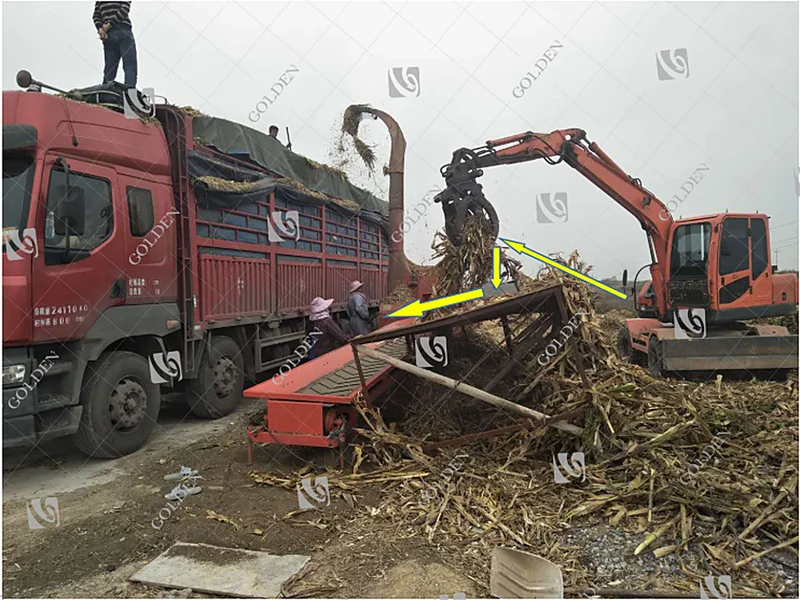
Every figure below is measured on the standard GC-06, so you can check lifting height, reach and weight against your trucks, stacks and site before you order.
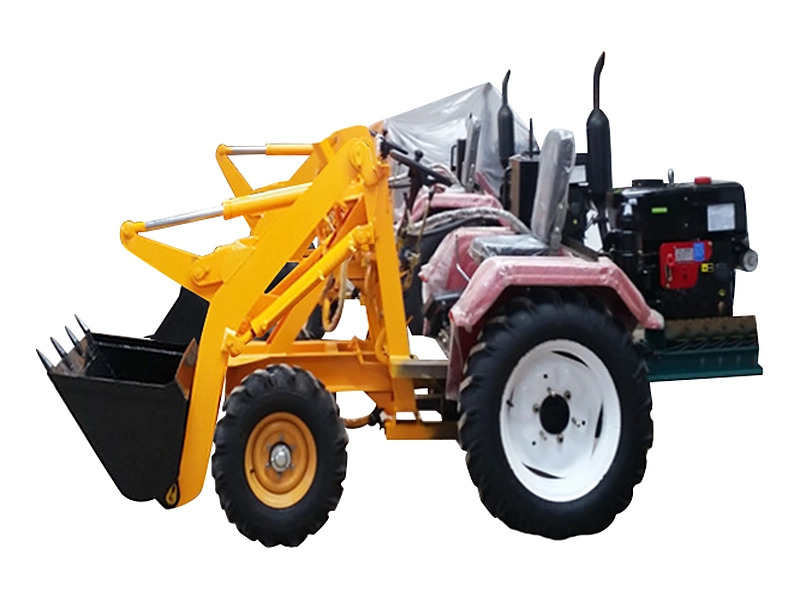
Compact structure, open canopy with adjustable seat, hydraulic steering and electric start. Engines from domestic or international brands can be fitted to your requirements.
Get the Full Spec Sheet| Power & Drive | |
|---|---|
| Engine model | ZS1115, 22 HP / 16.2 kW |
| Rated engine speed | 2200 r/min |
| Transmission / rear axle | Shandong Shifeng origin |
| Shift | Seven-speed gearbox, three forward, one reverse |
| Moving speed | 27–30 km/h |
| Configuration | Hydraulic steering, electric start |
| Working Performance | |
| Rated load weight | 600 kg |
| Gripping head size | 1200 mm |
| Lifting height | 2500 mm |
| Maximum discharge height | 1900 mm |
| Discharge distance at max. discharge height | 650 mm |
| Bucket capacity / width | 0.3 m³ / 1000 mm |
| Maximum dump angle | ≥ 45° |
| Lifting time | 8 s |
| Hydraulic System | |
| Oil pump | CBT-F550 gear pump, 20 MPa, 50 ml/r |
| Multi-way valve | ZFS-20, 20 MPa, nominal flow 100 |
| Steering gear | BZZ1-E100, displacement 100 |
| Chassis & Dimensions | |
| Overall dimensions (L × W × H) | 3900 × 1400 × 2000 mm |
| Total weight | 1460 kg |
| Tyre model | Front 600-12, rear 750-20 |
| Tyre pressure | Front 0.3 MPa, rear 0.5 MPa |
| Wheelbase | 1400 mm |
| Track (front / rear) | 930 / 1200 mm |
| Minimum ground clearance | 130 mm |
| Minimum turning radius | 4.5 m |
| Climbing ability | ≥ 20° |
| Supply & Shipping | |
| On-board tools | Toolboxes, cranks, traction pins, repair kits |
| Quantity in 20GP | 2 units |
Specifications may be refined as we improve the design — your quotation confirms the exact configuration.
Every loader leaves our factory tested and adjusted, ready to work. Follow these steps from the instruction manual and it will stay that way for years.
Idle the engine 5+ minutes, then 10 minutes at full speed. Cycle boom and bucket for 10 minutes, then drive forward and reverse through every gear, low to high.
Increase the load gradually and keep it under 70% of rated load and 70% of top speed. Loose material is best while parts bed in.
After the run-in period, replace hydraulic oil and engine oil, and check every oil seal, sealing ring, dust boot and brake friction plate.
Use only the specified diesel, hydraulic and lubricating oils. Let them settle and filter before filling, with the machine standing level.
Keep your heel on the cab floor and your foot parallel to the accelerator, pressing it gently for smooth, economical power.
Rest your left foot flat on the floor. Control speed with the throttle and gears so bumps never trigger the brake and overheat it.
Cycle the lift and tilt levers in rhythm — lift first, then close — to fill every bite with less resistance and lower fuel use.
Never let the tyres spin, never let the rear wheels lift off the ground, and never ram the pile in a gear above second.
Only trained drivers who know this manual may operate. No alcohol, eating, smoking or chatting at the controls.
Check oil, water, circuits, steering and lights; set every lever to neutral; crank 5–15 s at most and wait one minute between tries.
Never stand under the bucket or boom, never overload, carry loads low, slow down for turns and avoid high speed on downhill slopes.
Drain cooling water after winter parking, store the battery indoors below −20°C, never warm the engine with an open flame, and lower the bucket before shutdown.
Most stoppages have a simple cause your own mechanic can fix. Open a system to see the symptom, the likely cause and the remedy straight from our service manual.
| Symptom | Likely cause | Remedy |
|---|---|---|
| Slips when engaged | Pedal free travel too short | Friction plates worn — readjust free travel to 25–30 mm |
| Pressure springs weak | Replace pressure springs | |
| Oil on friction surface | Clean; replace friction plates | |
| Judders when engaged | Severe spline wear | Re-balance release levers, replace clutch shaft or tighten bolts, clean and readjust |
| Loose fastening bolts | ||
| Grease on friction surface | ||
| Does not disengage fully | Pedal free travel too long | Release lever set incorrectly — readjust |
| Symptom | Likely cause | Remedy |
|---|---|---|
| Abnormal noise | Gear wear, excessive backlash; worn gear and shaft splines | Replace gears or shaft |
| Bearing wear | Replace bearings | |
| Loose fastening bolts | Tighten | |
| Insufficient lubricating oil | Top up lubricating oil | |
| Jumps out of gear | Fork-shaft positioning spring weak or failed | Replace spring |
| Fork-shaft detent groove worn beyond limit | Replace fork shaft | |
| Internal and external spline wear | Replace gear or shaft | |
| Stiff gear shifting | Gear tooth ends burred by collision | Remove burrs or replace gears |
| Symptom | Likely cause | Remedy |
|---|---|---|
| Noise while driving | Poor mesh of the final-drive gears | Adjust or replace bevel gears |
| Bearings worn beyond limit or loose | Replace or adjust bearings | |
| Gears worn beyond limit | Replace gears | |
| Noise when braking | Brake backing plate bent | Repair or replace |
| Brake lining rivets loose | ||
| Brake drum damaged | ||
| Pulls to one side when braking | Oil on brake shoe surface | Clean |
| Shoe clearance adjusted unevenly | Readjust | |
| Tyre pressure not to standard | Equalise tyre pressure | |
| Weak braking | Drum-to-shoe clearance incorrect | Readjust via the eccentric bolt |
| Oil contamination | Clean | |
| Brake linings worn beyond limit | Replace |
| Symptom | Likely cause | Remedy |
|---|---|---|
| Weak boom lift or bucket tilt | Safety valve set too low, low system pressure | Reset working pressure to the specified value |
| Suction pipe or oil filter blocked | Clean and change oil | |
| Internal leakage in pump, cylinder or lines | Replace pump; check system sealing by natural settlement | |
| Multi-way valve worn, stem clearance over limit | Replace multi-way valve | |
| Unstable or reduced performance | Working oil deteriorated | Replace working oil |
| Foreign matter blocking lines | Clean oil circuit and tank | |
| Oil filter blocked or damaged | Clean or replace | |
| Air in the system | Check the suction side for leaks | |
| Boom sinks after lifting | Boom cylinder internal leakage | Overhaul cylinder, replace seals |
| Multi-way valve stem clearance too large | Repair or replace | |
| Working under load for too long | Stop to rest or reduce the load | |
| Insufficient oil | Fill to the specified level | |
| Steering keeps turning after wheel returns | Return spring leaf in steering gear broken | Dismantle and replace spring leaf |
| Distribution sleeve seized on shaft or valve body | Dismantle and repair steering gear |
| Symptom | Likely cause | Remedy |
|---|---|---|
| Engine runs but battery does not charge, or charges slowly | Battery plates sulphated | Desulphate or replace plates |
| Generator belt too loose or damaged | Readjust or replace | |
| Loose wiring, poor contact | Check and clean connections | |
| Regulator out of adjustment or damaged | Readjust or repair | |
| Battery capacity insufficient; electrolyte density or level too low | Correct the density or add electrolyte | |
| Short circuit between plates | Remove sediment, replace electrolyte | |
| Poor wire contact | Check and clean | |
| Active plate material shedding | Replace plates | |
| Generator produces no power | Residual magnetism lost | Re-magnetise with the battery, following the original polarity |
| Field coil circuit broken | Reconnect across both ends of the field coil | |
| Poor commutator contact | Polish with No. 0 or 00 sandpaper | |
| Brushes sticking | Correct brush size, adjust spring pressure | |
| Armature short circuit | Check and repair |
Still stuck? Our engineers answer by phone or WhatsApp 24 hours a day and send genuine spare parts for the life of your machine.
We test and adjust every grass loader before it leaves, pack it for the sea, choose the safest and most cost-effective carrier, and track your order until the machine is on your site.
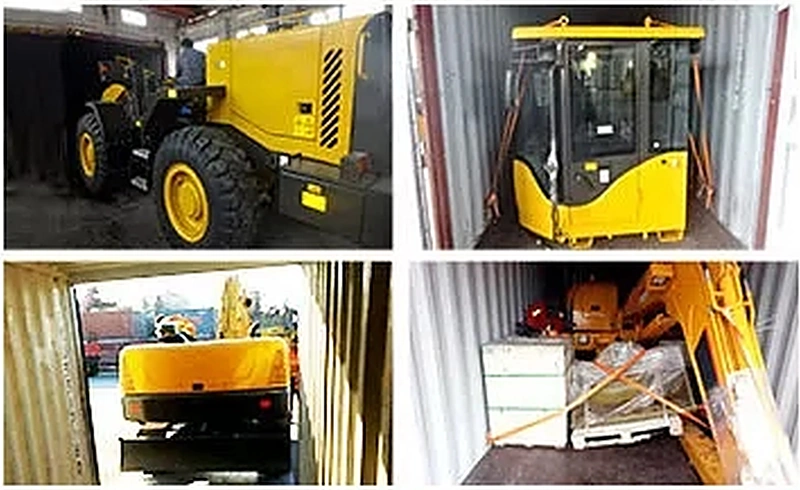
Fully enclosed and secured — the standard choice for single units and mixed orders with spare parts.
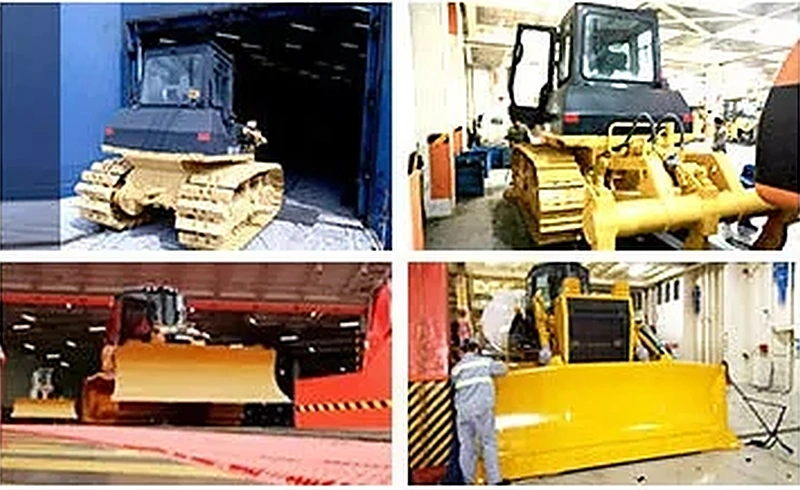
Driven straight on and off the vessel — no dismantling, fast unloading at the destination port.
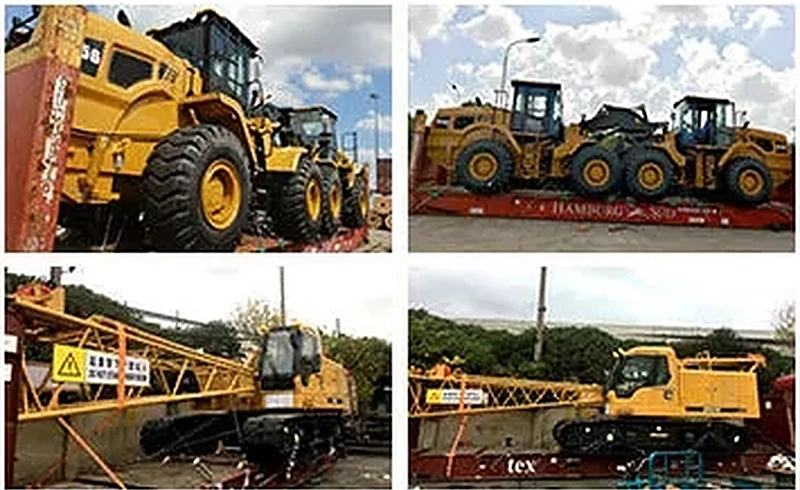
For oversize loads and mixed machinery orders that exceed container height, lashed and protected for the voyage.
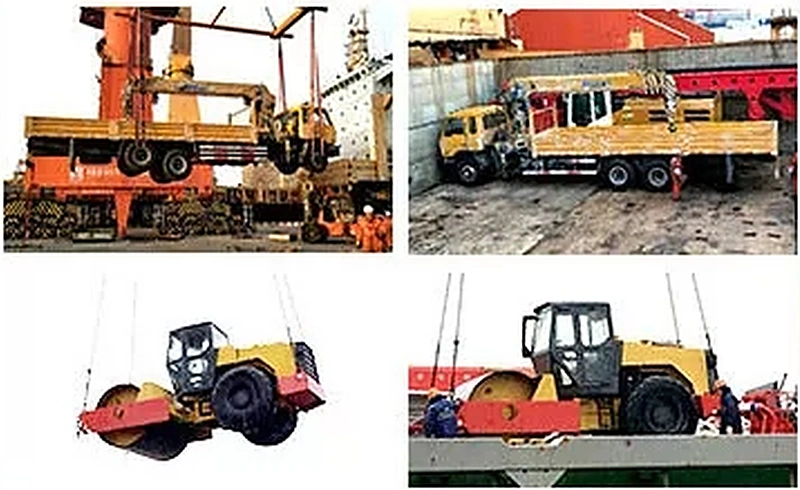
Crane-lifted break-bulk for large fleet orders and ports without regular container service.
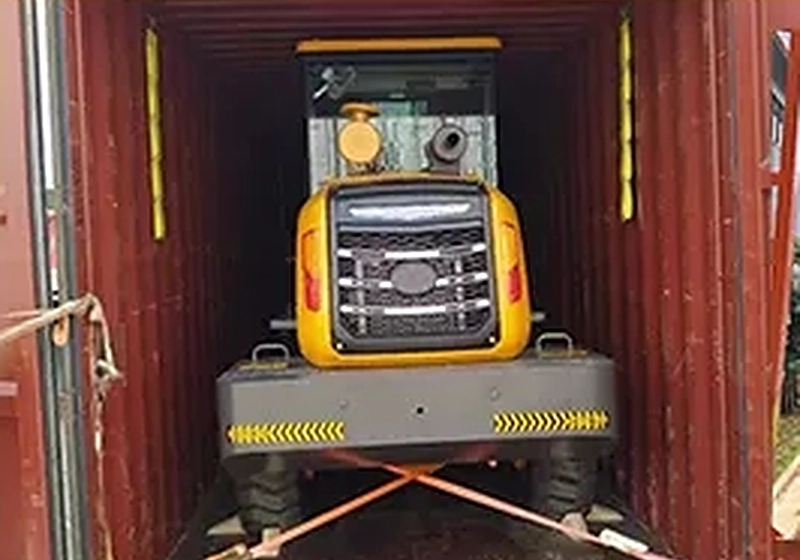
Ratchet straps and wheel chocks hold the loader rigid, so it arrives without dents or loose fittings.
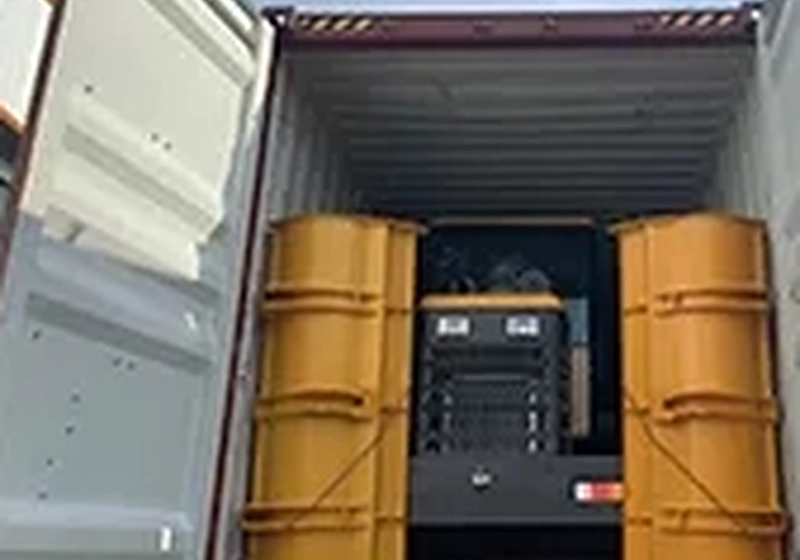
Where needed, wheels and attachments are removed and stowed alongside to cut your freight volume.
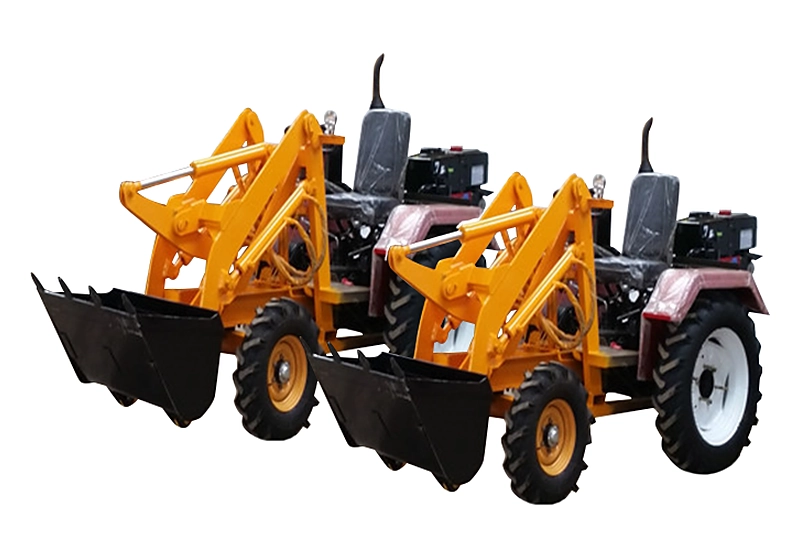
Two GC-06 grass loaders fit one 20-foot container, halving the freight cost per machine.
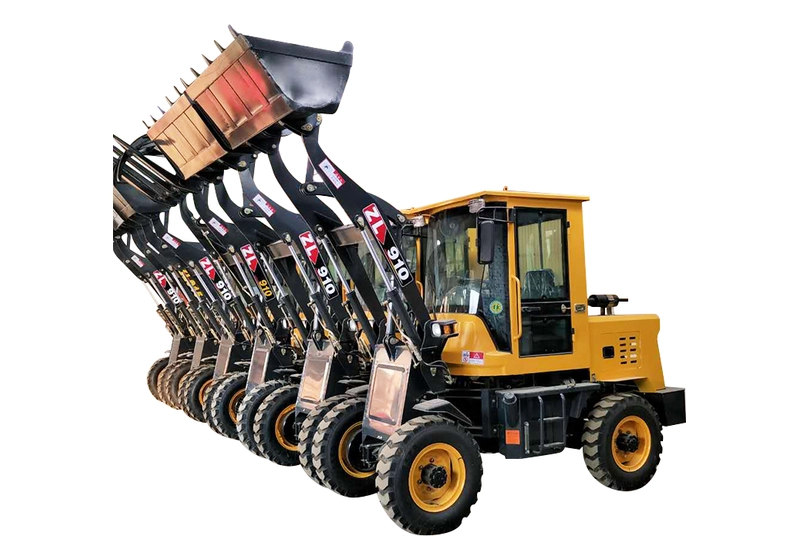
Batch production lets dealers and cooperatives receive multiple units on one schedule.
Each machine is run and adjusted at the factory, so you can put it to work as soon as it arrives.
Commissioning data and manuals come with every loader, plus round-the-clock phone and message support.
Faults caused by the machine itself are our responsibility during the warranty term; please don’t modify the machine without our approval.
Quality, fairly priced parts for as long as you run the machine. New loaders ship within 3–4 weeks, parts in seaworthy wooden cases.
Straight answers to the questions buyers ask before ordering a grass loader.
A grass loader is a compact wheel loader refitted with a hydraulic grapple and an auxiliary oil circuit. A standard bucket pushes loose straw, forage, logs and bark around; the grapple clamps them from above so they can be carried and loaded. Fit the bucket again and it works as a normal mini front-end loader.
Straw, hay, silage, corn stalks, branches, logs, tree roots and bark, plus bulk biomass fuel such as rice husk, cotton hulls, broken bark and twigs. With the bucket it also moves sand, gravel, manure and grain, and the grapple can handle scrap iron and stone.
The GC-06 has a 600 kg rated load, 2500 mm lifting height, 1900 mm maximum discharge height and 650 mm discharge distance. See the full specification table.
The standard GC-06 runs on a famous-brand ZS1115 single-cylinder diesel rated at 22 HP / 16.2 kW, paired with a Shandong Shifeng gearbox and rear axle. If your market prefers a particular brand, we can fit domestic or imported engines to your requirements.
On typical straw, forage and timber loading jobs, one operator with the grass loader saves 10–12 workers. It is especially efficient when feeding a chaff cutter machine directly from the stack.
Yes. The hay grapple and bucket are the core configuration, and a bale grab, pallet fork, earth auger and sweeper brush are available as options, so one machine covers feeding, stacking, drilling and cleaning.
Run it in for about 28 hours at under 70% load, change hydraulic and engine oil after 80–120 hours, then follow the 50 / 200 / 600 / 1200-hour service plan in our maintenance guide. Common faults and fixes are listed in the troubleshooting section.
Two GC-06 units fit one 20GP container; we also ship by 40HQ, RoRo, flat rack and bulk. Machines are tested before dispatch and ship within 3–4 weeks, with a one-year quality guarantee, 24-hour technical support and lifetime spare parts supply.
The loader brings the material; these machines turn it into feed. Build a complete, labour-saving forage line from one manufacturer.
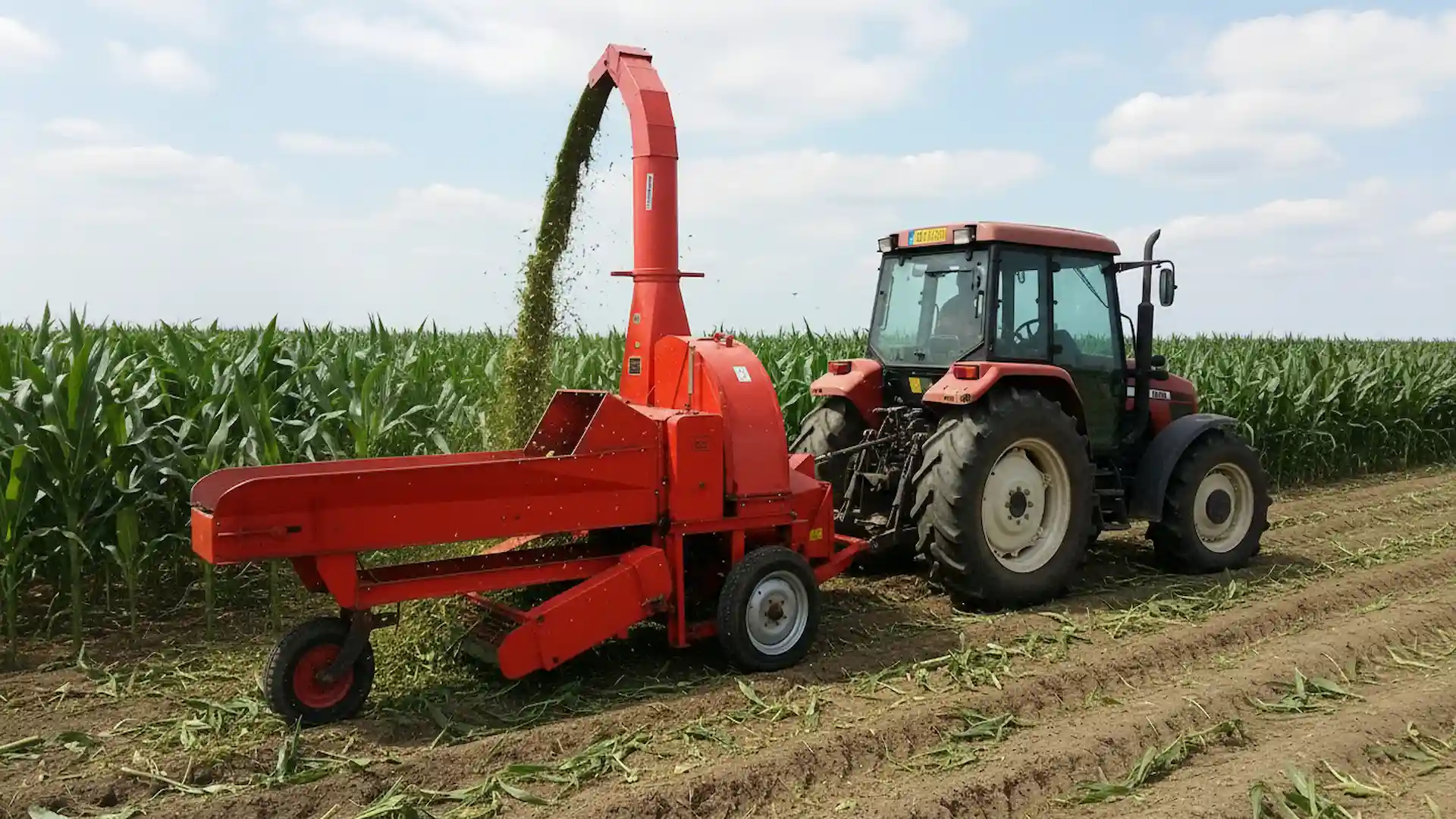
Let the grapple feed straw and stalks straight into the cutter for fast, even chopping.
View chaff cutters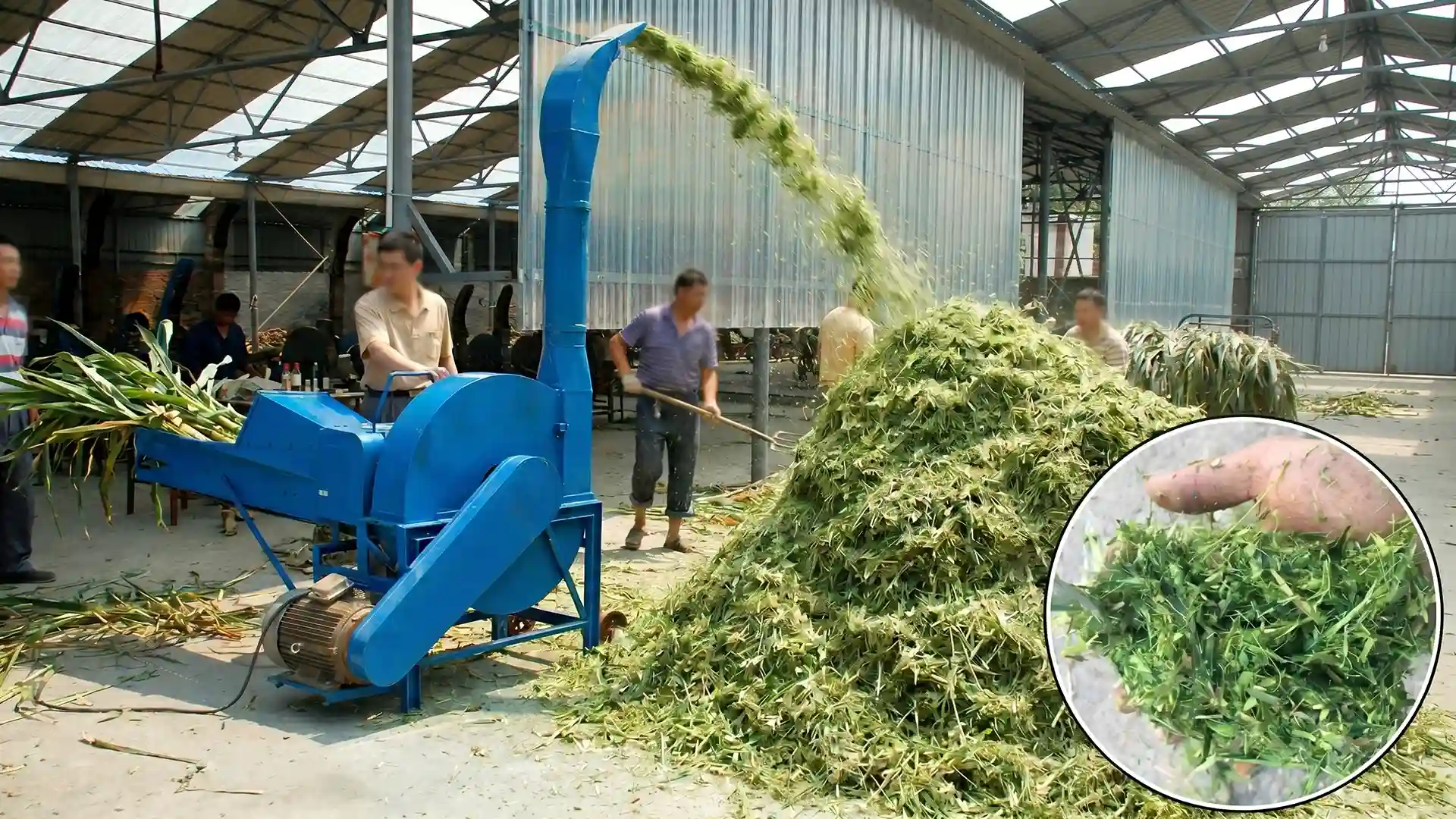
Shred tough stalks into soft, palatable silk forage cattle and sheep eat completely.
View kneading machines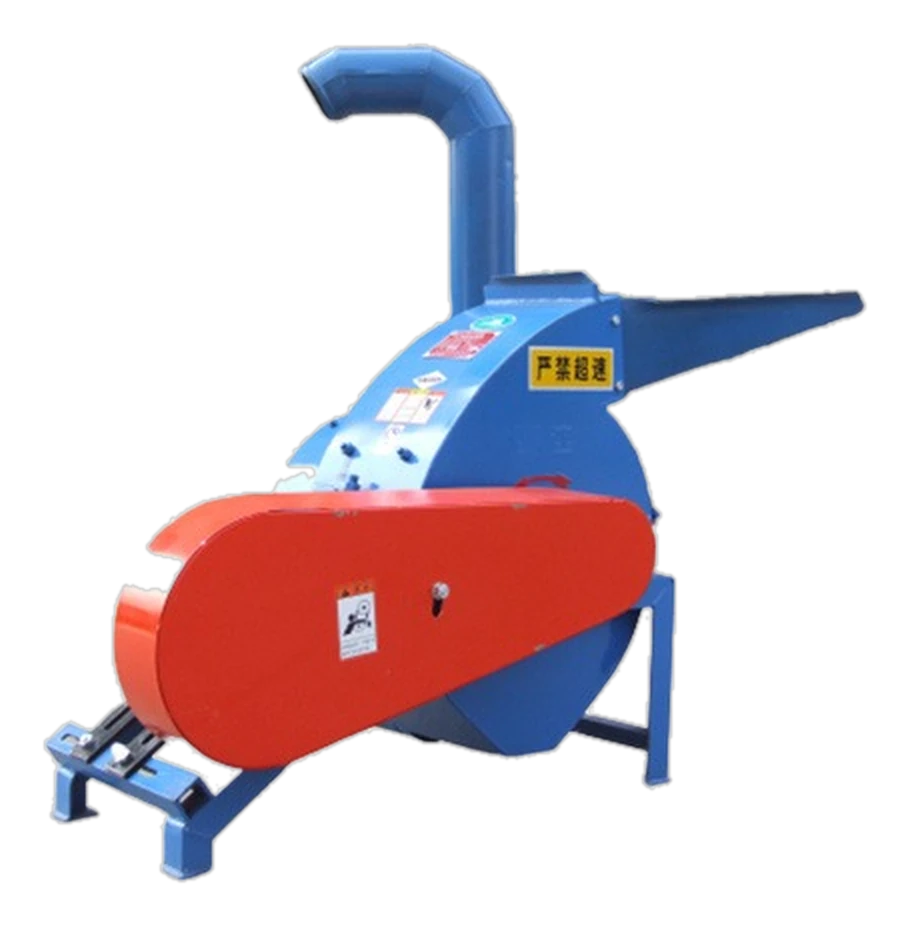
Grind grain, dry straw and hay into fine feed for mixed rations on smaller farms.
View feed crushers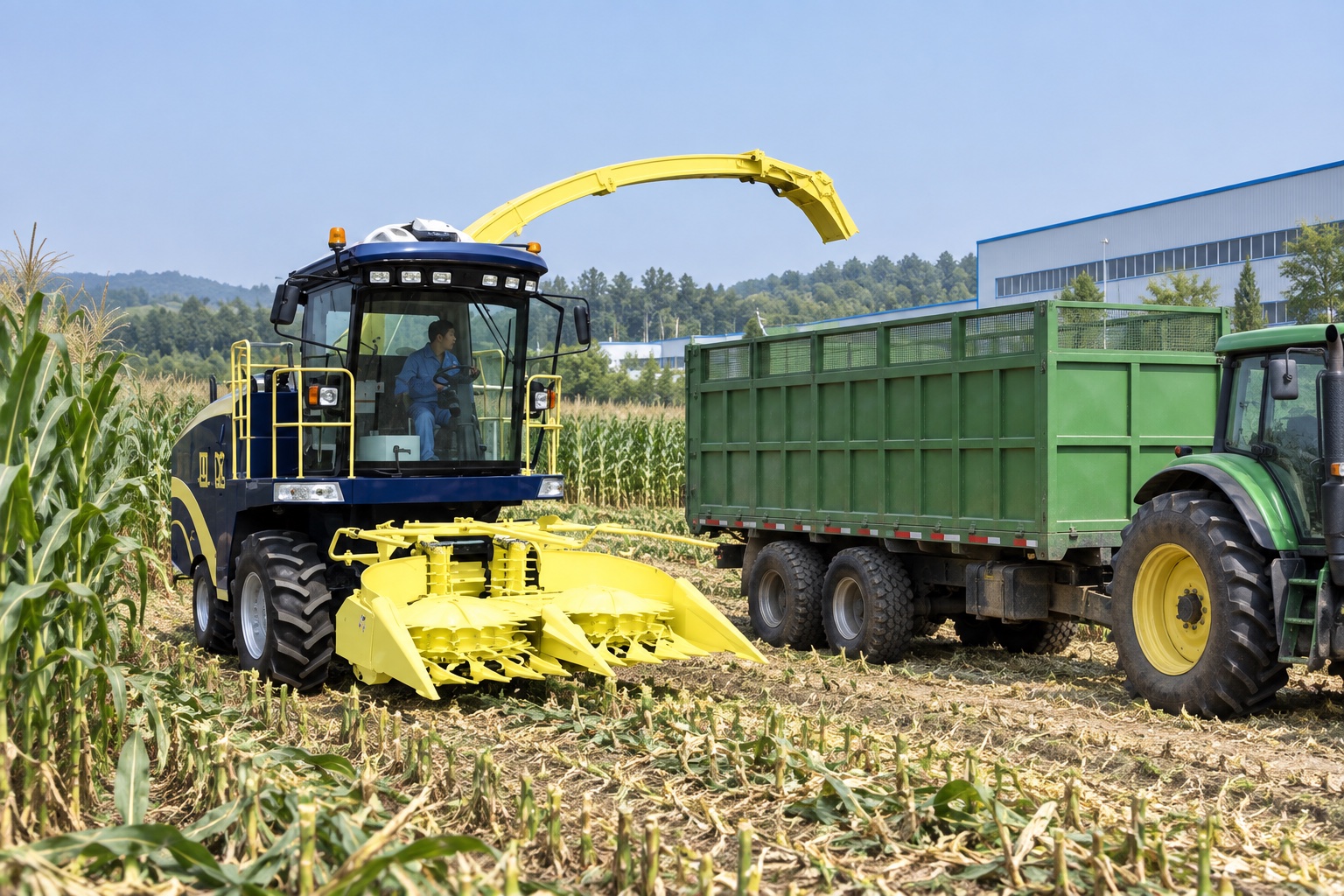
Cut and chop standing corn and sorghum in one pass, then let the loader manage the silage pile.
View forage harvester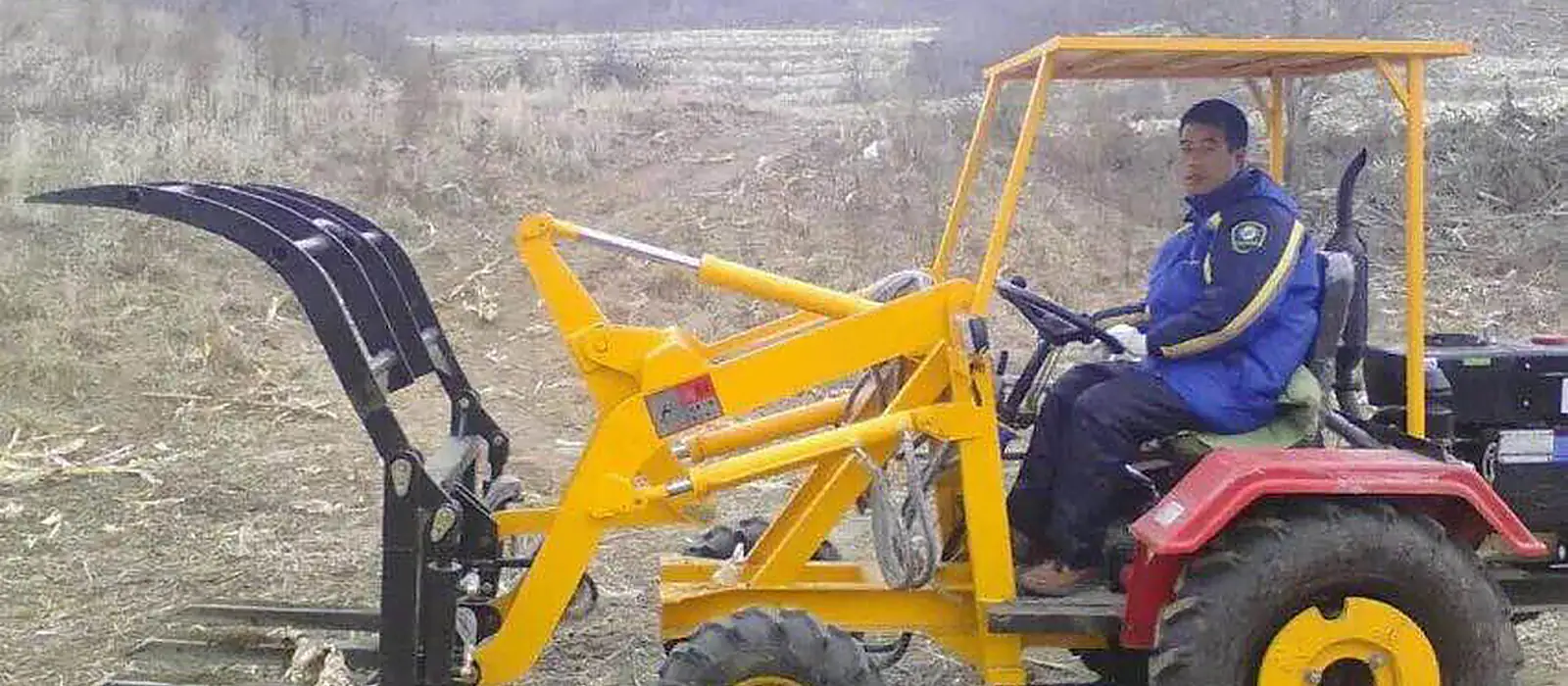
Tell us what you handle and how much per day. A Golden Machinery engineer will recommend the right grass loader set-up and attachments, then send a clear, itemised quotation.
Direct contact with an engineer, not a sales script.
Factory-tested, securely packed for export — 2 units per 20GP.
Quality, fairly priced parts for as long as you run the machine.
Fields marked * are required.