
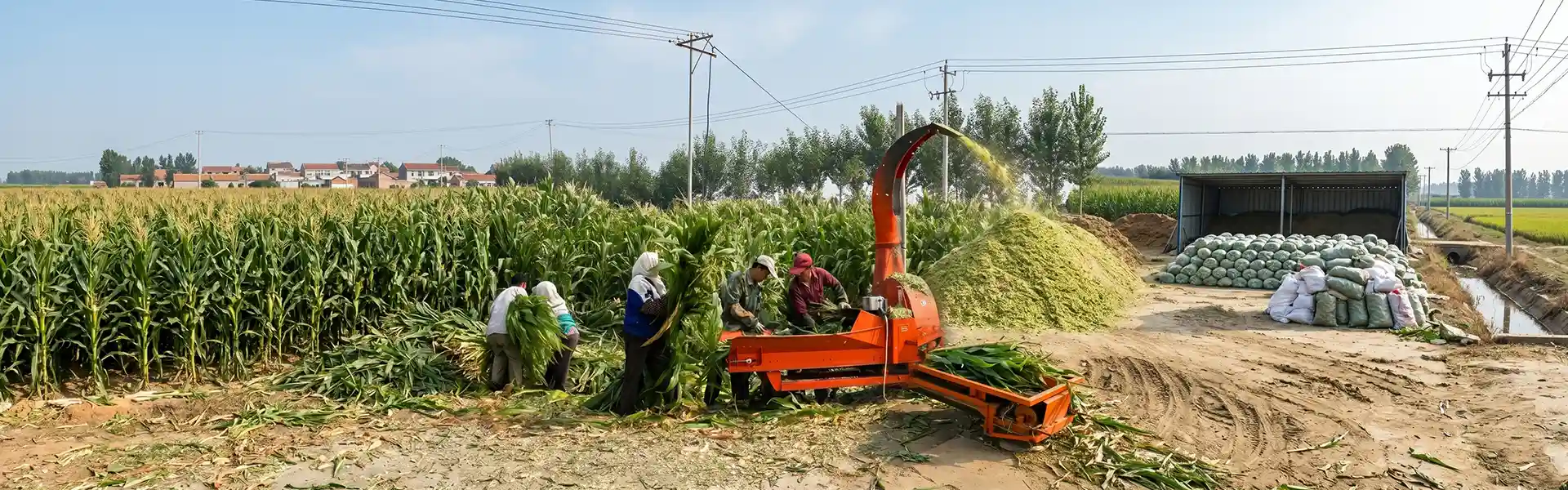
What Is a Chaff Cutter and How Does It Work?
A high-quality Chaff Cutter is essential for livestock farmers because it processes tough raw crop residues and grasses into highly nutritious, easily digestible fodder. If you are struggling with rising animal feed expenses, watching your herd reject thick stalks and trample valuable hay into the dirt can be incredibly frustrating. This wastage slowly drains your farm’s profit margins, making daily livestock management feel like an uphill battle. Fortunately, a modern hay chopper machine solves this problem by slicing coarse vegetation into uniform, bite-sized pieces that animals love to eat.
A Chaff Cutter is a mechanical device designed to chop straw, hay, and other agricultural forage into tiny, uniform pieces for livestock consumption. This machine functions by feeding raw grass or crop residues through a set of high-carbon steel rollers. Once the material passes these rollers, high-speed rotating blades cleanly slice the forage to your desired length. This simple process makes tough, woody materials immediately palatable for your farm animals.
How Does This Machinery Boost Feed Intake?
Processing raw crops changes how your livestock interacts with their daily food supply. Think about it: animals naturally avoid eating hard, thick stalks because they are difficult to chew and digest. By reducing the crop size, the machine prevents selective feeding and ensures your herd consumes all the nutrients.
- Improves overall digestion rates
- Minimizes selective feed rejection
- Encourages higher dry matter intake
Key Takeaway: Utilizing this preparation technique maximizes the biological value of your feed, helping you grow healthier livestock with less raw materials.
Which Types of Chaff Cutter Suit Your Farm Best?
Selecting the right Chaff Cutter depends entirely on your farm’s size, power availability, and daily feed requirements. Small-scale homesteads often prefer highly portable gasoline models that offer great flexibility without relying on grid electricity. Meanwhile, large-scale dairy operations typically require heavy-duty electric or tractor PTO-driven systems to handle tons of daily forage. Choosing the correct energy source ensures uninterrupted feed preparation.
Can You Run These Machines Without Electricity?
You can easily operate your feed processing machinery in remote areas by selecting alternative power sources. Here is the thing: diesel-powered or tractor-driven units allow you to chop fresh grass directly in the pasture. These mobile configurations are ideal for farms where electricity is unstable or completely unavailable.
- Highly portable trailer designs
- Independence from the power grid
- Excellent high-output performance
Key Takeaway: Off-grid machines provide unmatched operational flexibility, allowing you to prepare fresh feed anywhere on your property.
What Are the Main Applications of a Chaff Cutter?
The main applications of a Chaff Cutter include chopping dry straw, slicing green pasture grasses, and preparing raw materials for silage making. It serves as the primary processing tool for managing cattle, sheep, goat, and horse nutrition. By breaking down tough agricultural waste, it turns discarded crop remains into valuable feed resources. This makes it a multi-purpose workhorse for modern integrated farms.
How Does Silage Preparation Benefit from Chopping?
Slicing your forage to uniform lengths is a critical first step in producing high-quality fermented silage. But wait, there’s more: shorter, compressed grass pieces pack tightly together, successfully expelling air from the silage pit or bag. This anaerobic environment is crucial for proper lactic acid fermentation to preserve nutrients.
- Promotes faster lactic fermentation
- Prevents harmful mold growth
- Enhances long-term feed storage
Key Takeaway: Proper mechanical chopping ensures optimal silage fermentation, giving you a reliable food reserve for dry seasons.
Why Choose a Quality Chaff Cutter for Your Feed?
Choosing a high-quality Chaff Cutter ensures that your feed is processed uniformly without damaging its essential nutritional fibers. Cheap, low-grade cutters often crush the forage instead of slicing it cleanly. Crushed grass loses precious moisture and nutrients, which reduces its overall feed value. Investing in premium machinery protects your financial investment in crops and livestock.
How Do Sharp Blades Save Your Feed and Fuel?
Precision cutting blades reduce the mechanical resistance your machine experiences during daily operations. Think about it: sharp blades draw less power, which directly lowers your electricity or diesel fuel bills. Clean cuts also maintain plant cell integrity, retaining essential moisture.
- Reduces machine wear and tear
- Lowers operational energy costs
- Preserves natural plant juices
Key Takeaway: Premium cutting components improve feed palatability while cutting down your monthly energy expenditures.
How Do You Maintain Your Chaff Cutter for Longevity?
Maintaining your Chaff Cutter requires a consistent schedule of lubrication, thorough cleaning, and regular blade inspections. Agricultural environments are full of dust, corrosive plant juices, and moisture that can damage metal components. Without proper care, rust and friction will quickly degrade your machine’s efficiency. Simple daily habits prevent expensive breakdowns during peak harvest seasons.
What Simple Steps Keep the Blades in Top Shape?
Keeping your blades sharp and clean is the single most important maintenance task you must perform. Here is the thing: dull blades force the motor to work twice as hard, leading to premature engine failure. Checking blade alignment regularly prevents dangerous metal-on-metal contact inside the cutting chamber.
- Sharpen blades after heavy usage
- Wipe down sap and moisture daily
- Tighten mounting bolts securely
Key Takeaway: Dedicating ten minutes a day to basic blade upkeep extends your machinery’s lifespan by several years.
How Can You Troubleshoot Common Chaff Cutter Issues?
Troubleshooting common Chaff Cutter issues involves checking for clogged feeding hoppers, loose drive belts, and dull cutting surfaces. Most operational problems stem from overfeeding the machine or neglecting basic adjustments. By understanding how to spot these minor issues early, you avoid costly professional repairs. Keeping a basic toolkit nearby allows for quick, on-the-spot adjustments.
What Should You Do When the Feed Jams?
Resolving a feed jam requires you to immediately shut off the power source before touching any part of the machine. But wait, there’s more: feeding wet, tangled grass too quickly is the most common cause of sudden blockages. Once the power is safely cut, manually clear the excess material from the roller chamber.
- Always turn off the motor first
- Clear debris from the feeding rollers
- Adjust feeding speed for wet crops
Key Takeaway: Safe, prompt troubleshooting keeps your feed line moving smoothly without risking operator injury.
What Is the History Behind the Modern Chaff Cutter?
The history of the modern Chaff Cutter dates back to simple hand-cranked wooden boxes designed in the late eighteenth century. Over the decades, these manual devices evolved into the heavy-duty electric and diesel-powered systems used today. If you are interested in our heritage of agricultural innovation, you can read more about our manufacturing history. This journey of continuous improvement has turned feed preparation into a highly efficient science.
How Did Automation Change Livestock Farming?
Automating the feed cutting process dramatically reduced the manual labor required on traditional farms. Think about it: early farmers spent hours hand-chopping straw, whereas modern machines process tons of feed in minutes. This shift allowed farmers to scale up their herd sizes and increase total milk production.
- Drastically reduced manual farm labor
- Allowed rapid scaling of livestock herds
- Standardized feed sizes for consistency
Key Takeaway: Embracing modern automated chopping technology frees up your valuable time to focus on herd health and farm expansion.
How Does a Chaff Cutter Reduce Daily Feed Wastage?
A Chaff Cutter reduces daily feed wastage by preventing animals from selectively eating only the soft leaves of the plants. When livestock are fed whole stalks of crop residues, they typically discard the hard stems. This rejected material gets trampled into the ground and contaminated with manure. Slicing the entire plant together forces the animals to eat the complete, nutritious feed.
Why Is Mixed Feed More Economical for You?
Creating a uniform feed mixture ensures your animals receive balanced nutrition in every single bite. Here is the thing: when you blend chopped straw with nutritional concentrates, livestock cannot separate the ingredients. This simple feeding strategy allows you to utilize cheap crop byproducts effectively.
- Lowers overall feeding expenses
- Ensures balanced nutrient absorption
- Optimizes use of dry crop residues
Key Takeaway: Minimizing feed waste directly translates into lower production costs and higher profit margins for your farm.
What Key Safety Rules Keep Chaff Cutter Operators Safe?
Key safety rules for Chaff Cutter operators include never reaching into the feeding hopper and always wearing close-fitting clothing. High-speed rotating blades can cause severe, life-altering injuries in a fraction of a second. Operating these powerful agricultural machines requires absolute focus and adherence to safety protocols. Educating all farm workers on emergency shut-off procedures is a vital necessity.
How Can You Prevent Accidental Hand Injuries?
Preventing hand injuries requires using a wooden push paddle rather than your bare hands to guide short stalks into the machine. But wait, there’s more: loose clothing, jewelry, or long hair can easily catch in the feeding rollers. Setting up a clear safety boundary around the machine keeps bystanders at a safe distance during operation.
- Use a wooden push stick for safety
- Avoid wearing loose gloves near rollers
- Keep the safety guards firmly in place
Key Takeaway: Prioritizing safety protocols guarantees a productive, accident-free environment for everyone working on your farm.
Where Can You Purchase a Reliable Chaff Cutter Machine?
You can purchase a reliable Chaff Cutter directly from certified manufacturers who offer verified quality standards and lifetime spare parts support. Buying factory-direct eliminates extra middleman markups, ensuring you get the best competitive pricing. This direct sourcing strategy gives you full access to specialized technical guides and responsive customer service. Investing in a manufacturer-backed machine guarantees long-term support and reliable performance.
What Critical Features Should You Look For?
Evaluating structural build quality and motor specifications prevents you from purchasing an unreliable machine. Think about it: check if the machine uses wear-resistant manganese steel blades for long-lasting performance. A robust steel frame and pure copper motor coils ensure the unit runs smoothly under heavy loads.
- Heavy-duty manganese steel cutting blades
- Pure copper wire electric motor
- Dynamic balance-tested rotor assemblies
Key Takeaway: Choosing a machine built with premium components secures hassle-free feed processing for decades.
Summary of Modern Feed Preparation Solutions
By transforming tough, woody crops into digestible, high-value feed, a premium grass chopper protects your herd’s health and secures your farm’s bottom line. No longer do you have to watch hard-earned profits get trampled into the dirt or wasted by selective eaters. We are committed to supplying you with heavy-duty feed preparation machinery that streamlines your daily operations and boosts output year after year. Let us help you build a more sustainable, high-yield livestock business starting right now. Reach out and contact us today to receive your custom machinery recommendation and a factory-direct price list.
Frequently Asked Questions
Can I use a Chaff Cutter to process both wet grass and dry straw?
Yes, you can process both materials efficiently. High-quality machines are designed with versatile cutting drums that handle succulent green grasses for silage as well as dry, fibrous crop residues like wheat and rice straw without clogging.
What’s the best Chaff Cutter for a small-scale dairy farm?
An electric model ranging from 2 HP to 5 HP is generally the best choice. This configuration provides a perfect balance of compact sizing, low power consumption, and enough processing capacity to easily feed a moderate herd of cattle.
How do I know if my Chaff Cutter blades need sharpening?
You will notice ragged cutting edges on the output feed and increased motor strain. If the machine begins crushing the forage instead of slicing it cleanly, or if the engine sounds overloaded during normal feeding, it is time to sharpen the blades.
Can I operate a Chaff Cutter without access to grid electricity?
Yes, you can choose alternative power configurations. Diesel engine-powered or tractor PTO-driven models are specifically engineered for off-grid operations, allowing you to prepare fresh feed directly in remote pastures.
