
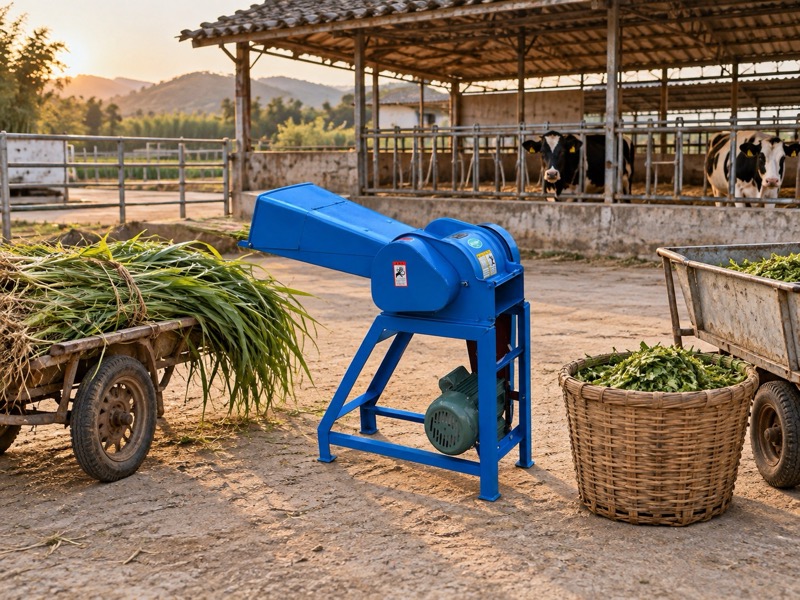
Choosing a Chaff Cutter for Small Dairy Farms in Kenya
Choose a chaff cutter for your Indian dairy farm by matching daily fodder volume, available power, cutting quality, and service support. Morning milking is finished, but feeding runs late because long stalks still need preparation. An unsuitable machine can replace that delay with repeated loading stops, awkward handling, or parts you cannot obtain locally. This Chaff Cutter guide helps you compare practical requirements before you commit your budget.
1. What does a Chaff Cutter do for your dairy farm?
A Chaff Cutter cuts harvested grass, straw, and other suitable fodder into shorter pieces for livestock feeding. Its feed arrangement guides material toward a cutting assembly, then chopped material leaves through an outlet. You still need to select sound fodder and balance your cattle or buffalo ration separately.
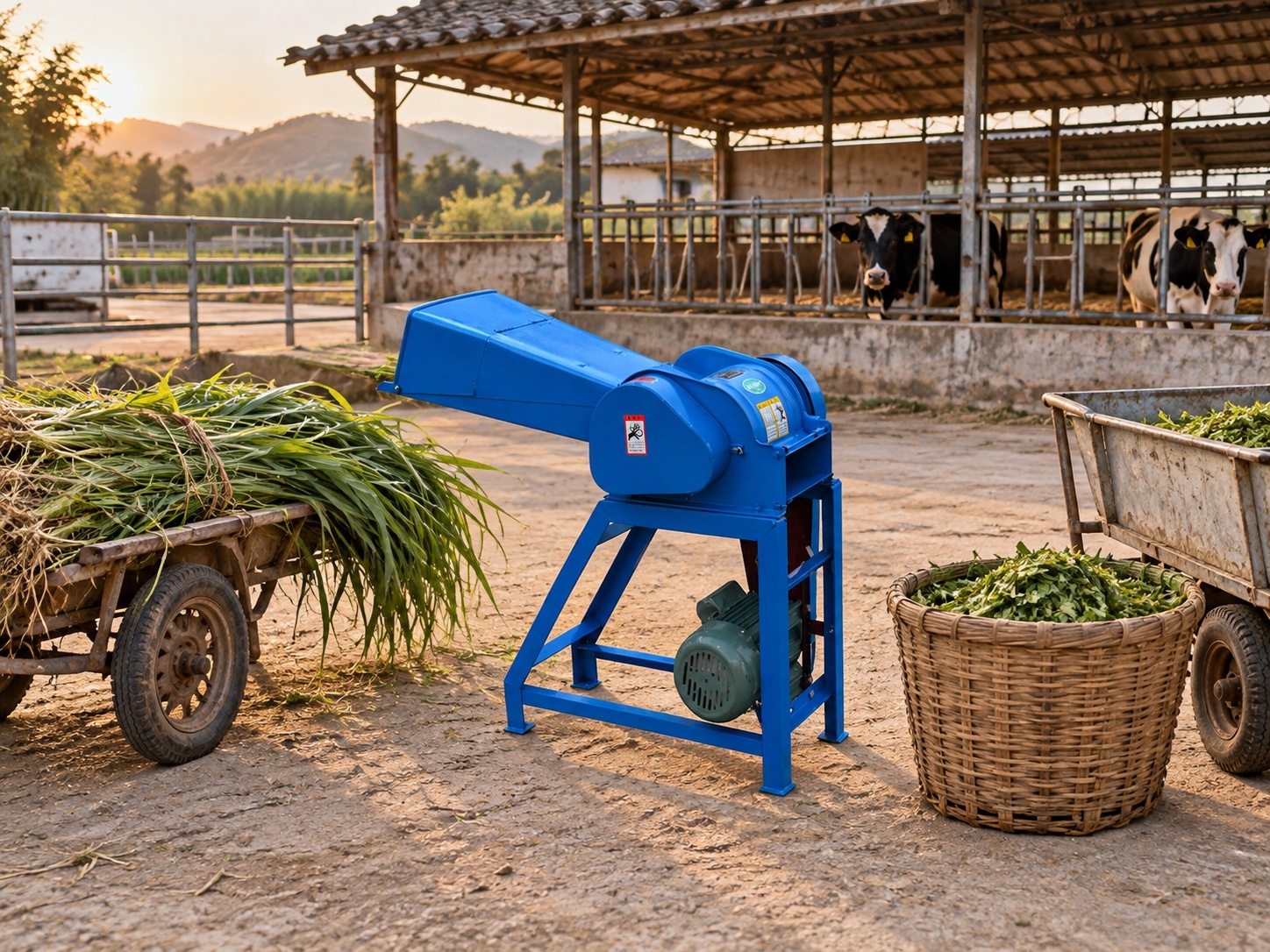
Which feeding jobs can it support?
Chopping can make long fodder easier to handle and mix with other ration ingredients. However, a cutter cannot restore spoiled feed or correct a poorly balanced diet. Start with your feeding routine. List which materials arrive at your shed and how workers prepare each daily batch.
- Separate green fodder from dry material during trials.
- Identify where chopped feed will be collected.
- Include loading and cleaning in your work plan.
Does cutting replace nutrition advice?
No; particle preparation and ration design solve different problems. India’s National Dairy Development Board feeding guidance discusses chaffing alongside balanced feeding for dairy animals. Ask your feeding adviser about suitable forage preparation for your herd rather than assuming finer material always gives better results.
| Farm task | What remains your responsibility |
|---|---|
| Shorten suitable fodder | Select clean, usable material |
| Prepare material for mixing | Balance ration ingredients |
| Organize daily feeding | Move and deliver prepared feed |
Key Takeaway: Treat chopping as one part of feed preparation. This keeps equipment expectations separate from nutrition decisions that need their own evidence.
2. How have Chaff Cutter choices changed for farmers?
Farmers can choose manual or powered equipment with different feeding, drive, and handling arrangements. A Chaff Cutter purchase should reflect today’s workload rather than the type another farm has always used. Compare features you will use daily instead of assuming a newer or larger design automatically fits better.
When does a powered unit make sense?
Consider powered cutting when repeatable batch preparation and available labor justify it. Manual equipment still needs a realistic assessment of effort, guarding, and operating time. Compare a complete morning’s work. Include bringing fodder in and taking chopped material away, not only time spent cutting.
- Record who performs each handling task.
- Note whether power is available when feeding begins.
- Compare working space around different configurations.
Should you move straight to a larger machine?
Check whether capacity or material handling causes your delays before reviewing industrial chaff cutters. Extra output can be difficult to use when workers cannot load steadily or clear collected feed. For comparison, a smaller suitable unit may fit an organized daily batch without occupying unnecessary shed space.
| Configuration decision | Practical comparison |
|---|---|
| Manual or powered | Effort, time, and available power |
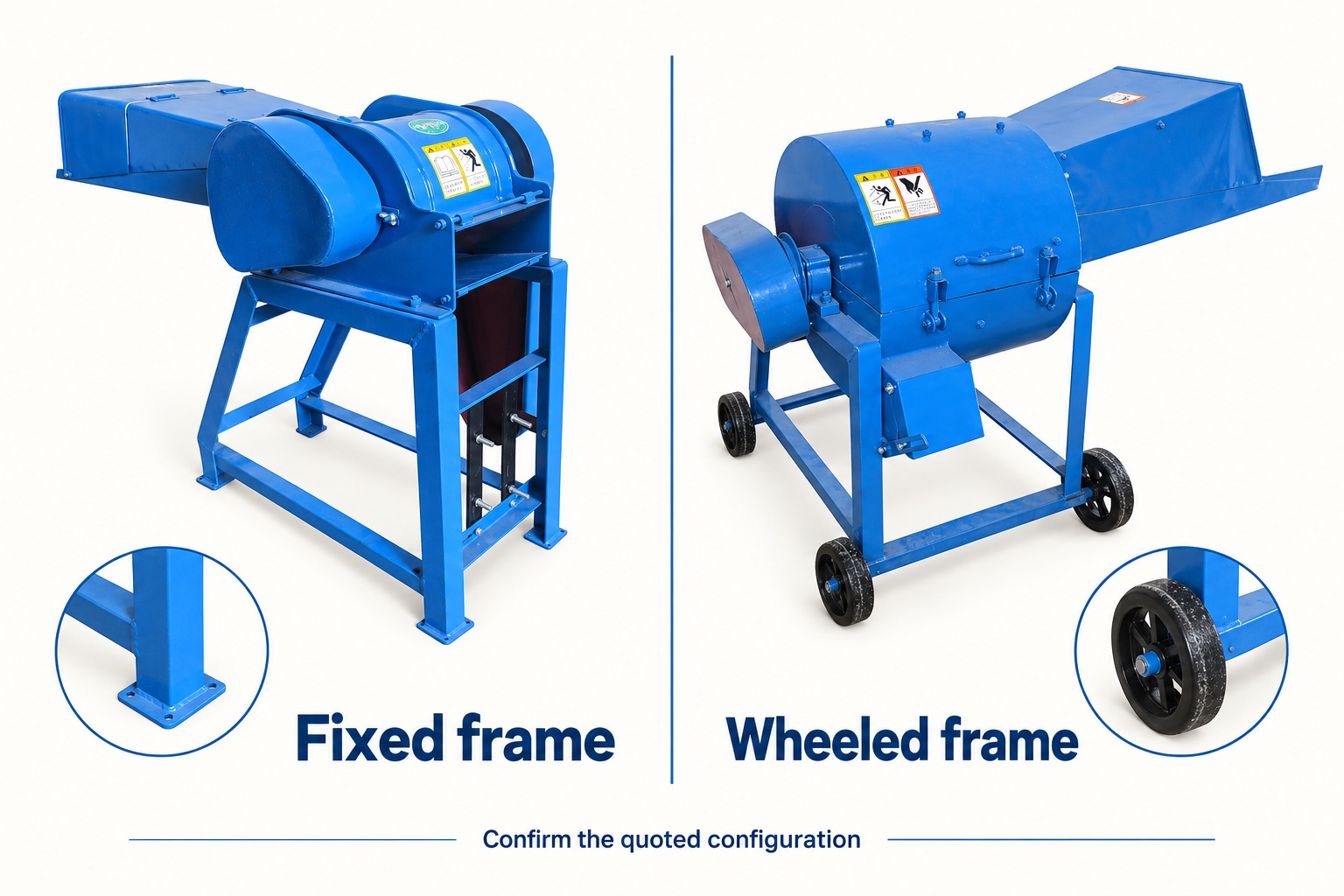
| Fixed or wheeled frame | Positioning and stable installation |
| Compact or larger unit | Usable output and handling capacity |
Key Takeaway: Choose equipment around your current work pattern. A change in machine type should solve an observed problem rather than follow a trend.
3. What Chaff Cutter benefits should you measure?
Measure preparation time, usable output, labor requirements, and feed refusals before judging a machine’s value. A Chaff Cutter may help organize daily fodder preparation, but results depend on material and operating conditions. Avoid treating a sales claim about milk yield or waste reduction as a guaranteed outcome for your herd.
How can you establish a useful baseline?
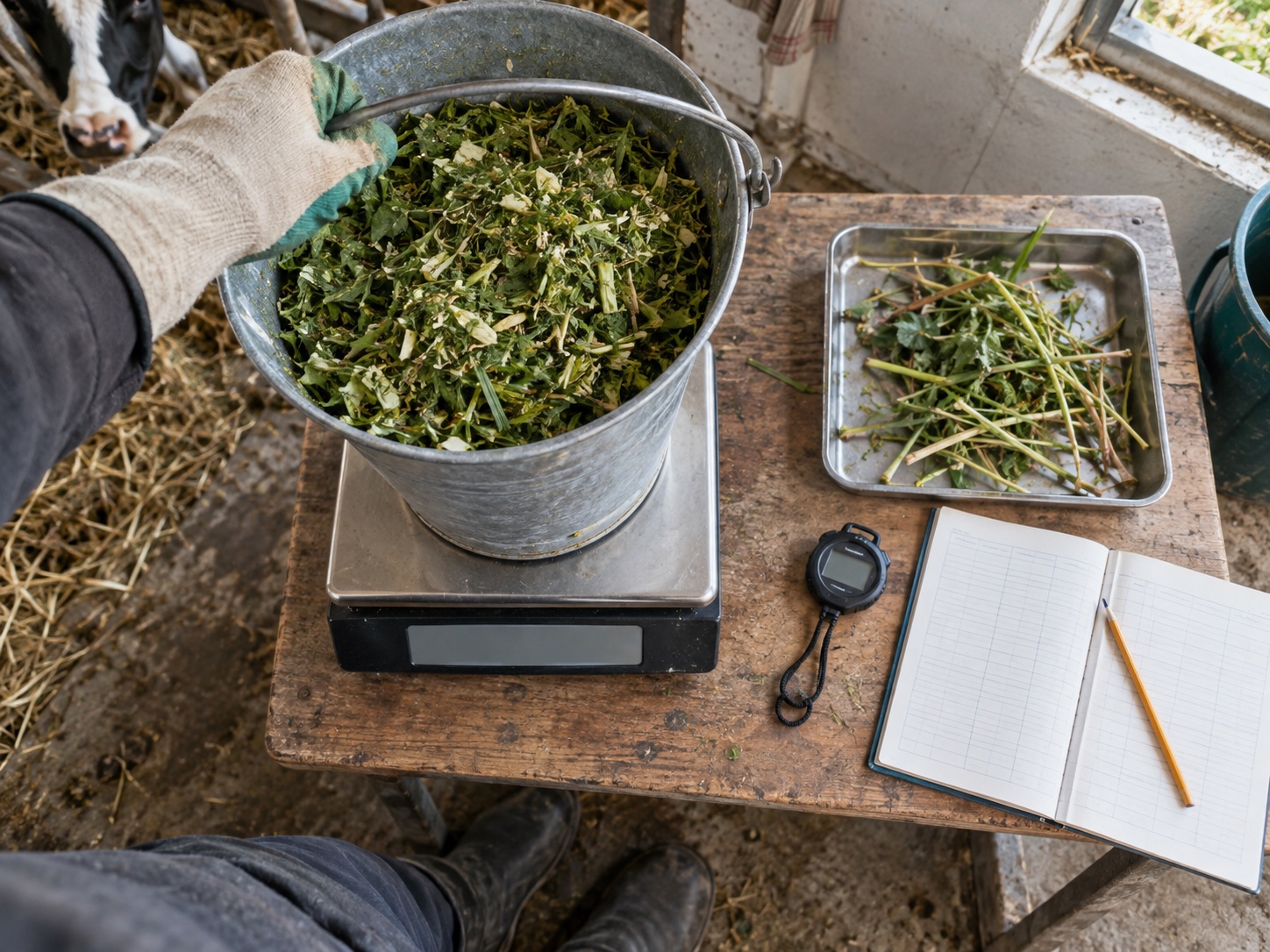
Record a typical batch before changing equipment, then repeat the measurement under comparable conditions. Keep forage type, quantity, and staffing similar so the comparison remains useful. Measure the task you want improved. A short video of an empty machine proves little about a busy feeding session.
- Weigh fodder before and after processing.
- Record total preparation time and interruptions.
- Note changes in rejected material without promising a fixed saving.
Which benefits require wider changes?
Improved feeding consistency also depends on storage, mixing, ration balance, and delivery routines. For example, labor saved at a feed tray may move to collecting scattered output. Discuss these steps with your workers before assigning a financial value to expected savings.
| Claimed benefit | Evidence worth collecting |
|---|---|
| Faster preparation | Comparable full-batch timing |
| Less handling work | Tasks and staffing before and after |
| Less rejected fodder | Measured refusals under similar feeding conditions |
Key Takeaway: Use your own records when comparing benefits. This gives you a sounder purchasing basis than an unsupported percentage in an advertisement.
4. Which Chaff Cutter features deserve a closer look?
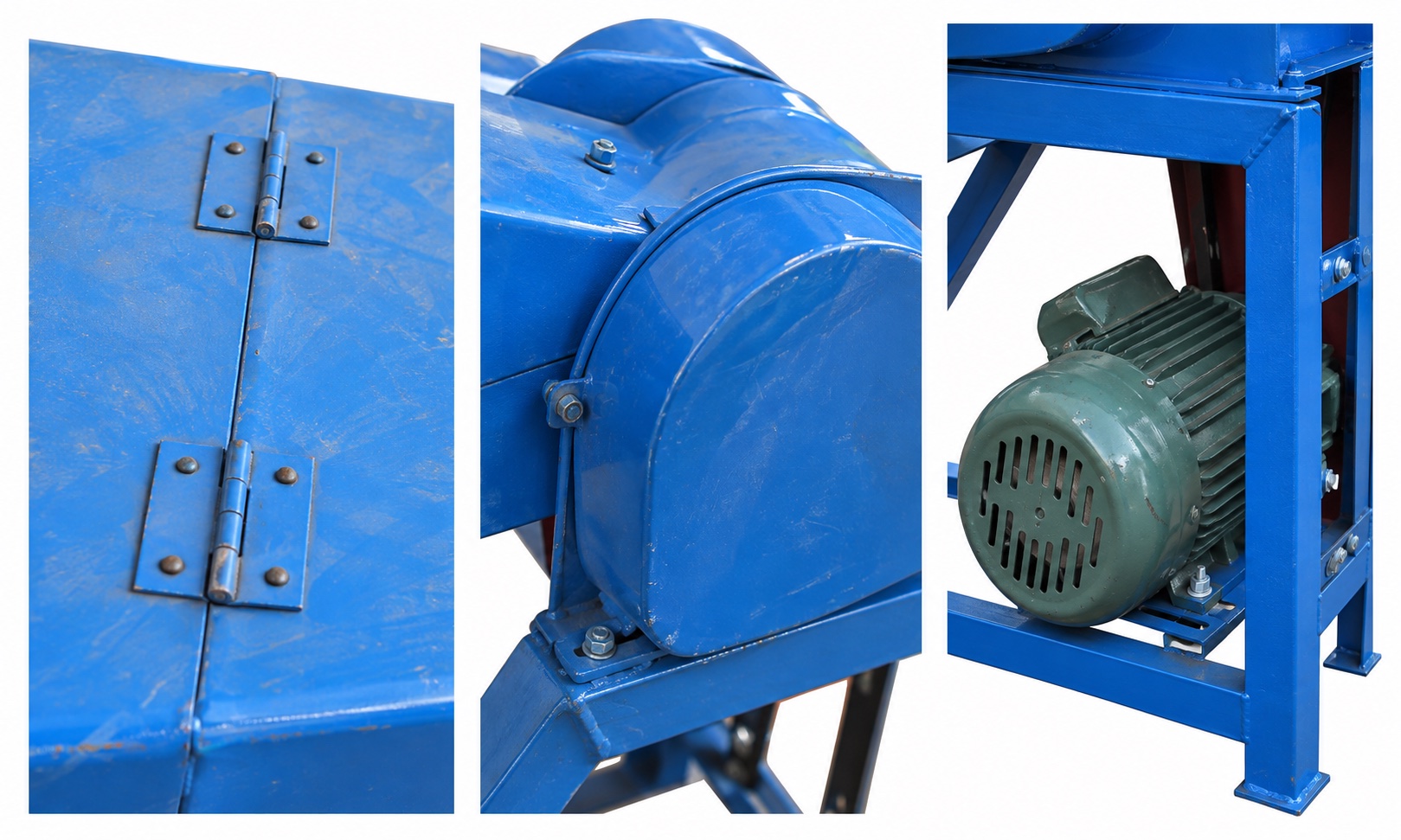
Inspect the feeding arrangement, cutting assembly, drive protection, frame, outlet, and service access on your proposed configuration. A Chaff Cutter photograph can show these visible features, while performance and included equipment need written confirmation. Similar blue housings do not prove that two versions have identical motors, knives, or output.
What can your product photos establish?
Use supplied photographs to compare visible covers, hinges, frames, and loading arrangements. Request current pictures of the exact unit being quoted, including its installed power package. Match the picture with your order. Our machine buying checklist outlines details worth confirming beyond appearance.
- Request a configuration-specific parts list.
- Confirm whether a motor and protective components are included.
- Ask how operators adjust and inspect cutting quality.
What Chaff Cutter specifications need a trial?
Capacity, cut consistency, and material suitability deserve a demonstration using representative fodder. Ask your supplier to record settings, crop condition, and interruptions during that demonstration. Do not infer rated output from a folder name, frame size, or photograph of a motor.
| Feature | Verification method |
|---|---|
| Visible construction | Current configuration photographs |
| Included components | Written equipment list |
| Cutting performance | Representative material trial |
Key Takeaway: Combine photographs, documentation, and test results. Each answers a different question about what you will receive and how it should perform.
5. How much Chaff Cutter capacity does your herd need?
Calculate required average output from your daily fodder mass and actual chopping time, then confirm it through a material trial. Assess a Chaff Cutter against your busiest normal workload rather than animal count alone. Herd size cannot describe differences in ration ingredients, batch schedules, or purchased prepared feed.
How does a small-farm calculation work?
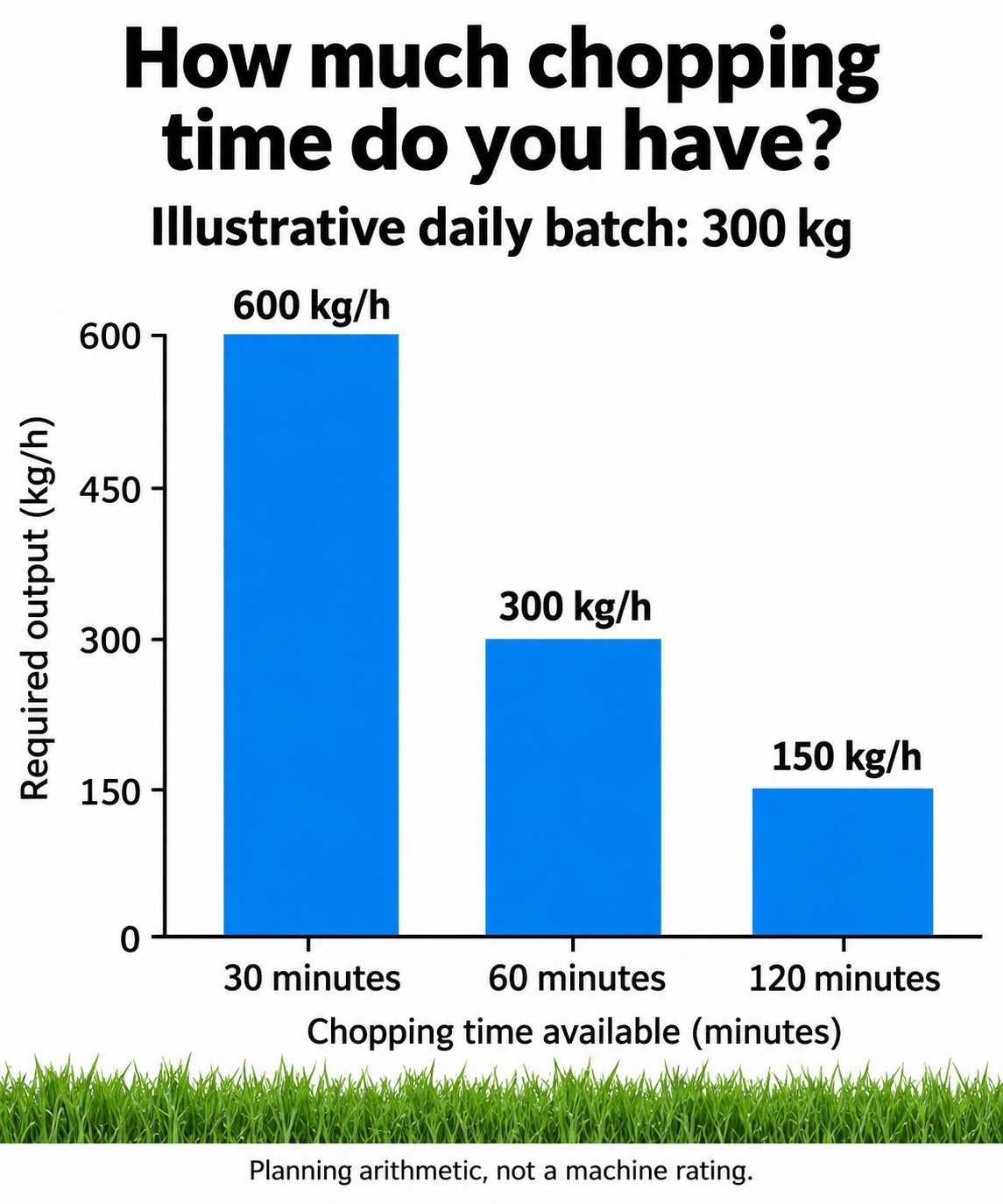
For example, a hypothetical 300 kg batch requires 600 kg/h average output if actual chopping time is limited to 30 minutes. With one hour available, required average output becomes 300 kg/h. Separate cutting time from handling time. These figures are planning arithmetic, not specifications for the photographed machine.
- Weigh your usual batch instead of estimating from its volume.
- Allow time for loading, collection, and cleaning.
- Repeat the calculation for seasonal workload changes.
How should you test a quoted capacity?
Use forage similar to your farm’s material and record output across a complete batch. Note moisture, stem condition, cut setting, and feeding interruptions. A brief run with easy-to-cut material may not represent your daily working conditions.
| Time to chop an illustrative 300 kg batch | Required average output |
|---|---|
| 30 minutes | 600 kg/h |
| 60 minutes | 300 kg/h |
| 120 minutes | 150 kg/h |
Key Takeaway: Let weighed batches and available time guide capacity selection. The calculation gives you a requirement that a supplier can demonstrate against.
6. Which Chaff Cutter fits your Indian farm setup?
Choose equipment that fits your electrical supply, available space, daily access, and service arrangements. A Chaff Cutter should work within your feeding schedule and shed layout without forcing awkward handling. Tell your supplier about power interruptions or space restrictions where they affect your actual installation.
What should you check at the installation site?
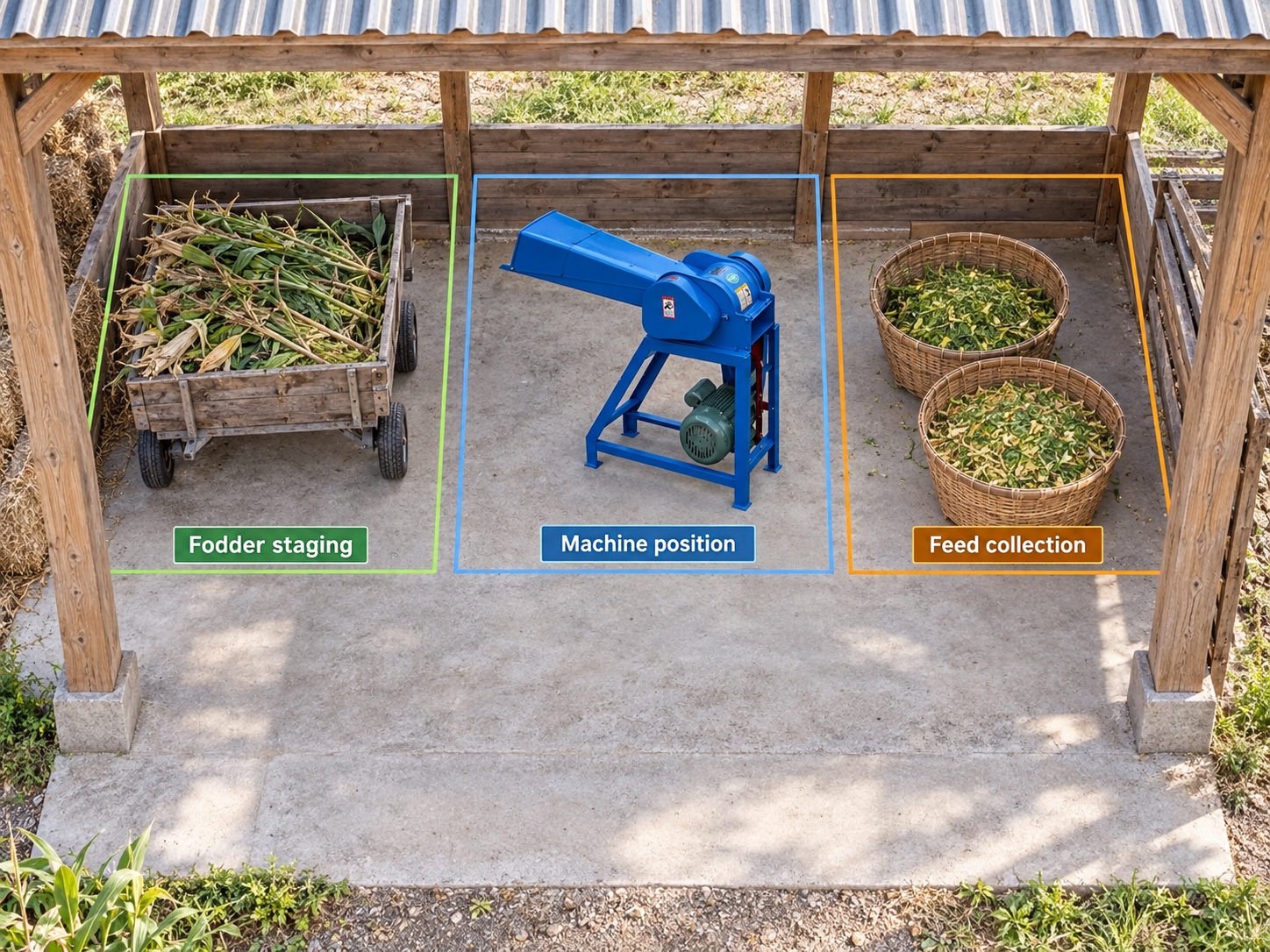
Have a qualified installer confirm supply compatibility and suitable electrical protection for the proposed motor. Measure space for loading, collection, servicing, and safe movement around equipment. Check more than the footprint. A machine that fits between walls may still leave too little room for daily work.
- Confirm voltage, phase, frequency, and starting requirements.
- Keep material routes and collection areas clear.
- Agree on stable positioning before delivery.
When should a small farm compare access options?
If utilization is low, compare buying with any suitable local hiring or shared-use arrangement actually available to you. Include transport, scheduling, responsibility for damage, and cleaning between users. Shared access only helps when equipment remains available during your feeding window.
| Farm constraint | What to compare |
|---|---|
| Limited shed space | Working clearance and material routes |
| Uncertain power availability | Installation requirements and work schedule |
| Infrequent use | Ownership against reliable local access |
Key Takeaway: Fit the equipment to your farm’s routine. Power, space, and access can determine whether a suitable machine becomes useful every day.
7. What Chaff Cutter safety checks should you require?
Require suitable guards, safe feeding arrangements, identifiable controls, stable installation, and clear stopping procedures before operation. Review any Chaff Cutter drive configuration separately because motor and tractor arrangements have different connection hazards. An exposed assembly photographed for inspection does not represent a machine ready to run.
What should happen before clearing a blockage?
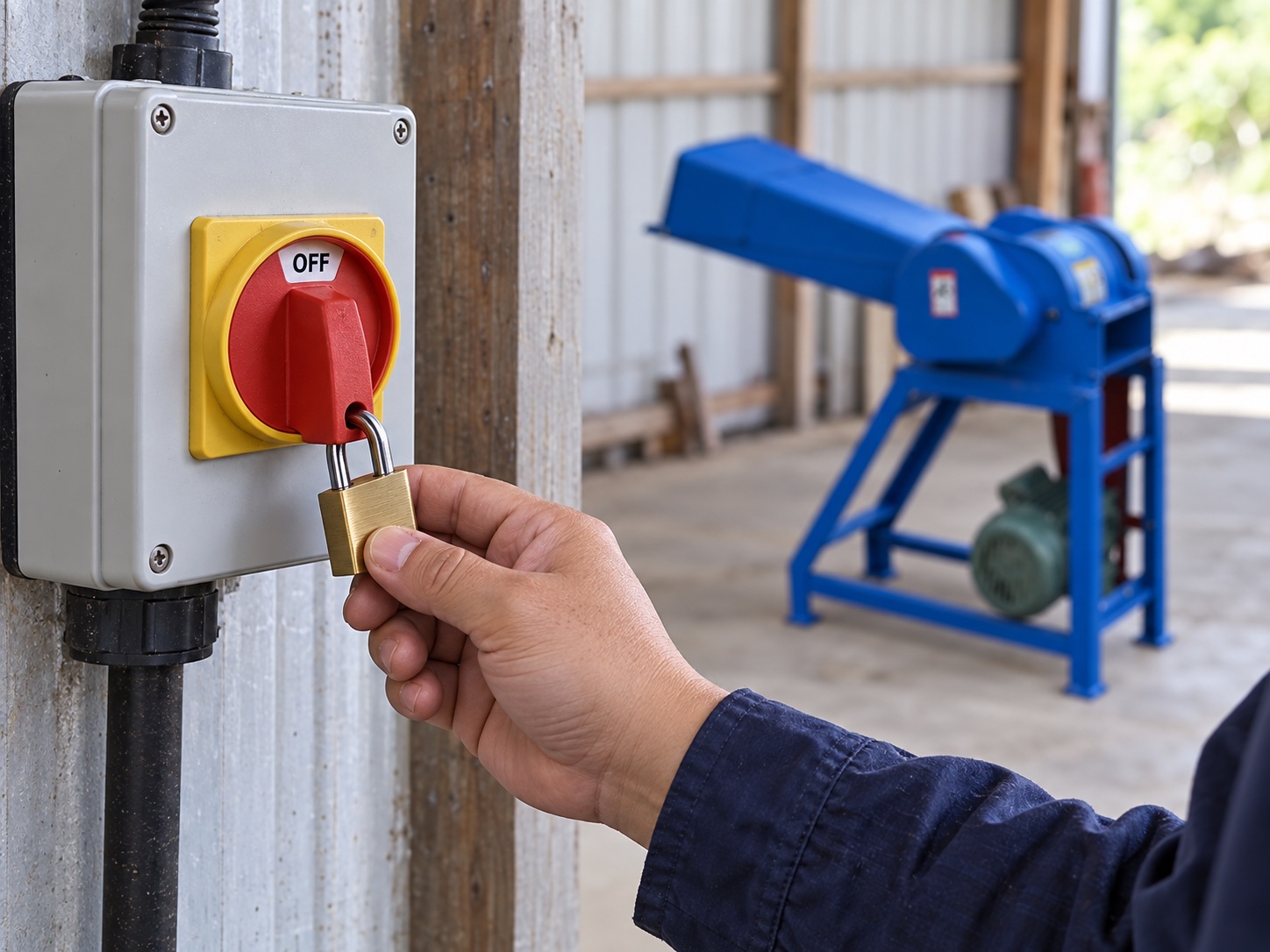
Stop equipment, isolate its power source, and wait for movement to cease before intervention under your machine’s instructions. The UK Health and Safety Executive’s machinery guidance explains guarding and safe stopping principles. Resolve access risks before testing. Do not defeat a guard because material feeds more easily without it.
- Keep bystanders away from feeding and discharge areas.
- Correct missing or damaged protection before use.
- Obtain an explanation of safe isolation during handover.
What Chaff Cutter safety evidence belongs in your order?
Request photographs of the complete installed guard package and operating instructions that workers can understand. Confirm training arrangements and responsibilities for installation. Ask competent local advisers about applicable requirements rather than accepting a generic compliance claim without supporting details.
| Safety check | Evidence to request |
|---|---|
| Moving-part protection | Complete fitted guarding |
| Safe intervention | Stopping and isolation instructions |
| Operator preparation | Demonstration and understandable guidance |
Key Takeaway: Inspect safety arrangements as carefully as output. Missing protection or unclear instructions should be resolved before anyone operates the equipment.
8. What Chaff Cutter maintenance and costs should you plan for?
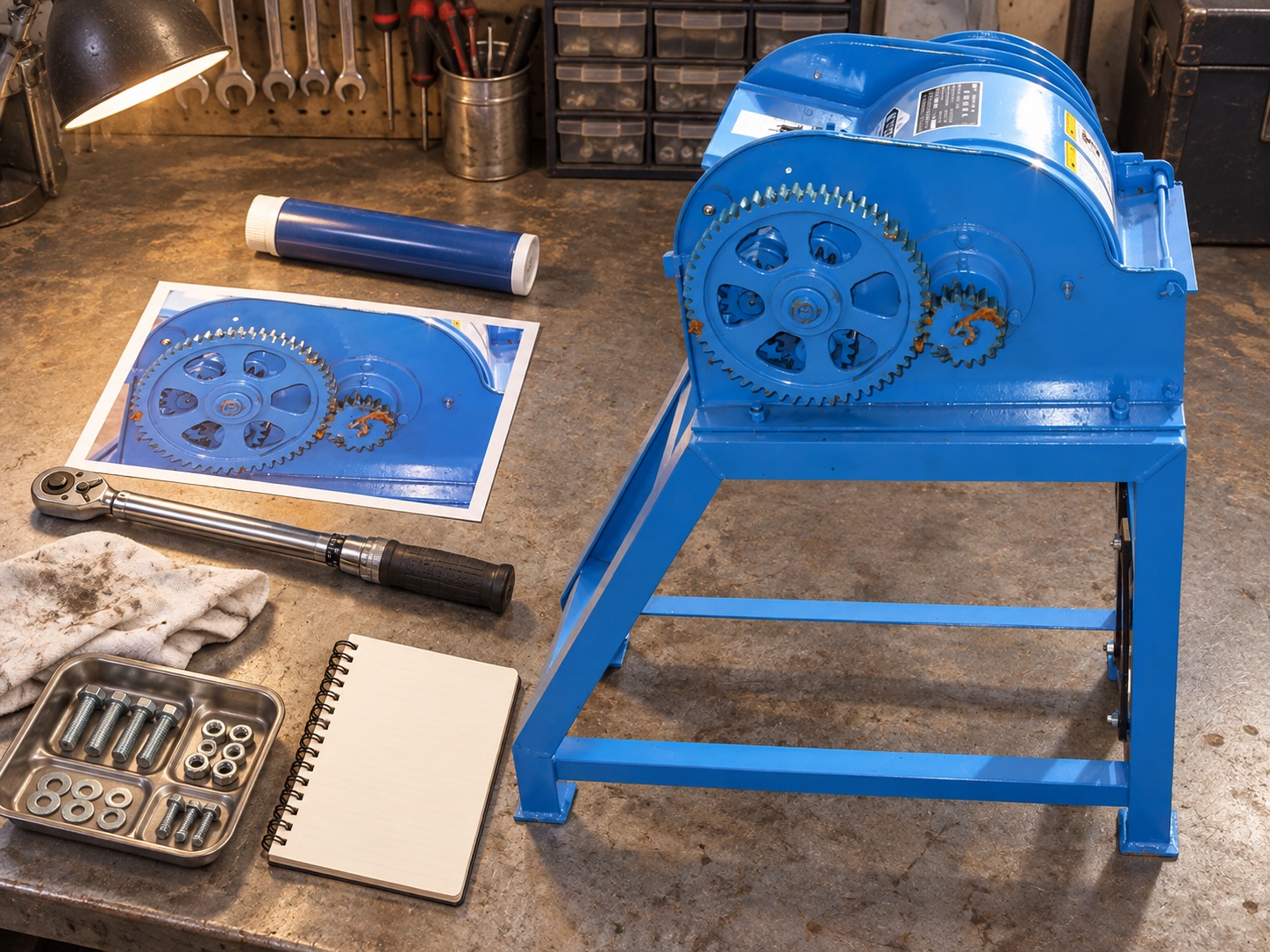
Budget for routine inspections, cleaning, approved wear parts, operating energy, and any installation or delivery costs. Your Chaff Cutter comparison should cover a complete usable package rather than the machine price alone. Ask about local service access and replacement-part identification before a fault interrupts feeding.
Which service details should you request?
Obtain configuration-specific instructions for knife inspection, adjustment, lubrication, and drive maintenance. Ask your equipment supplier which tasks need trained personnel and how replacement parts are identified. Check the parts route before purchase. A low quote can become less attractive if routine components are difficult to obtain.
- List the parts supplied with your order.
- Request part identifiers and a service contact.
- Confirm written warranty scope and exclusions.
How should Indian buyers compare quotations?
Request itemized totals in an agreed currency, with delivery destination and exclusions clearly stated. For cross-border purchases, ask the supplier and your local adviser to clarify landed costs and responsibilities. Compare equivalent power packages, protection, accessories, and support before judging which offer costs less.
| Cost item | Detail to confirm |
|---|---|
| Initial package | Drive, accessories, guards, and delivery |
| Daily operation | Energy, labor, and handling requirements |
| Ongoing service | Wear parts, instructions, and support |
Key Takeaway: Compare complete costs and service arrangements. An itemized offer makes differences visible before they become expenses after delivery.
9. How can you buy a Chaff Cutter with fewer regrets?
Choose a documented configuration that completes your representative batch safely and fits your farm’s power, space, and support needs. Discuss your Chaff Cutter requirements using measured fodder quantities and clear photographs. Ask for unresolved details in writing before placing an order.
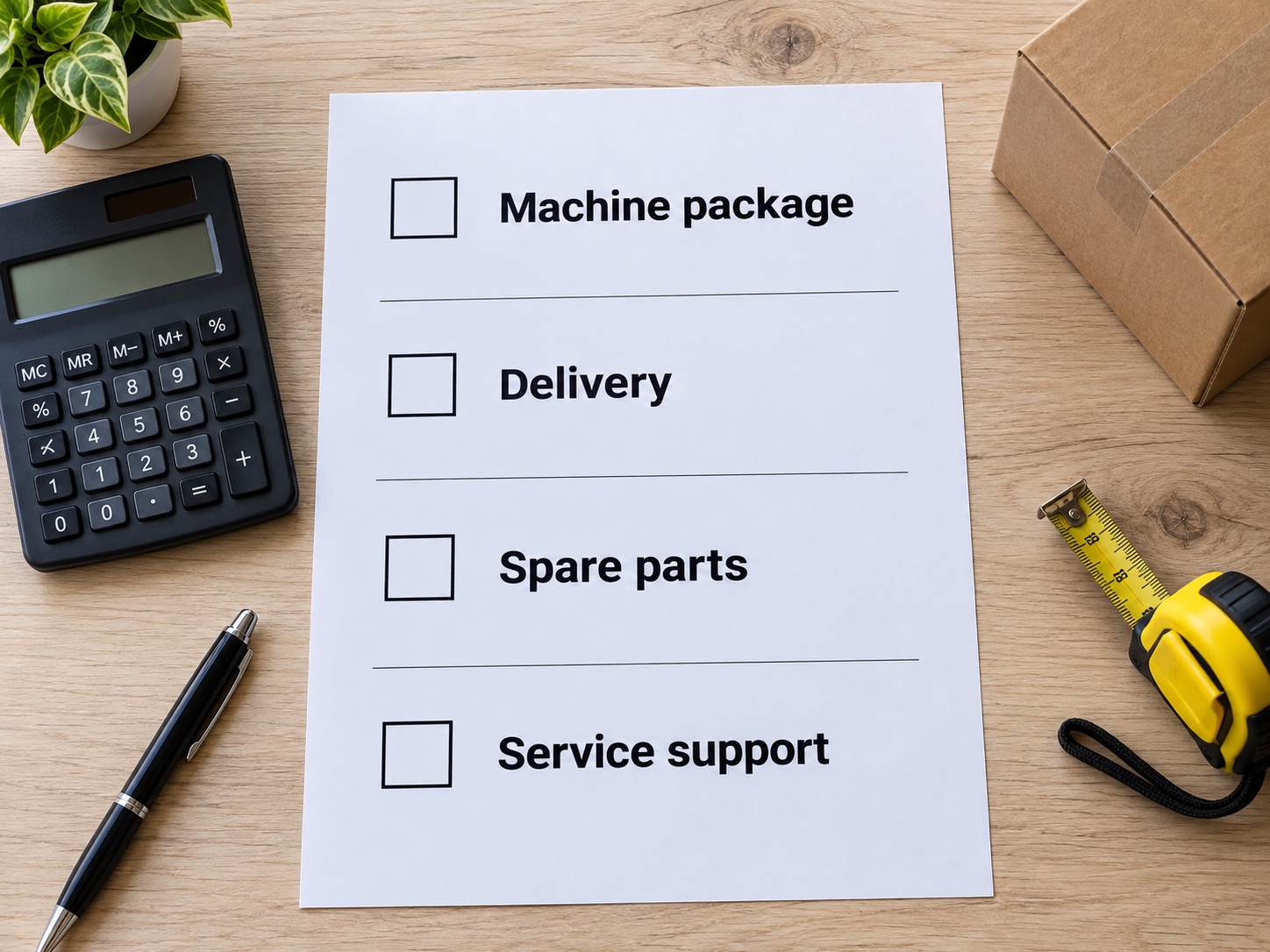
What should your final purchasing brief include?
Describe your materials, daily workload, chopping window, electrical service, and receiving arrangements. Include the actual operator’s observations because loading and cleaning affect everyday use. Turn the shortlist into a trial. Comparable conditions help you distinguish suitable equipment from an attractive demonstration.
- Bring a representative fodder sample or clear material photographs.
- Record output quality and full-batch timing.
- Confirm installed components and service terms.
What should you do after comparing your options?
These checks address uncertain capacity, unsuitable power, incomplete protection, and unexpected ownership costs. We can review your crop, workload, and installation details to discuss relevant equipment configurations. Our position is straightforward: recommendations should follow your farm’s working conditions and evidence from a suitable trial.
| Final decision | Evidence needed |
|---|---|
| Suitable machine | Crop and workflow match |
| Adequate output | Representative batch results |
| Clear purchase terms | Written package and support details |
Key Takeaway: Use those records to settle remaining questions before ordering. Send your farm requirements and contact us today to discuss a practical fodder-preparation setup.
10. What else should Indian farmers ask? (FAQ)
Ask for configuration-specific answers about materials, power, capacity, cutting quality, and service before buying. A Chaff Cutter recommendation becomes more useful when your supplier knows how your farm actually prepares feed.
Which questions help you compare suppliers?
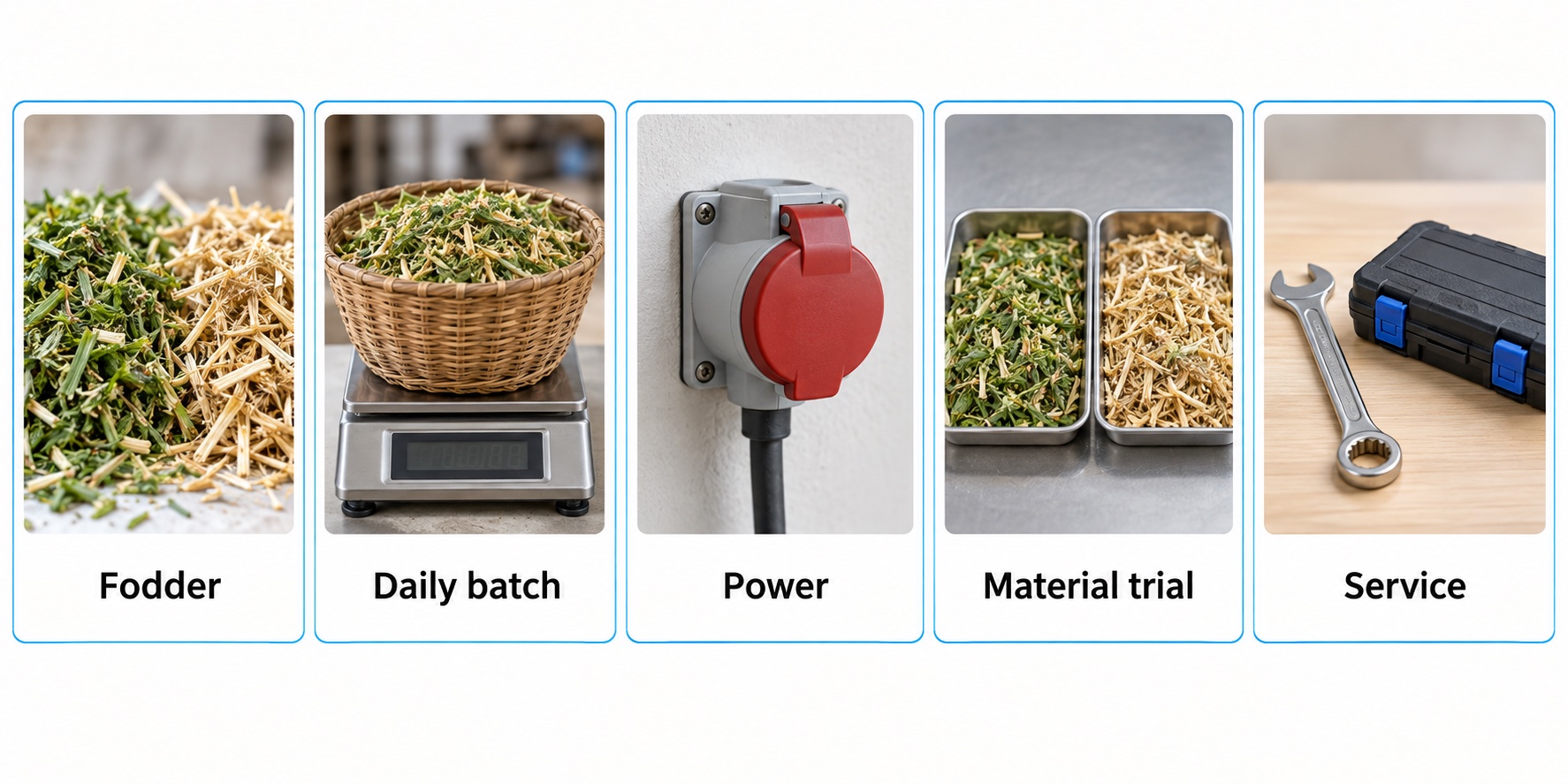
Keep your daily batch in view. It gives each supplier a common basis for discussing your requirements.
- Describe your usual green and dry fodder.
- State your available cutting time and power supply.
Q1: Can I use one unit for green fodder and dry straw?
Possibly, if that configuration supports both. Request separate trials because moisture and stem characteristics can affect cutting quality and output.
Q2: What’s the best size for a small cattle or buffalo farm?
Choose from your weighed workload and chopping window. Animal count alone cannot describe how much material you actually need to process.
Q3: How do I know if a quoted capacity is realistic?
Test a representative batch under recorded conditions. Include pauses and handling limits rather than relying on a brief demonstration.
Q4: Can I assume a motor comes with the machine?
No. Confirm the exact drive package in writing because photographs and similar model names can show different configurations.
Q5: What’s the best way to choose a supplier in India?
Compare documented equipment, relevant trials, clear delivery terms, and accessible service. A familiar name or low headline price cannot establish suitability by itself.
