
Chaff Cutter Machine: Types, Capacity and Buying Guide
Choose a chaff cutter by matching machine type, tested capacity, and available power with your forage and daily workload. Your morning feed is late, workers keep pushing tough stalks through a small cutter, and yesterday’s batch contains long strips. Buying a larger motor without checking feeding and cutting performance can leave you paying for the same delays. Use this Chaff Cutter Machine buying guide to compare practical requirements before requesting a quotation.
1. What does a Chaff Cutter Machine actually do?
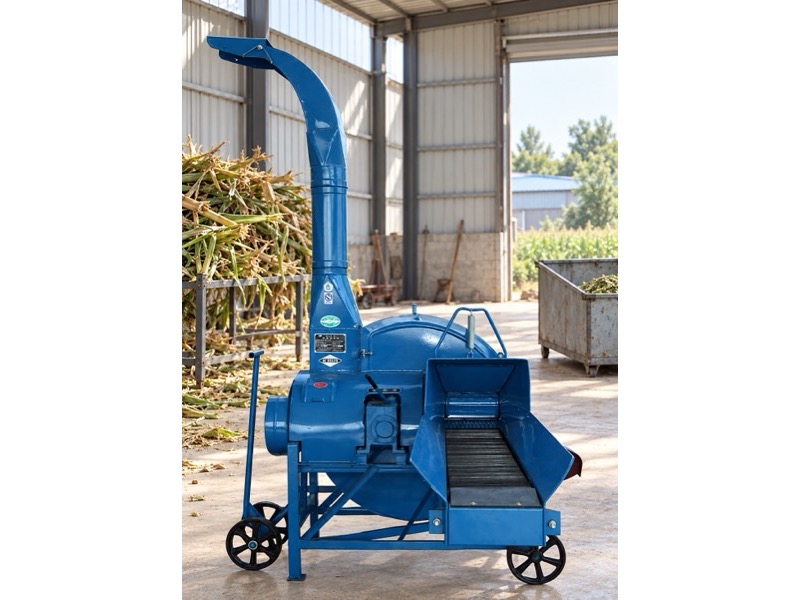
A Chaff Cutter Machine cuts harvested forage into shorter pieces for feeding or further preparation. Feed rollers or a suitable feeding arrangement move material toward a cutting assembly, while discharge equipment directs chopped output away. The machine prepares forage; it does not harvest standing crops or complete silage fermentation by itself.
Where does cutting fit into your workflow?
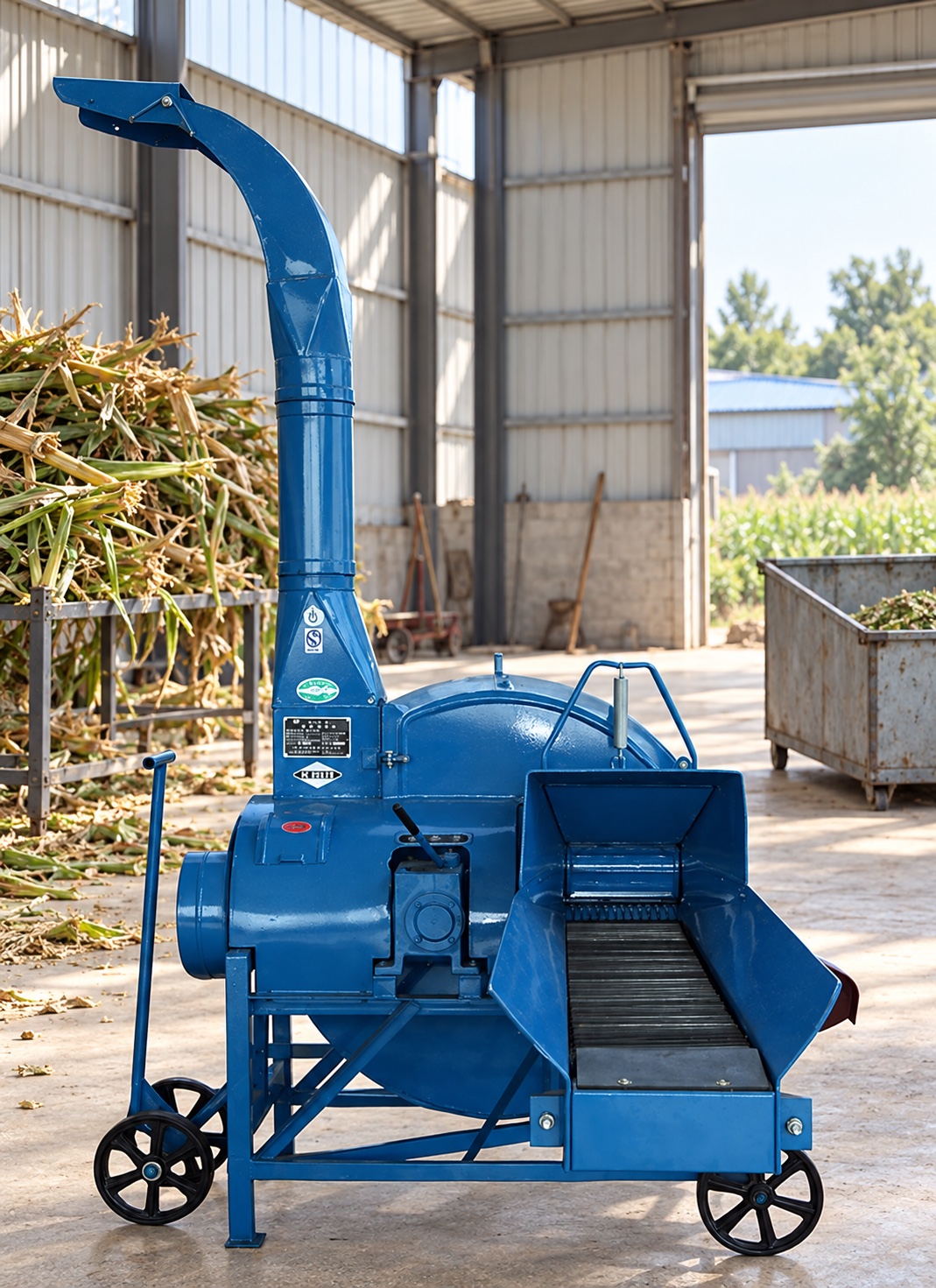
Place cutting between raw-material collection and your next handling stage. Fresh feeding needs timely delivery, while silage preparation also needs suitable moisture, packing, and sealing. Follow one batch through your yard. That reveals loading and collection jobs a machine description may leave out.
- Identify who brings forage to your cutter.
- Provide space for collecting chopped material.
- Match discharge height with your receiving container.
Which jobs need separate equipment?
Grain grinding, stalk kneading, and kernel processing involve different mechanisms. Ask what your proposed configuration actually includes rather than assuming every forage machine performs all three. A demonstration should show both material entering and usable output leaving.
| Required task | What to verify |
|---|---|
| Shorten harvested forage | Cutting assembly and feed arrangement |
| Grind grain | Appropriate grinding equipment |
| Break maize kernels | Documented processing capability |
Key Takeaway: Define each processing job before comparing models. This prevents you from buying a cutter for work its installed components cannot perform.
2. Which Chaff Cutter Machine type fits your farm?
Choose a compact, electric, engine-driven, or tractor-powered configuration according to workload and local power availability. Your Chaff Cutter Machine should fit how workers load material and move finished forage. A small footprint can help in a crowded shed, but it says little about sustained output.
Should you choose compact or larger equipment?
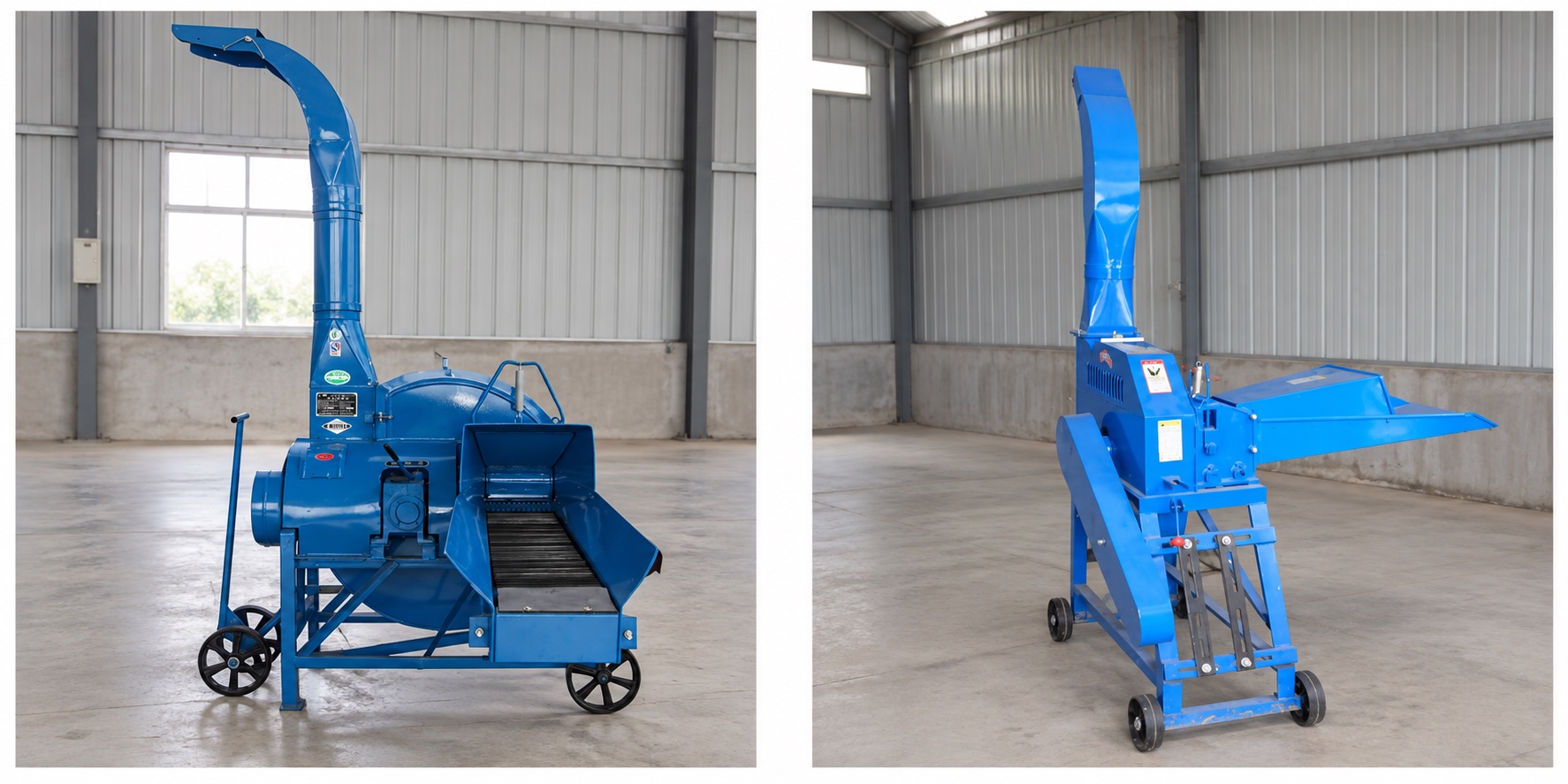
Compare a mini chaff cutter for limited working space and manageable batches. Consider an electric chaff cutter where electrical supply and regular stationary feeding suit your routine. Start with your actual batch. Model labels cannot replace a trial using representative forage.
- List crops you process throughout the year.
- Measure available space, including safe access.
- Include collection bins and material staging areas.
What do Chaff Cutter Machine photographs tell you?
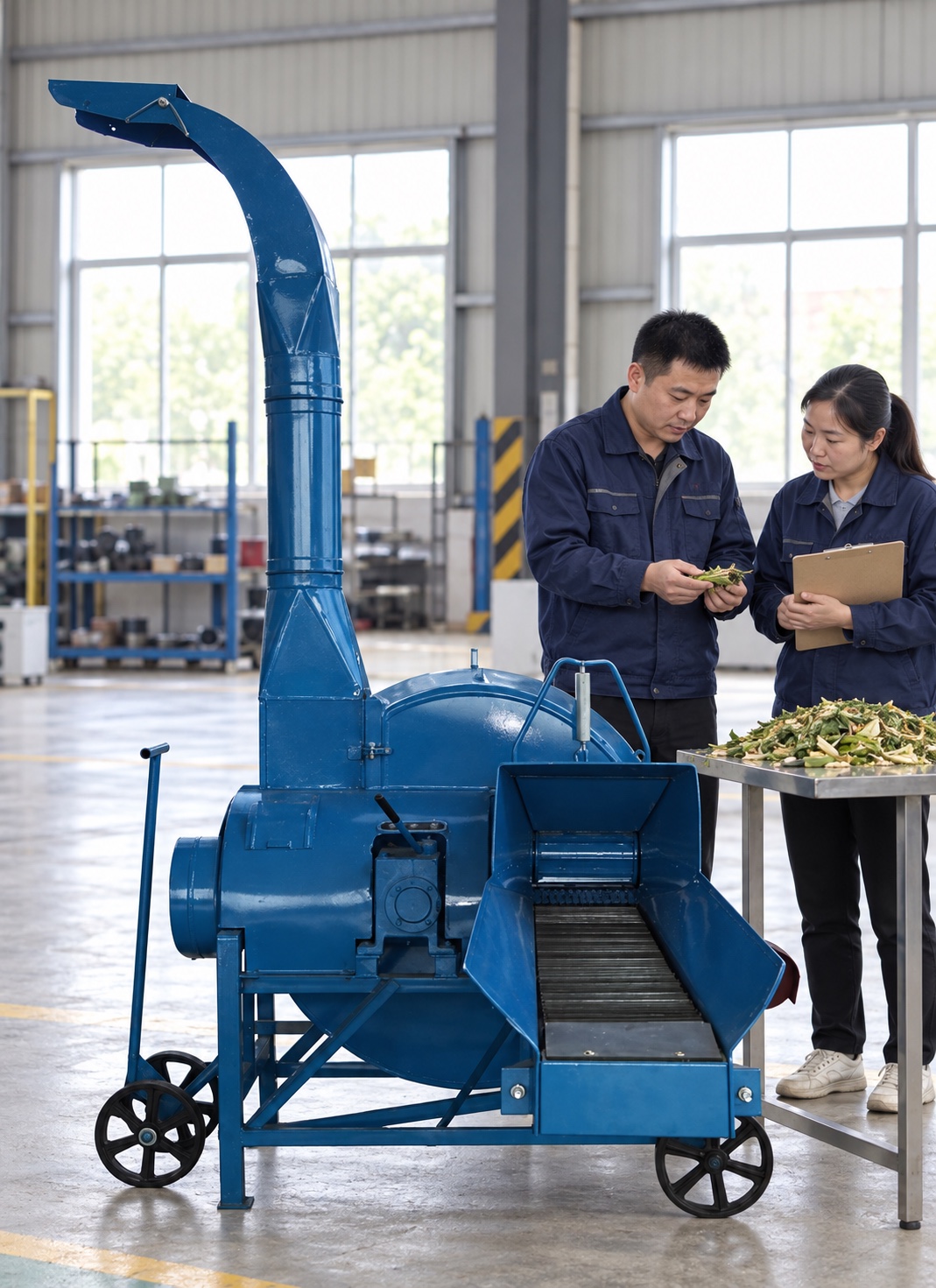
Photographs help you inspect visible feeding arrangements, discharge direction, wheels, and frame construction. They cannot establish capacity, motor rating, included guards, or suitability for every crop. Request a written configuration that matches the photographed version before placing an order.
| Configuration choice | Main question |
|---|---|
| Compact stationary unit | Can it complete your daily batch? |
| Larger feed arrangement | Can workers supply material steadily? |
| Mobile installation | Can you position and stabilize it safely? |
Key Takeaway: Use machine type to narrow your shortlist. Then compare the exact configuration and trial output, not appearance alone.
3. How much Chaff Cutter Machine capacity do you need?
Divide daily forage mass by available chopping time to estimate your required average output. Check a Chaff Cutter Machine against that workload using your actual crop and desired cut. Keep time for loading, moving bins, cleaning, and routine checks outside your net chopping allowance.
How does a planning calculation work?
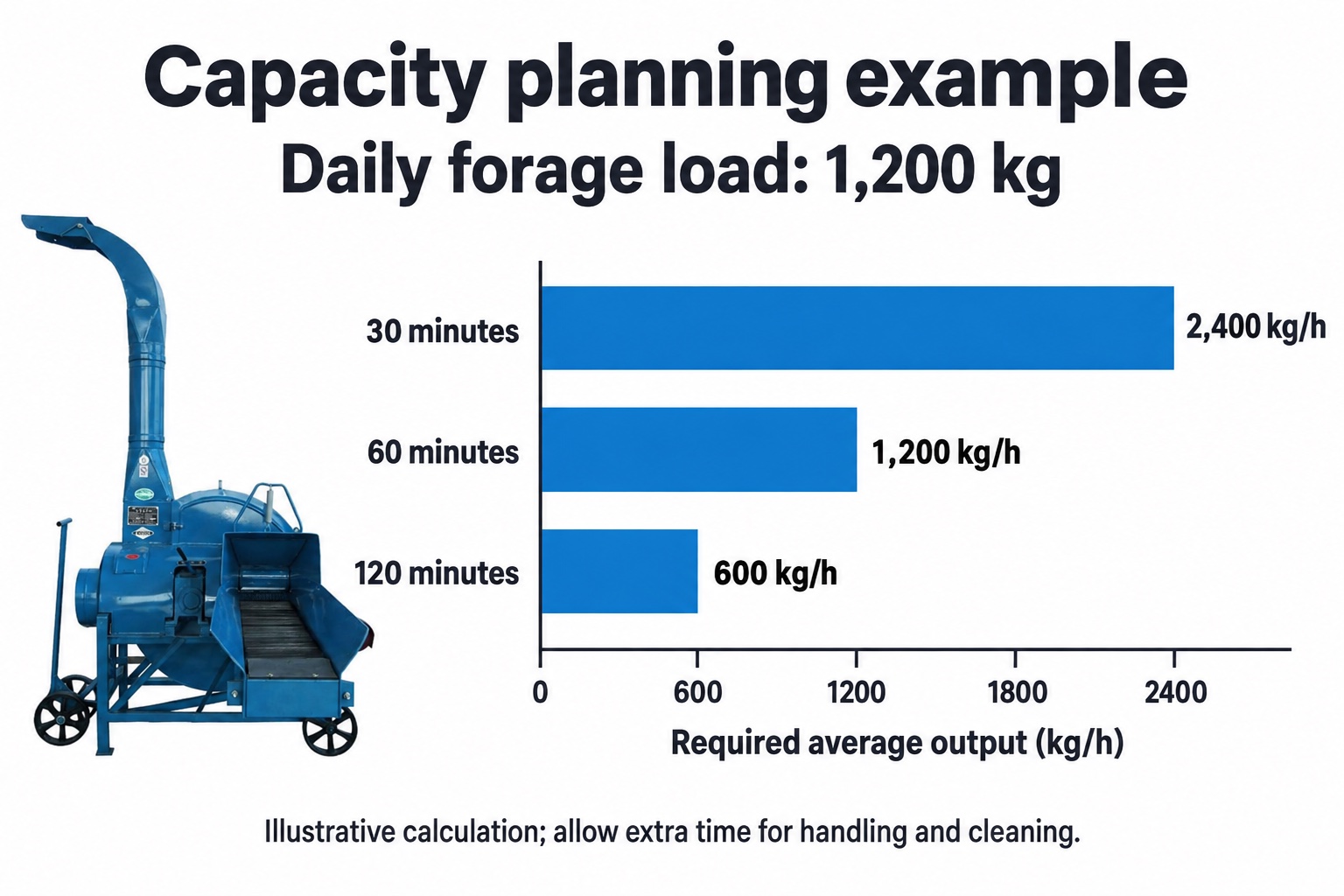
For example, you need to chop 1,200 kg daily and have one hour available for actual cutting. That requires an average output of 1,200 kg/h during that hour. Allow room for handling delays. This calculation sets a requirement; it does not predict any model’s performance.
- Weigh a representative daily batch.
- Separate actual cutting time from total working time.
- Repeat the estimate for your busiest season.
Why might advertised output differ from your result?
Crop moisture, stem size, cut setting, feed consistency, and operator handling can change measured output. Ask suppliers how they tested their capacity figure. Compare demonstrations using equivalent material and count interruptions during your own trial.
| Chopping time for an illustrative 1,200 kg batch | Required average output |
|---|---|
| 30 minutes | 2,400 kg/h |
| 60 minutes | 1,200 kg/h |
| 120 minutes | 600 kg/h |
Key Takeaway: Buy against a measured workload and a realistic schedule. A shorter working window demands more usable output, even when daily forage mass stays unchanged.
4. Which Chaff Cutter Machine power source should you choose?
Choose power that your site can supply reliably and that matches the machine’s written requirements. An electric Chaff Cutter Machine needs compatible electrical service, while engine and tractor drives require their own operating checks. Motor size alone does not establish cutting capacity or crop suitability.
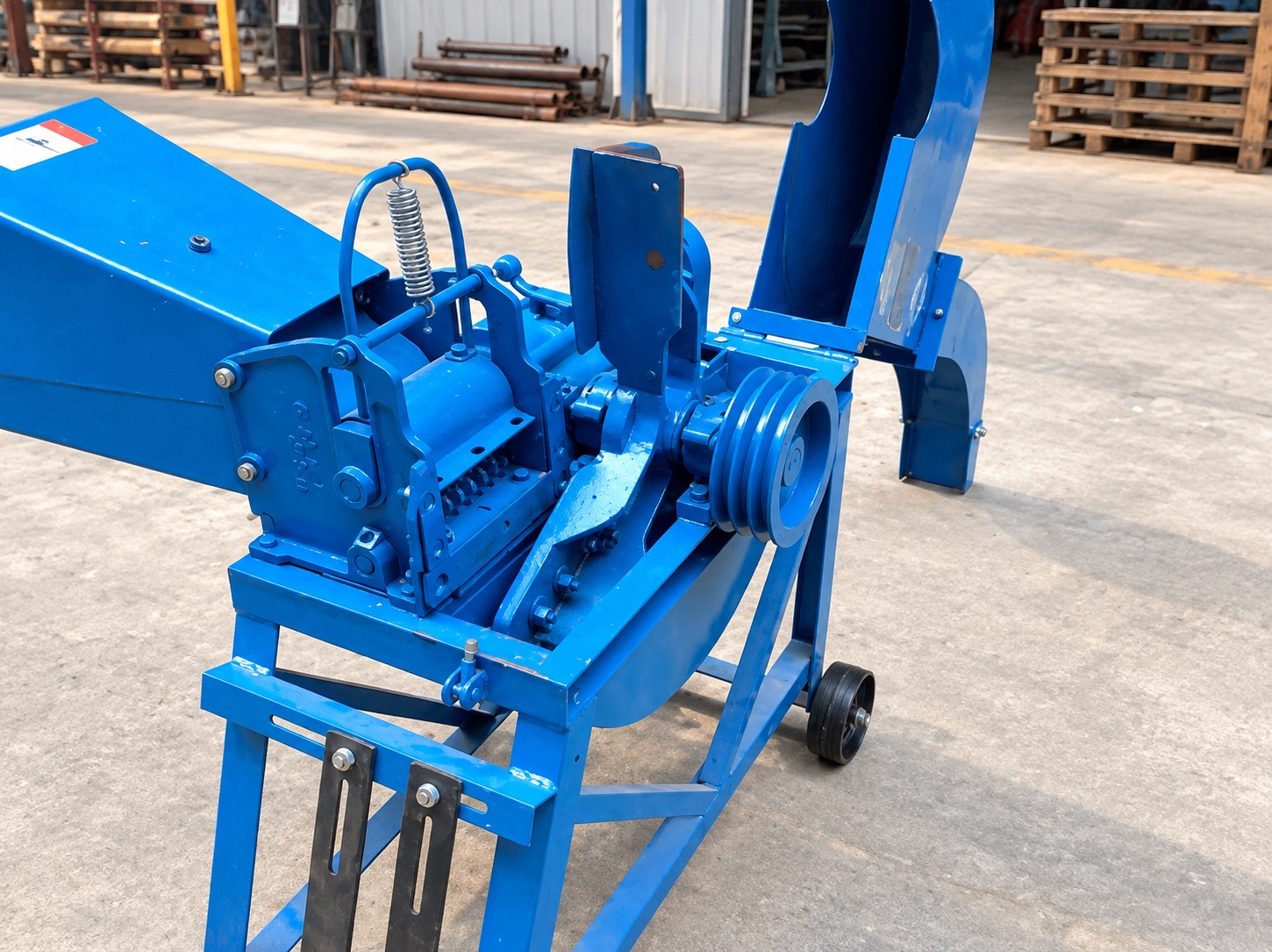
What should you confirm before installation?
For electric equipment, confirm voltage, phase, frequency, starting requirements, and suitable protection with your supplier and a qualified installer. For a tractor-powered chaff cutter, verify PTO speed, power, coupling, and guarding compatibility. Check the connection before delivery. An incompatible drive can delay use even when everything else looks suitable.
- Provide your actual electrical or tractor details.
- Request configuration-specific installation instructions.
- Confirm who supplies cables, couplings, and protective equipment.
How do Chaff Cutter Machine operating costs compare?
Use local energy or fuel prices and measured consumption under a representative load. Include staffing and material handling in your comparison. Avoid transferring consumption claims from another crop, motor size, or cutting arrangement.
| Power option | Check before purchase |
|---|---|
| Electric | Supply and installation compatibility |
| Independent engine | Fuel, ventilation, and maintenance needs |
| Tractor PTO | Speed, power, connection, and guards |
Key Takeaway: Confirm your power arrangement before choosing a model. A suitable connection matters more than a large power figure printed in a brochure.
5. How do you check Chaff Cutter Machine cutting quality?
Inspect representative chopped samples for consistency, excessive fines, long strips, and suitability for your feeding or storage plan. Evaluate a Chaff Cutter Machine using your own grass, maize, or dry stalks. A neat demonstration sample from a different material cannot settle your purchasing decision.
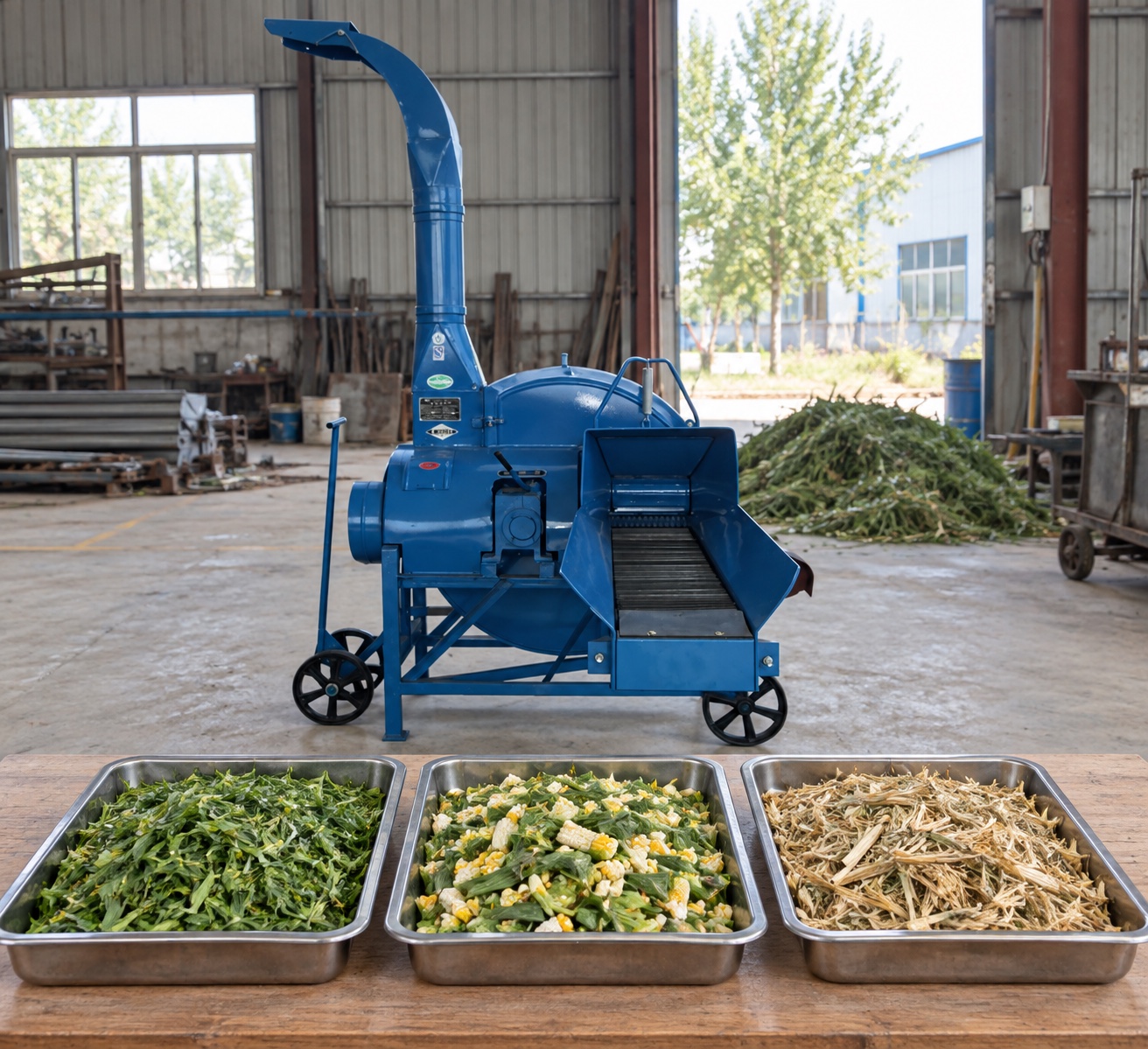
Does shorter always mean better?
No; cutting length must balance packing needs and useful fiber in your ration. For silage, moisture and storage management still affect preservation after chopping. Inspect output before increasing speed. Penn State’s particle-size guidance explains why both long pieces and excessive fines deserve attention.
- Compare samples from several points during a trial.
- Inspect stem pieces and maize kernels separately.
- Ask your nutritionist about suitable particle distribution.
How can you make a trial repeatable?
Record crop condition, feed rate, power setup, and cutting adjustment alongside each sample. Confirm knife condition and adjustment procedures with your supplier. For whole-plant maize, verify any kernel-processing claim separately because stem cutting alone does not establish grain breakage.
| Sample finding | Question to investigate |
|---|---|
| Long uneven strips | Are feed and knife settings suitable? |
| Excessively fine forage | Does this output suit your ration? |
| Frequent whole kernels | Is kernel processing actually included? |
Key Takeaway: Judge quality with repeatable samples. Faster chopping has little value when finished material does not fit your feeding or storage needs.
6. Which Chaff Cutter Machine safety checks come first?
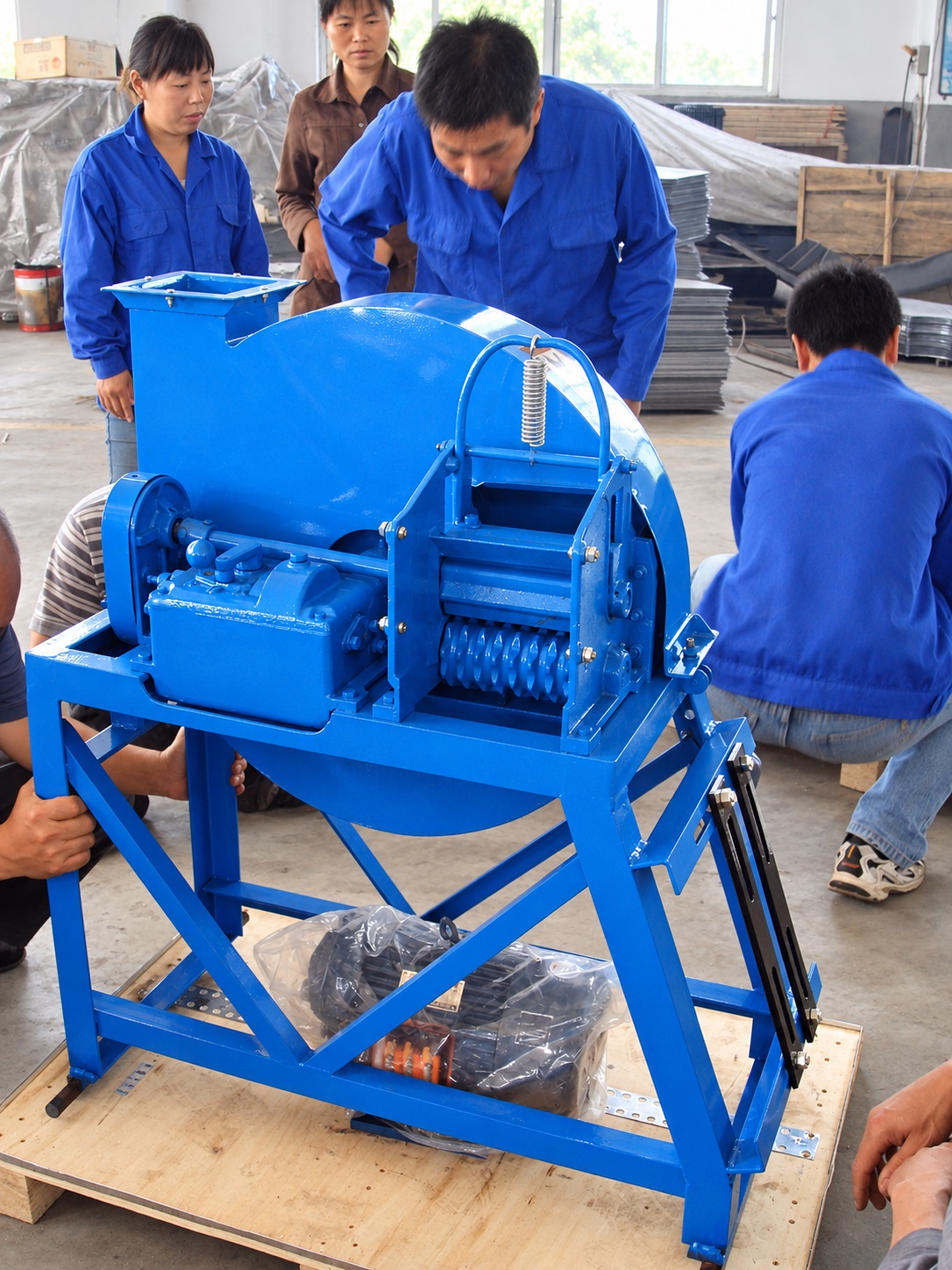
Check guarding, safe feeding arrangements, stopping controls, stable installation, and safe access before testing or buying. Your Chaff Cutter Machine should arrive with instructions covering operation, isolation, cleaning, and maintenance. Photographs of open assemblies show inspection access; they do not demonstrate a machine ready for operation.
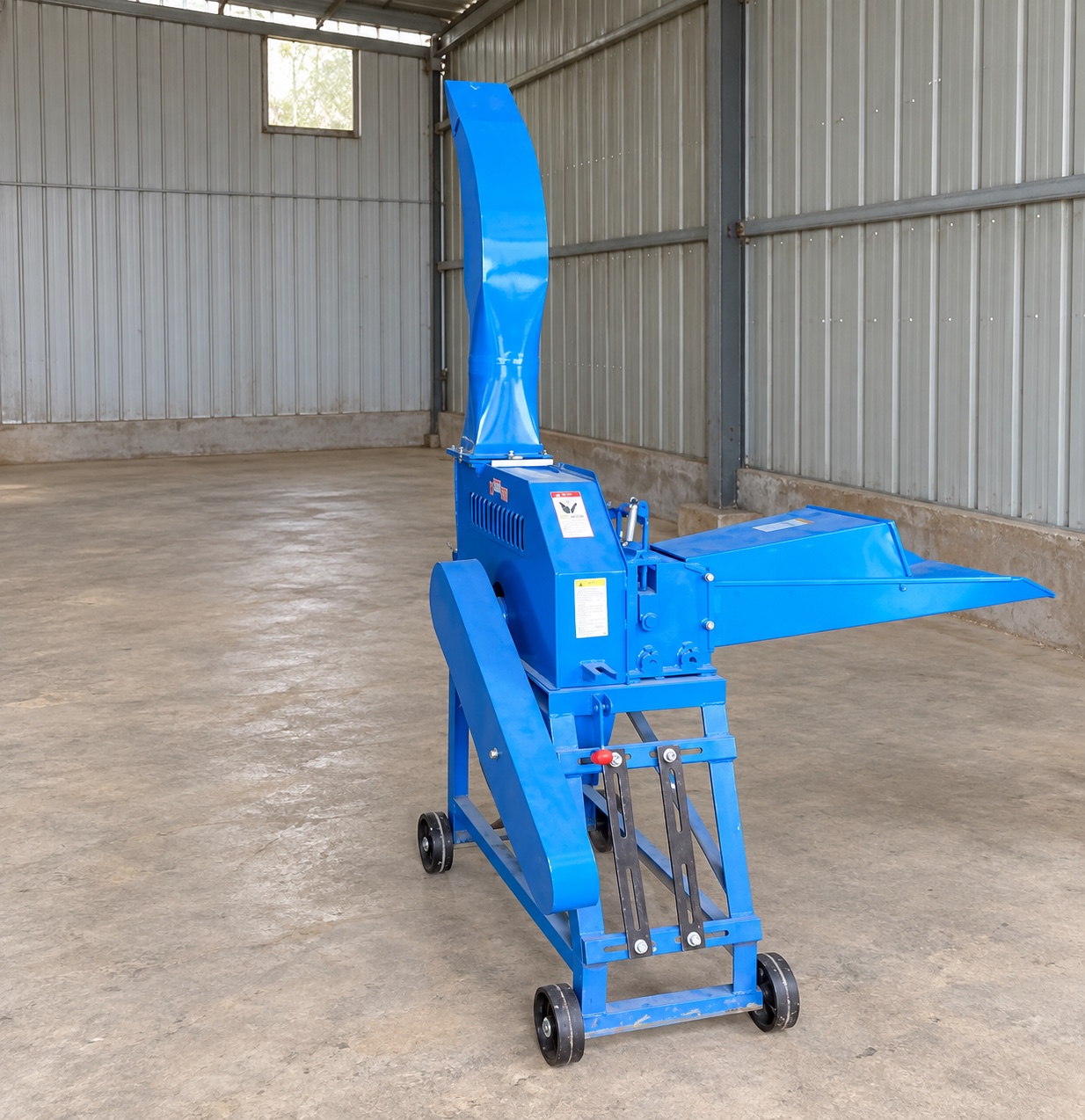
What should you inspect during a demonstration?
Look for secure covers around hazardous moving parts and adequate separation from cutting and feeding mechanisms. Follow UK Health and Safety Executive guidance on checks, guarding, and safe stopping. Check access as carefully as output. Ask the demonstrator to explain normal stopping and safe isolation before any maintenance discussion.
- Keep people clear of feed and discharge hazards.
- Stop, isolate power, and wait for movement to cease before servicing.
- Have damaged or missing guards corrected before use.
What belongs in your delivery inspection?
Compare delivered equipment with the agreed guard package and operating instructions. Check that controls are identifiable and suitable for your installation. Confirm training and any local compliance requirements with competent advisers rather than relying on a photograph or generic certificate.
| Inspection point | Evidence to request |
|---|---|
| Moving-part protection | Complete installed guarding |
| Safe stopping | Clear control and isolation instructions |
| Installation | Stable positioning and safe access |
Key Takeaway: Resolve safety questions before accepting equipment for use. A productive demonstration cannot make up for missing protection or unclear procedures.
7. What Chaff Cutter Machine maintenance should you plan for?
Plan for cleaning, knife inspection, adjustment checks, lubrication, and replacement of worn components according to your manual. Ask your Chaff Cutter Machine supplier which tasks operators can perform and which require trained service personnel. Downtime also depends on whether correct parts and instructions are available when needed.
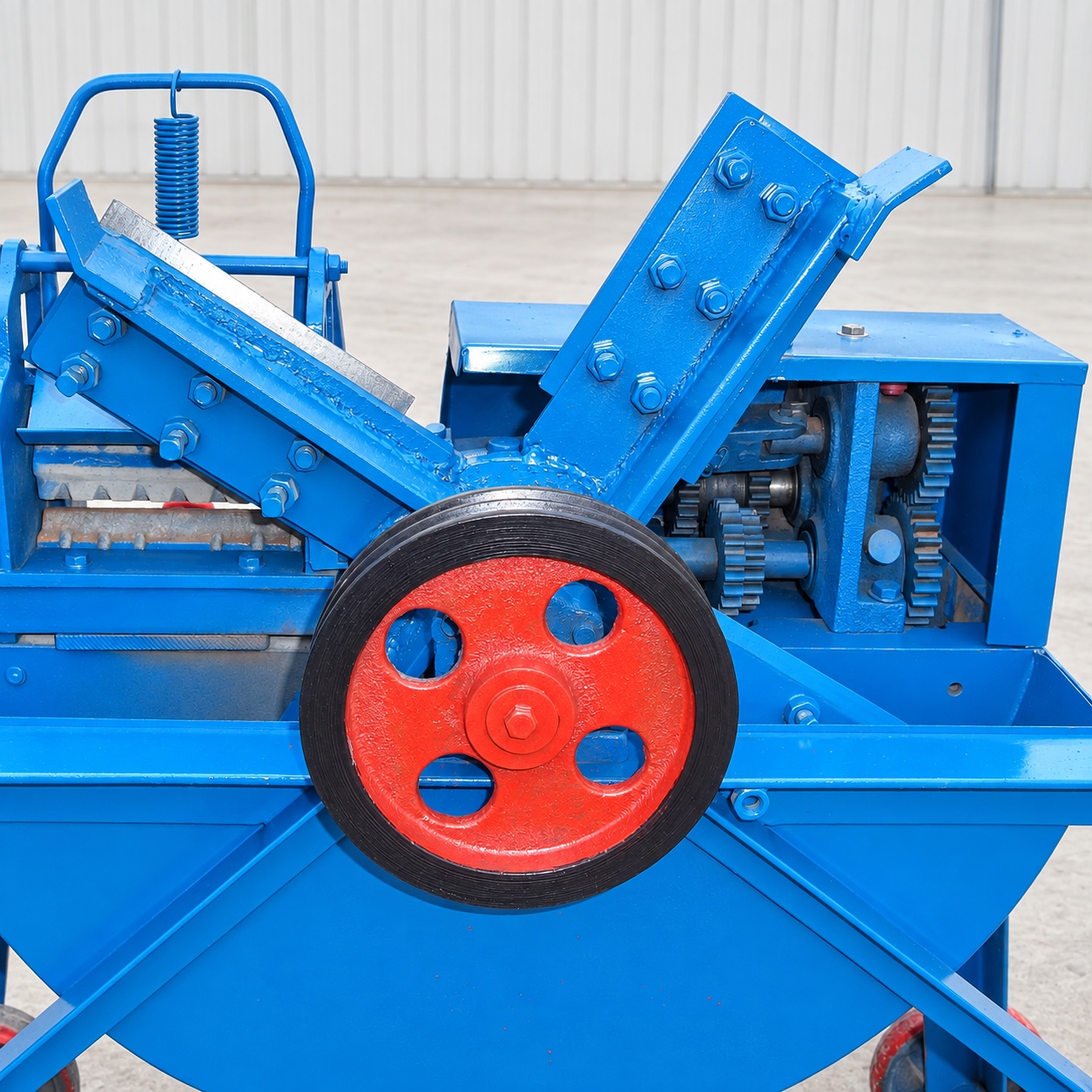
Which details deserve attention before ordering?
Request part identifiers for knives, fasteners, belts, bearings, and crop-contact components relevant to your configuration. Ask about adjustment limits and sharpening instructions rather than improvising a blade angle. Price the parts you will replace. A low machine price can hide an awkward service arrangement.
- Obtain a parts drawing for your exact version.
- Confirm recommended inspections and lubrication points.
- Ask how replacement parts are ordered and identified.
How can you reduce avoidable stoppages?
Record unusual vibration, changing cut quality, and recurring blockages so service discussions have useful evidence. Stop equipment when a fault could affect safe use and investigate under proper isolation. Keep maintenance records with your machine details for future parts inquiries.
| Maintenance concern | Preparation before purchase |
|---|---|
| Knife wear | Approved sharpening and replacement procedure |
| Drive components | Correct part numbers and adjustment guidance |
| Service delays | Named contact and parts-order process |
Key Takeaway: Compare service support alongside output. Clear parts identification makes routine repairs easier to plan and discuss.
8. What should a Chaff Cutter Machine quotation include?
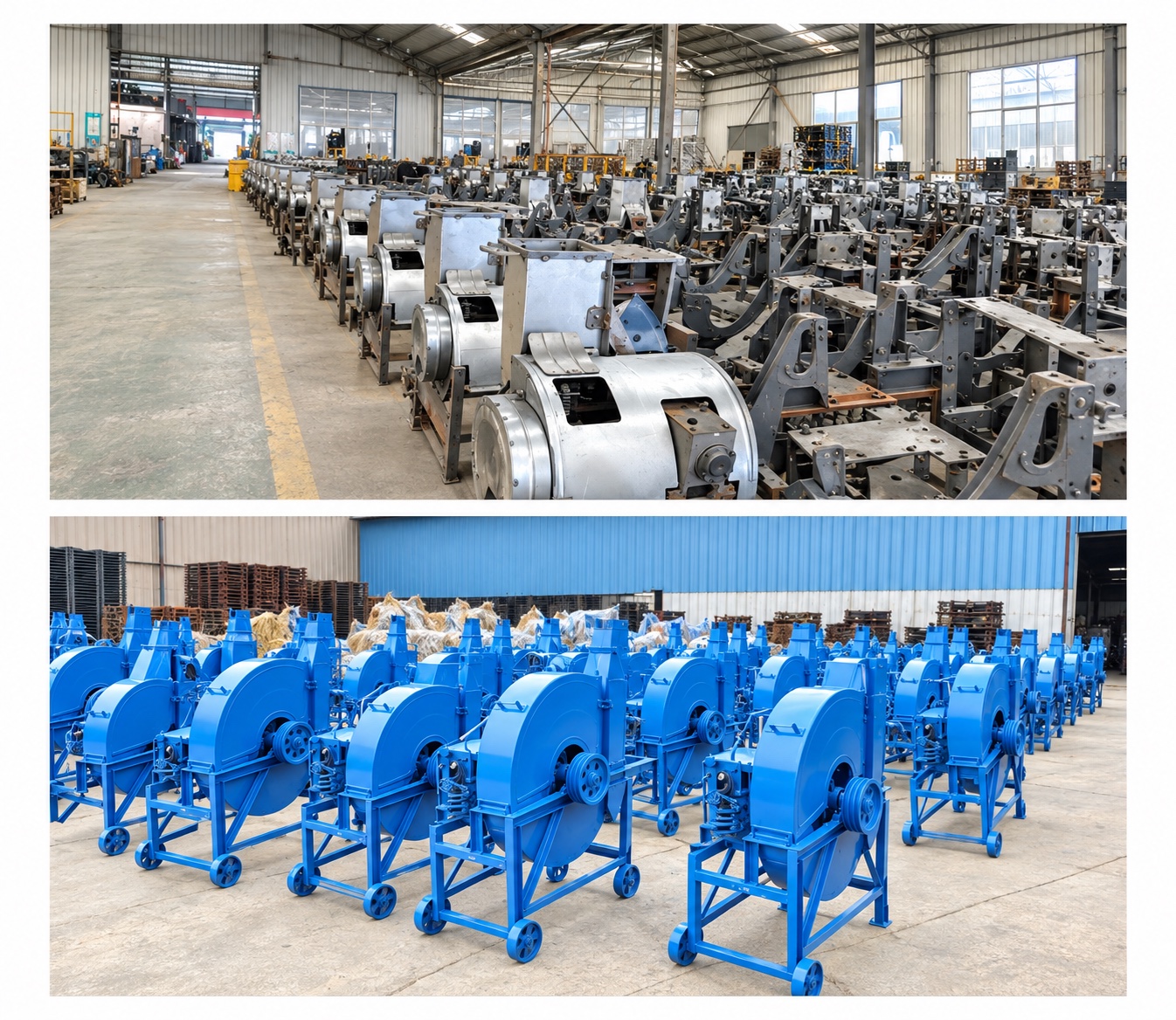
Request an itemized quotation covering configuration, power package, included protection, accessories, packing, transport, and service terms. Compare each Chaff Cutter Machine offer against the same written requirements. A headline price means little when suppliers include different components or delivery arrangements.
Which costs can be easy to overlook?
Installation work, collection equipment, spare parts, training, and transport can affect your total outlay. Ask suppliers to state exclusions clearly and separate optional items from included equipment. Compare complete packages. This prevents a cheaper-looking quotation from winning because necessary items were left out.
- Identify the exact machine and drive configuration.
- List included accessories and recommended spare parts.
- Confirm delivery destination and responsibility for installation.
How should you evaluate claimed savings?
Use your current staffing, measured batch times, and local operating costs as a baseline. Ask what evidence supports any promised labor or waste reduction. Treat proposed savings as estimates until your own material trial and working routine support them.
| Quotation item | Detail to confirm |
|---|---|
| Machine package | Model, drive, accessories, and guards |
| Delivered cost | Packing, transport, and stated exclusions |
| Support | Warranty scope, training, and spare parts |
Key Takeaway: Compare equivalent delivered packages. A clear quotation reduces disagreements about what you expected to receive.
9. How can you choose a Chaff Cutter Machine with confidence?
Choose the configuration that completes your batch safely, produces suitable forage, and fits your power and service arrangements. Discuss your Chaff Cutter Machine requirements using actual crop samples and workload records. Put agreed trial conditions and included equipment in writing before ordering.
What should your purchasing brief contain?
Bring together daily forage mass, available chopping time, crop condition, power details, and receiving-container requirements. Add sample photographs so suppliers can see stem size and material variation. Turn those details into a trial. You can then compare what a proposed machine does under relevant conditions.
- State your usual and busiest daily workloads.
- Specify feeding or silage-preparation requirements.
- Record trial output, sample quality, and interruptions.
What should you do before placing an order?
These checks address unsuitable machine types, overstated capacity, poor cutting results, and incomplete quotations. We can review your material, power supply, and working schedule to discuss suitable configurations. Our position is straightforward: equipment recommendations should match demonstrated performance and clear operating requirements.
| Buying decision | Evidence to collect |
|---|---|
| Suitable type | Workflow and power requirements |
| Enough capacity | Representative batch trial |
| Acceptable package | Written configuration and service terms |
Key Takeaway: Use your trial results to settle remaining questions before payment. Send your crop details and contact us today to discuss a cutter that fits your daily work.
10. What else should you ask before ordering? (FAQ)
Confirm crop suitability, capacity conditions, cutting adjustments, and included equipment before committing to a purchase. A Chaff Cutter Machine quotation should answer these questions for your specific configuration.
Which practical questions help you compare offers?
Keep your crop sample close. It gives your supplier a more useful starting point than a general request for a powerful machine.
- Share photographs of your usual forage.
- Ask for answers tied to a named configuration.
Q1: Can I use one machine for green grass and dry straw?
Possibly, if that configuration supports both. Request separate trials because moisture and stem characteristics can change output and cutting quality.
Q2: What’s the best capacity for my small farm?
Use your daily forage mass and actual chopping time. Then confirm that a representative trial meets your requirement with room for normal handling delays.
Q3: How do I know if a cutter can prepare corn silage?
Check its chopped output and maize-kernel processing capability. Suitable moisture, prompt packing, and airtight storage still require separate management.
Q4: Can I choose a machine from photographs alone?
No. Photographs show visible construction, while performance, included components, and power requirements need written details and testing.
Q5: What’s the best way to compare two quotations?
Compare identical requirements and complete packages. Include trial conditions, installed power, guards, accessories, transport, warranty terms, and parts support.
