
Four-Blade Chaff Cutter: How to Make Better Feed
Get more consistent chopped forage from a four-blade cutter by matching knife configuration, feed speed, sharpness, and power to your material. Your feeding crew needs another batch, but long stalks keep appearing and the machine slows whenever loading becomes uneven. Buying extra blades without checking those conditions may leave the same problems in place. Compare a Chaff Cutter through its cutting action and a representative trial before paying for claimed advantages.
1. What changes in a four-blade Chaff Cutter?
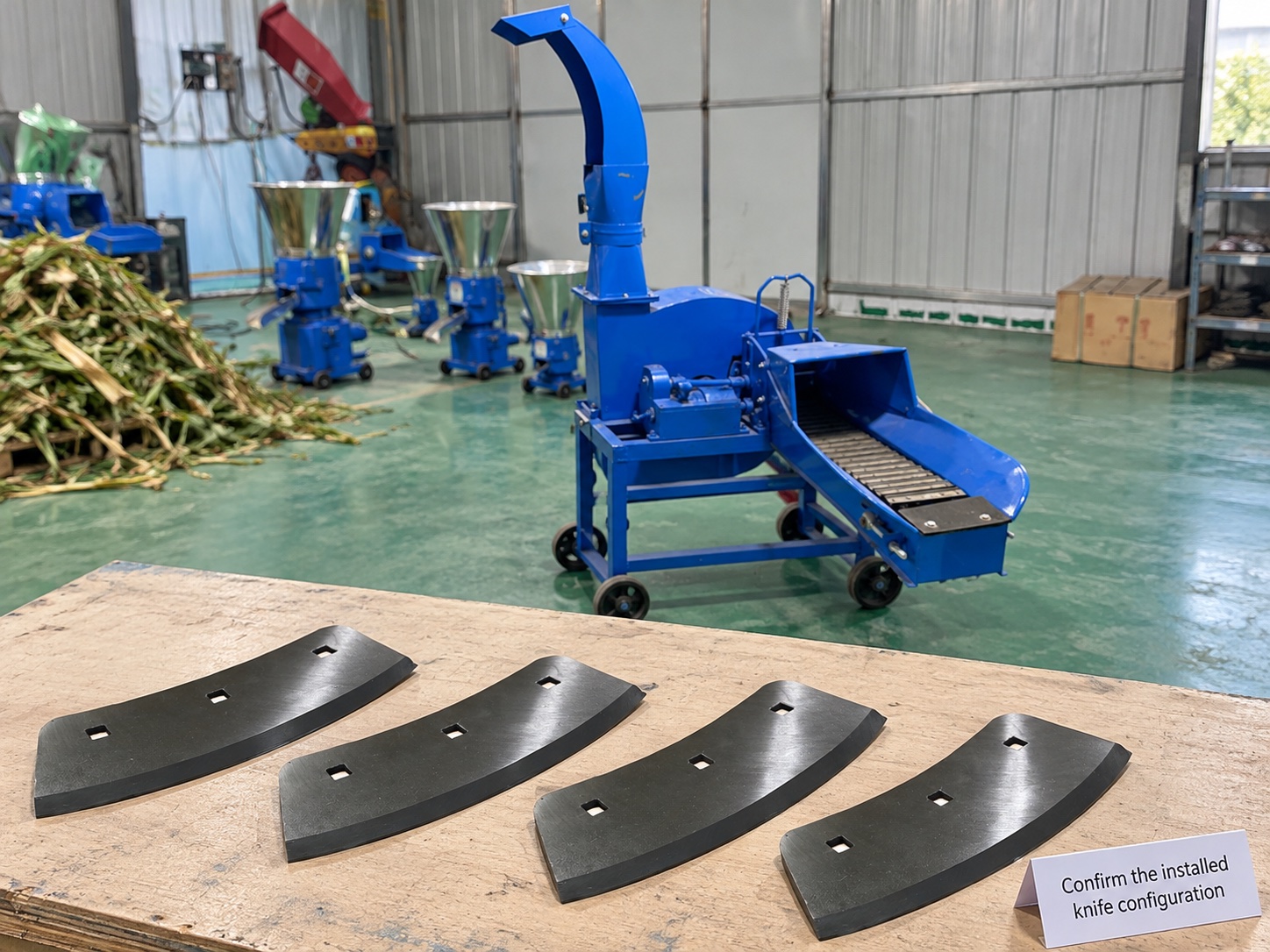
Four effective rotating knives can create more cutting events per revolution than two when every knife crosses the same feed path. A Chaff Cutter still needs suitable feeding, knife settings, power, and discharge capacity to turn those events into useful output. Confirm the installed knife arrangement from model documentation rather than exterior photographs.
What does the blade count actually describe?
Ask whether a quoted count refers to rotating cutting knives, fixed counter-knives, or other components. These parts have different jobs and should not be added together as though they produce equivalent cuts. Confirm what is being counted. A supplier’s rotor drawing should make the configuration clear.
- Request the installed rotating-knife count.
- Confirm which knives cross each feed path.
- Obtain a configuration-specific parts drawing.
How does knife count affect theoretical cut length?
For comparable cutting geometry, more effective knife passes shorten theoretical cut length when rotor and feed speeds remain unchanged. A published feed-chopper study describes the relationship between feed advance, rotor speed, and knife count. Actual forage pieces can still differ because material slips, bends, or enters unevenly.
| Configuration detail | What it establishes |
|---|---|
| Effective rotating knives | Cutting opportunities per revolution |
| Feed and rotor speeds | Material advance between cuts |
| Actual sample | Output achieved with your forage |
Key Takeaway: Blade count describes part of a cutting system. Use it alongside feed control and sample results rather than treating it as a complete performance rating.
2. Can a four-blade Chaff Cutter increase usable output?
A four-blade layout can support more cutting events, but usable output increases only when other components can sustain suitable feeding. Compare each Chaff Cutter at an acceptable particle size and under similar crop conditions. Doubling knife passes does not automatically double material processed per hour.
What does an equal-speed comparison show?
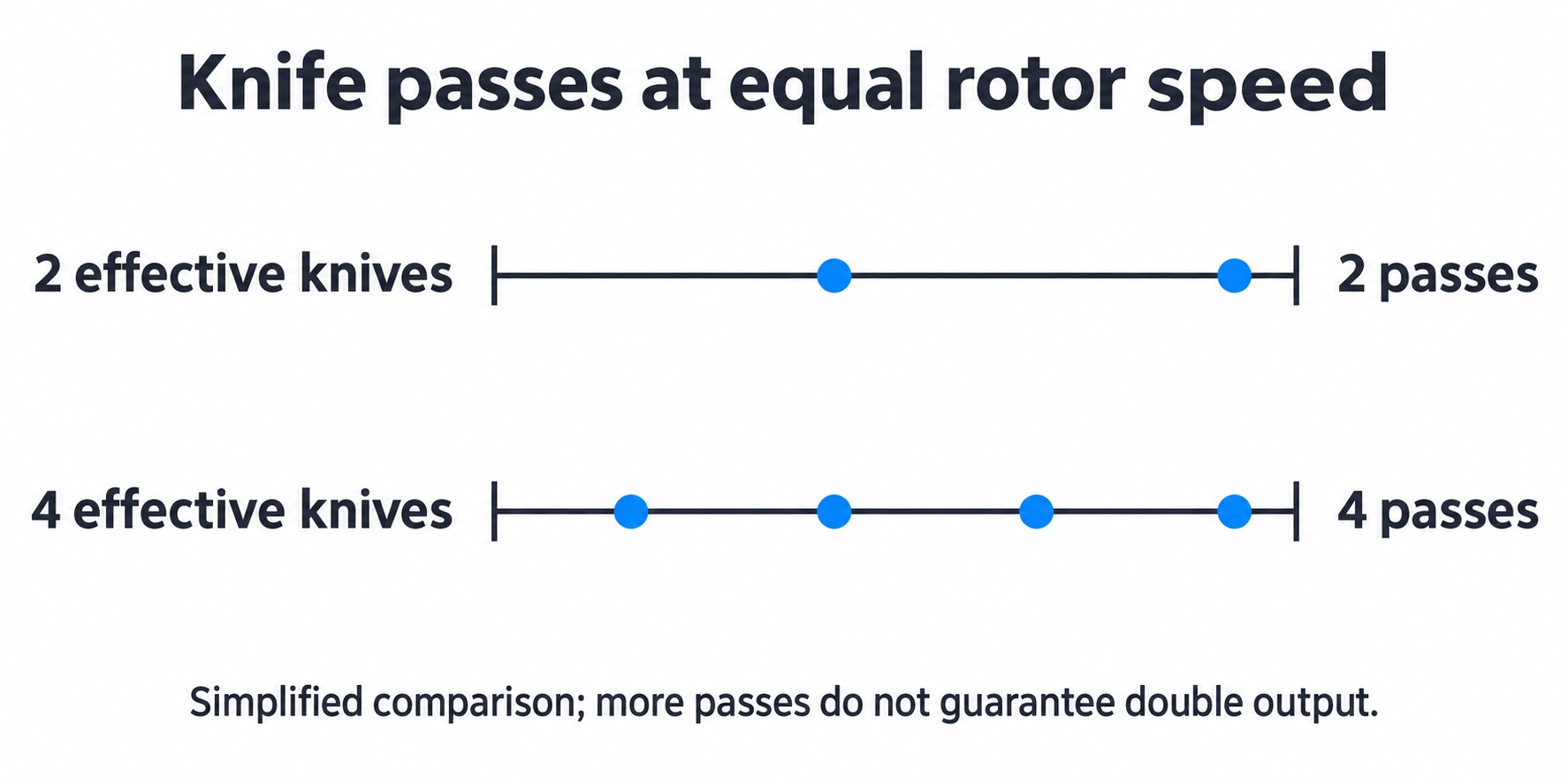
In a simplified single-feed-path example, two effective knives give two passes per revolution and four give four. This illustrates cutting frequency, not a measured capacity advantage. Follow the whole material path. Feed rollers, power supply, and discharge can limit output before knife count becomes decisive.
- Compare identical forage and moisture conditions.
- Record pauses as well as cutting time.
- Check that both outputs suit your intended use.
When should you compare larger equipment?
Assess an industrial chaff cutter if your measured workload requires a larger feeding and handling system. A higher blade count alone cannot establish that capacity. Ask for a full-batch demonstration instead of judging a brief unloaded run.
| Simplified knife configuration | Passes per revolution |
|---|---|
| Two effective knives | 2 |
| Four effective knives | 4 |
| Actual capacity comparison | Requires a material trial |
Key Takeaway: More cutting events can be useful when feeding and power are matched. Measure usable output before assigning a productivity benefit.
3. Will a four-blade Chaff Cutter make more even cuts?
Four correctly set knives can support a repeatable cutting action, but even output also requires consistent feeding and sound cutting edges. Inspect a Chaff Cutter using several samples from a complete batch. Knife count cannot correct worn edges, poor adjustment, or irregular material presentation by itself.
What should you look for in chopped forage?
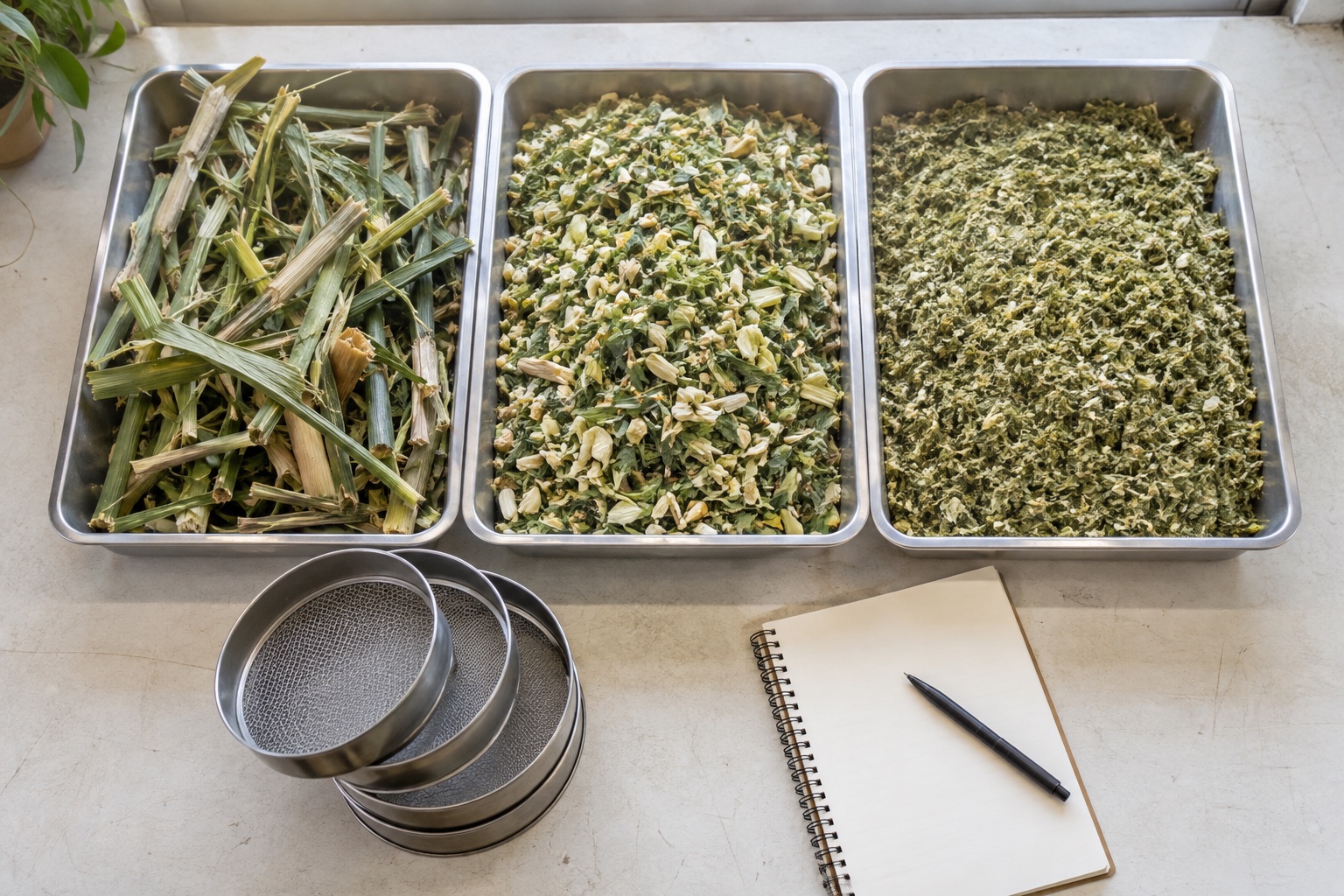
Look beyond a neat handful selected for a sales photograph. Compare long strips, ordinary particles, and fines across representative samples. Check what reaches your feeding system. Penn State’s particle-separator guidance explains why particle distribution matters alongside a nominal cutting setting.
- Sample at several points during the run.
- Note changes when loading becomes heavier.
- Discuss suitable particle distribution with your feeding adviser.
Is a shorter cut always an advantage?
No; forage preparation must suit your ration and any storage requirements. Shortening every particle can create a different problem if useful fiber length falls below your feeding target. For whole-plant maize, assess kernel breakage separately because stalk cutting does not prove adequate grain processing.
| Observed result | Comparison question |
|---|---|
| Long strips recur | Are feeding and knife adjustments consistent? |
| Excessive fines appear | Does this setting suit your ration? |
| Output changes during loading | Can feed rate remain steady? |
Key Takeaway: Judge uniformity from repeated samples. A four-blade configuration earns its place when it produces suitable forage consistently under normal loading.
4. Does a four-blade Chaff Cutter last longer?
Blade count alone cannot establish longer machine life; material quality, heat treatment, installation, wear conditions, and maintenance all need examination. Evaluate a Chaff Cutter through documented components and service requirements. Avoid treating a blade’s color, thickness in a photograph, or marketing label as proof of durability.
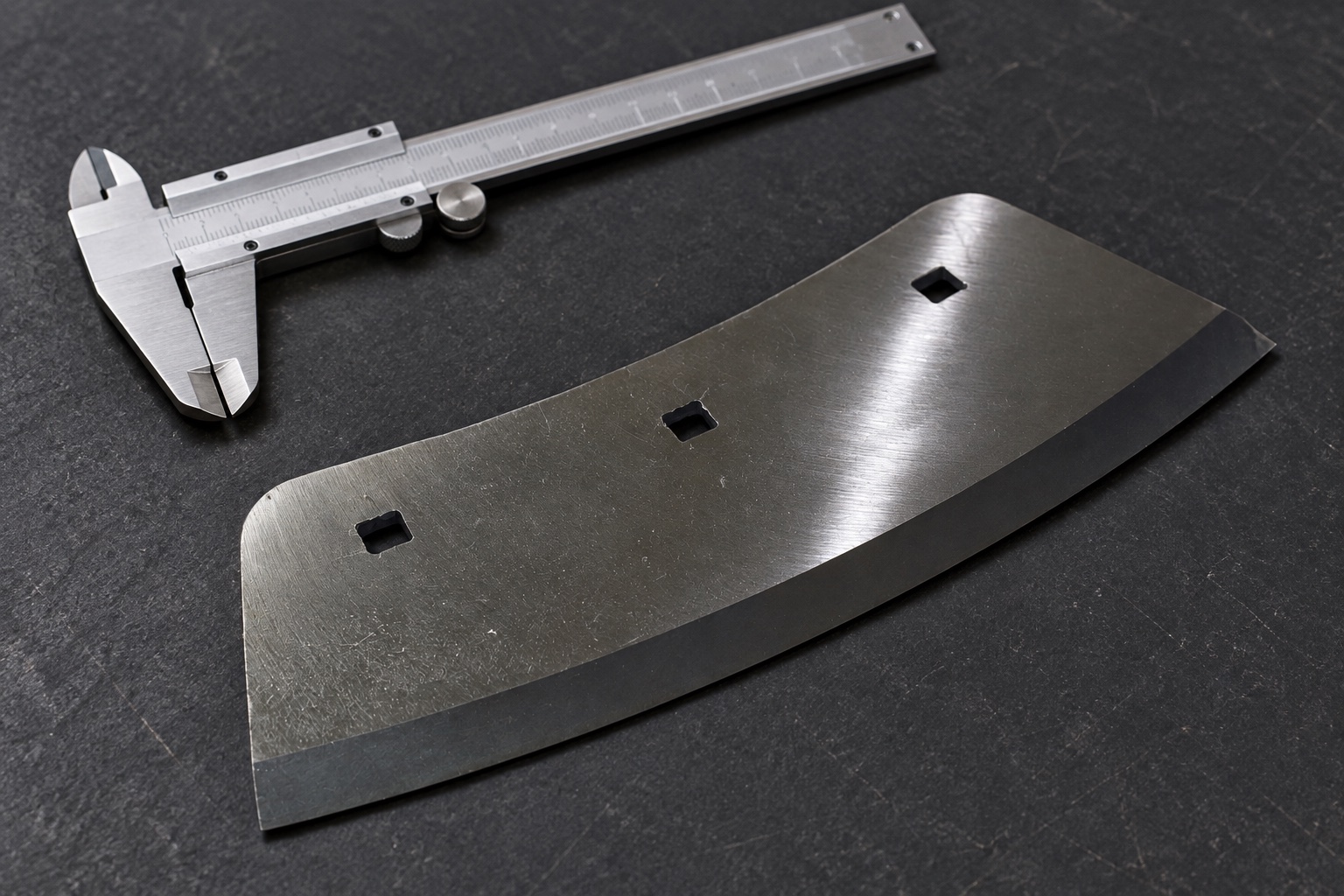
What Chaff Cutter blade details should you verify?
Request the correct part number, dimensions, mounting arrangement, and available material documentation for your configuration. Compare these with approved replacement instructions. Check fit before comparing hardness claims. A blade with a similar outline may still have incompatible mounting holes or operating requirements.
- Confirm geometry and mounting-hole positions.
- Ask for documented sharpening and wear limits.
- Check approved fastener and replacement requirements.
Can more knives reduce wear on each knife?
It may change how cutting work is distributed, but service life cannot be predicted without knowing load and operating conditions. More installed edges also mean more edges to inspect and maintain. Ask for wear records from comparable use rather than assuming four knives always outlast fewer knives.
| Durability claim | Evidence to request |
|---|---|
| Suitable blade material | Configuration-specific documentation |
| Long service life | Relevant operating and wear records |
| Easy replacement | Approved parts and fitting instructions |
Key Takeaway: Buy documented compatibility and support. Knife count is a poor substitute for evidence about materials, wear limits, and replacement practice.
5. Which crops can a four-blade Chaff Cutter handle?
Crop suitability depends on the complete machine design and its approved materials, not blade count alone. Test a Chaff Cutter separately with representative grass, maize stalks, hay, or dry straw that your supplier says it can process. Green and dry material can behave differently even when their stems look similar.
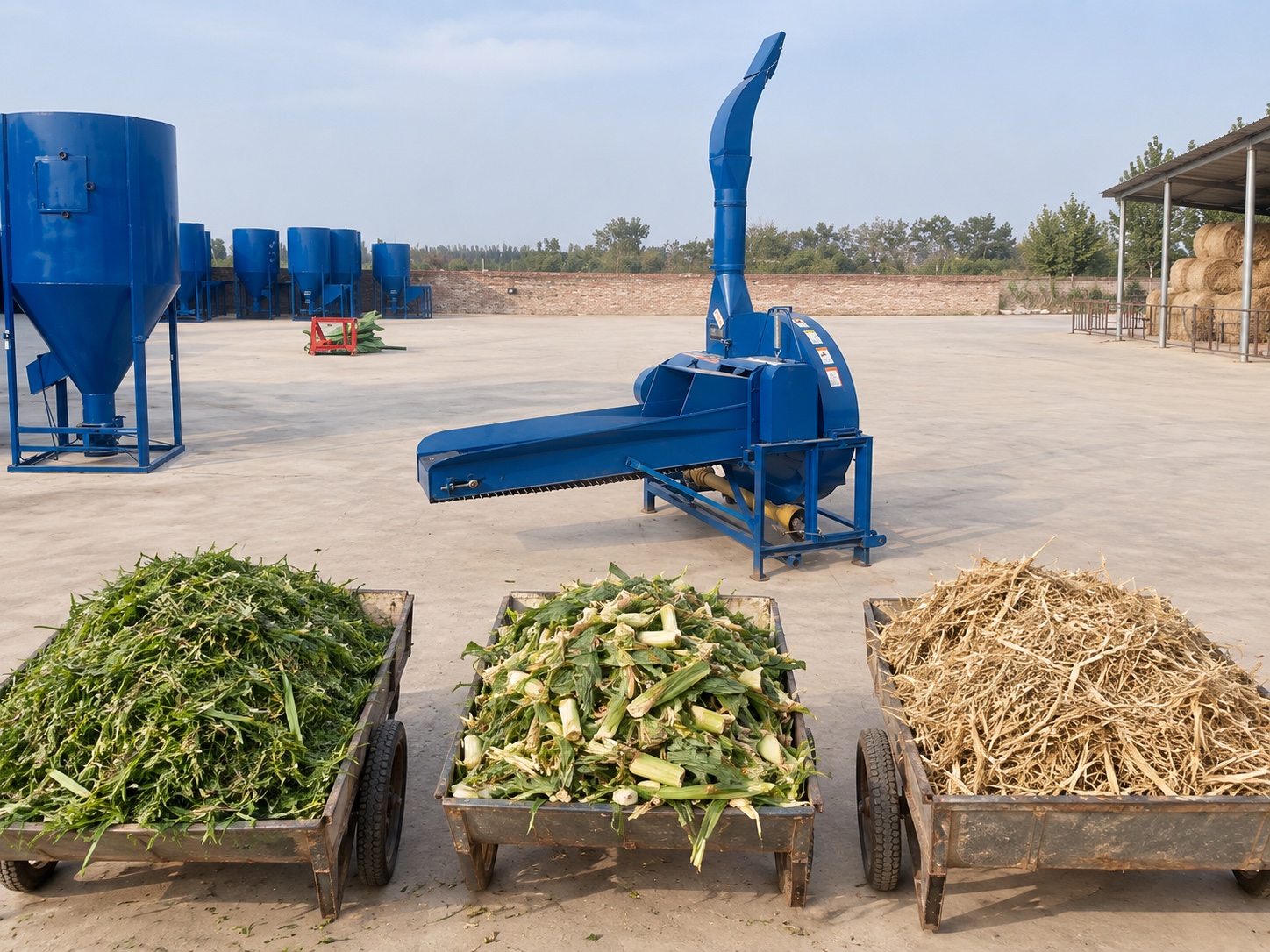
How should you organize different crop trials?
Record crop type, moisture condition, stem size, and feeding method for each batch. Keep samples separate so a good result with soft grass does not hide problems with tougher stalks. Test the difficult material too. Your busiest season may involve forage unlike the supplier’s usual demonstration crop.
- Include your common and demanding approved materials.
- Inspect output and record handling interruptions.
- Keep stones, metal, soil, and other contamination out.
Does versatility mean one machine performs every task?
No; chopping, grinding, kneading, and kernel processing require different mechanisms. Confirm which functions your quoted configuration includes before adding new materials or work. A broad list of crops does not establish that every crop can run at the same output or setting.
| Material difference | What to observe |
|---|---|
| Green versus dry | Feeding behavior and particle quality |
| Thin versus tough stems | Load stability and interruptions |
| Different preparation task | Whether suitable components are installed |
Key Takeaway: Compare crop suitability through separate trials. One successful batch cannot establish performance across your entire forage supply.
6. Does a four-blade Chaff Cutter use less power?
Four blades do not inherently guarantee lower power use; cutting length, edge condition, adjustment, and crop load also affect energy demand. Compare a Chaff Cutter at equivalent output quality and measured batch mass. A short unloaded demonstration cannot establish energy efficiency during regular feeding work.

What should you measure during an energy comparison?
Record processed mass, elapsed time, and energy use under comparable conditions. Then compare energy per unit of useful output rather than motor size alone. Match the cutting result before judging consumption. Otherwise, a machine producing much coarser material may appear cheaper while doing a different job.
- Use comparable crop condition and loading.
- Record interruptions and collection losses.
- Have suitable energy measurements arranged by qualified personnel.
Which Chaff Cutter settings can affect energy demand?
Knife sharpness, cutting length, and knife-to-counter-knife adjustment deserve attention under manufacturer instructions. Extension machinery-maintenance guidance discusses their effect on energy use. When comparing an electric chaff cutter, confirm both electrical compatibility and loaded performance.
| Comparison measure | What it tells you |
|---|---|
| Installed motor rating | Required power package, not actual consumption |
| Energy used per batch | Operating demand for that trial |
| Energy per unit of usable output | A basis for comparable operating cost |
Key Takeaway: Measure energy against a defined cutting result. Do not turn a larger blade count into an unsupported electricity-saving promise.
7. Is a four-blade Chaff Cutter easier to maintain?
Maintenance depends on access, adjustment procedures, part availability, and workload; four blades do not automatically mean fewer service tasks. Ask your Chaff Cutter supplier for configuration-specific instructions and replacement-part information. Additional knives create additional cutting edges that need inspection.
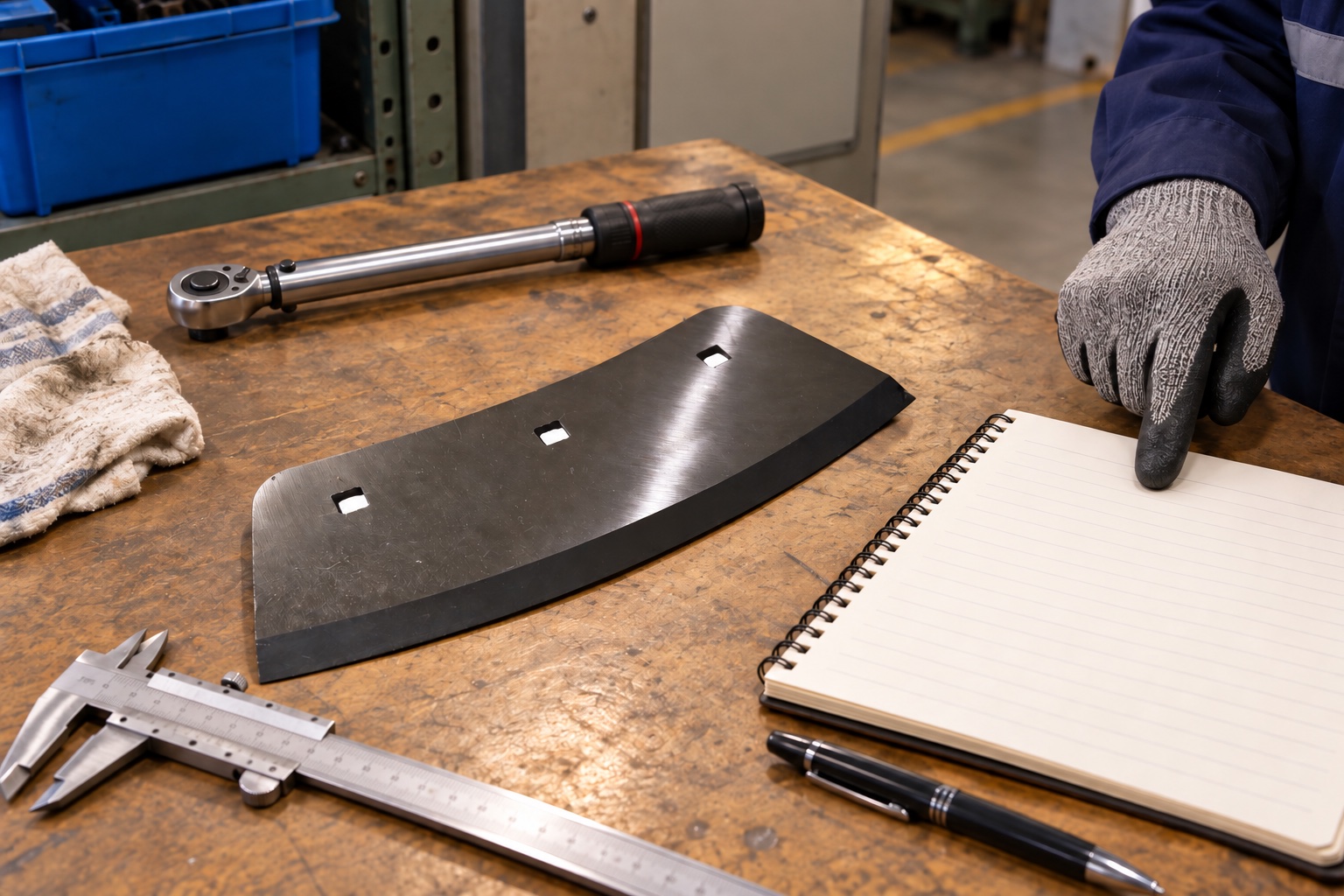
What should your service comparison include?
Compare how trained personnel inspect knives, verify fasteners, make approved adjustments, and restore guarding after service. Ask what routine work involves and which tools or skills are required. Include maintenance time in your comparison. Easy access in an open photograph does not prove straightforward or safe servicing.
- Stop, isolate power, and wait for movement to cease before intervention.
- Follow approved sharpening, fitting, and adjustment procedures.
- Keep service records tied to the exact machine configuration.
Can you remove knives or fit different blades yourself?
Do not change knife number, geometry, or mounting arrangements unless the manufacturer explicitly permits that configuration and supplies instructions. Such changes can affect balance, loading, clearances, and guarding. Request approved parts instead of treating a similar hole pattern as proof of interchangeability.
| Service question | Required information |
|---|---|
| Which parts fit? | Approved part identifiers |
| How are adjustments made? | Model-specific instructions |
| Who can perform the work? | Training and service requirements |
Key Takeaway: Compare maintenance procedures and parts support before purchase. Safe access and clear instructions matter more than a general low-maintenance label.
8. How should you compare Chaff Cutter configurations?
Compare configurations using the same crop, target particle quality, batch measurement, and handling boundaries. A Chaff Cutter with fewer knives can remain suitable when it meets your required output and service needs. A fair comparison should allow either configuration to perform well rather than assume the four-blade option must win.
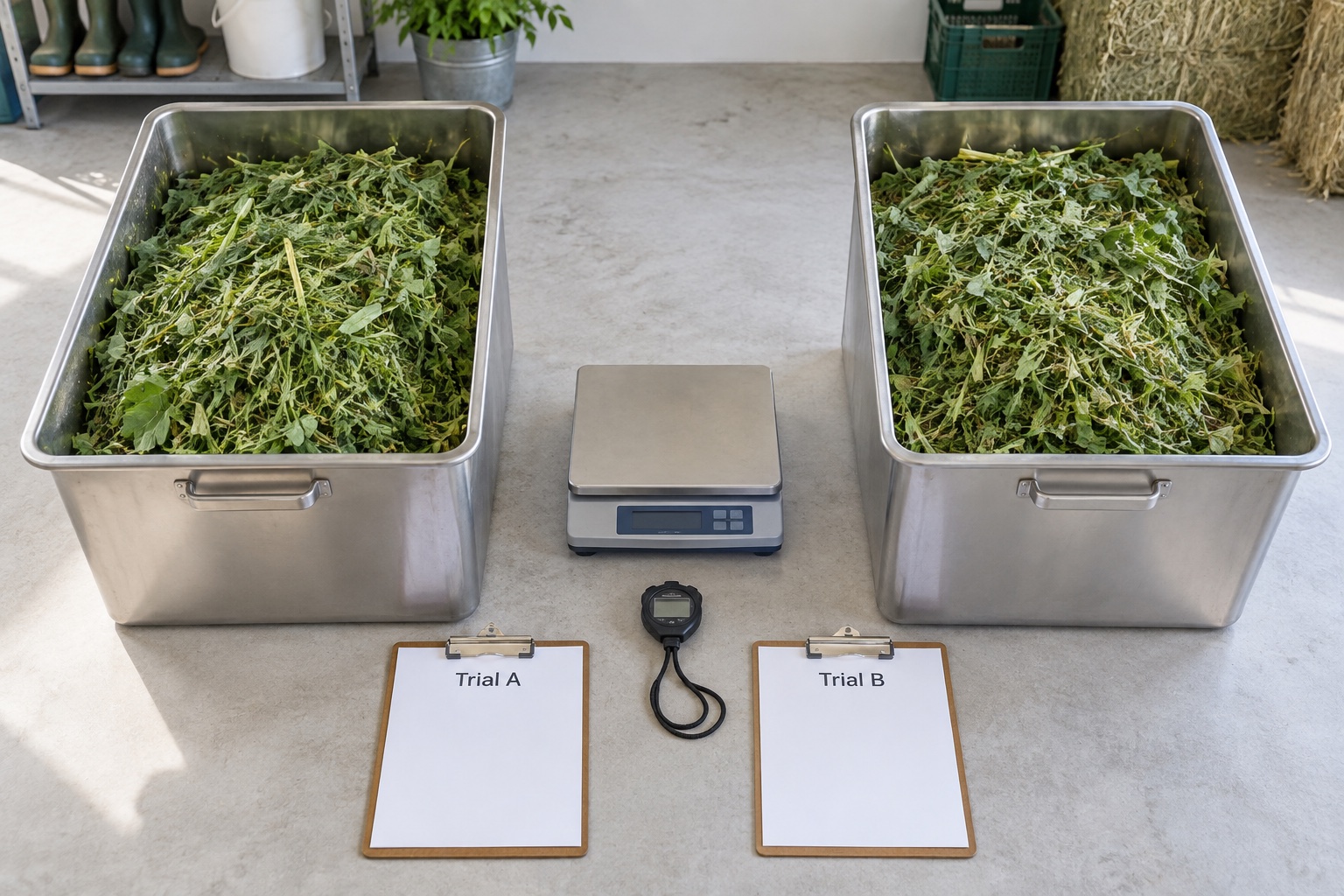
Which variables should stay comparable?
Use similar material condition and record each machine’s approved operating settings. Measure usable output after accounting for interruptions and collection, then inspect samples. Compare the job completed. A fast run and a fine-cut run cannot be judged as equivalent without examining their output.
- Record crop, moisture condition, and batch mass.
- Compare actual samples alongside processing time.
- Include power, staffing, and service arrangements.
When should you compare another type of equipment?
If your main objective is softening tough stalks, discuss whether a straw kneading machine addresses that task better. Grinding grain or harvesting standing crops also calls for a different equipment comparison. Extra cutting knives cannot replace missing process functions.
| Buying requirement | Appropriate comparison |
|---|---|
| Shorten harvested forage | Chaff-cutting configurations |
| Soften or split tough stalks | Suitable kneading equipment |
| Improve complete workflow | Feeding, cutting, collection, and support |
Key Takeaway: Define your required result before ranking machines. This keeps blade count in proportion to the actual work you need completed.
9. When is a four-blade Chaff Cutter worth buying?
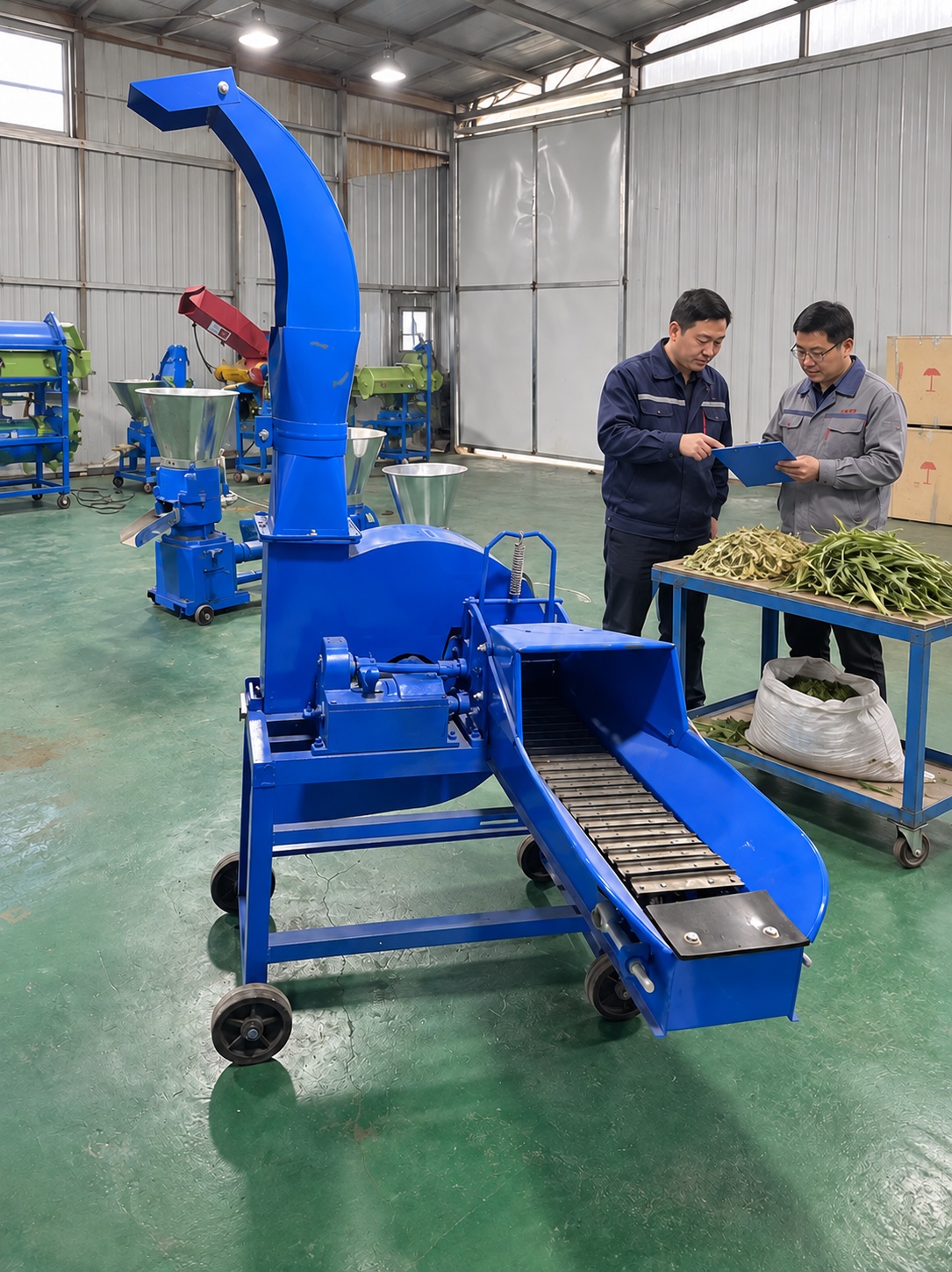
Choose a four-blade configuration when a relevant trial shows useful cutting performance and its ownership requirements fit your operation. Discuss your Chaff Cutter choice using material samples, workload records, and the documented installed configuration. Pay for demonstrated suitability rather than an assumed advantage from blade count.
What should your final quotation confirm?
Ask for knife arrangement, approved crop range, power package, guarding, accessories, and service terms in writing. Attach agreed trial conditions so performance discussions refer to the same job. Bring the evidence into your order. This makes differences between quotations easier to review before payment.
- Identify the exact machine and rotating-knife configuration.
- Record acceptable output quality and trial conditions.
- Confirm delivery, installation, and spare-parts responsibilities.
What should your next step achieve?
These checks address uncertain throughput, uneven chopping, unproven durability, and misleading power or maintenance claims. We can review your forage, working schedule, and equipment requirements to discuss suitable configurations and trial conditions. Our position is straightforward: cutting performance should be demonstrated with relevant material and clear operating limits.
| Purchase decision | Evidence before ordering |
|---|---|
| Useful cutting advantage | Comparable samples and batch results |
| Suitable ownership cost | Power and maintenance requirements |
| Clear configuration | Written parts and equipment details |
Key Takeaway: A four-blade machine is worthwhile when its verified advantages match your workload. Send your material details and contact us today to discuss an appropriate comparison.
10. What else should you ask about four-blade cutters? (FAQ)
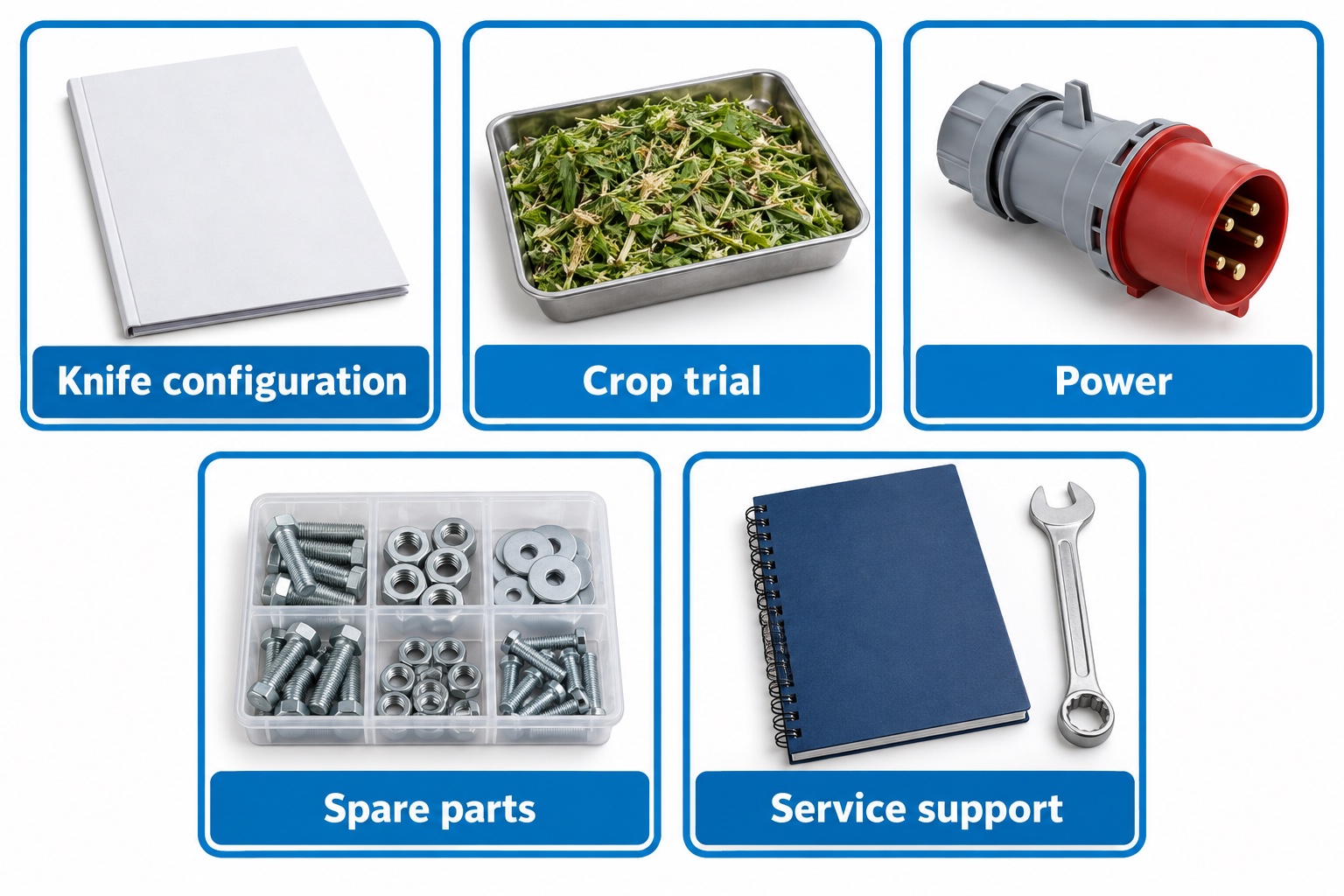
Ask for evidence about knife configuration, loaded performance, crop suitability, and approved service procedures. A Chaff Cutter recommendation should connect those answers with your actual feeding operation.
Which questions help separate claims from evidence?
Keep the trial conditions attached. They explain what a result means and whether it applies to your forage.
- Request model-specific written answers.
- Keep sample quality beside every output claim.
Q1: Can I assume four blades double hourly output?
No. They can double effective knife passes compared with two at equal rotor speed, while power, feeding, and discharge still limit throughput.
Q2: What’s the best blade count for silage preparation?
Choose a configuration that produces suitable particle distribution and supports your storage plan. Knife count alone cannot establish the best result.
Q3: How do I know whether a machine really has four knives?
Check its model-specific rotor drawing and parts list. Exterior photographs and loose blade displays do not establish the installed configuration.
Q4: Can I fit four knives to my existing two-knife cutter?
Only if the manufacturer expressly approves that configuration. Obtain its instructions because balance, mounting, power demand, and guarding may differ.
Q5: What’s the best way to compare blade life?
Use records from comparable crops, loads, maintenance, and approved components. Material descriptions and blade count cannot predict service life on their own.
