
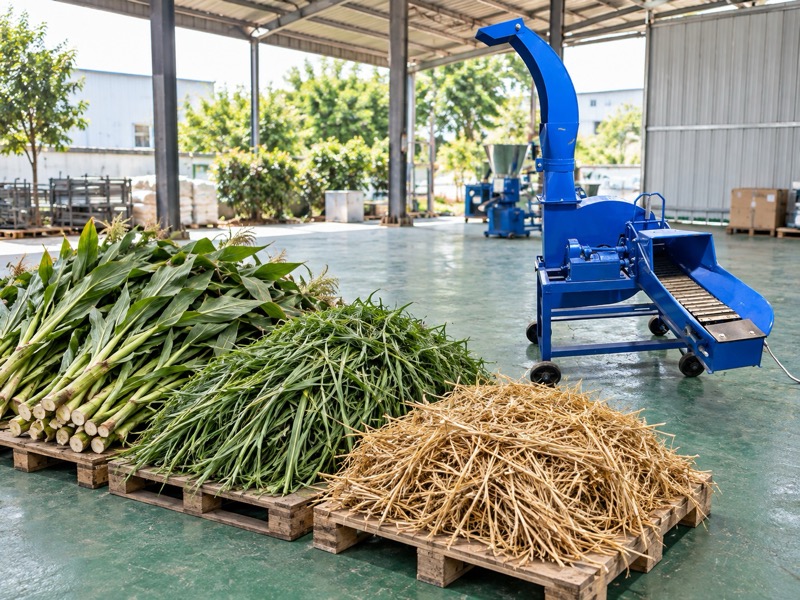
Chaff Cutter Machine: Better Results With Your Forage
A Chaff Cutter machine can chop corn stalks, fresh grass, cereal straw, and suitable crop residues when its design supports those materials. Crop condition and your required output determine whether a particular model can do that job well.
You may have green grass ready for morning feeding and a shed full of dry stalks for later use. A demonstration with tender forage tells you little about how those tougher leftovers will behave. Start with your actual materials, check their condition, and ask for samples before choosing equipment.
Which materials can a Chaff Cutter machine process?
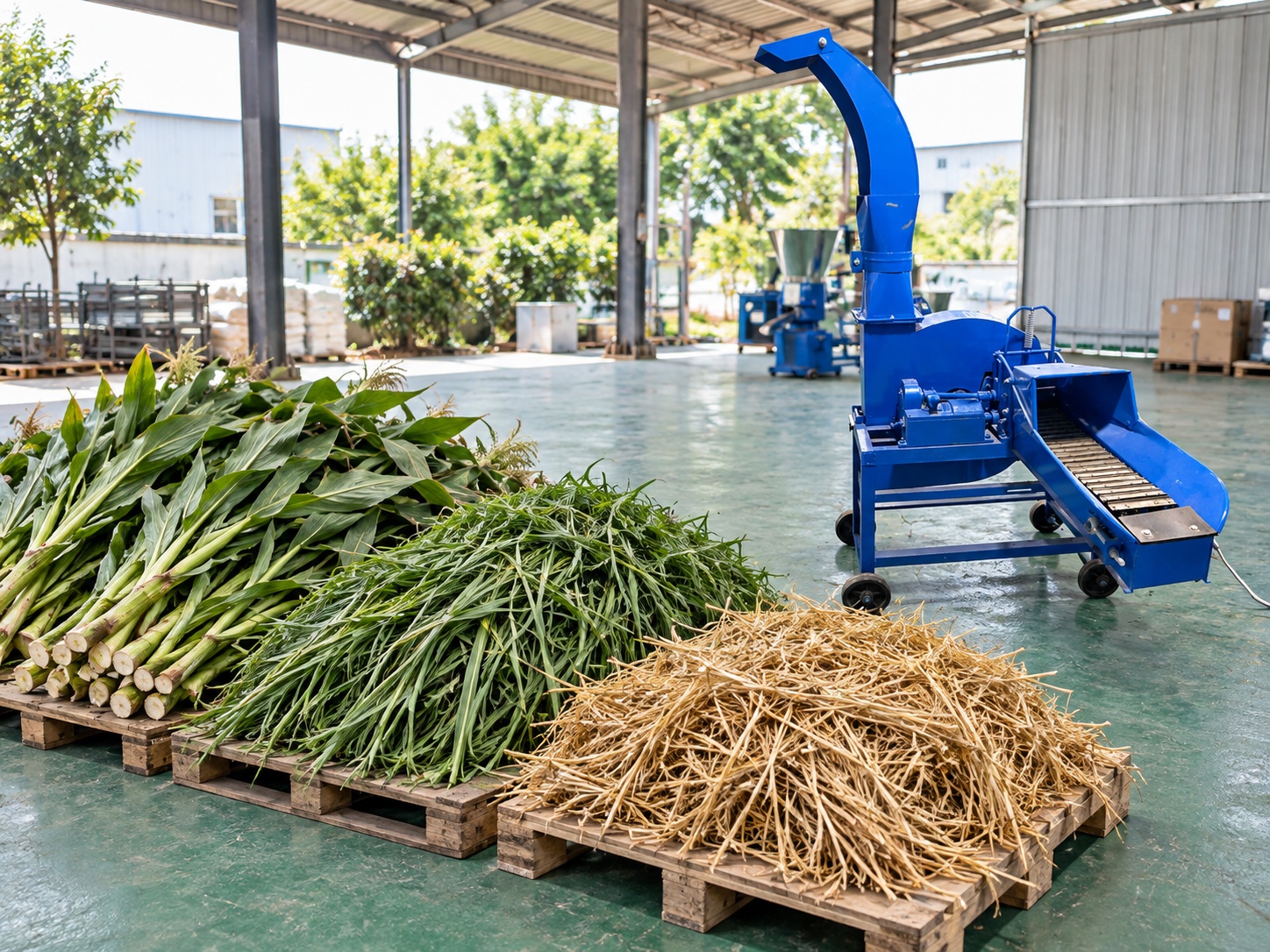
A Chaff Cutter machine commonly handles leafy forage, crop stalks, and straw, subject to its documented material limits. Treat a broad crop list as a starting point for confirmation, especially when your supply includes tough stems or tangled vines.
What does material compatibility mean?
Look beyond a successful single cut. Your cutter should accept a representative batch, discharge material steadily, and produce an output you can use. A machine that cuts one stem may still struggle with your usual feeding routine.
- Identify each crop rather than calling everything grass.
- Describe whether it arrives fresh, wilted, or dry.
- Separate leafy growth from mature, thick stems.
- Confirm approved materials in writing for your model.
What should your material list contain?
Record crops by type and condition before requesting a demonstration. Keep mechanical suitability separate from whether that crop belongs in your livestock ration.
| Material group | Examples | What to confirm |
|---|---|---|
| Stalk crops | Corn stalks and stover | Stem condition and feed opening |
| Leafy forage | Grass and alfalfa | Steady feeding and useful cut |
| Cereal straw | Rice and wheat straw | Dry-material suitability |
| Other residues | Peanut haulms and vines | Model approval and sample trial |
Key Takeaway: A crop name alone cannot specify a cutter. Add condition, batch size, and required output so suppliers can assess your actual workload.
Can a Chaff Cutter machine handle corn stalks?
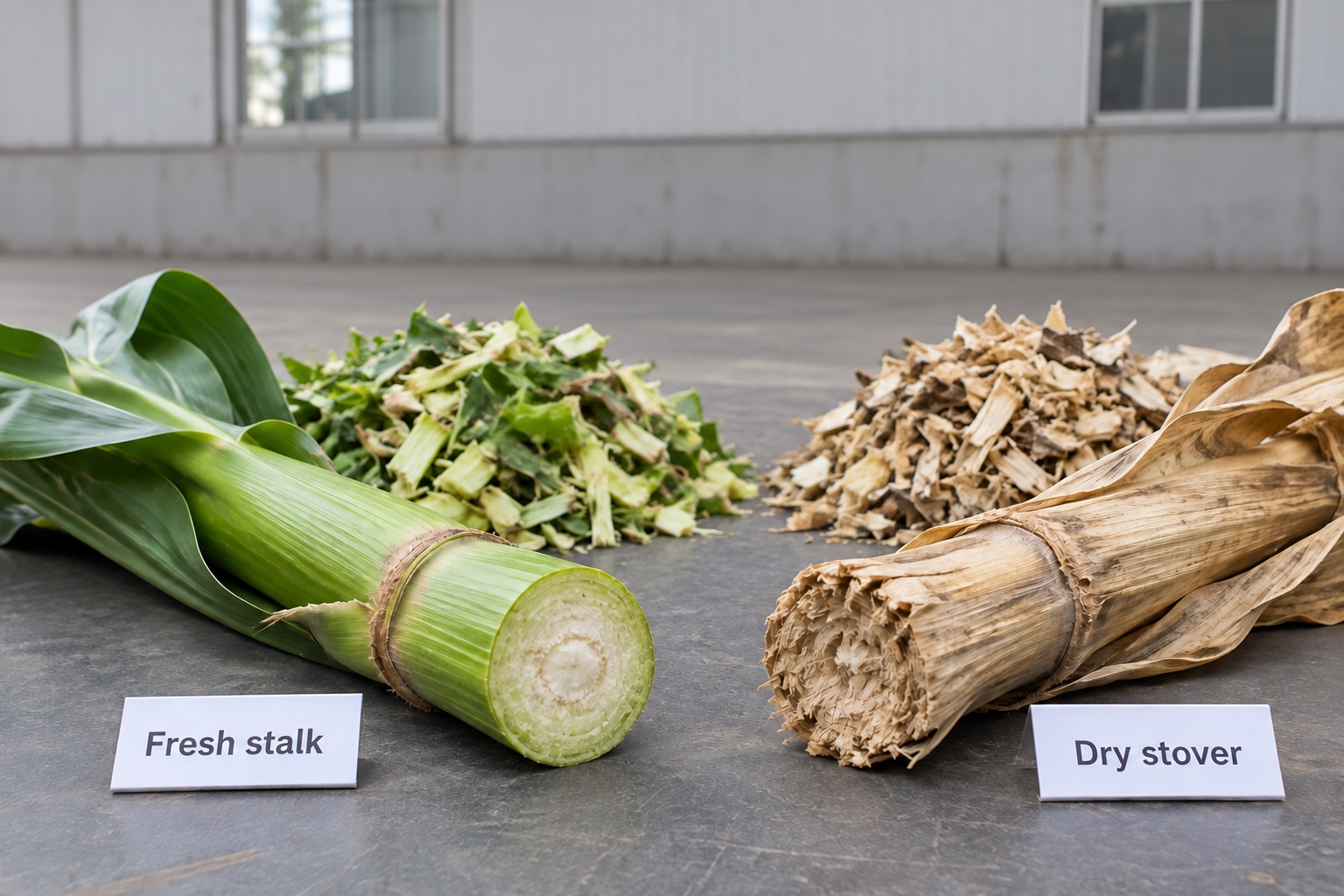
A Chaff Cutter machine can handle corn stalks when its feeding system and cutting assembly suit their size and condition. Fresh maize plants and dry stover should have separate trials because they represent different processing jobs.
What should a Chaff Cutter machine corn trial show?
Bring your toughest ordinary stalks. Include mature nodes and typical leaves rather than selecting only tender stems. Ask suppliers to document material condition, feeding method, and any adjustments used during your trial.
- Confirm permitted stalk size for your configuration.
- Remove roots carrying soil, stones, or other debris.
- Inspect long pieces left among chopped material.
- Check whether your application needs kernel processing.
Does chopping corn automatically produce good silage?
No; chopping forms only part of silage preparation. Whole-plant moisture, harvest timing, packing, and sealing need their own checks, covered in our corn silage harvest guide.
| Corn material | Question before processing |
|---|---|
| Fresh leafy stalks | Does your model accept this stem size? |
| Dry stover | Does output remain useful throughout a batch? |
| Whole plants with ears | Is required grain processing provided? |
Key Takeaway: Specify fresh corn and dry stover separately. A neat stalk sample does not prove that kernels are adequately processed or that silage storage conditions are suitable.
Which grasses suit a Chaff Cutter machine?
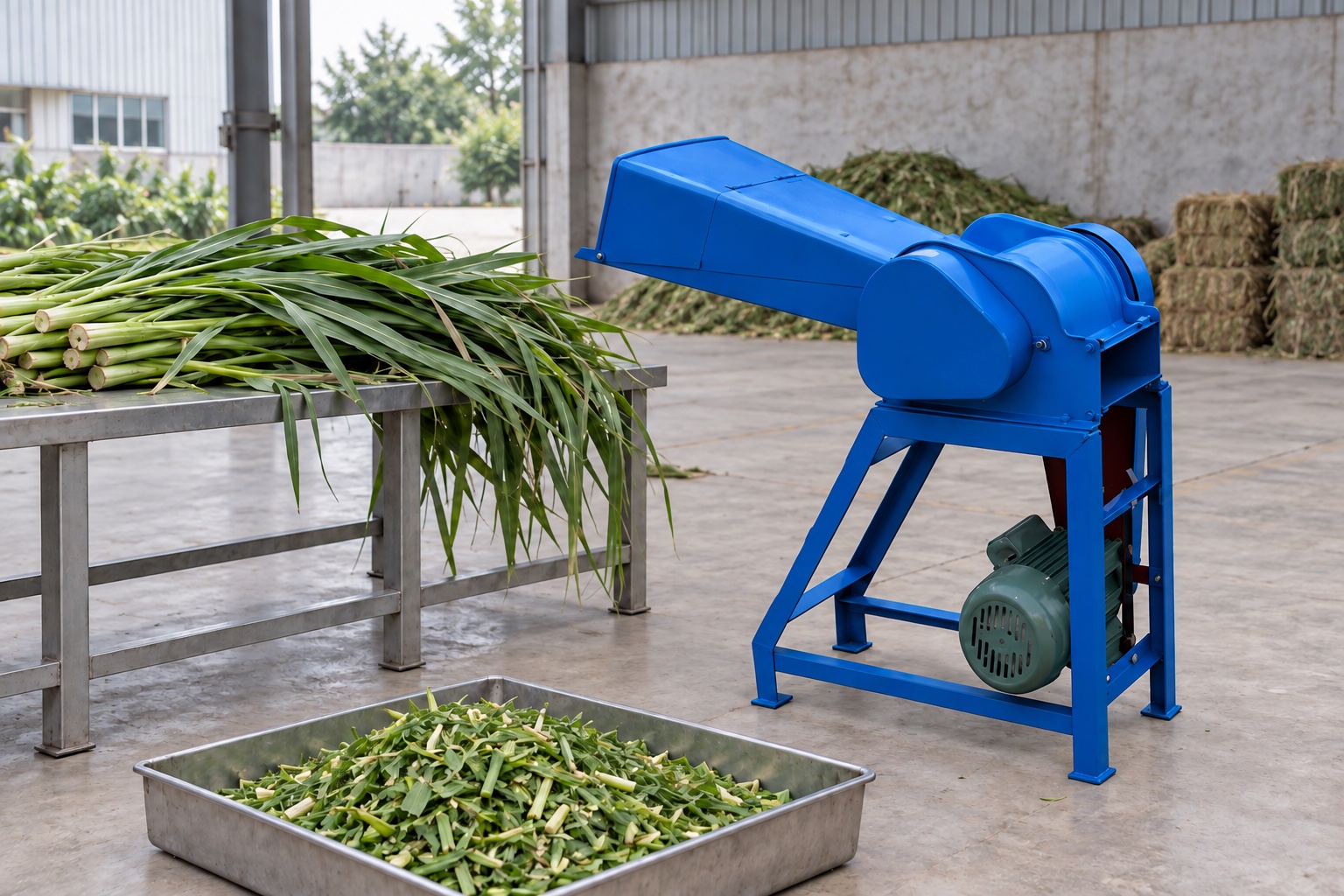
A Chaff Cutter machine can prepare approved forage grasses such as Napier grass and ryegrass, provided their condition suits its design. Leafy alfalfa also belongs in your forage discussion, although it is a legume rather than a grass.
How should you prepare a representative grass sample?
Bring stems along with the leaves. A sample of soft leaf tips can hide difficulties with mature stalks or long, tangled growth. Keep different harvest stages separate during your demonstration.
- Identify species and typical harvest stage.
- Show usual stem length and thickness.
- Describe whether forage arrives wet or wilted.
- Observe feeding and discharge throughout a batch.
Which Chaff Cutter machine settings need checking?
Ask which cut-length adjustments your model supports and how operators should set them. Agree a useful output with your feeding adviser instead of assuming that finer chopping always makes better feed.
| Forage | Useful demonstration detail |
|---|---|
| Napier grass | Mature stems alongside leafy sections |
| Ryegrass | Usual length and moisture condition |
| Alfalfa | Leaf retention and remaining long stems |
Key Takeaway: Demonstrate grass at your normal harvest stage. A cutter selected from very tender samples may leave unanswered questions about later, more fibrous growth.
Can a Chaff Cutter machine cut rice and wheat straw?
A Chaff Cutter machine can cut rice and wheat straw if its manufacturer approves dry fibrous materials for that configuration. Check how straw feeds, how much loose material escapes collection, and whether output matches your mixing method.
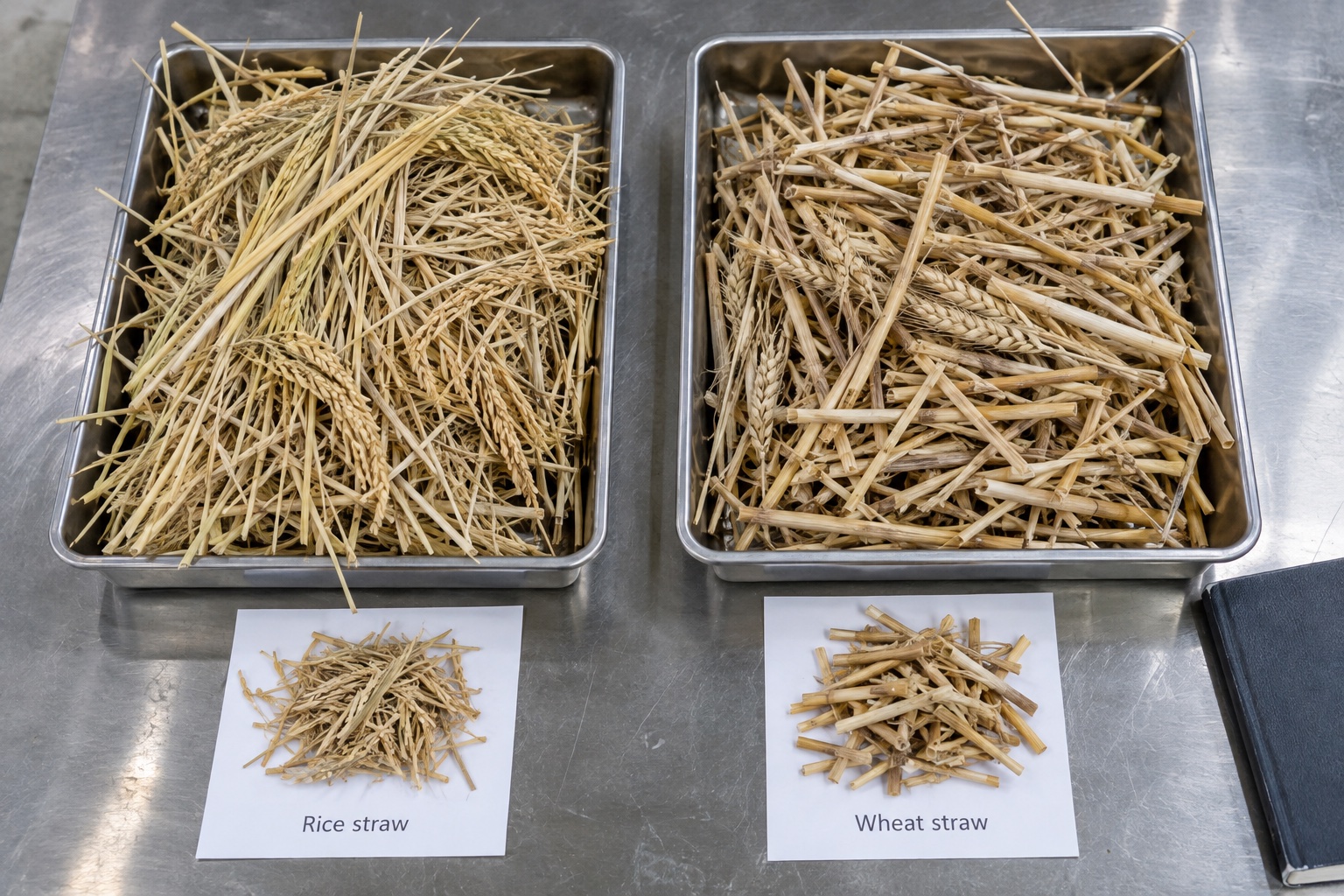
Does cutting straw improve its nutritional content?
Keep cutting and nutrition separate. Chopping changes particle size; it does not add missing protein or minerals. FAO’s crop-residue feeding review discusses nutritional limitations that require a feeding plan beyond physical size reduction.
- Remove all bale ties, netting, and wrapping.
- Present loose straw using approved feeding procedures.
- Check output for excessive fines and long pieces.
- Plan collection and dust control for your workspace.
When might straw need another processing method?
Shortening stems and producing a softer fibrous texture are different requirements. If you need more fiber disruption, compare a straw kneading machine using your own material and agreed output criteria.
| Desired result | What your trial should establish |
|---|---|
| Shorter straw | Suitable particle distribution |
| Easier handling | Output collects and mixes as intended |
| Softer fiber texture | Whether additional processing is needed |
Key Takeaway: Choose straw equipment around a demonstrated physical result. Keep ration formulation separate, and do not treat a smaller particle as proof of better nutrition.
Will a Chaff Cutter machine handle vines and haulms?
A Chaff Cutter machine may handle peanut haulms, bean haulms, or sweet potato vines when its manufacturer approves that material. Flexible vines and mature legume stems deserve crop-specific trials before you rely on a general forage claim.
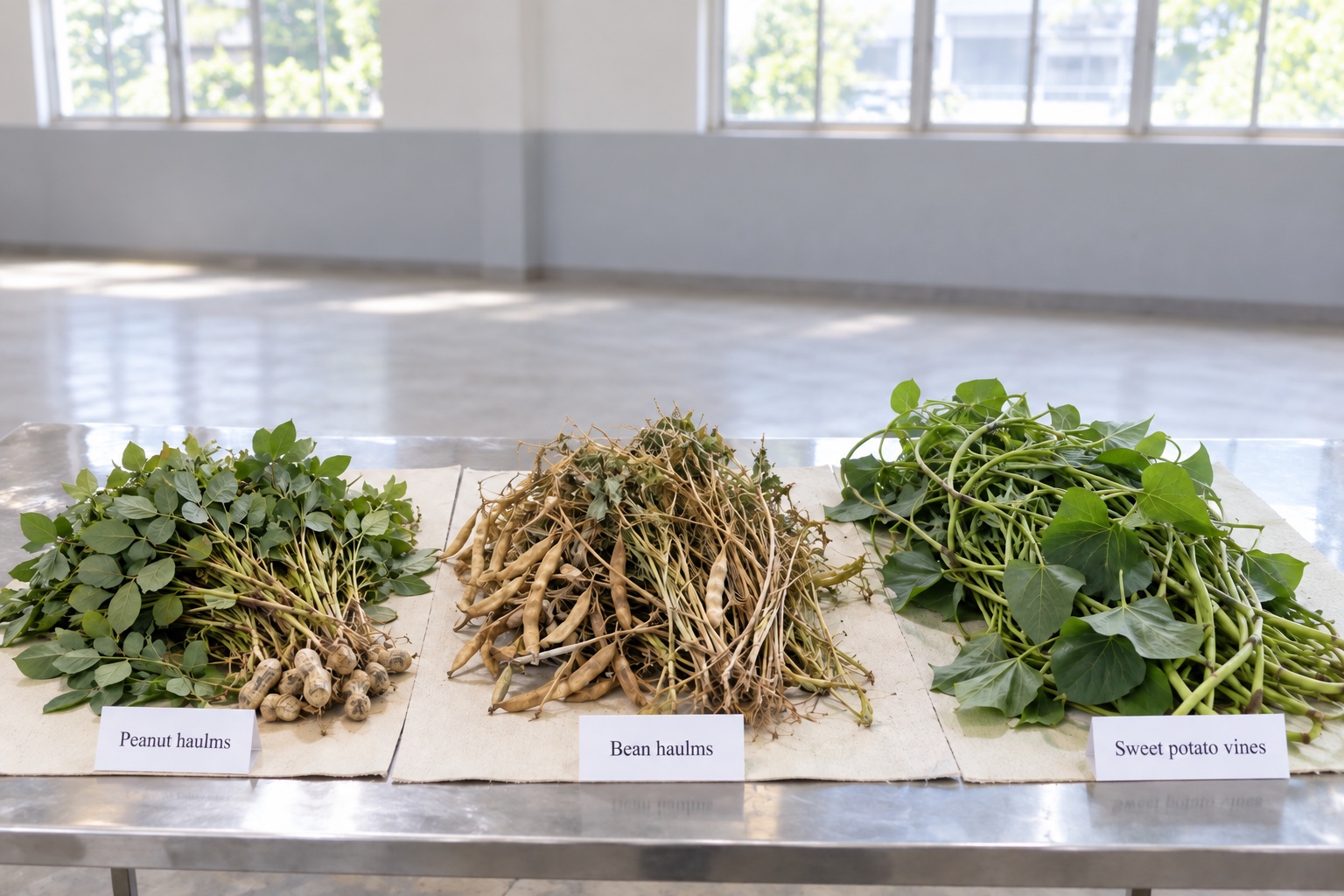
Why should you identify each residue precisely?
Name the plant and plant part. Peanut haulms are above-ground stems and leaves, while a tuber or root presents another cutting task. Tell suppliers whether your material includes pods, woody stems, tangled growth, or soil-contaminated roots.
- Keep unfamiliar plant material out of your trial.
- Remove contamination before material reaches equipment.
- Show typical mature stems as well as leaves.
- Confirm feeding suitability with an appropriate adviser.
What should you watch during a vine trial?
Observe whether loose material enters and leaves without repeated stops, using only approved operating procedures. Stop and isolate equipment before investigating wrapping or blockages; never pull at material while components are moving.
| Residue | Detail worth documenting |
|---|---|
| Peanut haulms | Leaf, stem, and attached-debris condition |
| Bean haulms | Stem maturity and remaining pods |
| Sweet potato vines | Length, moisture, and tangling tendency |
Key Takeaway: Treat unusual residues as separate applications. Obtain written approval and a relevant demonstration rather than extending a grass trial to every plant available on your farm.
How does material condition change chopping results?
Your Chaff Cutter machine may handle the same crop differently as moisture, maturity, stem thickness, and bundle condition change. Record those variables alongside trial output so you know which field conditions a result represents.
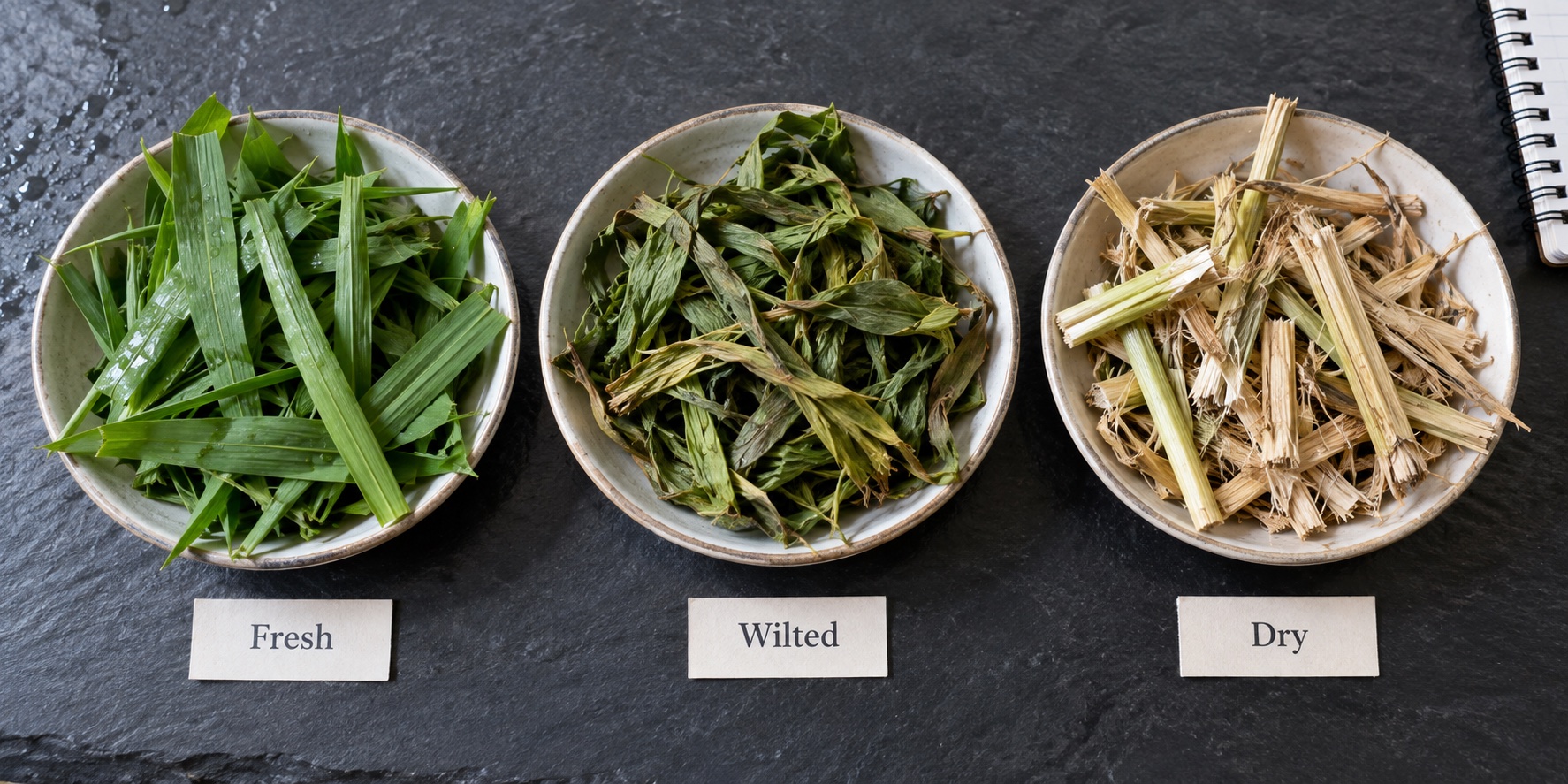
Why can Chaff Cutter machine results change by batch?
Match conditions before comparing output. Ask whether published capacity describes green or dry material, and how operators prepared each batch. A fresh-mass figure does not tell you how much dry matter that material contains.
- Record crop species and approximate growth stage.
- Describe moisture condition using a consistent method.
- Keep feeding method and chosen settings documented.
- Inspect collection samples across a complete run.
Can extra power solve every material problem?
No; investigate feed arrangement, cutting condition, discharge, and approved setup before assuming that more power will solve repeated stoppages. Never alter drive speed or protection beyond manufacturer instructions.
| Material condition | Observation worth recording |
|---|---|
| Wet leafy bundles | Clumping and discharge behavior |
| Dry brittle stems | Fines, dust, and sample consistency |
| Mature thick stalks | Remaining long pieces and interruptions |
Key Takeaway: Keep operating conditions attached to every output claim. When crop condition changes, revisit your settings and instructions instead of expecting identical results automatically.
What should stay out of a Chaff Cutter machine?
Keep stones, metal, plastic, wrapping, and unapproved materials out of your Chaff Cutter machine, regardless of its size. A heavy frame or large motor does not establish approval for timber, hard waste, or every agricultural by-product.
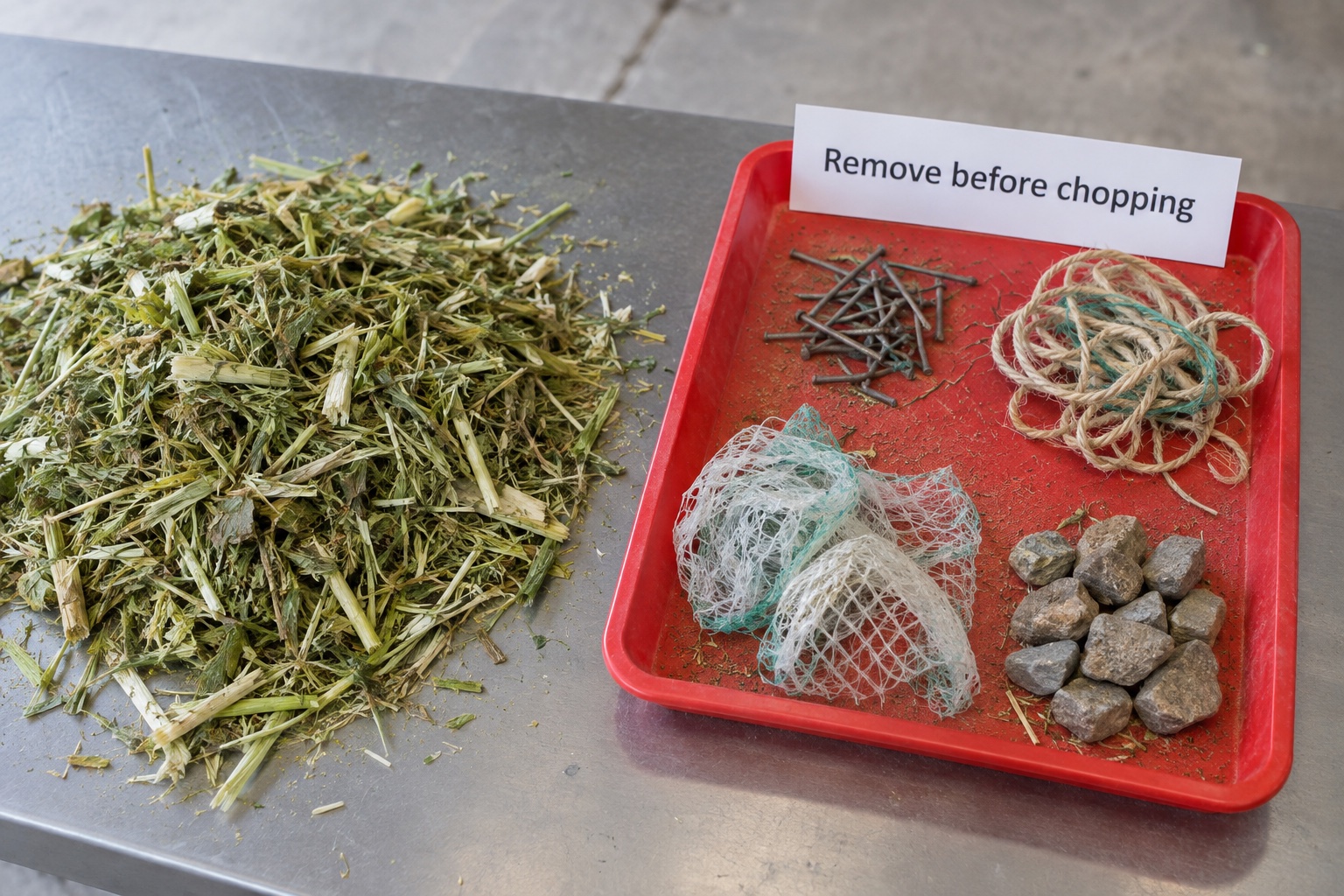
Which checks belong before the feed opening?
Sort material before starting machinery. Remove foreign objects while equipment is stopped and forage remains outside its intake. Follow agricultural machinery safety guidance and your manual for guarding, isolation, and blockage handling.
- Remove strings, ties, sacks, and bale netting.
- Check material collected near soil or workshop debris.
- Keep unknown, contaminated, or visibly spoiled forage aside.
- Never reach into an operating feed opening.
Can a cutter replace a grain mill or wood chipper?
Only use additional functions specifically approved for your machine. If you need ground grain or controlled grinding, discuss a suitable feed crusher instead of assuming a chopping chamber provides that result.
| Input or task | Appropriate decision |
|---|---|
| Metal, stones, wrapping | Remove before processing |
| Unknown or spoiled plants | Hold aside for assessment |
| Grain, roots, or woody material | Confirm a purpose-suitable machine |
Key Takeaway: An object fitting through an opening proves nothing about suitability. Reject contamination and check unfamiliar applications before they become a blockage or damaged component.
How do you test material compatibility before buying?
Test your Chaff Cutter machine with representative forage, documented settings, and agreed output requirements before placing an order. Include each crop condition you expect to process rather than asking for one general demonstration.
What belongs on a practical trial sheet?
Weigh the batch and keep a sample. Record total elapsed processing time, including ordinary interruptions, using a clearly stated timing method. Photograph input material and collect output safely after shutdown from an accessible receiving container.
- Identify crop, condition, and batch mass.
- Record machine configuration and approved settings.
- Note stoppages, collection losses, and long pieces.
- Agree what output quality would count as acceptable.
How do you compare Chaff Cutter machine test results?
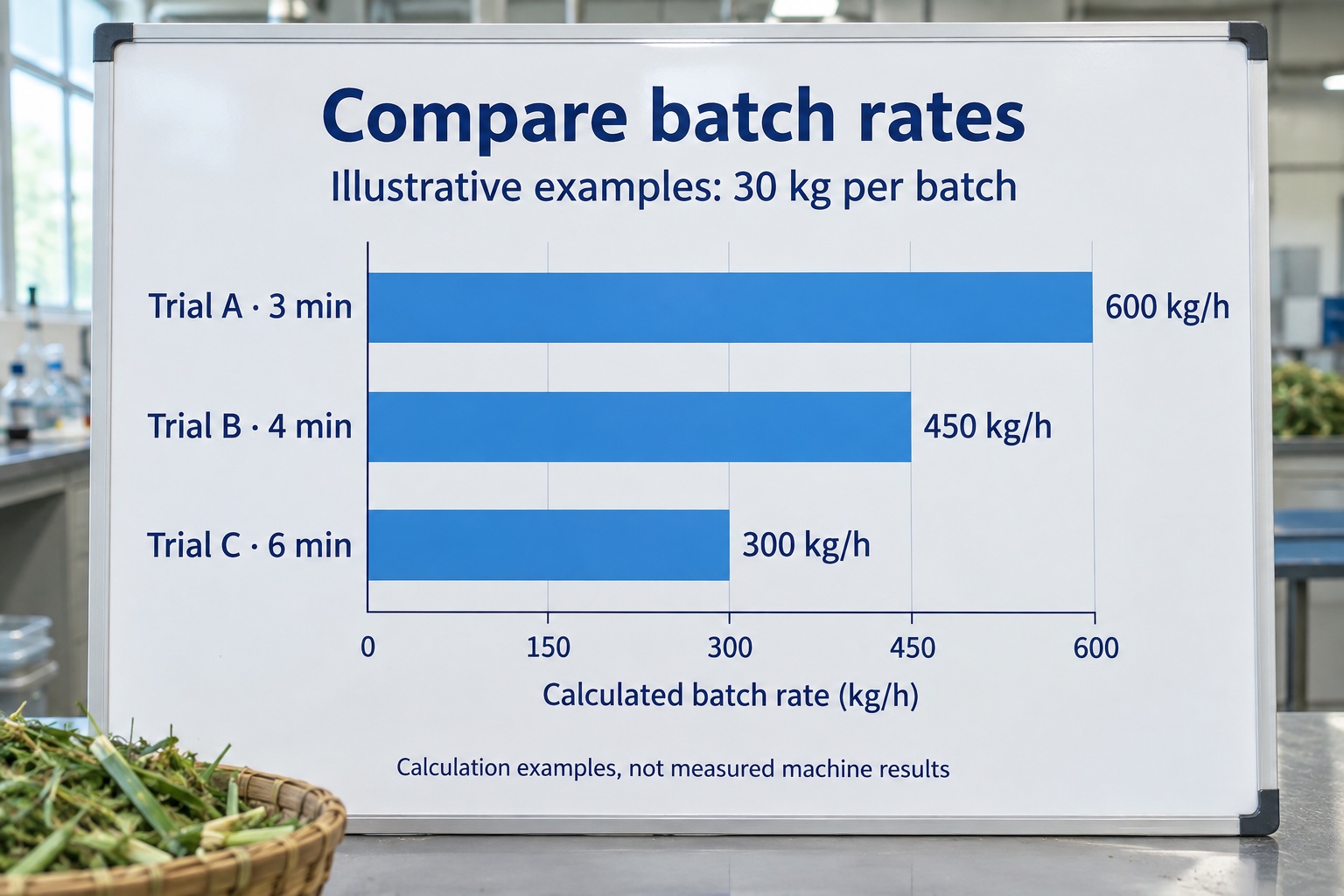
Divide processed mass by elapsed hours for a practical batch rate, using comparable timing boundaries. These examples show arithmetic only; they are not measured results or ratings for pictured equipment.
| Illustrative batch | Elapsed time | Calculated batch rate |
|---|---|---|
| Trial A: 30 kg | 3 minutes | 600 kg/h |
| Trial B: 30 kg | 4 minutes | 450 kg/h |
| Trial C: 30 kg | 6 minutes | 300 kg/h |
Key Takeaway: Useful output and practical batch rate belong together. Compare like conditions, and reject a fast result if its collected material fails your agreed requirements.
Which Chaff Cutter machine suits your material mix?
Choose a Chaff Cutter machine that demonstrates acceptable results across your routine crops and your most demanding approved material. Match that evidence with available power, daily quantity, collection arrangements, and service support.
What should you send with an equipment inquiry?
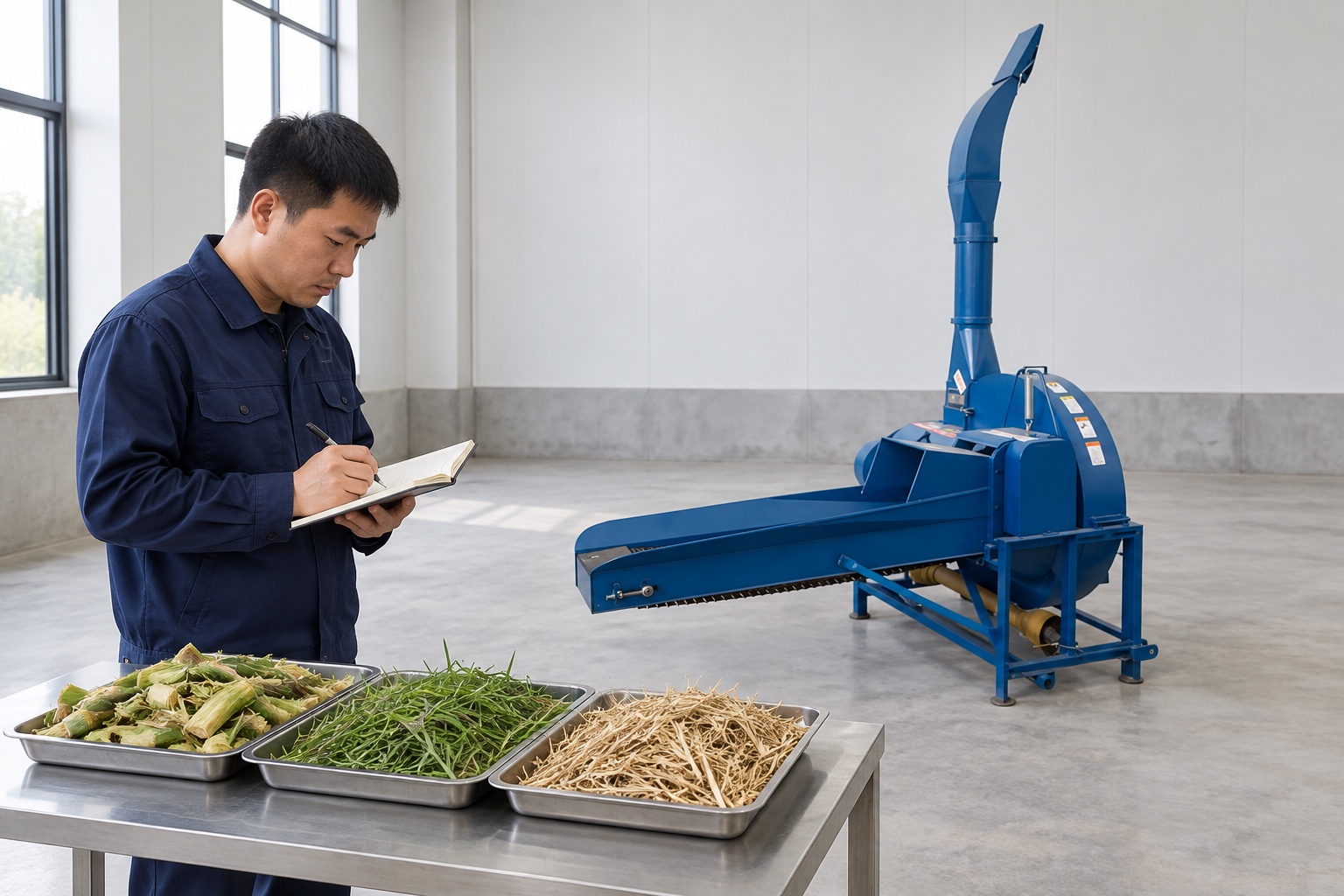
Send samples before broad performance requests. A short crop brief helps suppliers propose a configuration and identify limitations. Include separate requirements for chopping, fiber softening, or grinding when your feeding process needs them.
- List regular crops and occasional seasonal residues.
- Share photographs showing typical stem thickness.
- State daily mass and available working time.
- Ask for documented crop approval and trial conditions.
What does a sound material decision look like?
| Your requirement | Evidence before purchase |
|---|---|
| Several forage crops | Separate representative material trials |
| Consistent physical output | Samples checked against agreed criteria |
| A workable daily routine | Suitable rate, power, and collection plan |
| Continued operation | Instructions, wear parts, and support details |
Key Takeaway: You can now separate crop compatibility, material preparation, and output quality when assessing equipment. Resolve uncertain residues through testing before adding them to your regular workload.
For help matching equipment with corn stalks, grass, straw, or approved residues, contact us today with your crop list and photographs. We can discuss a suitable configuration and the material details needed for an equipment proposal. We believe a useful forage machine earns trust through clear limits and results you can inspect.
What else do farmers ask about materials? (FAQ)
Your Chaff Cutter machine should process only approved materials prepared according to its instructions. These questions help resolve common gaps between a product description and your actual crop supply.
Which final questions deserve a written answer?
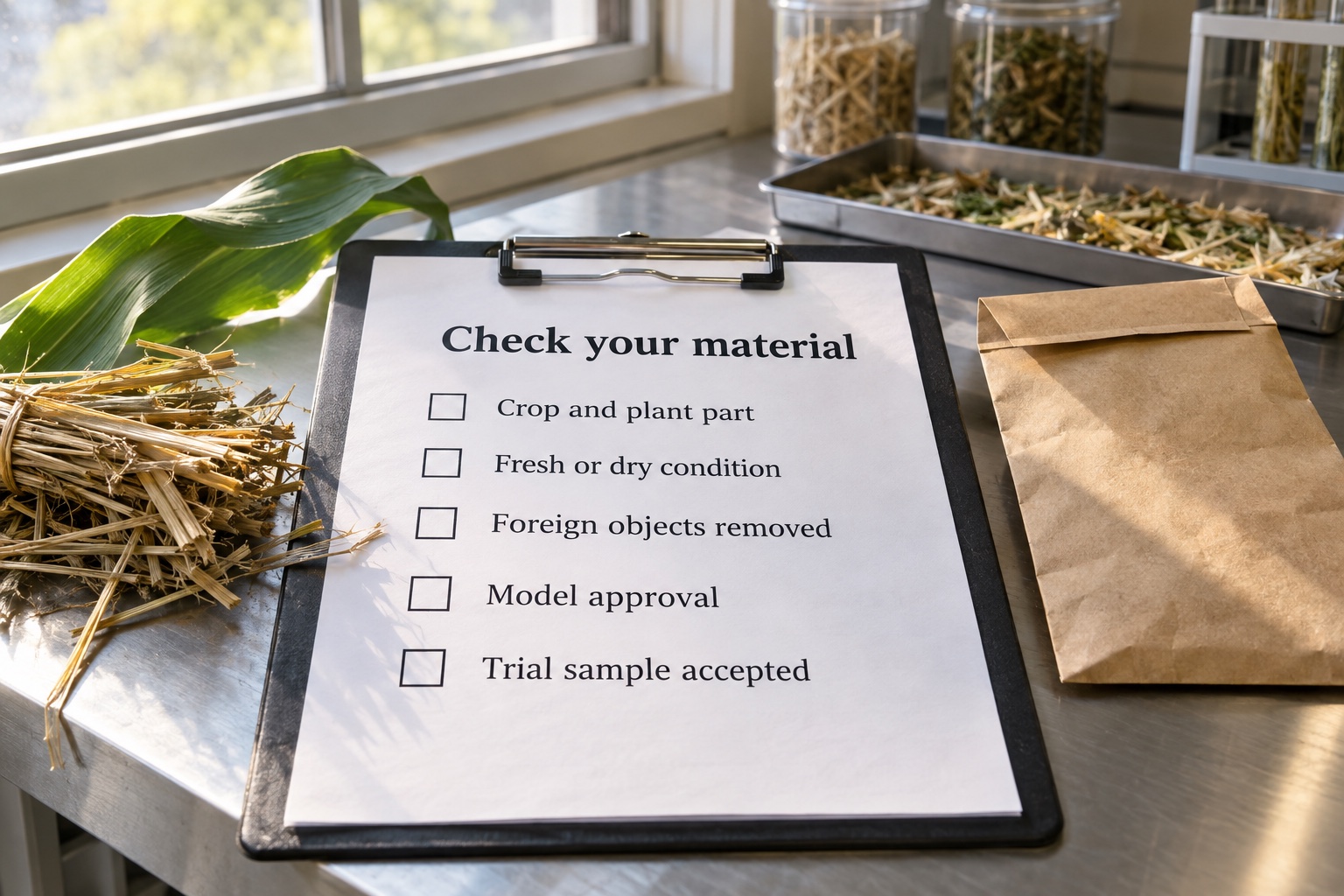
Keep crop details beside your quotation. Written confirmation helps prevent confusion when seasonal forage changes or another operator takes over.
- Confirm permitted materials and any exclusions.
- Keep preparation and adjustment instructions available.
- Record which samples your demonstration covered.
Q1: Can I feed a whole straw bale into my cutter?
Only if your specific machine explicitly supports that feeding method. Remove wrapping and follow approved preparation instructions; ordinary loose-forage approval does not establish whole-bale capability.
Q2: What’s the best chop length for every crop?
There is no single length suitable for every ration and application. Agree a target with your feeding adviser, then confirm available adjustments and inspect actual output.
Q3: How do I know if dry stalks need another machine?
Use a representative trial with an agreed physical result. If chopping cannot deliver your required texture or handling, compare suitable kneading or crushing equipment.
Q4: Can I chop sugarcane leaves with the same equipment?
Possibly, when your manufacturer approves that material and a trial supports your needs. Do not extend approval for leaves automatically to thick cane stalks, roots, or other plant parts.
Q5: Can chopping make moldy forage safe to feed?
No; size reduction does not establish feed safety. Keep suspect material separate and seek qualified assessment before deciding whether it belongs in your feeding program.
