
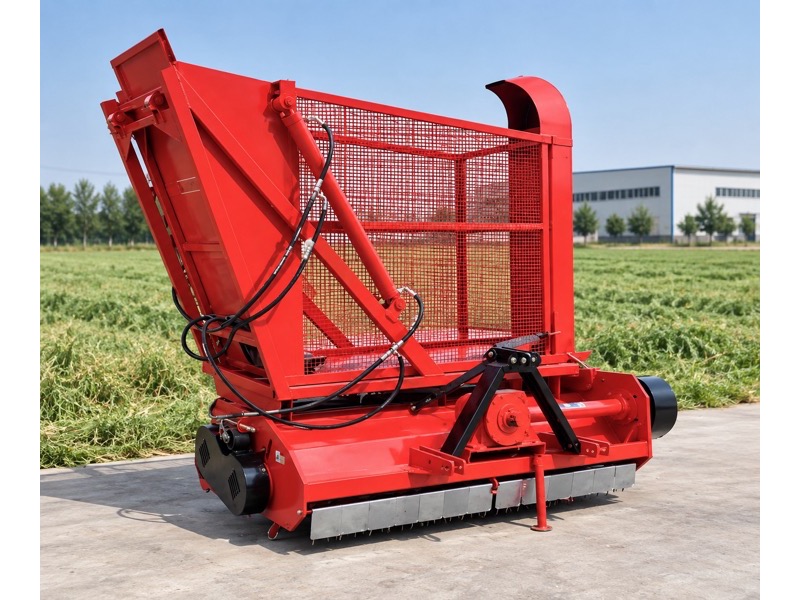
Grass Silage Harvester: Get Better Results in the Field
Match your Grass Silage Harvester to crop condition, tractor requirements, and transport capacity for consistent field work. Check chopped samples and storage readiness before judging equipment by speed alone.
A trailer arrives late while a freshly cut swath sits through another change in weather. Your harvester may have spare capacity while collection and storage cannot keep pace. Plan those stages together so useful forage reaches storage within your available working window.
What does a Grass Silage Harvester do in the field?
A Grass Silage Harvester cuts or collects forage and reduces particle size during field work, depending on its configuration. Crop intake, chopping, and collection arrangements differ between models, so identify your required harvesting method before comparing machines.
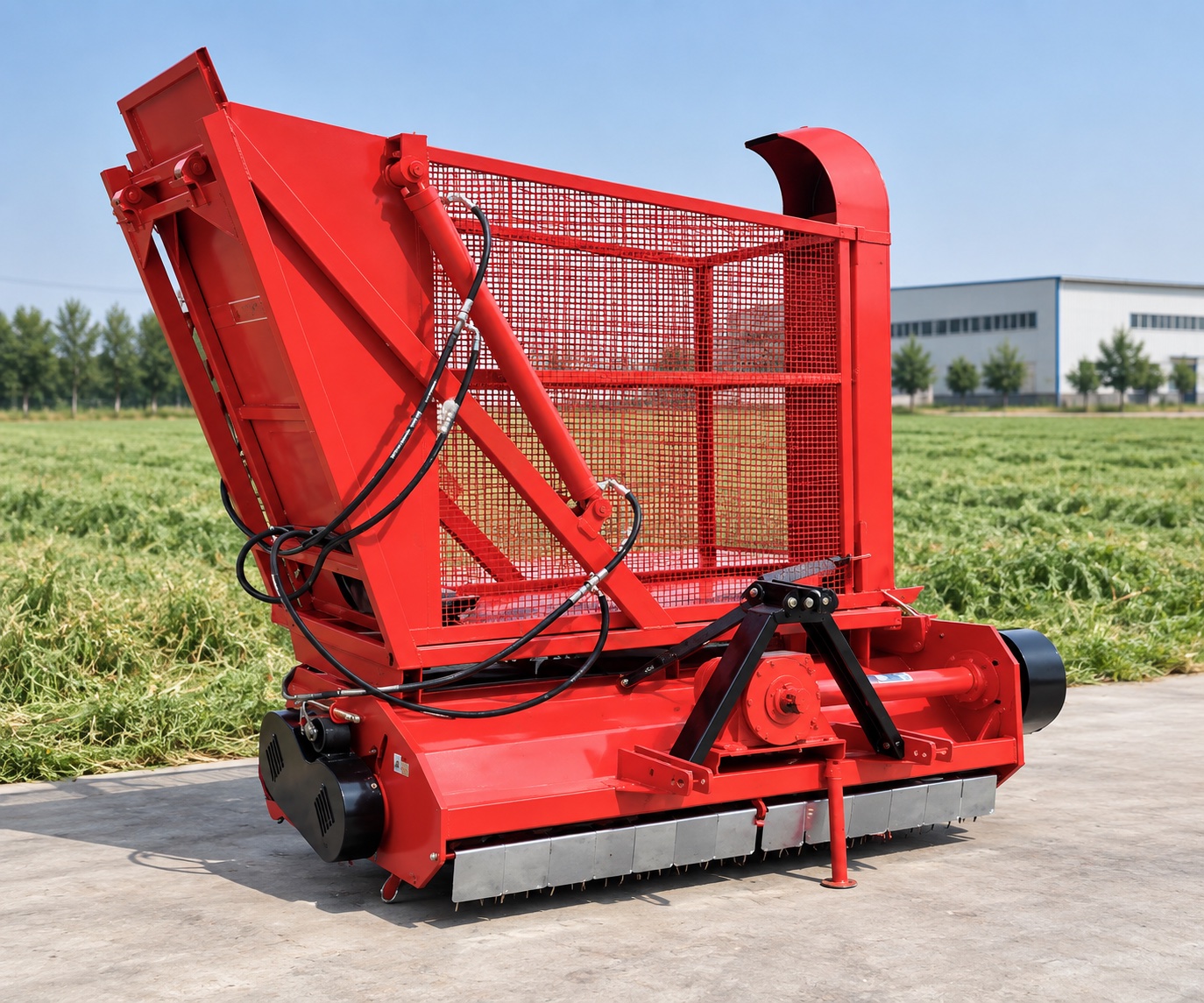
Which harvesting layout matches your crop?
Start with how forage reaches the machine. Some systems cut standing crops, while others collect material already mown into swaths. Residue-recovery equipment needs its own suitability check when proposed for fresh grass silage.
- Identify standing-crop or swath-collection work.
- Confirm approved crops and operating conditions.
- Check whether output enters a hopper or trailer.
- Include unloading and field movement in your plan.
Can a Grass Silage Harvester replace a stationary cutter?
It handles a different stage of feed preparation. A stationary chaff cutter processes delivered forage; field harvesting requires equipment designed for crop intake while moving across land.
| Work stage | Equipment requirement |
|---|---|
| Standing-crop harvest | Suitable cutting and collection system |
| Mown-swath collection | Compatible pickup and chopping arrangement |
| Yard preparation | Equipment accepting delivered forage |
Key Takeaway: Specify your field operation before selecting a machine. Tractor power and a discharge chute alone do not establish that equipment can harvest your crop.
Which crops suit a Grass Silage Harvester?
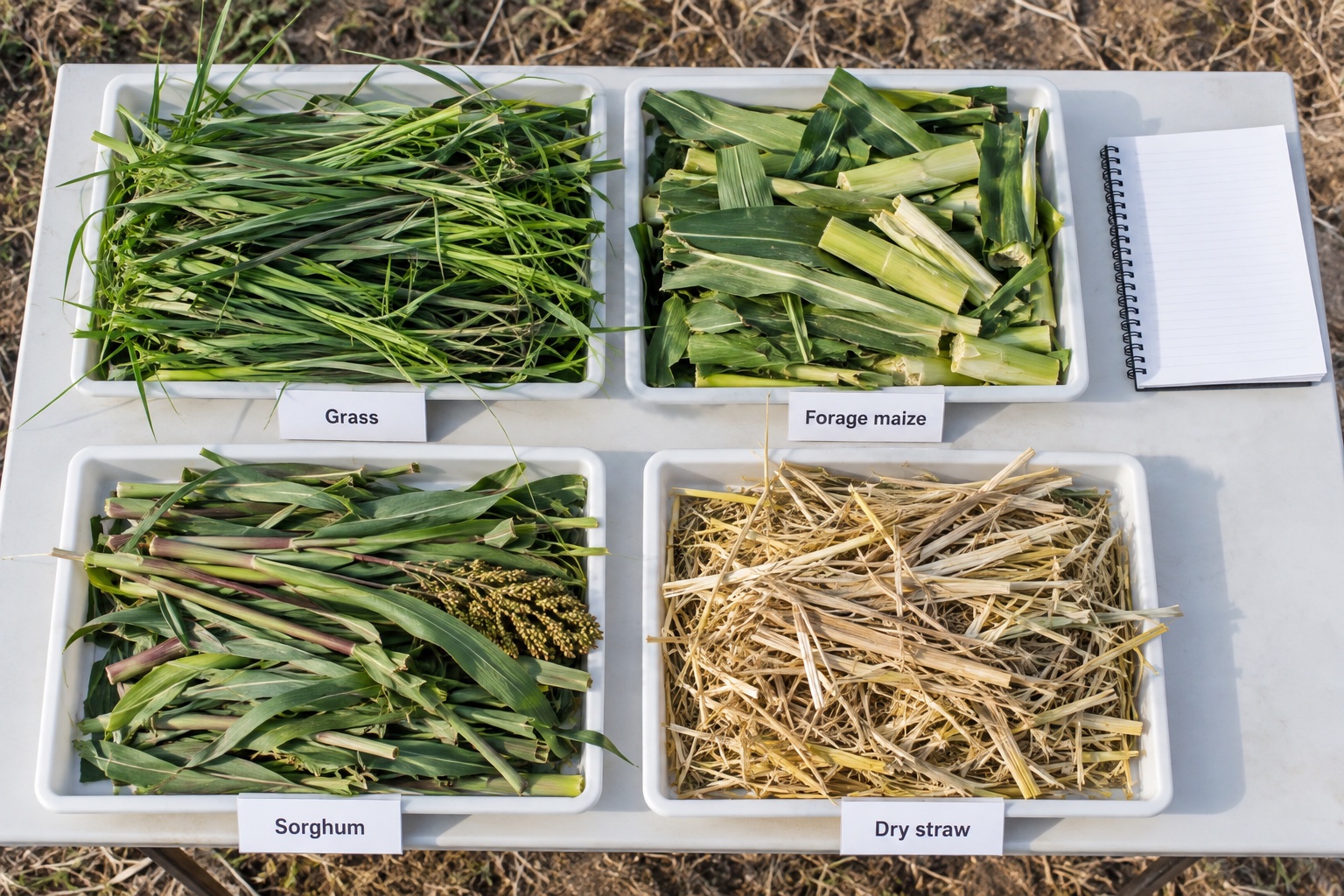
Your Grass Silage Harvester should have documented approval for your crop, its growth stage, and how material lies in the field. Grass, forage maize, sorghum, and dry residues should not share an assumed performance rating without relevant trials.
What should you tell suppliers about your fields?
Describe conditions beyond the crop name. Record typical stem thickness, crop height, lodging, moisture condition, and field surface. Our forage-material guide explains why fresh and dry materials need separate processing checks.
- Identify crop species and normal harvest stage.
- Describe standing, flattened, or windrowed material.
- Note wet patches, stones, and uneven ground.
- Request a trial under comparable crop conditions.
Does crop recovery prove suitability for silage?
No; collected material also needs acceptable physical quality and appropriate storage preparation. Check contamination, remaining long pieces, fines, and crop condition before treating recovered mass as usable silage feedstock.
| Application | Trial question |
|---|---|
| Fresh grass | Does intake suit your swath or standing crop? |
| Maize or sorghum | Does the configuration handle typical stems? |
| Dry residues | Is collection and output suitable for your intended use? |
Key Takeaway: Ask for crop-specific evidence. A useful residue-recovery demonstration can leave unanswered questions about leafy grass, moisture handling, and silage preparation.
How do you match a Grass Silage Harvester to your tractor?
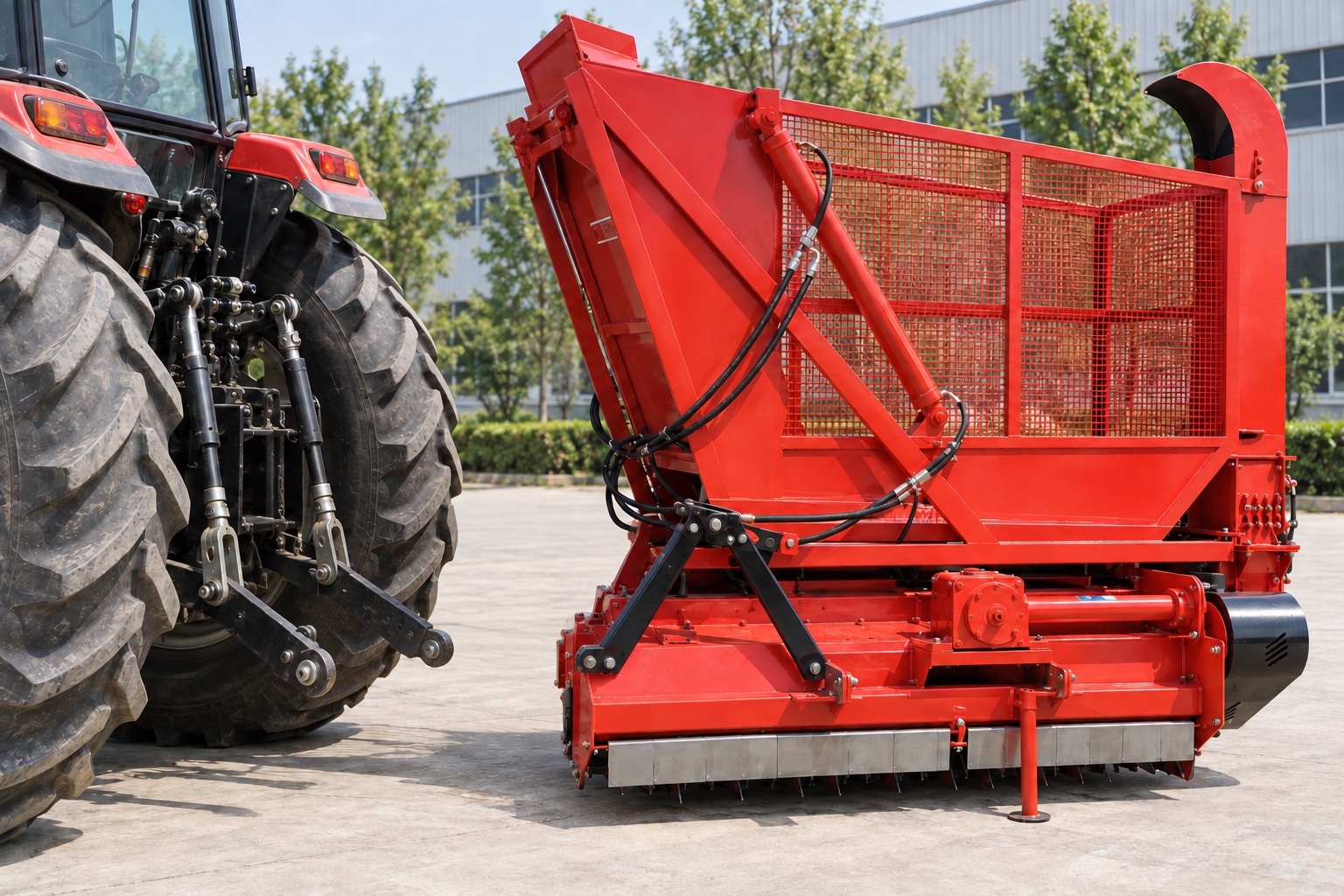
Match your Grass Silage Harvester with written requirements for PTO output, hitch, hydraulics, lifting capacity, and stability. Confirm compatibility for your selected configuration rather than choosing from advertised tractor horsepower alone.
Which tractor details belong in your inquiry?
Send the tractor specification sheet. Ask suppliers to identify required PTO speed, connection details, hydraulic functions, and installation arrangements. For example, available engine power and usable PTO output describe different points in your power system.
- Confirm required PTO speed and shaft compatibility.
- Check approved mounting or towing arrangements.
- Identify hydraulic supply and control requirements.
- Review lifting, ballast, and stability instructions.
Which Grass Silage Harvester figures need confirmation?
Request a model-specific datasheet that identifies operating width, mass, transport dimensions, and collection arrangements. Treat a minimum power figure as one compatibility check among several.
| Specification | Why you need it |
|---|---|
| Drive requirements | Correct power delivery and connection |
| Weight and mounting | Approved handling and tractor compatibility |
| Hydraulic functions | Suitable control of fitted equipment |
| Operating dimensions | Access through fields and working areas |
Key Takeaway: Confirm your tractor and implement as a working combination. A suitable power rating cannot compensate for an incompatible hitch or unsuitable lifting arrangement.
When should you mow, wilt, and collect grass?
Schedule your Grass Silage Harvester around crop condition, your storage target, and a weather window that allows collection and sealing. Mow and wilt when needed, then collect after representative samples reach your agreed dry-matter range.
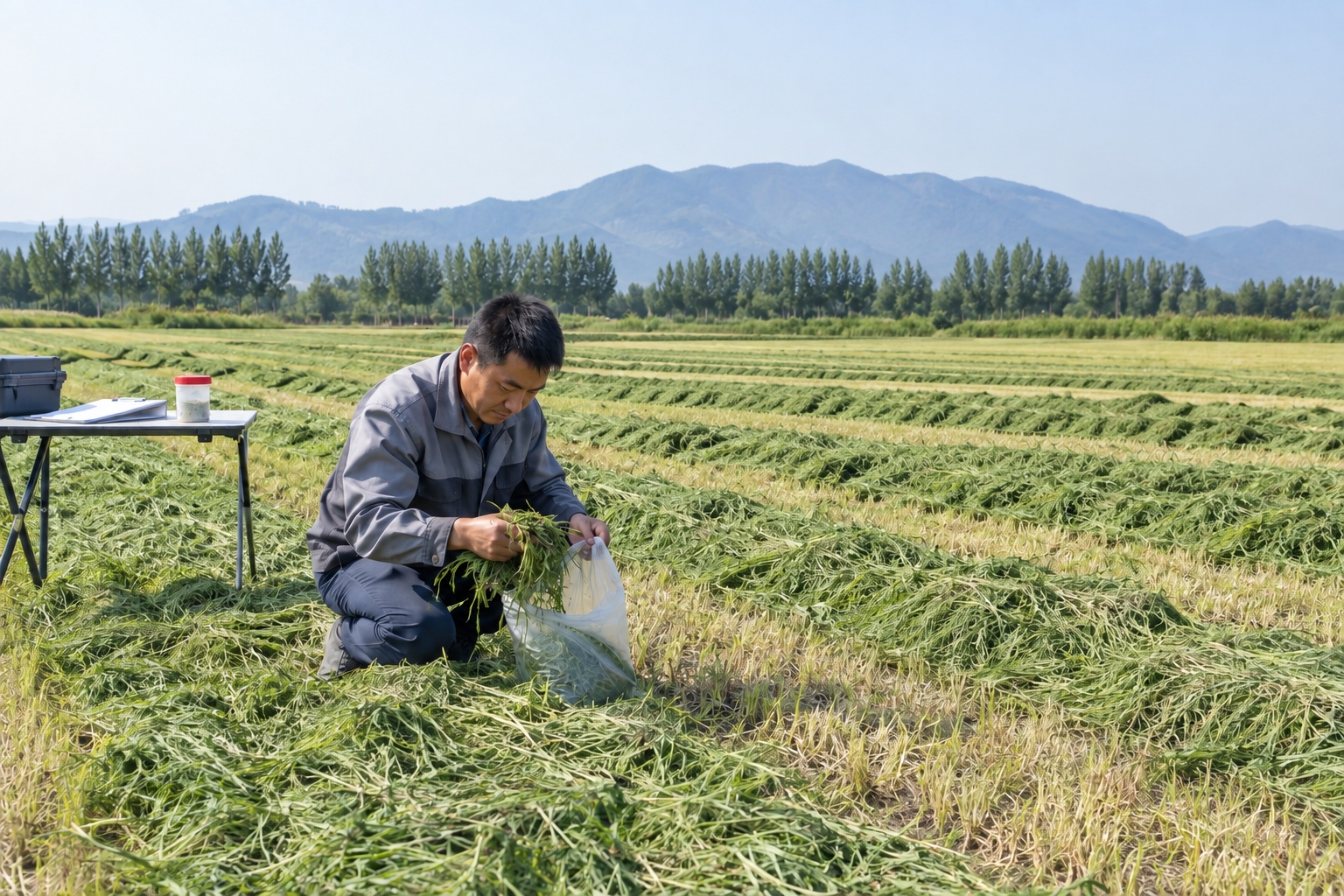
Why should you test grass before collection?
Check the crop rather than elapsed hours. Teagasc’s grass-wilting guidance explains how weather, swath arrangement, and drying time affect crop dry matter. Choose a target suited to your crop and storage system with appropriate advice.
- Sample representative areas, including wetter patches.
- Review maturity and crop condition before mowing.
- Prepare transport and storage before collection starts.
- Reassess plans when weather changes drying conditions.
Can a faster harvester solve poor preservation conditions?
No; crop readiness, prompt handling, packing, and sealing each need attention. Our silage fermentation guide explains why particle preparation must fit a workable storage process.
| Harvest decision | Check before proceeding |
|---|---|
| Mowing | Crop stage and a workable weather window |
| Wilting | Measured condition and storage target |
| Collection | Suitable crop, available transport, ready storage |
Key Takeaway: Base collection timing on your crop and whole operation. A fixed number of wilting hours cannot account for every swath, weather pattern, and storage method.
What determines Grass Silage Harvester cutting quality?
Your Grass Silage Harvester output depends on crop condition, intake consistency, cutting components, and approved operating settings. Inspect representative collected samples instead of assuming a nominal cut-length claim describes every particle.
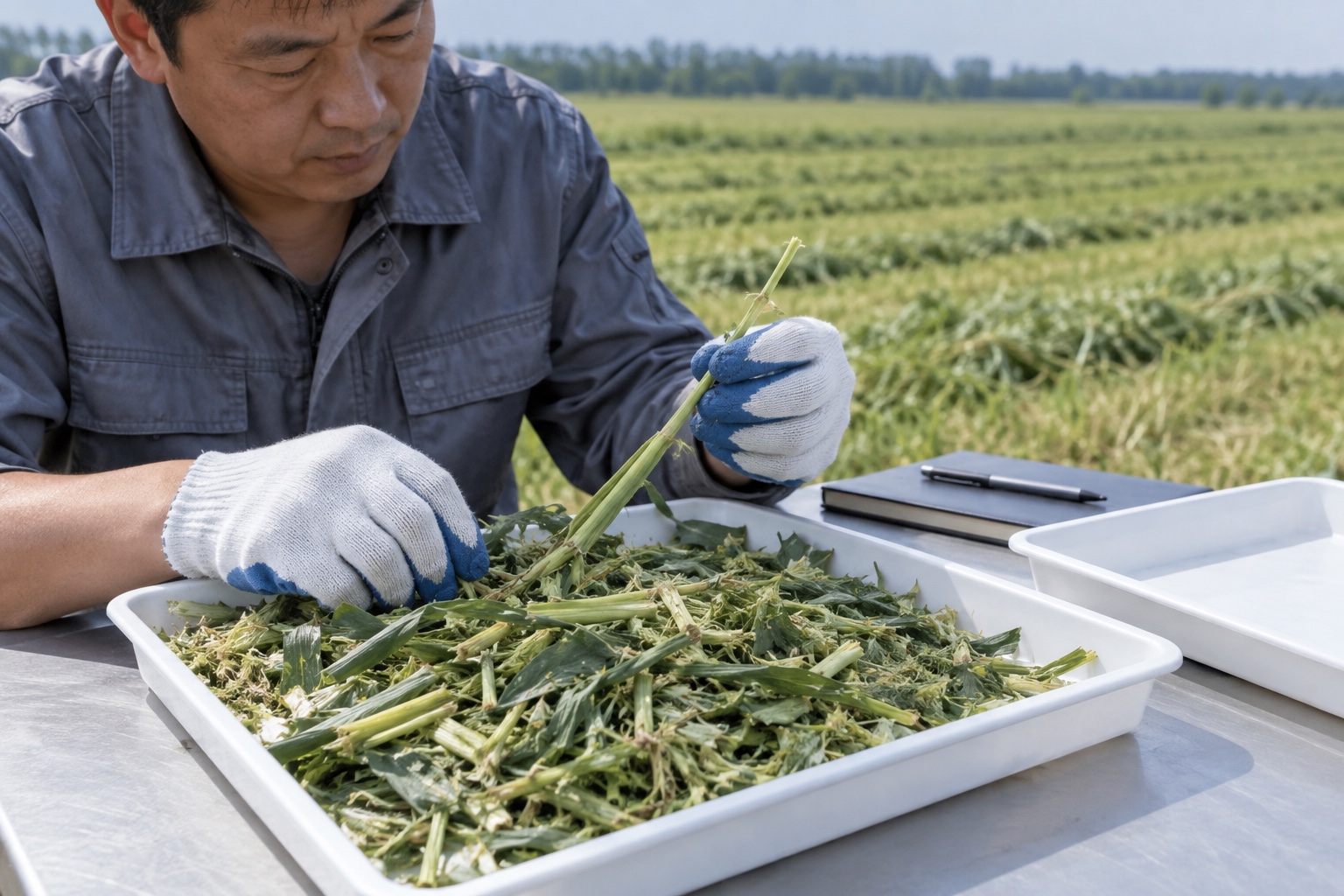
What should a Grass Silage Harvester sample show?
Inspect material across a complete trial. Collect samples safely from accessible discharged material after equipment stops. Check useful particle distribution, remaining long stems, fines, and visible soil or debris against your agreed requirements.
- Keep crop and operating settings documented.
- Sample beyond a short demonstration burst.
- Ask how adjustments change actual output.
- Agree acceptable feed and storage requirements beforehand.
Should you always aim for shorter particles?
No; your required output depends on livestock feeding, crop characteristics, and storage arrangements. Different cutting systems offer different adjustment options, so request instructions and sample evidence for your proposed model.
| Observation | Issue to investigate |
|---|---|
| Excessive long pieces | Intake, cutting condition, and approved settings |
| Too many fines | Suitability of processing for your end use |
| Soil or debris | Crop contamination and field collection setup |
Key Takeaway: Use collected material as your quality check. Ask for a repeatable physical result, with its crop conditions recorded, before accepting a general uniform-cutting claim.
How much field capacity can you realistically expect?
Your Grass Silage Harvester capacity depends on working width, travel speed, field efficiency, and crop-handling limits. Calculate a planning estimate, then compare it with timed field work under representative conditions.
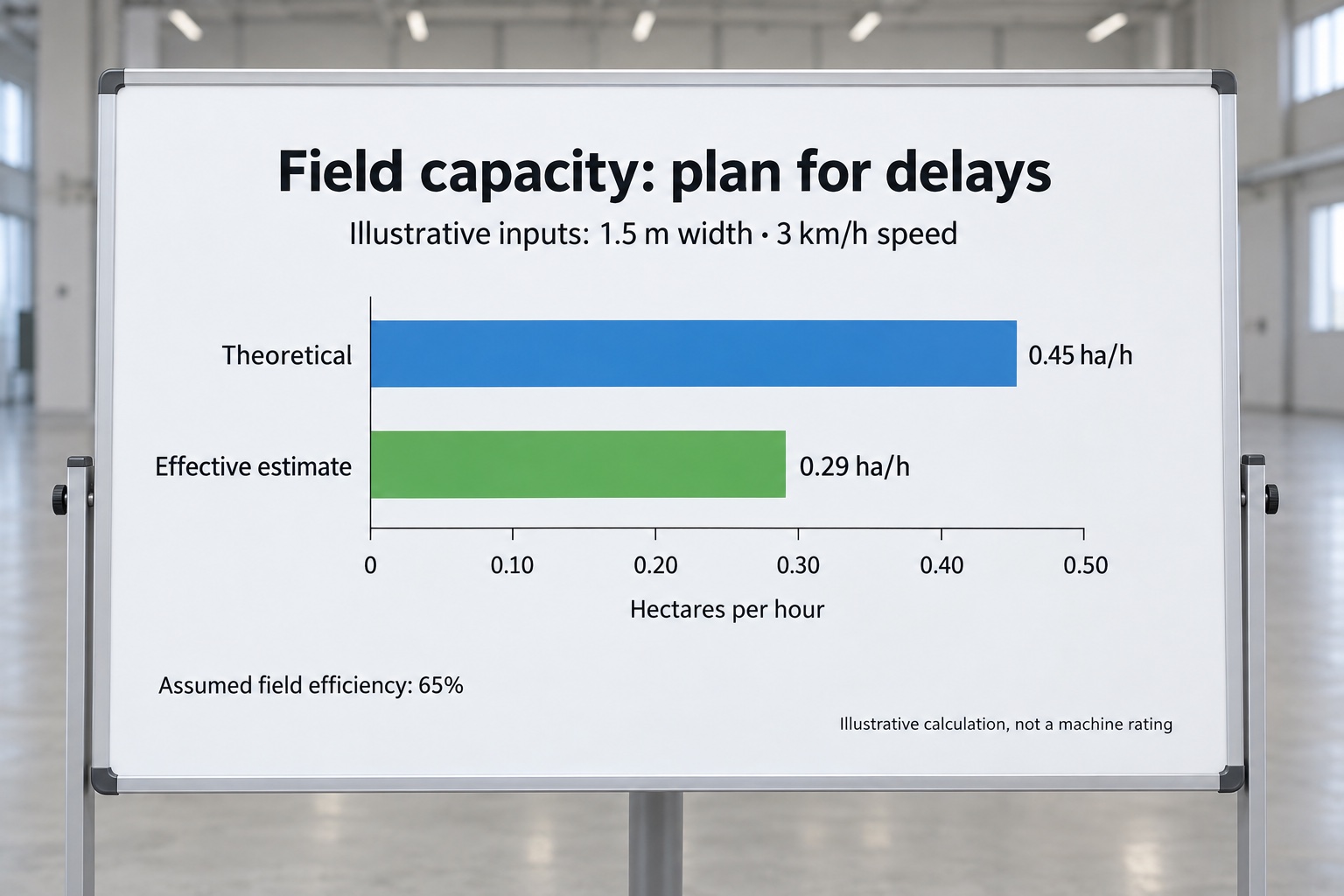
How do you calculate an initial estimate?
Separate uninterrupted cutting from completed field work. Iowa State’s field-capacity method distinguishes theoretical coverage from effective coverage after field delays. In metric units, theoretical hectares per hour equal width in meters multiplied by speed in kilometers per hour, divided by ten.
- Use the full working width for theoretical coverage.
- Choose a representative, suitable working speed.
- State your field-efficiency assumption explicitly.
- Allow separately for road travel and daily servicing.
How do you measure Grass Silage Harvester field capacity?
Divide completed field area by actual field time, including turns, unloading, and routine field delays. The following arithmetic uses assumed inputs; it does not describe a pictured machine’s rated or measured output.
| Illustrative input or result | Value |
|---|---|
| Working width | 1.5 m |
| Travel speed | 3 km/h |
| Theoretical coverage | 0.45 ha/h |
| Assumed field efficiency | 65% |
| Effective coverage estimate | 0.2925 ha/h, about 0.29 ha/h |
Key Takeaway: Compare hectares completed over consistent field-time boundaries. Mass output also depends on crop yield, so hectares per hour and tonnes per hour require separate interpretation.
How should a Grass Silage Harvester fit your transport plan?
A Grass Silage Harvester needs collection, transport, and storage capacity that can handle its actual output without prolonged waiting. Match hopper-emptying or trailer-exchange arrangements with your field layout and your available packing and sealing crew. Our silage preparation solution shows how harvesting, chopping, transport and sealing equipment can be sized to the same daily target.
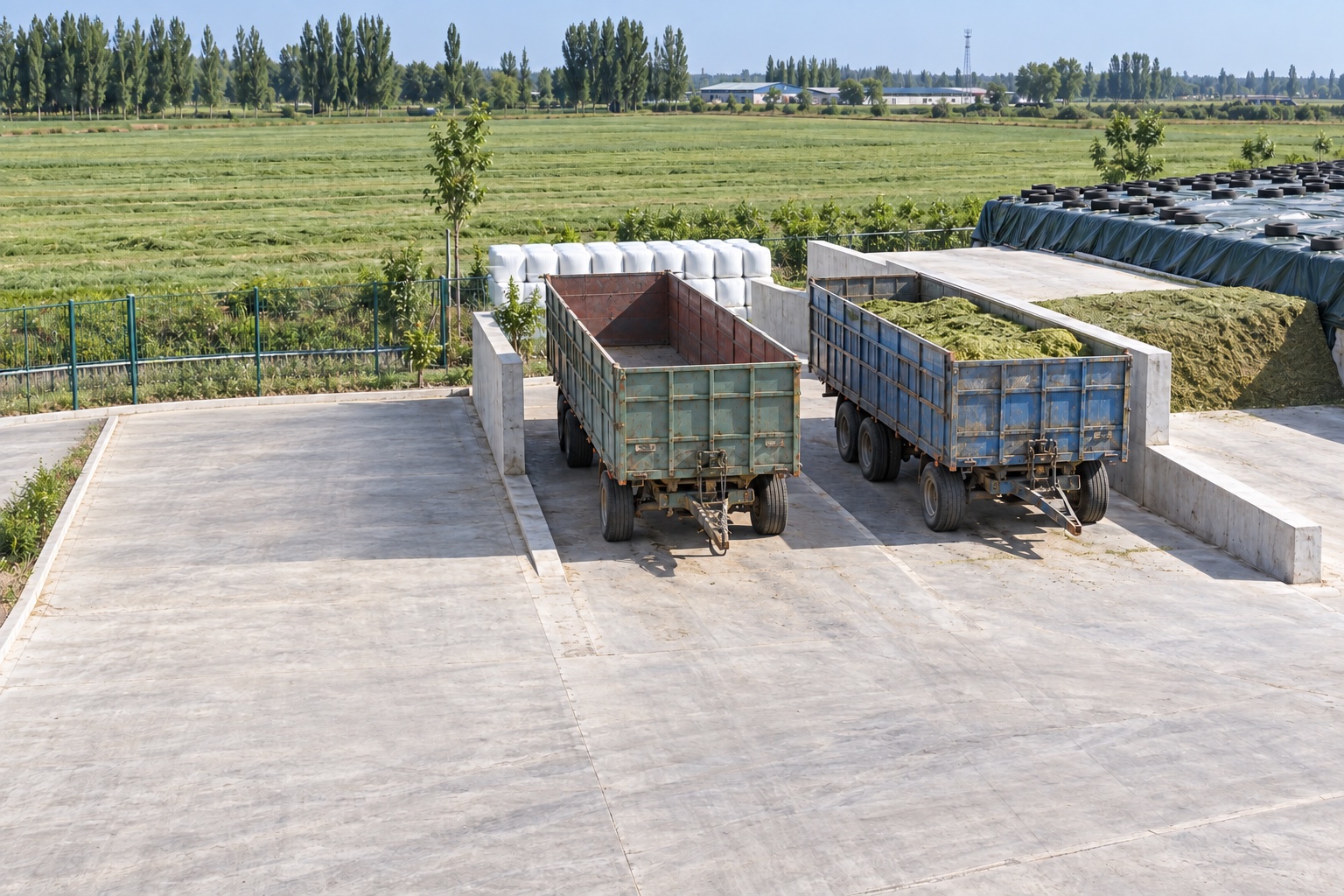
Where do delays usually enter a harvest plan?
Time a complete collection cycle. Record loading, travel, unloading, and return movements with your proposed vehicles. Check receiving height, access, load limits, and approved unloading procedures before assuming existing trailers will suit another machine.
- Confirm how material leaves your selected harvester.
- Plan clear vehicle routes and waiting areas.
- Identify field entrances and suitable turning space.
- Coordinate collection with storage work throughout each shift.
Does extra trailer capacity always solve the problem?
No; storage handling may become your limiting stage even when transport keeps up. Review where material waits and adjust the whole operation instead of building a large unprocessed queue at storage.
| Work stage | Planning check |
|---|---|
| Collection | Suitable hopper or receiving trailer |
| Transport | Practical load cycle and access route |
| Storage | Capacity for prompt handling and sealing |
Key Takeaway: Plan harvest flow beyond your cutting unit. A coordinated collection cycle can matter more than another increase in theoretical cutting capacity.
Which Grass Silage Harvester checks prevent avoidable stops?
Your Grass Silage Harvester needs its specified service checks, intact guards, suitable settings, and trained operators before field work begins. Inspect condition using approved procedures and keep required parts and support information available during your harvesting window.
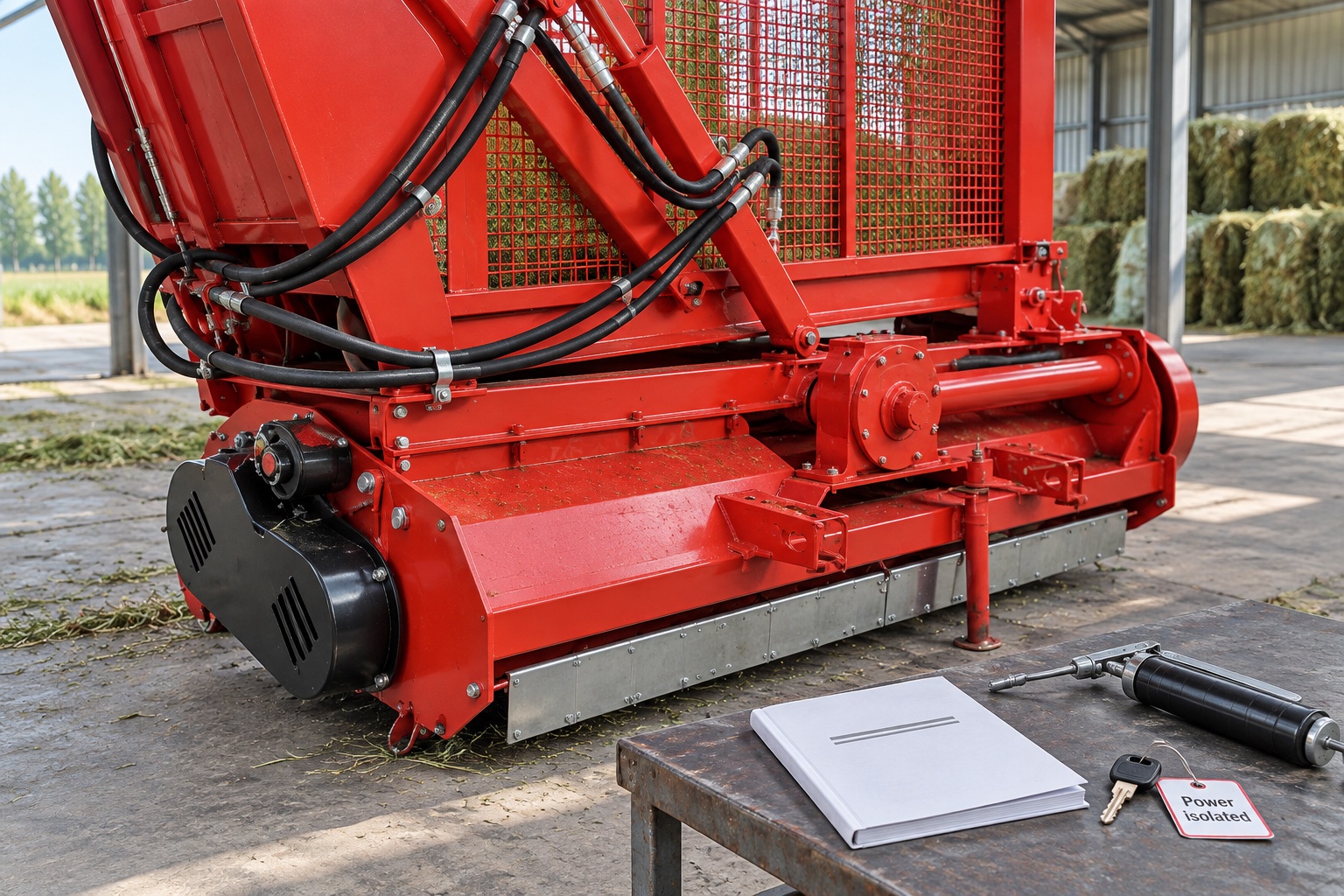
What belongs in a pre-work inspection?
Check readiness while repairs are still practical. Follow your manual for cutting-component condition, fasteners, lubrication, and guarding. Use HSE’s forage-harvester safety guidance alongside model-specific instructions, especially around PTO drives and blockages.
- Confirm guards and protective devices are in place.
- Check for damage, leaks, and loose components.
- Keep operators familiar with controls and procedures.
- Identify field hazards and overhead services beforehand.
What should happen when material blocks the intake?
Stop and isolate machinery, prevent restart, and wait for all movement to cease before intervention. Secure components against movement and follow your manual’s procedure; never pull material from an operating intake.
| Preparation need | Record or action |
|---|---|
| Routine service | Model-specific checklist and schedule |
| Wear parts | Correct identification and supply contact |
| Operating problem | Clear shutdown and service procedure |
Key Takeaway: Prepare for interruptions before your crop window opens. A documented service plan reduces uncertainty when equipment needs attention during a busy harvest.
How do you choose a Grass Silage Harvester for your farm?
Choose a Grass Silage Harvester after crop trials, tractor checks, and a field-to-storage plan support your requirements. Dairy farms, mixed livestock operations, forage growers, and contractors should each specify their own workload and collection arrangements.
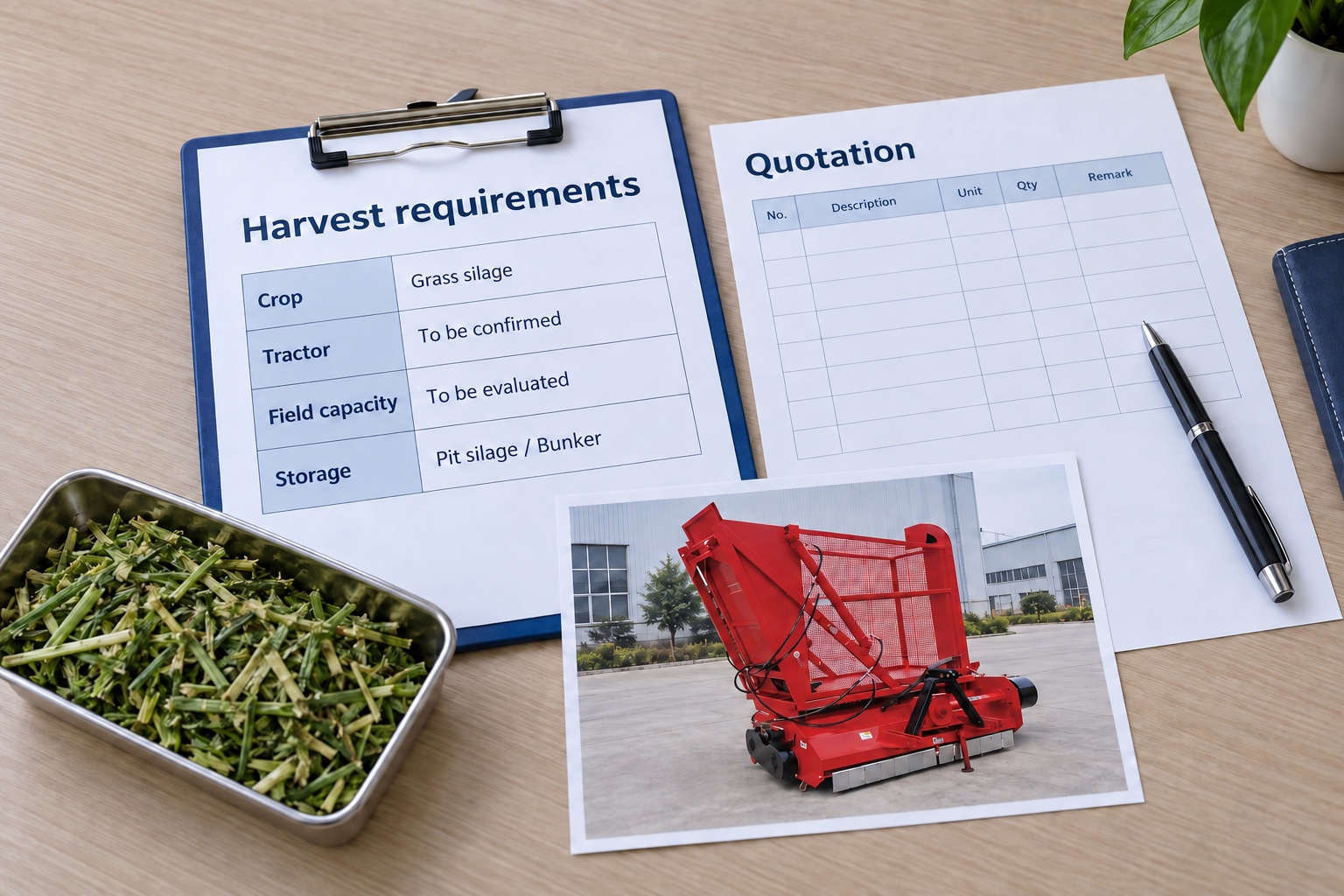
What should your supplier demonstrate?
Take your field brief into the demonstration. Provide crop details, expected area, available working days, tractor specifications, and receiving arrangements. Ask suppliers to document conditions behind every proposed performance figure.
- Request a representative crop and collection trial.
- Record completed area, elapsed field time, and output quality.
- Confirm required tractor connections and included equipment.
- Obtain manuals, wear-part details, and support terms.
What belongs in your final equipment decision?
| Your requirement | Evidence before ordering |
|---|---|
| Suitable crop handling | Approved application and relevant trial |
| Tractor compatibility | Written drive, mounting, and hydraulic requirements |
| Useful field performance | Timed work and inspected forage samples |
| Complete harvesting routine | Collection, transport, storage, and support plan |
Key Takeaway: You can now connect crop suitability, cutting quality, practical field capacity, and transport readiness. Resolve missing evidence before treating a specification table as proof of farm suitability.
For help discussing your forage equipment requirements, contact us today with your crop, tractor, field area, and collection plan. We can review those details and discuss an equipment proposal around your intended operation. We believe harvest performance should be judged by useful forage reaching storage, with conditions and limitations made clear.
What else should you know before harvesting? (FAQ)
Your Grass Silage Harvester selection should remain tied to approved applications, representative trials, and practical field conditions. These questions help close common gaps before you organize a harvesting crew.
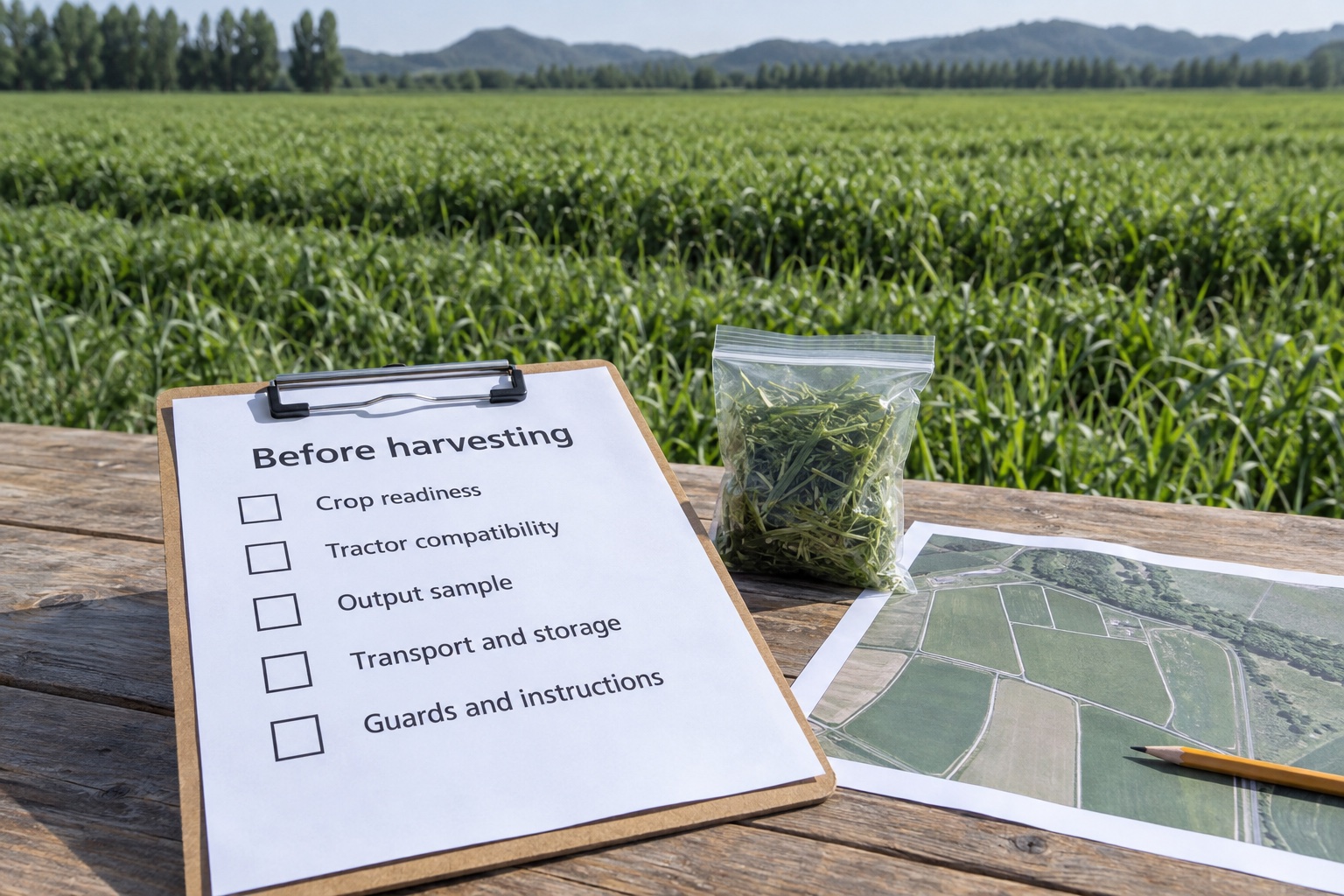
Which final checks should you keep in writing?
Keep these answers with your field plan. Share relevant operating details with everyone coordinating collection, transport, and storage.
- Confirm who approves equipment setup and settings.
- Record which conditions your trial covered.
- Keep service and operator instructions accessible.
Q1: Can I use a tractor-powered chaff cutter for field harvesting?
Only if it is specifically designed for that operation. PTO power alone does not provide a standing-crop cutting head, field pickup, or suitable mobile collection system.
Q2: What’s the best working width for a small farm?
Choose a width supported by your tractor, field access, workload, and harvesting window. A wider machine can lose its advantage when turns, transport, or storage become limiting.
Q3: How do I know if a capacity claim is realistic?
Ask for completed area, crop conditions, field time, and output-quality records. Confirm whether quoted figures describe uninterrupted cutting, effective field work, or mass throughput.
Q4: Can I harvest grass and corn with the same machine?
Possibly, if your configuration and attachments are approved for both crops. Check required changes and conduct separate trials before assuming equivalent output or collection performance.
Q5: What’s the best response when trailers cannot keep up?
Adjust your harvesting plan around a measured complete transport cycle. Add suitable transport or reduce harvesting output when needed, while preserving safe operation and timely storage handling.
