
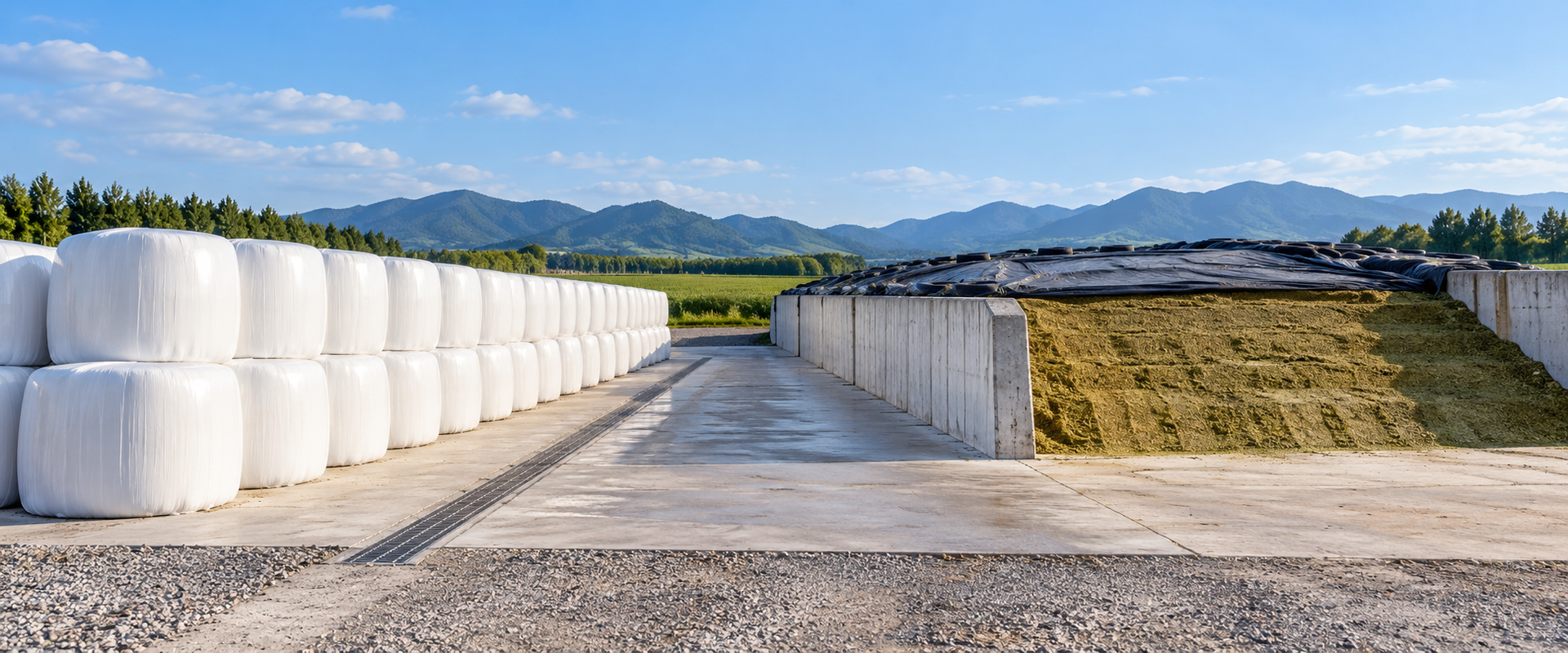
Baled silage suits farms that need movable portions and controlled opening, while bunker silage suits farms that can fill, pack, cover, and use a larger face on a steady schedule. This baled silage vs bunker silage storage comparison starts with daily feed-out rhythm, site, and repeatable crew work. Once storage is opened, forage can spoil if air exposure outpaces feed-out.
1. How Do Baled Silage and Bunker Silage Differ?
Baled silage vs bunker silage means different packaging and exposure. A bale is a wrapped unit; a bunker is a covered, compacted mass. This changes sealing, movement, and opening.
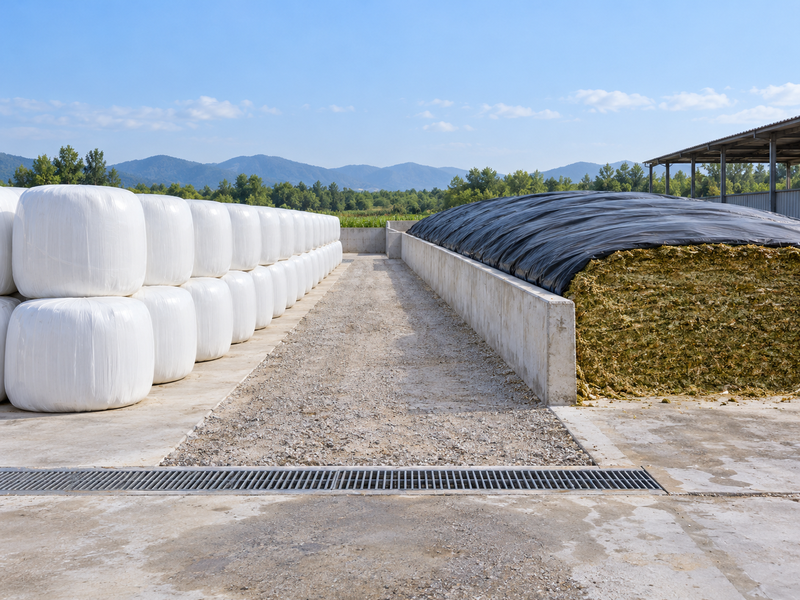
What happens when each store opens?
Wrapped bales open one at a time, while a bunker exposes a feed face. Start with the opening routine. Decide who moves feed and how the face stays tidy.
- Check film and cover before moving feed.
- Keep damaged packaging away from the feed path.
- Remove only what you can use.
Which system gives you more movement control?
Choose bales when separate lots or relocation are routine; choose a bunker when your route is stable and the face is managed daily.
| Point | Wrapped bales | Bunker silage |
|---|---|---|
| Unit of storage | Individual wrapped portion | Compacted mass under a cover |
| Movement | Lift, stack, and load units | Move from one planned face |
| Opening control | Select a bale | Manage the exposed face |
Geometry changes daily work. Key Takeaway: Pick the system that makes sealing, opening, and movement repeatable.
2. Which Fits Your Feed-Out: Baled Silage or Bunker Silage?
For baled silage vs bunker silage, start with feed-out rate and opening rhythm, not a fixed herd-size cutoff. Use the silage line sizing guide to map exposed feed and demand.
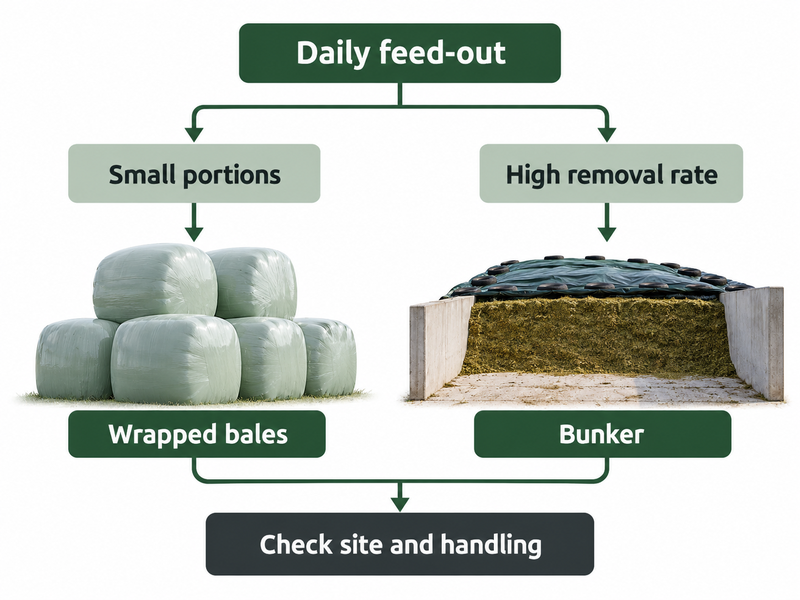
How quickly can you use an opened store?
Feed-out speed comes first because opened forage waits in air. A wrapped bale gives a defined portion; a bunker needs a clean face and removal plan. Measure the opening rhythm first. Record collection frequency and route.
- Estimate the portion you can use promptly.
- Identify days when labor or transport is limited.
- Plan a clean route to feeding.
How should you plan around changing demand?
Treat demand as a changing condition, not a farm-size label. A mixed herd or seasonal group may need separate lots.
| Question | If bales fit | If a bunker fits |
|---|---|---|
| Demand changes often | Select portions by lot | Use a face plan that handles changes |
| Storage opens frequently | Move only needed units | Keep removal clean and consistent |
| Feed route is steady | Stage units near the route | Keep the face near the route |
Feed-out behavior matters more than a herd-size label. Key Takeaway: Choose the storage system your daily removal rate can keep clean and controlled.
3. Which Site Fits Baled Silage or Bunker Silage?
Site infrastructure often decides whether baled silage vs bunker silage will work, since each needs a different footprint and traffic route. A silage baler machine needs clean staging; a bunker needs filling, packing, covering, and face access. Check drainage, turning space, and vehicle clearance.
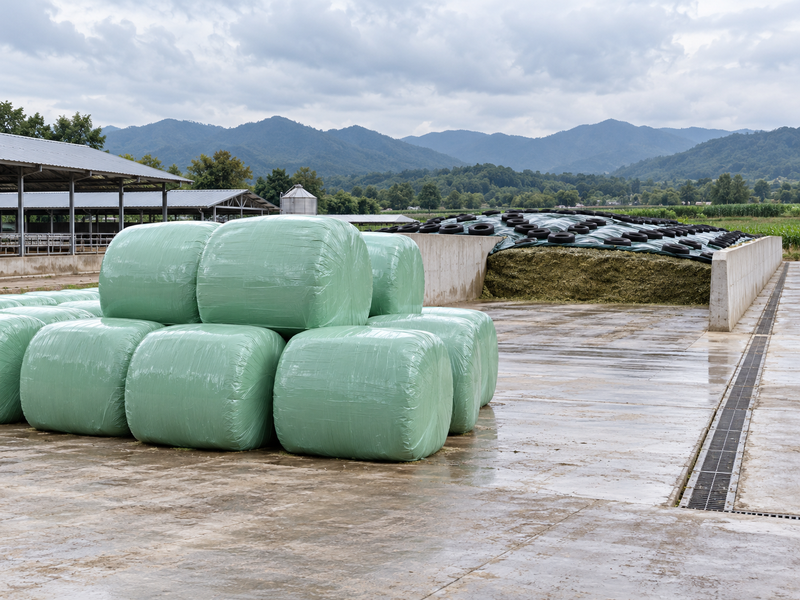
What does a bale staging area need?
Wrapped bales need a firm surface that keeps film away from sharp edges, standing water, and traffic. Leave room to inspect, stack, and load. Walk the bale route before harvest. Follow a load from wrapping to feeding.
- Keep the stacking surface level and free of sharp scrap.
- Provide drainage around stored film and bales.
- Leave access for inspection and loading.
What does a bunker lane need?
A bunker needs room for filling and packing equipment, plus cover and edge systems that can be checked after sealing. Its approach must support loaded vehicles. Review walls, floor, drainage, and cover handling before forage arrives.
| Site | Bale check | Bunker check |
|---|---|---|
| Surface | Clean, firm staging pad | Sound floor and stable edges |
| Traffic | Stacking and loading route | Filling, packing, and face route |
| Protection | Film inspection and repair area | Cover, weights, and edge inspection |
The site decides how safely each system can be repeated. Key Takeaway: Choose a design with room for the journey from harvest to feed-out.
4. How Does Handling Differ for Baled and Bunker Silage?
Baled silage vs bunker silage shifts labor to different points. Bales require forming, wrapping, stacking, and checking units; bunkers require filling, packing, covering, and managing a face. A silage baler machine can package forage, but transport and inspection remain.
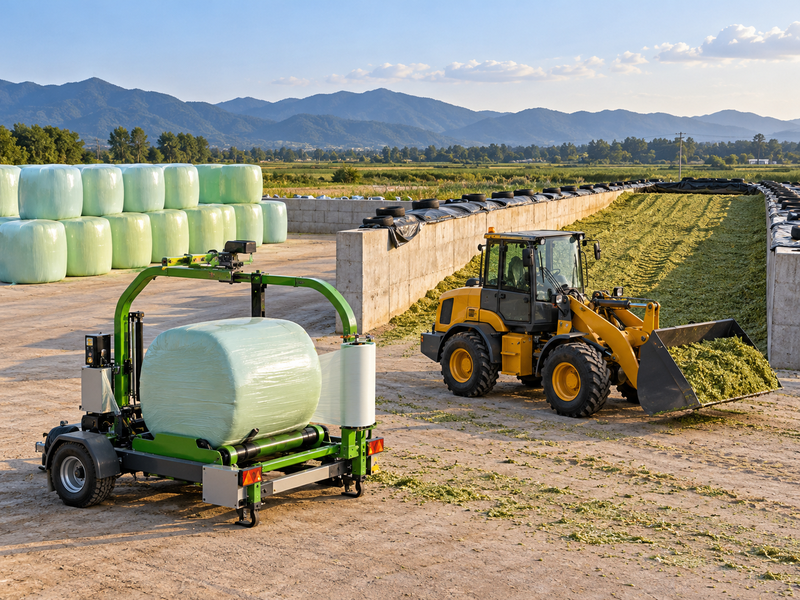
Where does work accumulate with bales?
Bale systems concentrate work around loading, film inspection, stacking, and movement. Handling is easier when staging, trailer, and feeding routes line up. Follow one bale through the day. Note every lift and waiting point.
- Assign a safe place for completed bales.
- Keep repair and inspection tools close to storage.
- Match lifting equipment to bale size and ground.
Where does work accumulate with a bunker?
Bunker systems concentrate work during filling and feed-out. The crew must keep forage moving, pack it, cover it, and remove a clean amount from the face. Traffic control matters when machines share the area.
| Labor | Wrapped bales | Bunker silage |
|---|---|---|
| Harvest day | Form, tie, wrap, stage | Deliver, spread, pack, cover |
| Storage check | Inspect film and stack | Inspect cover and edges |
| Feed-out | Move selected units | Remove from a managed face |
Labor follows the storage system’s tasks. Key Takeaway: Compare repeated handling steps, not one machine’s advertised speed.
5. What Supplies Do Baled and Bunker Silage Need?
For baled silage vs bunker silage, each system needs different consumables. Start with a clean chaff cutter workflow, then prepare film, ties, repair materials, covers, and weights. Keep packaging ready before cutting.
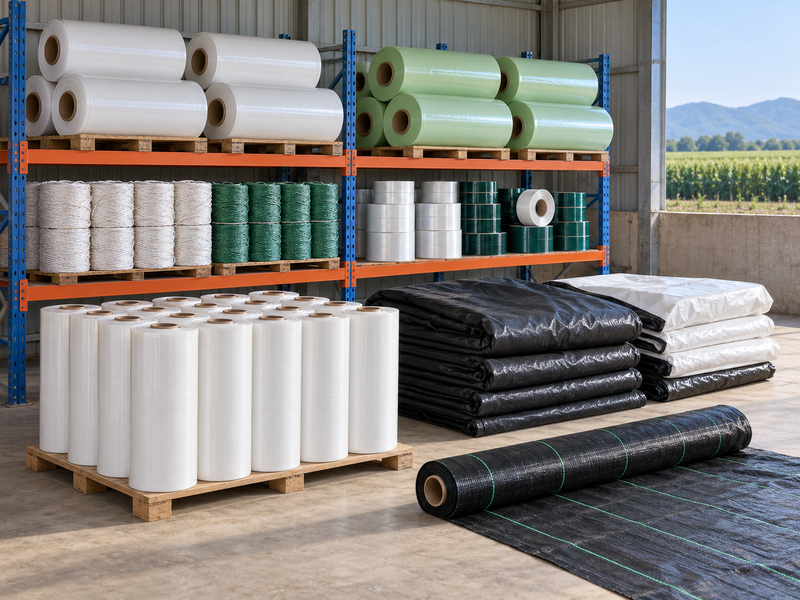
What goes around each bale?
Bale storage needs wrapping film, tying material, repair patches, and a clean checking area. Film must remain intact during wrapping, stacking, and transport. Check the package before the pile grows. Record the lot and isolate questionable units.
- Keep repair materials dry and easy to reach.
- Protect film from sharp forks and rough ground.
- Separate damaged units from sound storage.
What protects a bunker store?
A bunker needs a sound cover, weights or edge protection, clean surfaces, and repair materials. Keep an inspection record for seams, edges, punctures, and traffic damage.
| Supply | Bale system | Bunker system |
|---|---|---|
| Oxygen barrier | Wrapping film | Main cover and any liner required |
| Closure support | Ties and repair patches | Weights, edge protection, repair materials |
| Handling protection | Clean forks and staging surface | Clean filling and face tools |
The supply list follows each seal. Key Takeaway: Stage consumables that protect forage at exposed points.
6. Which Equipment Suits Baled Silage or Bunker Silage?
To compare baled silage vs bunker silage, plan the complete equipment chain: cutting, transport, storage, and feed-out. Our silage baling and wrapping equipment and chaff cutter range show the required flow. The FC-585 page lists approximately 70 kg per bale depending on material, 550 × 550 mm, 45–120 seconds per bale, and advertised output of 30–80 bales/hour.
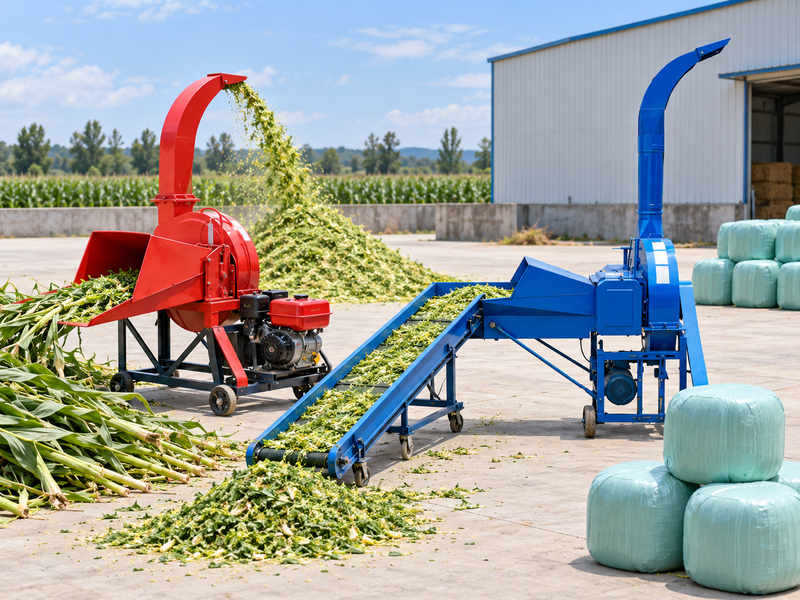
What does a bale line need?
A bale line needs prepared forage, then forming, tying, wrapping, staging, and transport. FC-585 forms, ties, and wraps; stated power options are 5.5 kW electric, 22 HP diesel, or 30 HP tractor PTO. Match the next stage. Confirm output with your crop.
- Confirm the available power configuration.
- Check where wrapped units wait before transport.
- Ask how film, ties, guards, and service parts are handled.
What does a bunker line need?
A bunker line needs cutting or chopping, transport, spreading, packing, prompt covering, and a safe feed-out route. Capacity depends on the slowest stage, so a faster cutter cannot fix a packing queue. Ask for a crop discussion before applying a rated number to your farm.
| Stage | Bale route | Bunker route |
|---|---|---|
| Preparation | Cutter or chopper to baler | Cutter or chopper to transport |
| Storage | Baler, tie, wrapper, staging | Spreader, packer, cover, weights |
| Later movement | Loader and trailer | Face removal and feed transport |
The chain must keep each stage supplied. Key Takeaway: Verify power, crop handling, and downstream capacity before treating a specification as a farm plan.
7. Where Do Baled and Bunker Silage Lose Quality?
With baled silage vs bunker silage, air and contamination risks appear in different locations. Corn silage harvest and quality guidance connects harvest with sealing and feed-out checks. Prompt closure and clean removal still matter.
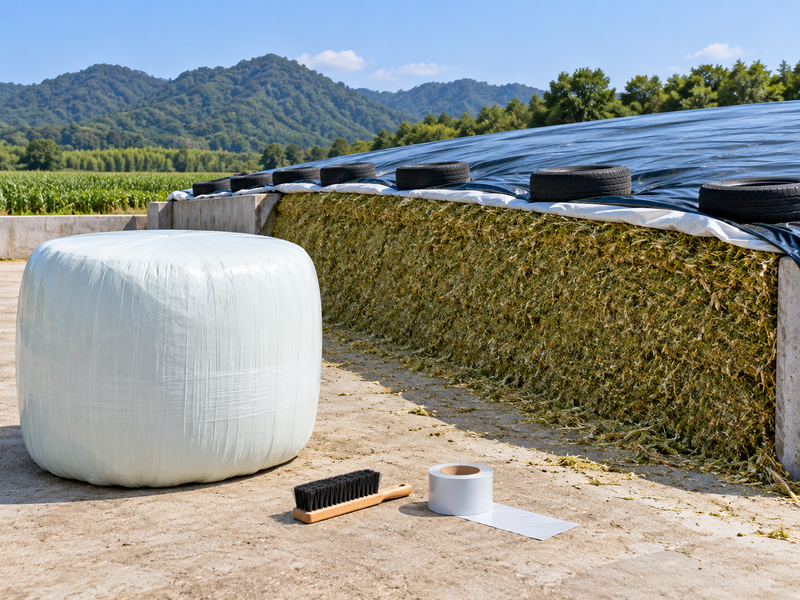
How do bales fail?
Bale problems begin with poor wrapping, punctured film, rough handling, or delayed inspection. Keep bales away from sharp edges and repair damage using film guidance. Inspect before you stack. A quick check is easier while each unit remains visible.
- Look for holes, loose film, and damaged seams.
- Keep tools and machinery away from stored film.
- Isolate questionable units.
How do bunker risks show up?
Bunker risks appear when forage is not packed evenly, the cover is delayed or damaged, edges are exposed, or the face becomes dirty. Keep cover checks, face removal, and traffic control in one routine. Reject visibly moldy or spoiled material; appearance and smell alone cannot certify safety when uncertain.
| Risk | Bale control | Bunker control |
|---|---|---|
| Air entry | Sound film and prompt repair | Adequate packing and intact cover |
| Contamination | Clean staging and handling | Clean floor, cover, and face |
| Inspection | Unit-by-unit checks | Cover, edge, and face checks |
Storage risk follows where air can enter or feed can be contaminated. Key Takeaway: Build inspection around your barrier and feed-out face.
8. Can You Sell Baled Silage More Easily Than Bunker Silage?
When you compare baled silage vs bunker silage, wrapped bales are easier to count, stage, load, and move, although packaging condition and handling capacity set the limits. A bunker is a stored mass, so you need an access plan. Use the baled silage solution to discuss separate lots.
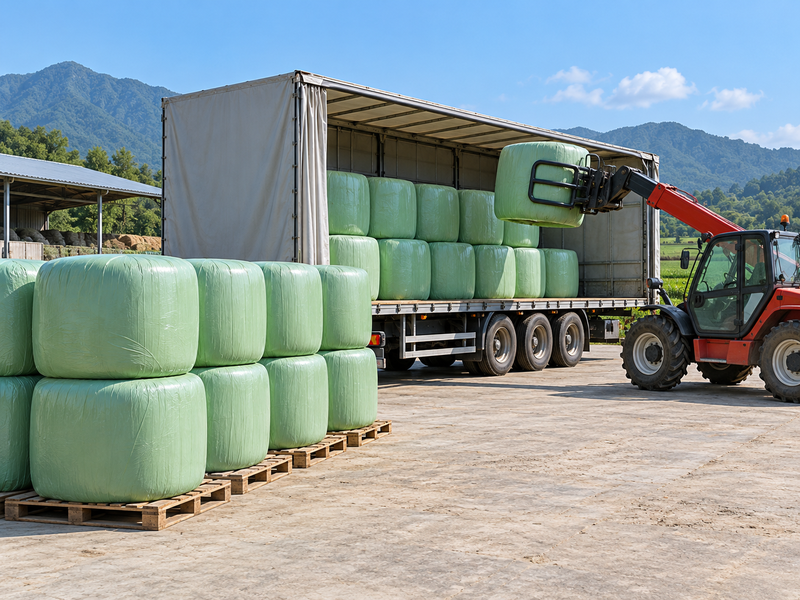
What makes bales easier to move?
Each wrapped bale can carry a lot identity, storage location, and destination. A clean loading pad and compatible lifting equipment reduce handling. Make the unit traceable. Record crop lot, storage position, and repair notes.
- Protect bales from puncture during loading.
- Keep a stable count of sound units.
- Confirm trailer clearance and cover needs.
What should a buyer inspect?
You should inspect film condition, handling damage, storage cleanliness, and lot information. A clean exterior does not prove feed value or safety; use testing or professional advice when needed. A wrapped package supports movement, but it does not replace honest lot information.
| Selling point | Evidence |
|---|---|
| Unit count | Recorded lot and location |
| Packaging | Intact film and repair notes |
| Movement | Safe loading and transport plan |
Packaging clarifies logistics, while feed quality still needs checks. Key Takeaway: Sell wrapped bales as identifiable feed units with documented handling information.
9. How Should You Choose Baled Silage or Bunker Silage?
Before choosing baled silage vs bunker silage, write down feed-out rhythm, site limits, power, machinery route, labor, and inspection. Use corn silage harvest and quality planning to connect crop condition with storage. Review the plan with the operators who will run it.
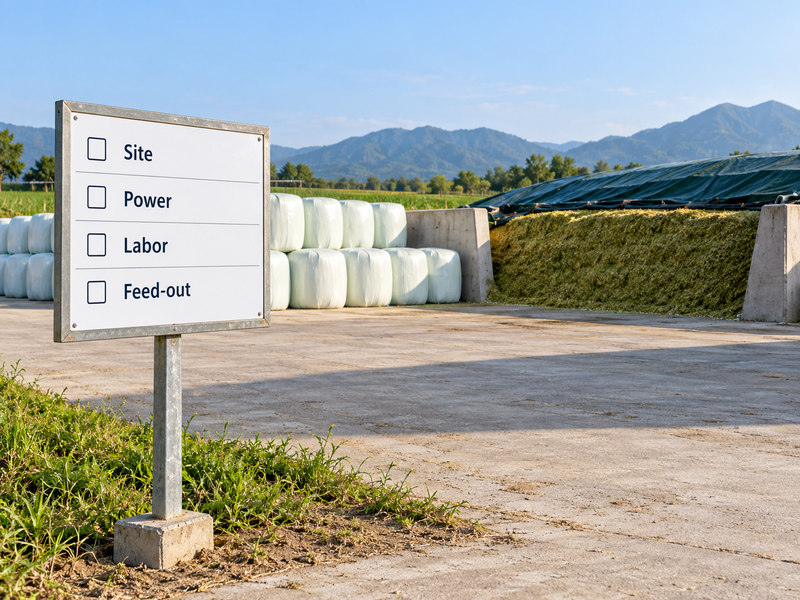
What should your farm worksheet include?
Start with observations your supplier can check, not a preferred machine name. Note surface, drainage, turning space, power, transport route, feed-out location, and demand changes. Put the bottleneck on paper. Address any packing, stacking, or face-removal delay.
- Describe crop condition and daily workload.
- List power, loading, transport, and storage constraints.
- Identify who checks seals, covers, and exposed feed.
What should a supplier specify?
Ask your supplier to explain which configuration fits your crop, power, site, and next stage. Ask for operating assumptions, service access, consumables, and a representative-material discussion. Recommendations should match actual conditions.
| Decision | Information |
|---|---|
| Storage form | Feed-out rate and opening routine |
| Equipment | Crop, power, loading, and transport |
| Support | Parts, service, packaging, and operator needs |
Your worksheet turns a preference into a checkable brief. Key Takeaway: Send those conditions before requesting a quotation, then contact us about a setup your farm can repeat.
10. What Should You Ask About Baled and Bunker Silage?
A baled silage vs bunker silage decision is sound when you answer questions about storage opening, crop handling, site access, and the next task after the machine stops. Ask for evidence that matches your workflow.
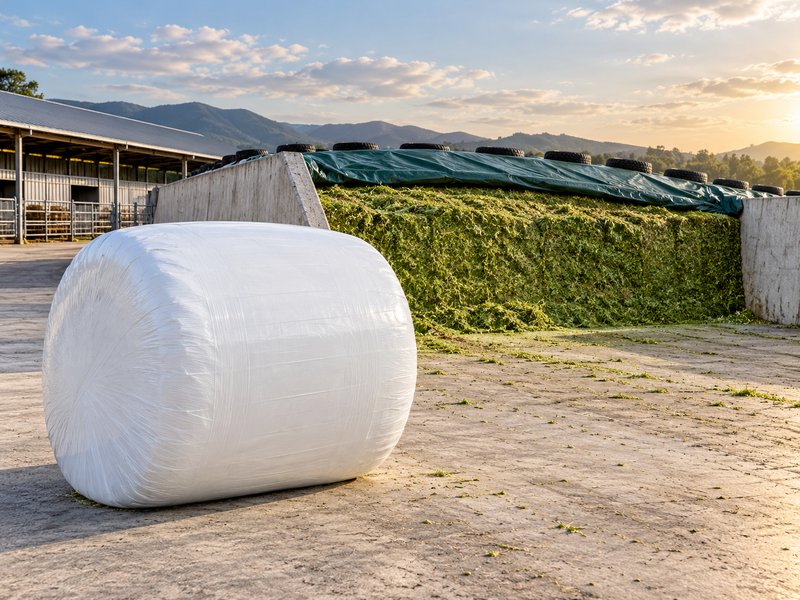
Can I use wrapped bales with my current farm layout?
Yes, if your layout has a firm staging surface, safe lifting route, protected film storage, and later loading access. Correct sharp edges, standing water, or traffic conflicts first. Take the route once more. A bale solution works when the route remains practical after harvest equipment arrives.
- Confirm turning and stacking space.
- Check lifting compatibility and storage protection.
- Keep feed-out access clear in wet weather.
What’s the best storage choice for Napier grass?
Your best choice depends on how the Napier crop is prepared, how quickly you feed it, and whether your site supports bales or a bunker routine. Use the Napier grass silage guide for crop preparation, then compare the storage work. The system should suit the material and handlers.
How do I know if an equipment quote fits?
You know a quote fits when it states crop assumptions, power, operating range, downstream handling, consumables, and support. Ask what advertised output includes and what changes with material or loading. Keep the answer beside your worksheet for operator review. Key Takeaway: Choose the system whose storage, equipment, and feed-out tasks your farm can inspect and repeat every season.
