
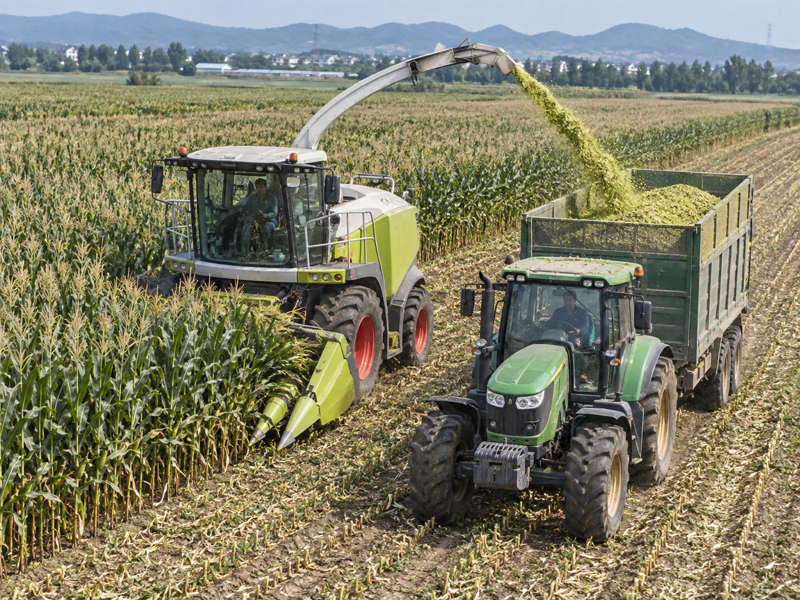
Corn Silage Harvest: Timing, Chopping and Storage
Improve corn silage yield and quality by harvesting at suitable whole-plant moisture, checking chop quality, and packing and sealing promptly. Your contractor arrives tomorrow, one field still looks green, and another has begun drying unevenly. Guessing which field goes next can leave you storing wet forage or struggling with material that won’t pack. Match your maize silage harvesting and chopping equipment with measured crop conditions and a workable equipment plan before cutting begins.
1. When should you start harvesting corn silage?
Start harvesting when measured whole-plant moisture fits your storage system and your crew can handle incoming forage. Schedule maize silage harvesting and chopping equipment around field measurements and storage preparation rather than a fixed calendar date. Kernel development helps you decide when sampling should begin, but green leaves alone cannot confirm readiness.
Can you trust the kernel milk line?
Treat milk line as a sampling cue. Weather, hybrid differences, and plant health can separate kernel maturity from whole-plant moisture. Check before you commit. A booking date should prompt another moisture test before you send machines into a field.
- Sample representative areas rather than convenient roadside plants.
- Keep visibly different field zones separate during testing.
- Record sampling dates so you can compare drying trends.
How should you organize your field schedule?
Give each field a short harvest record covering moisture, access, crop condition, and destination. Share updates with your contractor before equipment changes location. Keep trailer availability beside those notes so a ready field has a complete transport plan.
| Field condition | Scheduling response |
|---|---|
| Moisture approaching target | Prepare access and transport |
| Uneven maturity | Sample zones separately |
| Moisture outside storage guidance | Recheck before committing |
Key Takeaway: Use test results to assign your next field. A revised field order costs less disruption than discovering unsuitable forage after trailers reach storage.
2. What moisture level suits your silage storage?
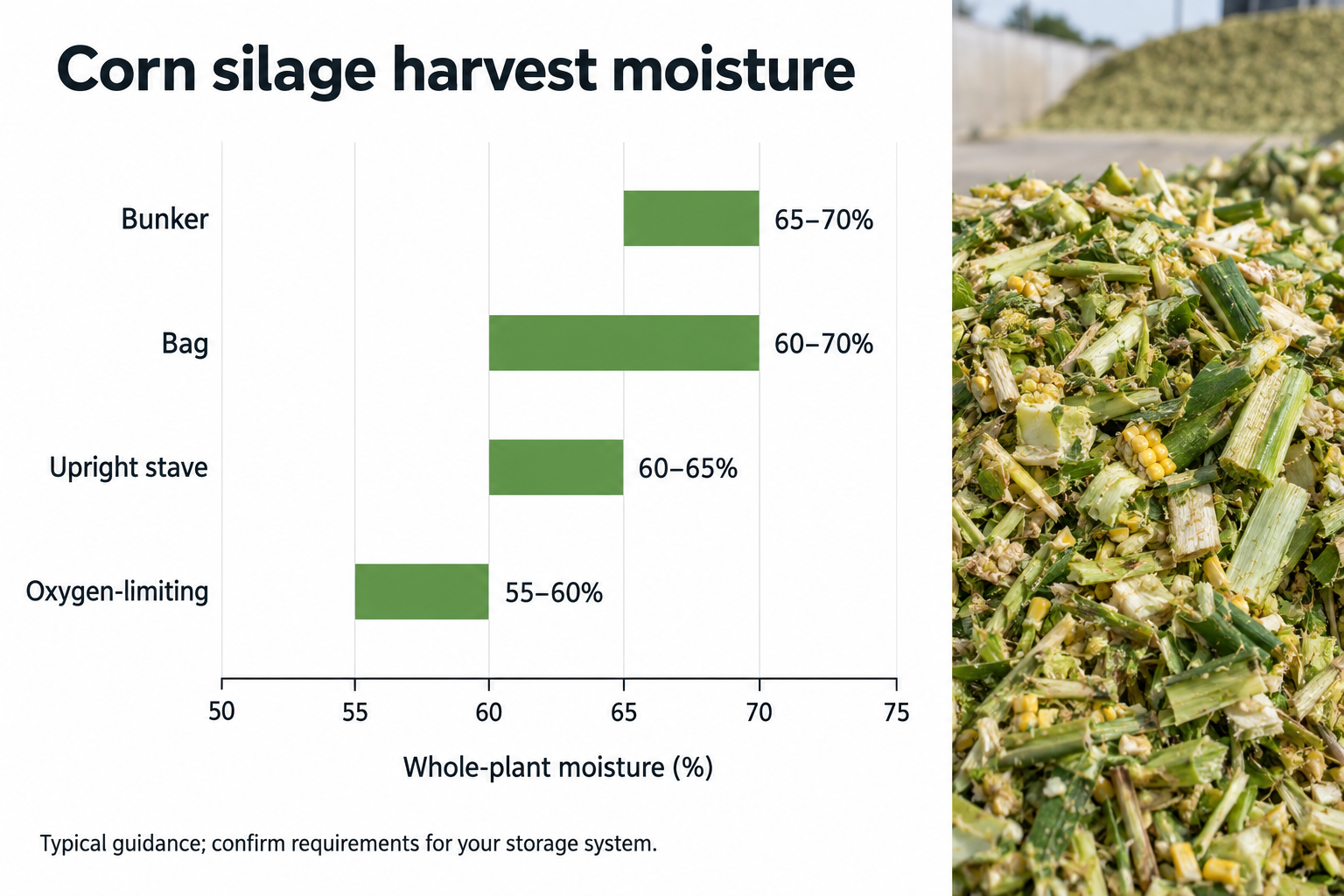
Choose whole-plant moisture according to storage type; bunkers commonly suit 65–70%, while bags commonly suit 60–70%. Prepare maize silage harvesting and chopping equipment for those measured conditions rather than copying a neighboring farm’s harvest date. Upright structures need their own targets because storage design changes packing and seepage risks.
How do you measure a useful sample?
Chop representative whole plants at your planned cutting height, mix thoroughly, and use a suitable forage moisture test. Follow its drying procedure and repeat inconsistent results. Start with your storage choice. University guidance provides working ranges, while your storage supplier can clarify system-specific limits.
- Include stalks, leaves, and ears in representative proportions.
- Retest when weather or field conditions change.
- Keep moisture percentage distinct from dry matter percentage.
Which moisture range should you work toward?
The ranges below follow University of Minnesota guidance. They apply to whole-plant moisture, not grain moisture. Confirm equipment and storage requirements before treating a range boundary as an operating target.
| Storage system | Typical whole-plant moisture |
|---|---|
| Bunker | 65–70% |
| Bag | 60–70% |
| Upright stave | 60–65% |
| Oxygen-limiting silo | 55–60% |
Key Takeaway: Agree on a storage-specific moisture target before booking harvest. These ranges explain why two farms can need different starting dates.
3. How high should you cut corn for silage?
Choose cutting height by balancing usable forage yield, soil contamination, and crop condition. Your maize silage harvesting and chopping equipment must support that decision across harvesting and subsequent chopping operations. A stationary PTO chopper processes already-cut plants; header height belongs to your field harvesting setup.
When does a higher cut make sense?
A higher cut leaves more lower stalk behind and changes harvested yield and composition. It may suit contaminated lower stems or a crop-specific feeding objective. Weigh what stays in your field. Ask your nutritionist whether a proposed quality change justifies reduced forage inventory.
- Check uneven ground for soil pickup.
- Compare harvested material from trial cutting heights.
- Test suspect drought-stressed forage for nitrates.
How can you avoid an expensive height decision?
Record cutting height alongside sample results so comparisons use equivalent material. Include your forage inventory requirement in discussions about raising stubble. Neither a fixed height nor visual crop appearance can establish nitrate safety.
| Priority | Practical check |
|---|---|
| Retain forage inventory | Estimate lost harvested material |
| Reduce soil pickup | Inspect chopped samples for contamination |
| Manage suspect nitrate risk | Arrange laboratory testing |
Key Takeaway: Choose height using crop tests and feed requirements. A cleaner sample helps only if your plan still supplies enough suitable forage.
4. What chop length should you use for corn silage?
Use a chop length that supports packing and your ration’s fiber requirements, then verify actual particle distribution. Set maize silage harvesting and chopping equipment with crop moisture and processor configuration in mind. For conventional processed corn silage, roughly ¾ inch, or 19 mm, provides a common starting point rather than a universal setting.
How do you check what comes out?
Collect a representative chopped sample safely away from moving machinery and assess it with a particle separator. Compare results with your nutritionist’s recommendation for that forage and ration. Look beyond the setting dial. Actual output can differ from theoretical cut length.
- Inspect for long stalk strips and large cob pieces.
- Recheck after changing fields or settings.
- Record results beside moisture measurements.
Should you shorten every difficult crop?
Shorter particles can help some dry crops pack, but excessive shortening reduces useful particle length. Follow Penn State’s chop-length guidance alongside machine instructions and ration advice. When comparing chaff cutter options, request a representative material trial before accepting a quoted cutting range.
| Sample finding | Next check |
|---|---|
| Long, uneven strips | Knife condition and feed consistency |
| Excessively fine material | Settings against ration requirements |
| Variable output | Crop moisture and loading changes |
Key Takeaway: Approve chopped output before processing a full field. Material already cut too short cannot regain length during storage.
5. How do you know whether kernels are processed well?
Check representative chopped samples for kernel breakage and confirm performance through an appropriate laboratory assessment when needed. Evaluate maize silage harvesting and chopping equipment for stalk cutting and kernel processing separately. A machine that slices stems evenly may still leave kernels largely intact.
What should you inspect during harvest?
Spread a sample where you can see kernels clearly and look for repeated whole kernels. Check again after a crop or machine adjustment instead of judging performance from one handful. Pause for a sample check. A recurring pattern deserves inspection before more forage enters storage.
- Confirm whether a dedicated kernel processor is fitted.
- Check roller condition and settings against manufacturer instructions.
- Compare output as kernels become harder.
What should you ask an equipment supplier?
Ask for a demonstration using whole-plant corn at representative moisture and maturity. Require clear descriptions of installed processing components rather than relying on general silage claims. Keep dated sample photographs with the proposed configuration for later comparison.
| Buying question | Evidence to request |
|---|---|
| Does it process kernels? | Installed component details |
| Does it handle your crop? | Representative material trial |
| Can performance be maintained? | Wear-part and adjustment instructions |
Key Takeaway: Verify kernel processing independently from stem cutting. This prevents a purchasing decision based on an attractive but incomplete chopped sample.
6. Which maize silage harvesting and chopping equipment fits?
Choose machinery around your crop-handling method, available power, and sustainable daily workload. Your maize silage harvesting and chopping equipment can include field harvesters and stationary choppers with different jobs. Identify how standing corn reaches your storage before comparing individual machines.
Do you need field harvesting or stationary chopping?
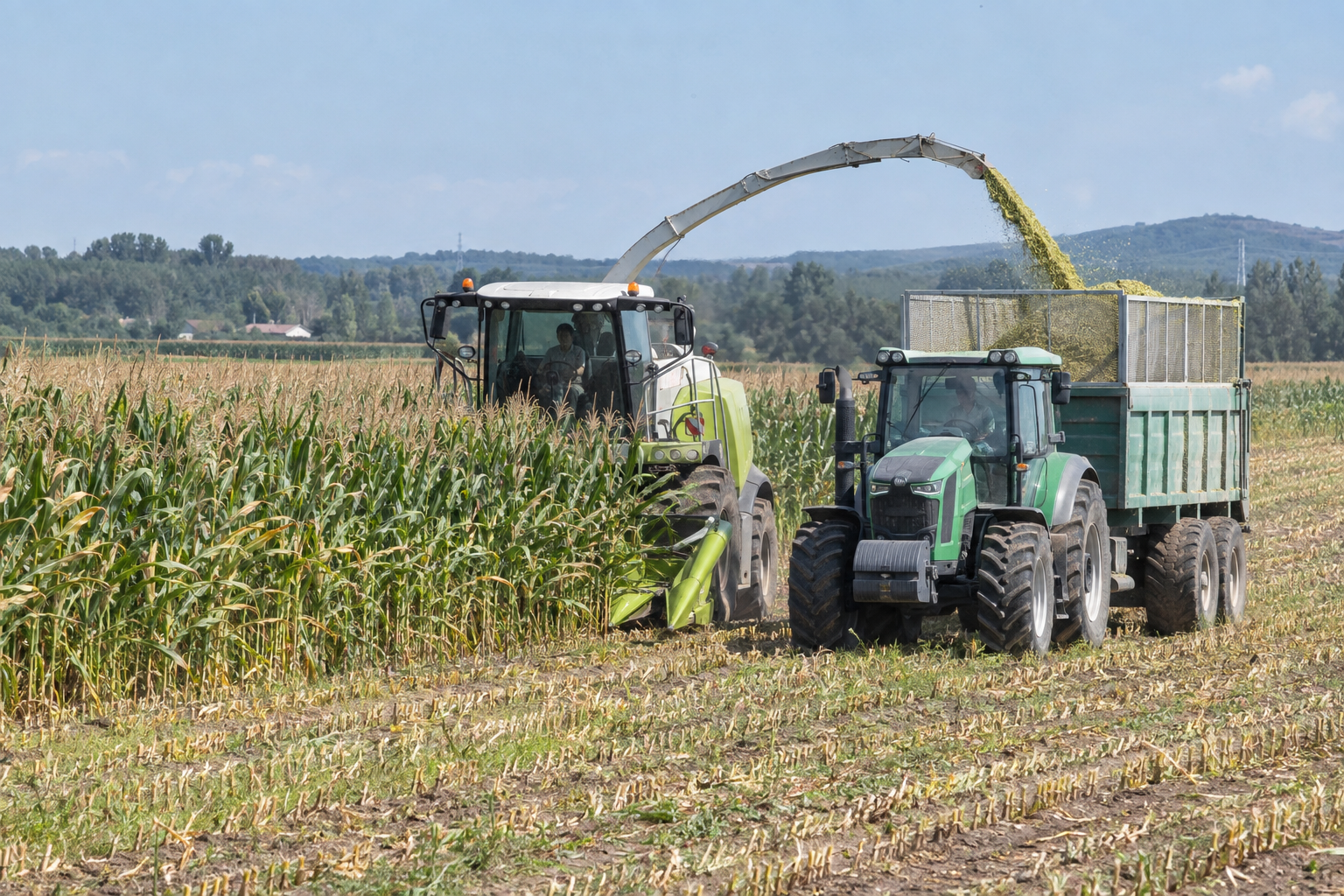
A forage harvester cuts and chops standing crops during field operation. A stationary chopper needs harvested material delivered to its feed system. Follow one load from field to storage. That exercise reveals handling tasks a machine quotation may leave out.
- Confirm who cuts and gathers standing corn.
- Identify power, loading, and transport requirements.
- Check how chopped material reaches packing equipment.
Which specifications belong in your comparison?
Compare an electric chaff cutter where suitable electrical supply and controlled feeding are available. Assess a heavy-duty industrial chaff cutter against sustained crop trials, handling labor, and downstream capacity. Require specifications for your configuration rather than transferring brochure claims across models.
| Requirement | Evidence before purchase |
|---|---|
| Power compatibility | Written motor or PTO requirements |
| Usable throughput | Crop-specific operating demonstration |
| Service access | Parts list and maintenance instructions |
Key Takeaway: Buy a machine that fits your complete workflow. Extra chopping capacity has limited value when unloading or packing already causes delays.
7. How can you pack and seal silage with fewer losses?
Match incoming loads with packing capacity and seal completed storage promptly. Plan maize silage harvesting and chopping equipment around your ability to exclude air from harvested forage. A faster chopping rate can become a problem when material arrives faster than crews can spread and compact it.
What should change when trailers start queuing?
Check whether unloading, spreading, or compaction causes the delay before increasing harvest speed. Give one person responsibility for coordinating arrivals and storage progress. Keep an eye on the queue. Repeated waiting signals a mismatch worth correcting during that shift.
- Prepare covering materials before chopping starts.
- Keep people clear of reversing and packing machinery.
- Follow site-specific slope and traffic procedures.
What should your closing check cover?
Confirm adequate compaction, intact covering, and sealed edges using a storage-specific checklist. Penn State describes thin packing layers, approximately six inches or less, as a practical bunker-management measure. Follow its silage storage guidance together with your site’s safe operating procedures.
| Observed problem | Operating response |
|---|---|
| Persistent trailer queue | Match arrival and packing rates |
| Uneven forage layers | Review spreading practice |
| Damaged covering | Repair using suitable sealing materials |
Key Takeaway: Set harvest pace by storage capacity. Correcting a bottleneck during filling helps preserve forage already delivered.
8. Should you use a silage microbial additive?
Consider an microbial additive when its documented purpose matches a specific fermentation or feeding problem. Fit maize silage harvesting and chopping equipment with a suitable applicator only after confirming product requirements. Different microbial additives serve different purposes, and application accuracy deserves as much attention as product selection.
What problem are you trying to solve?
Discuss previous heating, fermentation tests, storage conditions, and feeding practices with your adviser before selecting a product. Ask for evidence relevant to corn silage and your management conditions. Match treatment with the problem. Buying on a broad preservation claim leaves too many questions unanswered.
- Confirm crop suitability and intended outcome.
- Follow label requirements for dilution and application.
- Check storage conditions and product expiry.
How do you make application repeatable?
Calibrate delivery against actual forage flow and verify coverage during operation. Record product identity and treated loads so later feed tests have useful context. Recheck application whenever operating rate changes substantially.
| Application step | Check to record |
|---|---|
| Product selection | Intended use and supporting evidence |
| Setup | Dilution and delivery calibration |
| Operation | Forage flow and treated loads |
Key Takeaway: Make microbial additive use a documented management decision. Application records help distinguish a product question from a dosing problem.
9. How can you prepare for a more dependable harvest?
Prepare a written plan that connects crop testing, machine settings, transport, and storage before cutting begins. Discuss your maize silage harvesting and chopping equipment with those operating each stage and request capacity advice based on actual working conditions. Assign responsibility for sampling and adjustments before a busy shift makes those tasks easy to miss.
What should you settle before requesting a quotation?
Send your supplier enough information for a useful equipment discussion. Include photographs of typical material and explain whether you need field harvesting, stationary chopping, or both. Bring your operating details. Those details make competing proposals easier to compare.
- Crop condition, expected moisture, and daily workload.
- Available power and required kernel processing.
- Loading method, transport arrangements, and storage system.
What should your next step deliver?
Turn moisture targets, cut-quality checks, and packing limits into a shared operating brief. Ask us to review your chopping requirements and available equipment configurations. Our position is straightforward: equipment recommendations should be supported by crop trials and clear operating requirements.
| Harvest decision | Required preparation |
|---|---|
| When to start | Representative moisture results |
| What to specify | Crop, power, and processing requirements |
| How fast to work | Matched transport and storage capacity |
Key Takeaway: This brief gives you a basis for reducing timing errors, uneven chopping, and storage delays. Use it to compare a proposed machine with your actual workload. Send your requirements and contact us today to discuss suitable chopping equipment before your next harvest.
10. What else should you check before harvesting? (FAQ)
Check crop suitability, machine capability, and storage readiness before committing a full field. Questions about maize silage harvesting and chopping equipment often arise where those three decisions overlap.
Which practical questions come up most often?
Check these points before your next load. Keep current moisture results and machine instructions available during discussions with your contractor or adviser.
- Retest when crop conditions change.
- Verify processing claims with a representative sample.
Q1: Can I harvest corn silage based on milk line alone?
No. Use milk line as a sampling cue, then measure whole-plant moisture against your storage requirements.
Q2: What’s the best chop length for my dairy ration?
There isn’t one setting for every ration. Agree on a starting point with your nutritionist, then check particle distribution and kernel processing.
Q3: How do I know if my chopper breaks kernels adequately?
Inspect repeated samples and request testing when performance remains uncertain. Even stem cutting does not prove adequate kernel processing.
Q4: Can I use a stationary chaff cutter for standing corn?
You need a separate harvesting step. A stationary chaff cutter processes material delivered to it rather than cutting standing rows.
Q5: Can I assume drought-stressed corn is ready to chop?
No. Brown leaves can hide substantial plant moisture, and suspect crops need nitrate testing before feeding decisions.
