
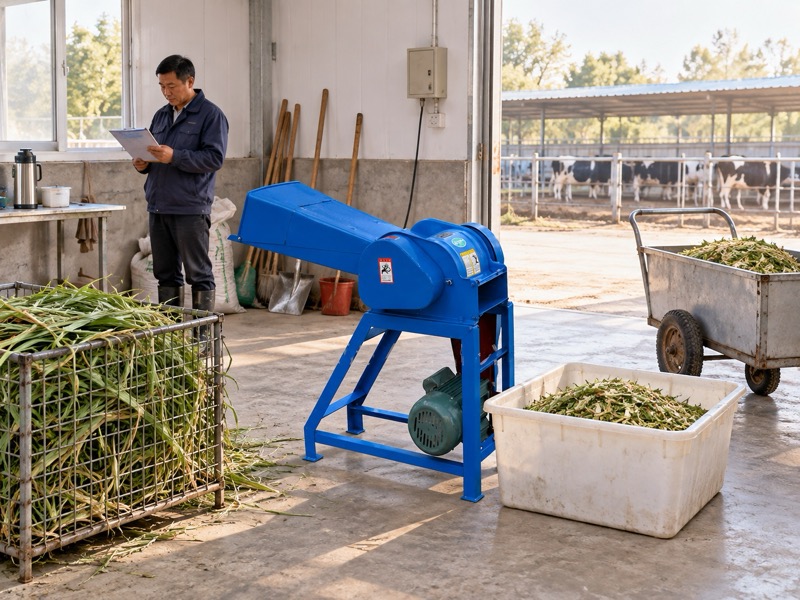
Chaff Cutter Machine Selection: Your Guide to Better Feed
Choose a chaff cutter by matching fodder, usable output, power, and handling arrangements with your complete feeding routine. Your crop is ready, yet workers spend much of the morning moving baskets, waiting for space, and clearing collected material. A faster cutter may leave those delays untouched if loading and delivery still interrupt every batch. Build your Chaff Cutter machine comparison around the whole preparation job before choosing a model.
1. What should a Chaff Cutter machine achieve for your farm?
A Chaff Cutter machine should prepare suitable harvested fodder at a rate and particle quality your feeding routine can use. It cuts material; it does not balance a ration, restore spoiled forage, or guarantee extra milk. Decide which preparation problem you need to solve before comparing machine specifications.
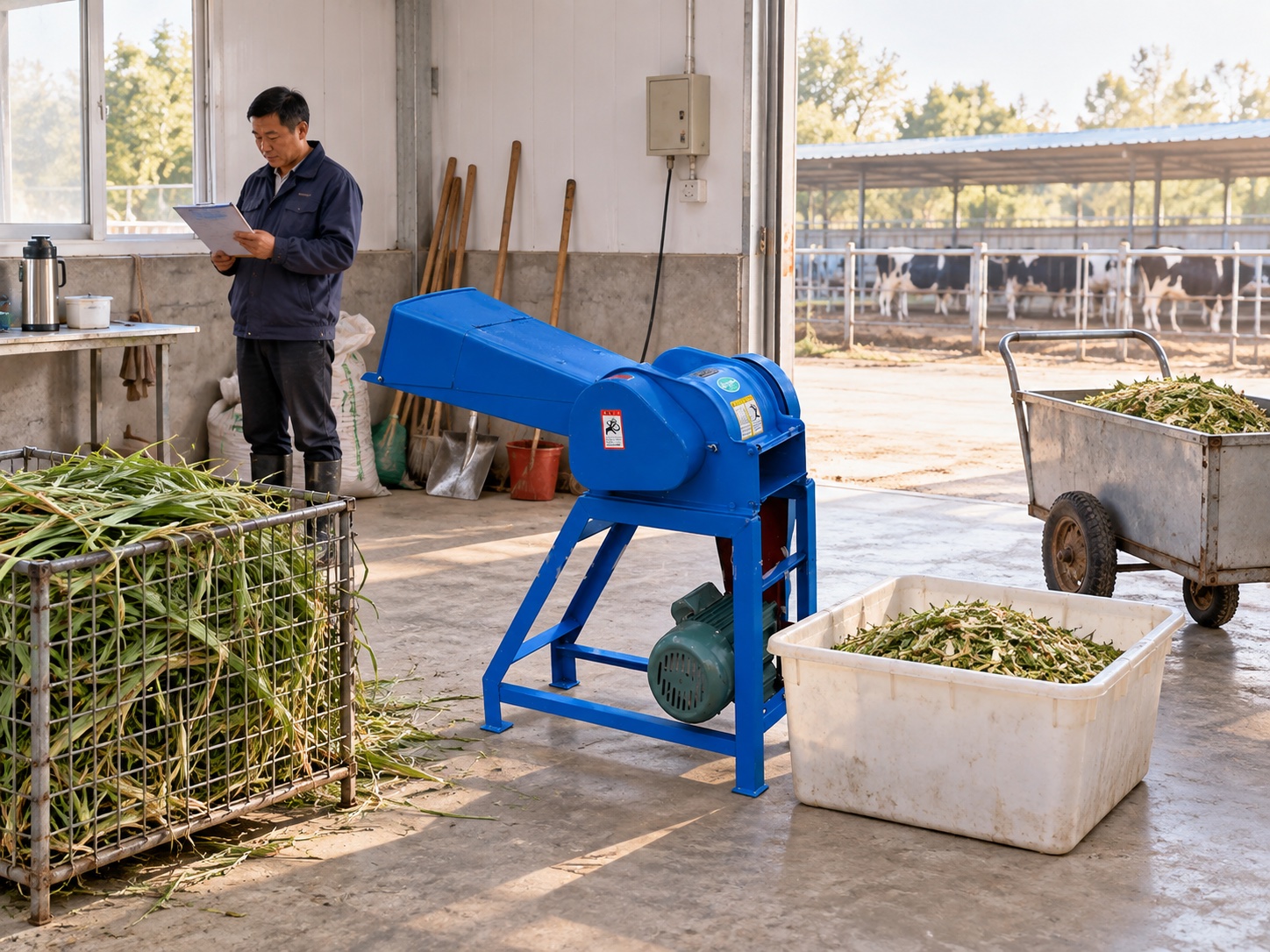
Which result matters in your daily routine?
Define whether your main difficulty is slow preparation, awkward handling, inconsistent chopping, or limited working space. Record a normal batch so your comparison has a practical starting point. Name the delay before buying capacity. A larger machine may offer little help when collecting and moving feed takes most of your time.
- Record fodder type and batch mass.
- Note preparation, waiting, and handling time separately.
- Describe acceptable output with your feeding adviser.
How does chopping relate to animal feeding?
Chopping and mixing belong within a wider feeding plan. The National Dairy Development Board’s feeding guidance discusses chaffing alongside balanced feeding and combining ration ingredients. Use equipment trials to assess preparation quality rather than promising an automatic improvement in animal health or yield.
| Current difficulty | Useful acceptance check |
|---|---|
| Preparation runs late | Full-batch completion time |
| Output varies | Samples taken across the batch |
| Handling feels awkward | Loading and collection arrangements |
Key Takeaway: Give your equipment purchase a defined job. This makes a supplier’s recommendation easier to assess against your actual feeding routine.
2. How does a Chaff Cutter machine process your fodder?
A Chaff Cutter machine moves suitable harvested material from its feeding arrangement into a cutting mechanism, then directs chopped output toward collection. Feed rollers normally advance material; cutting knives perform the chopping action. Confirm how your proposed configuration performs each stage because designs and included components differ.
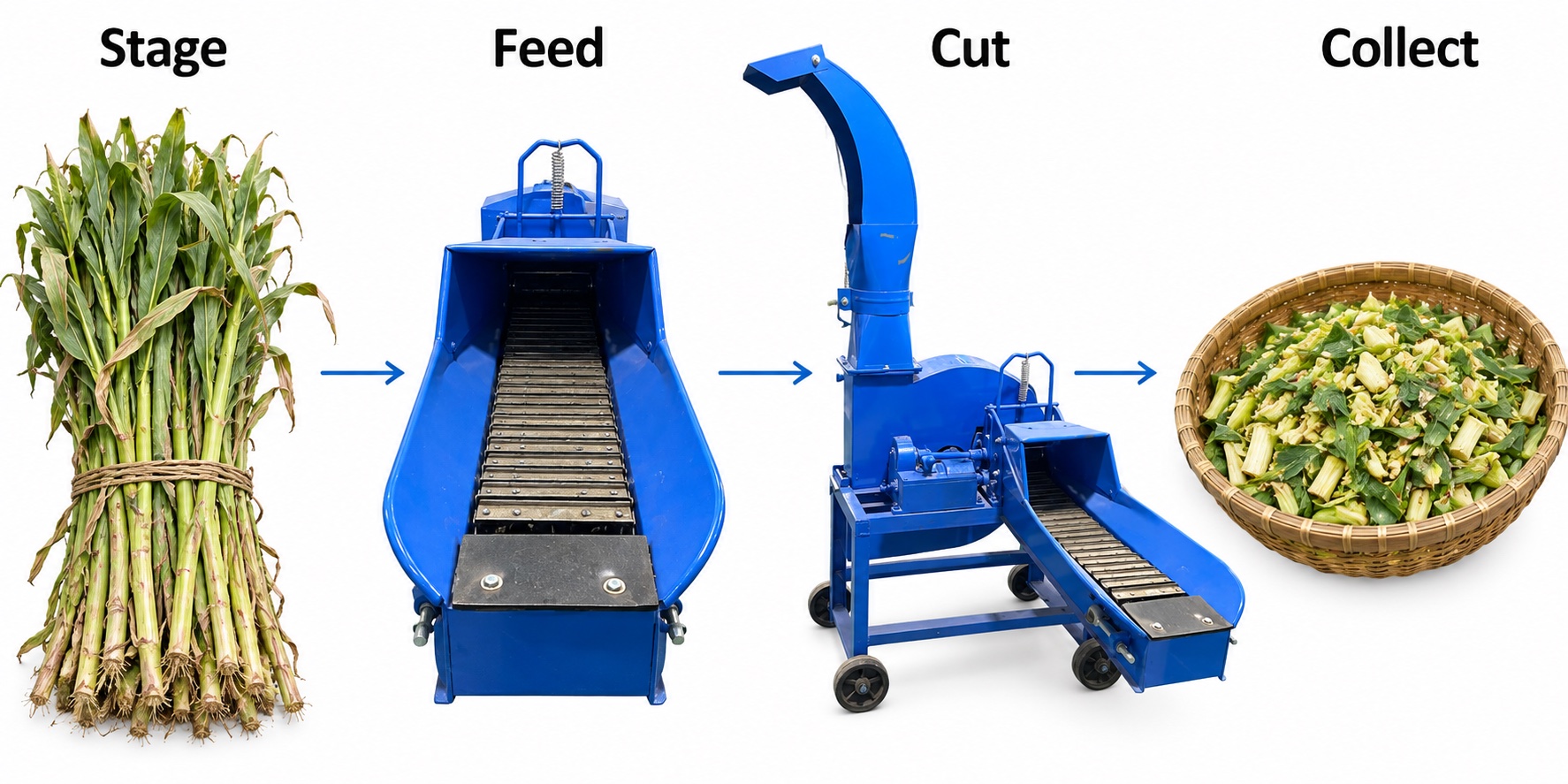
Which stage could restrict your working rate?
Check how workers stage material, supply your feed system, and collect output without interrupting the next load. A narrow access route or unsuitable receiving bin can slow an otherwise capable cutter. Trace one batch through all stages. The machine belongs inside that workflow rather than standing apart from it.
- Check raw-material delivery and staging space.
- Match the outlet with your collection method.
- Keep people clear of feeding and discharge hazards.
Which Chaff Cutter machine details need documentation?
Ask about feed control, cutting adjustment, power transmission, and installed protection. If blade arrangements differ, our four-blade comparison explains why knife count alone cannot establish throughput. Request a parts list for the exact version being quoted instead of relying on a general product photograph.
| Processing stage | Question for your supplier |
|---|---|
| Feeding | How is material presented and controlled? |
| Cutting | What adjustment and inspection procedures apply? |
| Collection | Where does output go during normal use? |
Key Takeaway: Review the complete material path before ordering. A good match between stages can matter as much as the cutting mechanism itself.
3. Which Chaff Cutter machine drive suits your power supply?
Choose manual, electric, engine, or tractor drive according to available resources, workload, and installation requirements. A Chaff Cutter machine does not become more capable merely because one drive type sounds more powerful. Compare documented requirements and loaded performance for each proposed configuration.
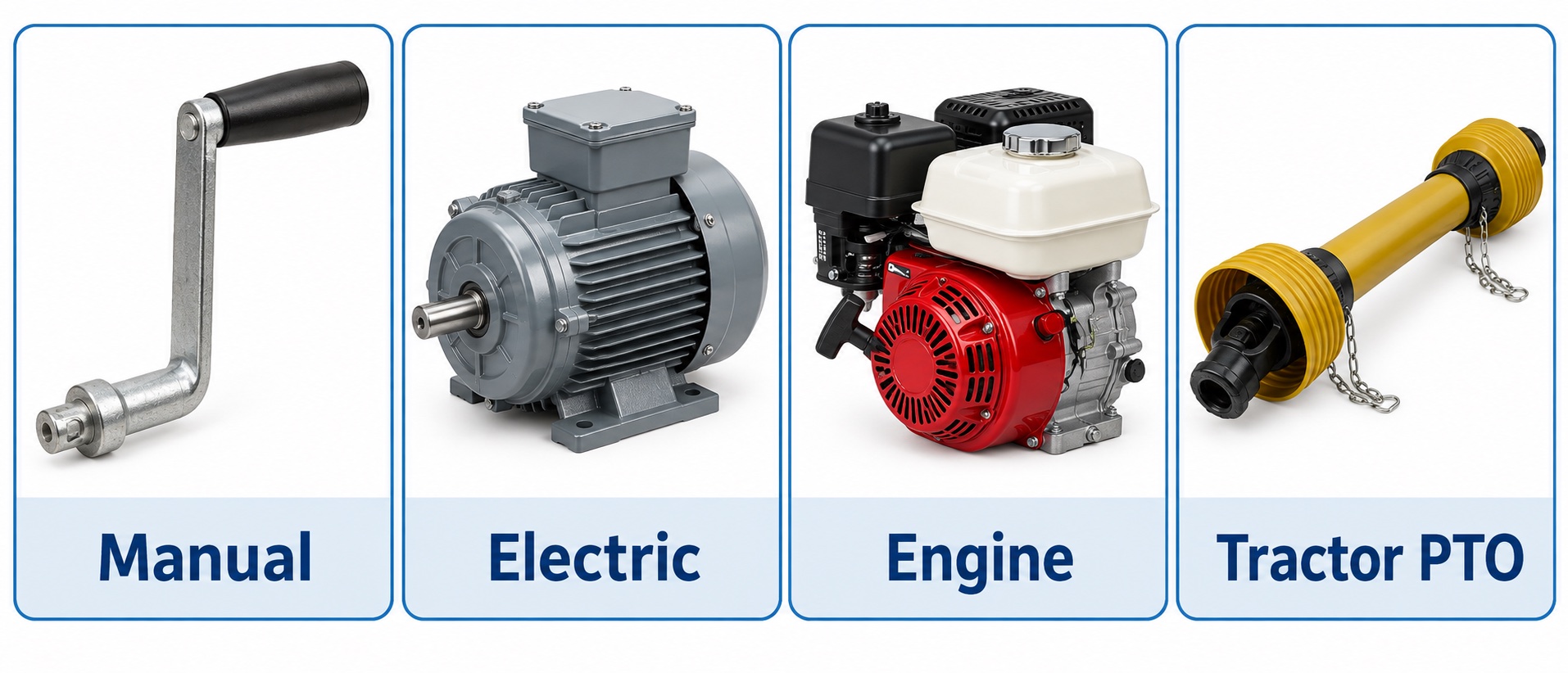
When should you consider each drive option?
Manual operation needs a realistic assessment of effort, output, and guarding. An electric chaff cutter can suit a fixed preparation area with compatible service, while engine or tractor options need different operating arrangements. Start with power you can reliably provide. Confirm actual compatibility before selecting a motor or drive package.
- Provide voltage, phase, and frequency for electrical proposals.
- Confirm tractor PTO requirements where applicable.
- Include fuel, ventilation, access, and service needs for engines.
What should you avoid assuming from a drive label?
Engine-driven equipment is not automatically more powerful than every electric alternative. Installed ratings, crop condition, feed arrangement, and machine design still determine the comparison. Ask who supplies connecting equipment and which installation tasks require qualified personnel.
| Drive option | Main requirement to confirm |
|---|---|
| Manual | Suitable effort, guarding, and working time |
| Electric | Compatible supply and installation |
| Engine or tractor | Correct drive setup and operating arrangements |
Key Takeaway: Choose a complete compatible power arrangement. A drive category cannot replace configuration-specific instructions or a relevant material trial.
4. What Chaff Cutter machine capacity fits your schedule?
Estimate required average output from batch mass and net cutting time, then confirm it through a trial. Evaluate a Chaff Cutter machine against the time left after staging, collection, and cleaning. A one-hour preparation window rarely means a full hour of uninterrupted chopping.
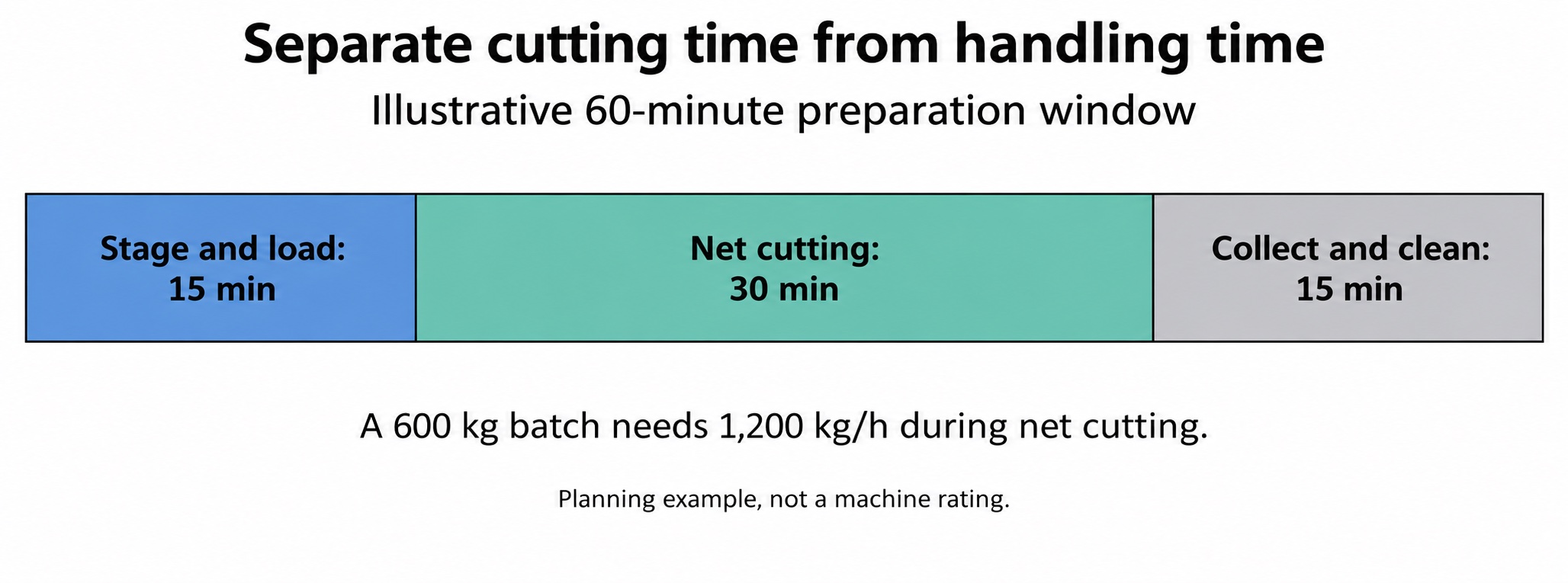
How can you separate cutting from handling time?
For example, an illustrative one-hour window might allow 15 minutes for staging, 30 for cutting, and 15 for collection and cleaning. A hypothetical 600 kg batch would then require 1,200 kg/h during net cutting. Calculate the time you actually have. These figures illustrate planning, not a rating for any photographed machine.
- Weigh your typical and busiest normal batches.
- Record handling time instead of ignoring it.
- Include interruptions when comparing a complete run.
Does a smaller machine necessarily take too long?
Compare a compact chaff cutter against measured workload before dismissing it by size. An organized loading and collection routine can make a modest installation useful within its demonstrated capacity. Conversely, a large advertised output offers little value when the rest of your workflow cannot keep up.
| Illustrative preparation stage | Time allowed |
|---|---|
| Stage and load | 15 minutes |
| Net cutting | 30 minutes |
| Collect and clean | 15 minutes |
Key Takeaway: Compare capacity against net cutting time and usable output. The example shows why total preparation time should not be treated as uninterrupted machine time.
5. How should you assess Chaff Cutter machine output quality?
Judge representative samples for particle distribution, long strips, excessive fines, and suitability for your feeding or storage plan. Test a Chaff Cutter machine with your actual approved forage. A sample made from a different crop or selected from an unusually easy run may give a misleading impression.
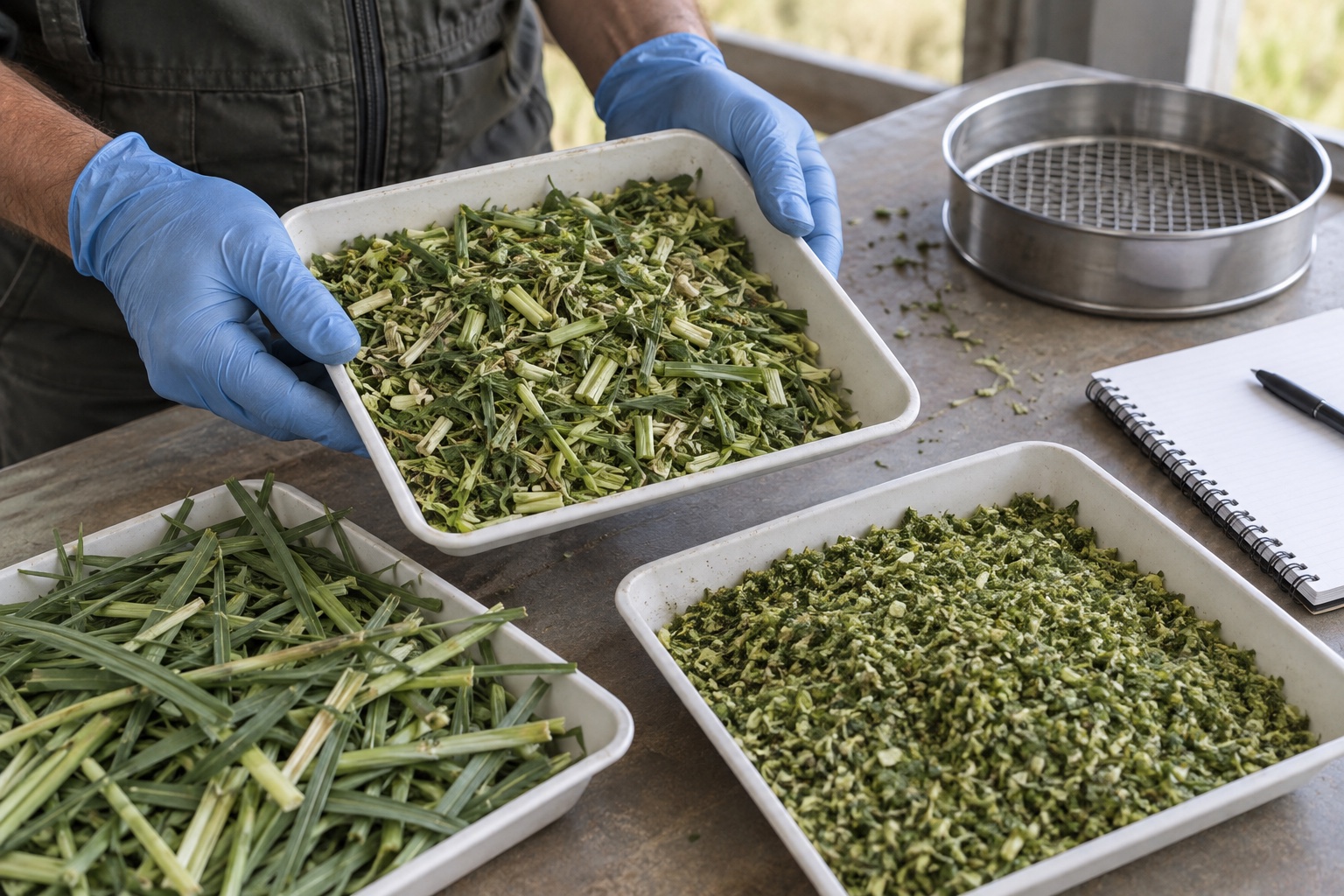
What makes a useful cutting-quality trial?
Keep crop condition, batch mass, operating settings, and loading observations with each sample. Collect material at several points rather than inspecting only the cleanest handful. Look at variation across the batch. Discuss suitable particle distribution with your feeding adviser instead of assuming shorter always means better.
- Include your usual green and dry materials separately.
- Inspect output after normal changes in loading.
- Record what happens during heavier or more difficult batches.
Which Chaff Cutter machine claims need separate checks?
Stem chopping does not prove grain grinding, stalk kneading, or adequate maize-kernel processing. Ask which mechanisms are installed and request evidence for each claimed function. If you intend to make silage, suitable moisture, packing, and sealing remain separate requirements after cutting.
| Trial observation | Question to resolve |
|---|---|
| Long pieces recur | Are feeding and cutting adjustments suitable? |
| Excessive fines appear | Does output fit your feeding target? |
| Kernels remain largely intact | Is effective kernel processing included? |
Key Takeaway: Approve an output standard before approving a machine. This gives you a practical way to compare different configurations under relevant conditions.
6. Will a Chaff Cutter machine fit your working area?
Check loading space, operator access, collection, power connection, and service clearance around the proposed installation. A Chaff Cutter machine needs more working space than its footprint alone suggests. Measure the actual route through your preparation area before agreeing on delivery or permanent positioning.
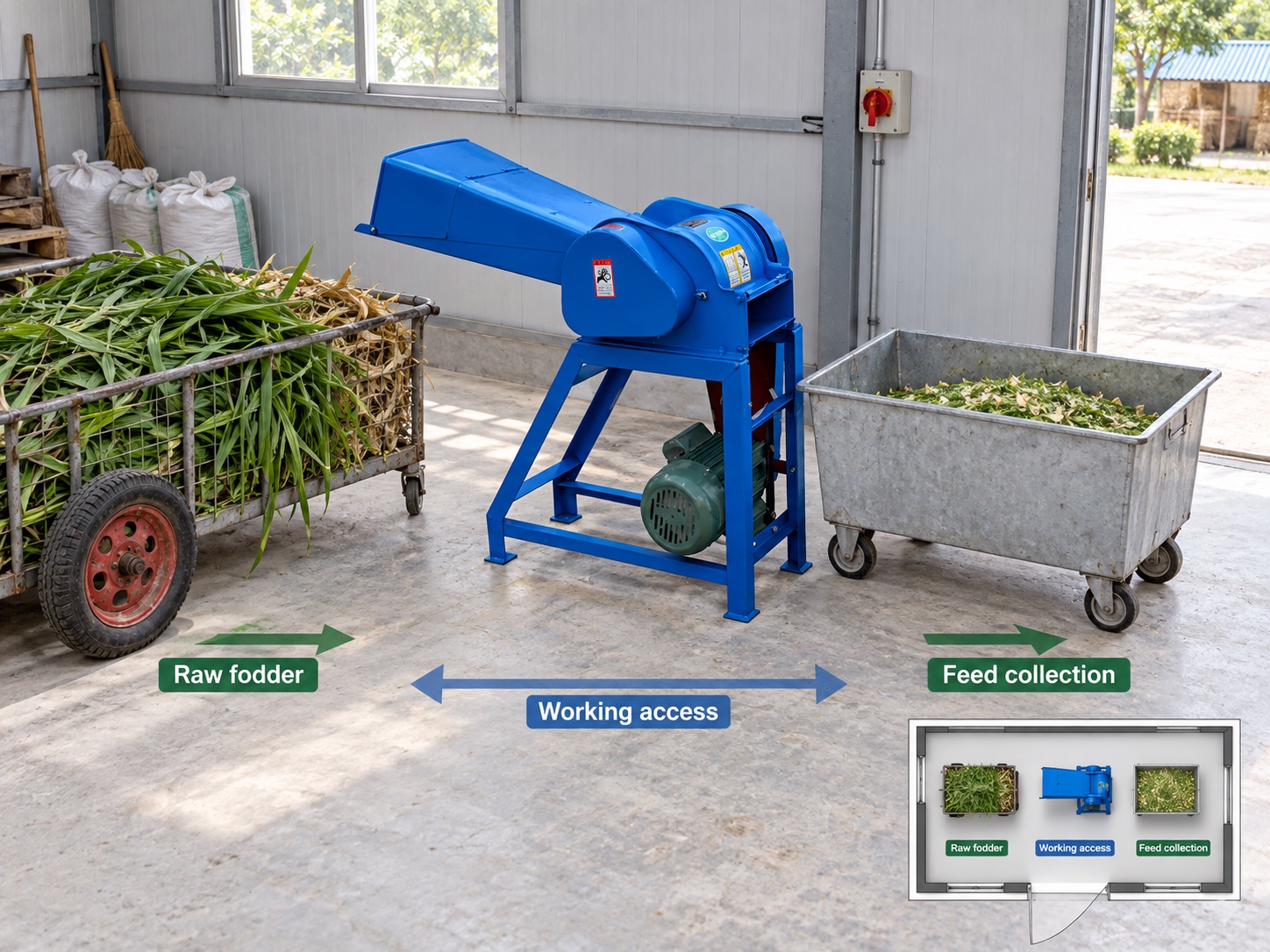
Does portability solve a space problem?
Wheels can help reposition suitable equipment, but you still need stable placement and an approved setup before use. Confirm how movement, power disconnection, and securing the machine should be handled. Plan where every batch will go. A mobile frame does not remove the need for clear access and receiving space.
- Measure entrances and intended material routes.
- Check bin or trolley access around the outlet.
- Keep storage piles away from controls and service access.
What should an installation discussion include?
Share site photographs and a simple layout with your supplier and qualified installer. Identify any proposed connecting equipment, floor preparation, and protection that the quote excludes. Resolve these items before delivery so a compatible cutter does not arrive at an unprepared site.
| Site requirement | Preparation before delivery |
|---|---|
| Access | Confirm routes and working clearance |
| Power | Agree on a suitable connection and protection |
| Collection | Match outlet position with bins or carts |
Key Takeaway: Review the installed workflow, not only machine dimensions. This helps prevent avoidable handling problems after the equipment reaches your farm.
7. What Chaff Cutter machine safety checks belong in handover?
Require complete protection, clear controls, suitable stopping arrangements, and instructions operators can understand before putting equipment into use. Ask your Chaff Cutter machine supplier to demonstrate the relevant procedures for your configuration. A fast cutting demonstration cannot substitute for a proper handover.
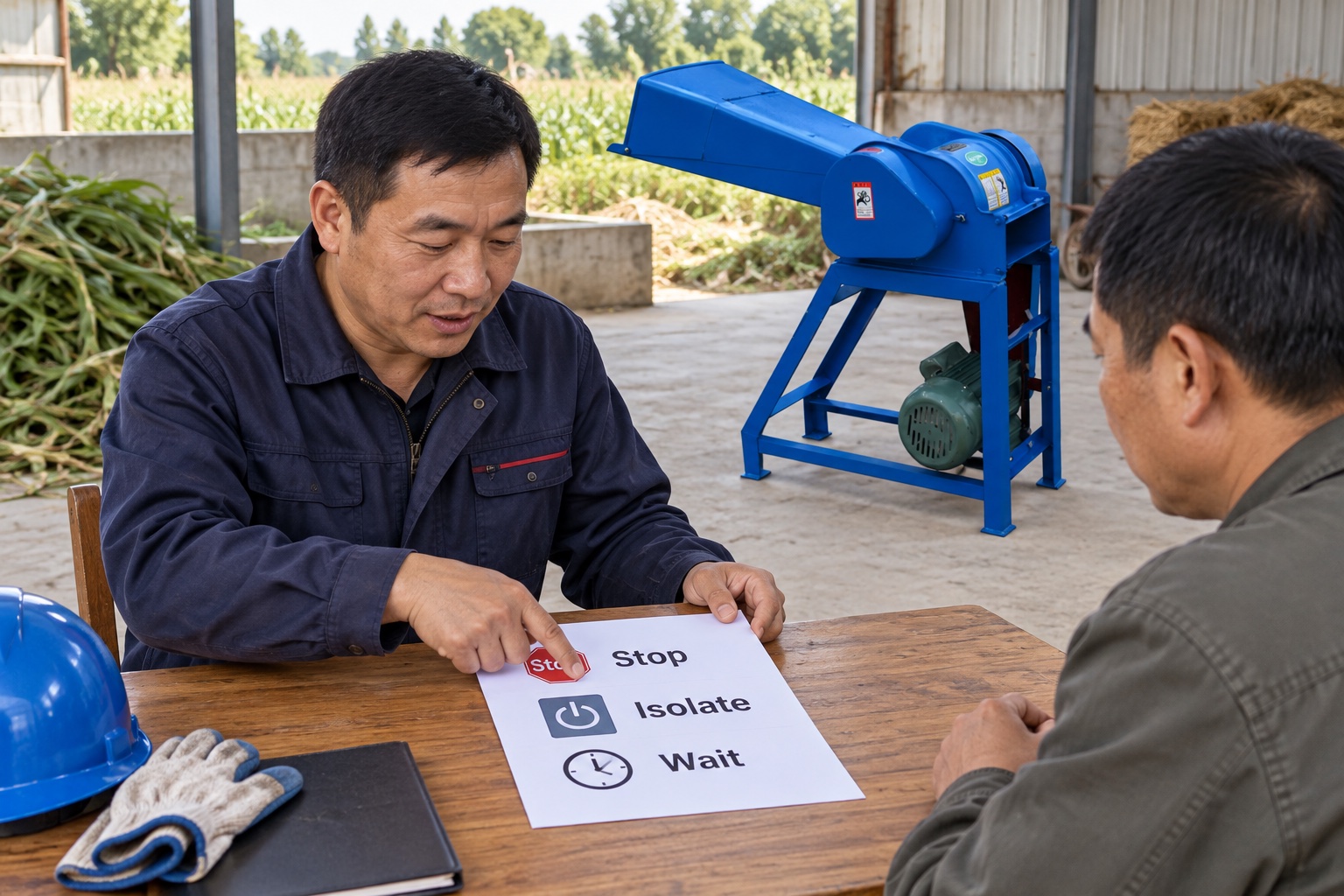
What should operators understand before starting?
Operators need training in safe feeding, stopping, isolation, cleaning, and dealing with faults under their machine’s instructions. The UK Health and Safety Executive’s machinery guidance explains pre-use checks and safe intervention. Agree on the stopping procedure. Nobody should improvise around moving knives, rollers, belts, or shafts.
- Keep guards correctly fitted and in good condition.
- Stop, isolate power, and wait for movement to cease before intervention.
- Keep bystanders clear and follow approved restart procedures.
Should you assume every safety feature is included?
No; request a written list of the supplied guarding, controls, and protective components. Confirm any installation-level requirements with competent local advisers. Photographs may show incomplete assembly or a different configuration, so check the delivered equipment against your agreement.
| Handover topic | What to confirm |
|---|---|
| Safe operation | Configuration-specific training |
| Intervention | Clear stopping and isolation procedure |
| Delivered protection | Complete agreed equipment and instructions |
Key Takeaway: Make safety preparation part of acceptance. A machine should enter service only after operators and installers understand its requirements.
8. How much Chaff Cutter machine upkeep should you allow for?
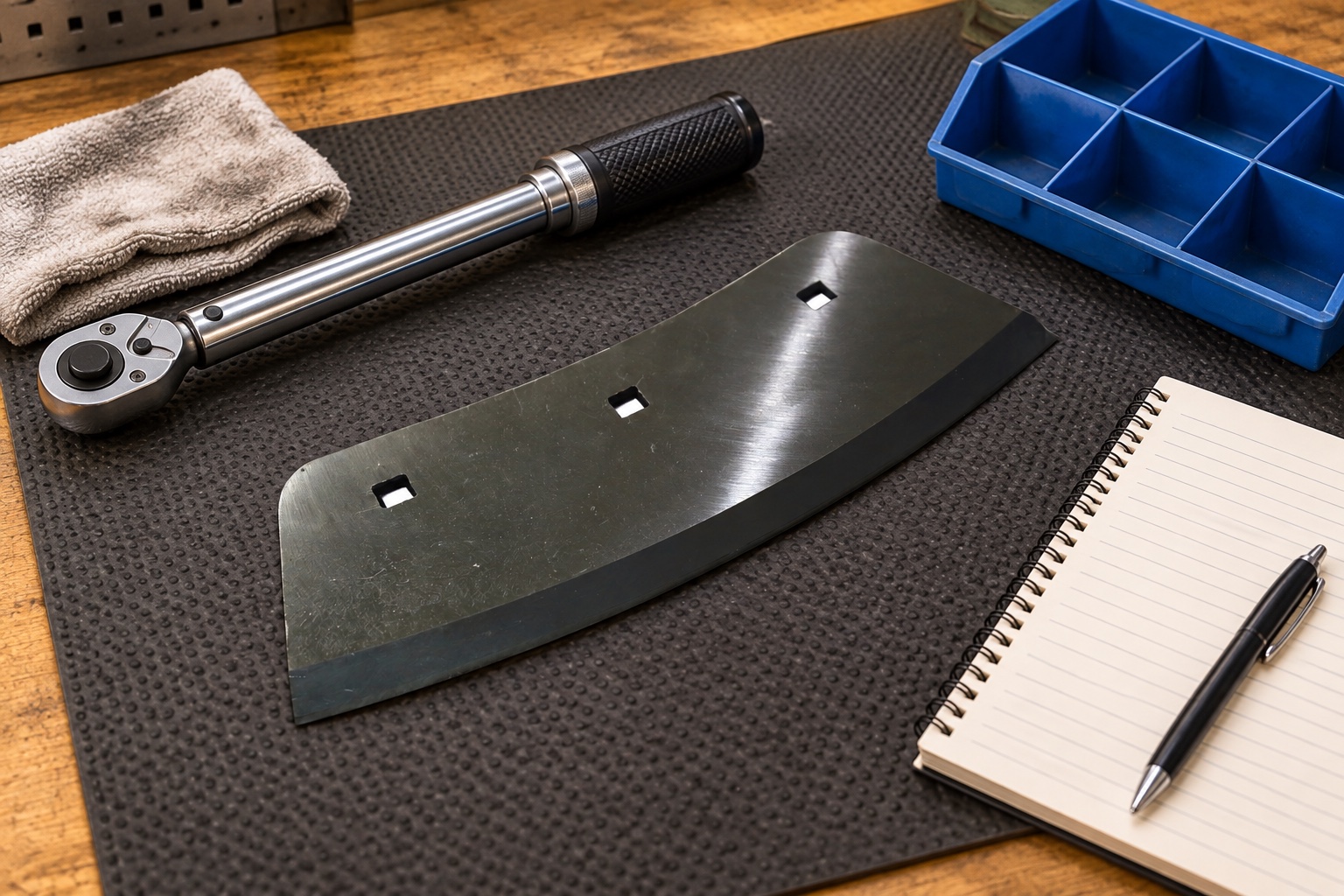
Allow time and budget for cleaning, inspections, approved adjustments, lubrication, and worn-part replacement according to the manual. Chaff Cutter machine maintenance should follow the actual model and operating conditions rather than a universal weekly schedule. Ask how routine tasks affect your available preparation time.
Which service details help you plan reliably?
Request parts identification, maintenance instructions, and a clear route for obtaining support. Confirm which tasks trained operators can perform and which need service personnel. Check what routine service involves. A low-maintenance claim has little value without procedures, intervals, and suitable replacement parts.
- Obtain approved blade and fastener information.
- Follow the stated sharpening and replacement limits.
- Keep records of faults, service, and recurring interruptions.
How should you compare total operating costs?
Combine purchase and installation costs with energy, labor, handling, and routine service for your workload. Use local costs and measured performance rather than assuming a larger motor consumes less energy per batch. An itemized quotation should also state warranty scope, delivery responsibilities, and exclusions.
| Ownership cost | Evidence to collect |
|---|---|
| Purchase and installation | Written included equipment and exclusions |
| Daily work | Measured time, staffing, and energy use |
| Service | Parts prices, instructions, and support arrangements |
Key Takeaway: Compare complete ownership requirements. This makes a lower purchase price easier to weigh against daily labor and service needs.
9. How can you choose a Chaff Cutter machine supplier?
Choose a supplier that documents the proposed configuration, supports a relevant trial, and explains delivery and service clearly. Discuss your Chaff Cutter machine requirements using crop samples, batch records, and installation details. Ask for evidence that matches your intended job rather than accepting general claims about farm productivity.

What should your acceptance checklist contain?
Record the agreed material, trial conditions, suitable output, included power package, protection, and accessories. Ask how any difference between the demonstrated and delivered configuration will be identified. Put working requirements into your order. Clear terms give both sides a practical reference during delivery and commissioning.
- Identify the exact machine and supplied components.
- Keep sample quality with recorded batch performance.
- Confirm installation, training, and parts responsibilities.
What should your final decision accomplish?
These checks connect crop suitability, usable capacity, output quality, installation, and service with your feeding routine. We can review your forage, batch schedule, and site details to discuss relevant equipment configurations. Our position is straightforward: a recommendation should fit the complete preparation job and be supported by clear operating evidence.
| Decision | Required evidence |
|---|---|
| Suitable configuration | Material and power match |
| Useful working rate | Full-batch performance and acceptable samples |
| Clear purchase | Written delivery and support terms |
Key Takeaway: Choose the equipment that completes your feeding task under realistic conditions. Share your crop, workload, and power details and contact us today to discuss a suitable setup.
10. What should you confirm before placing an order? (FAQ)
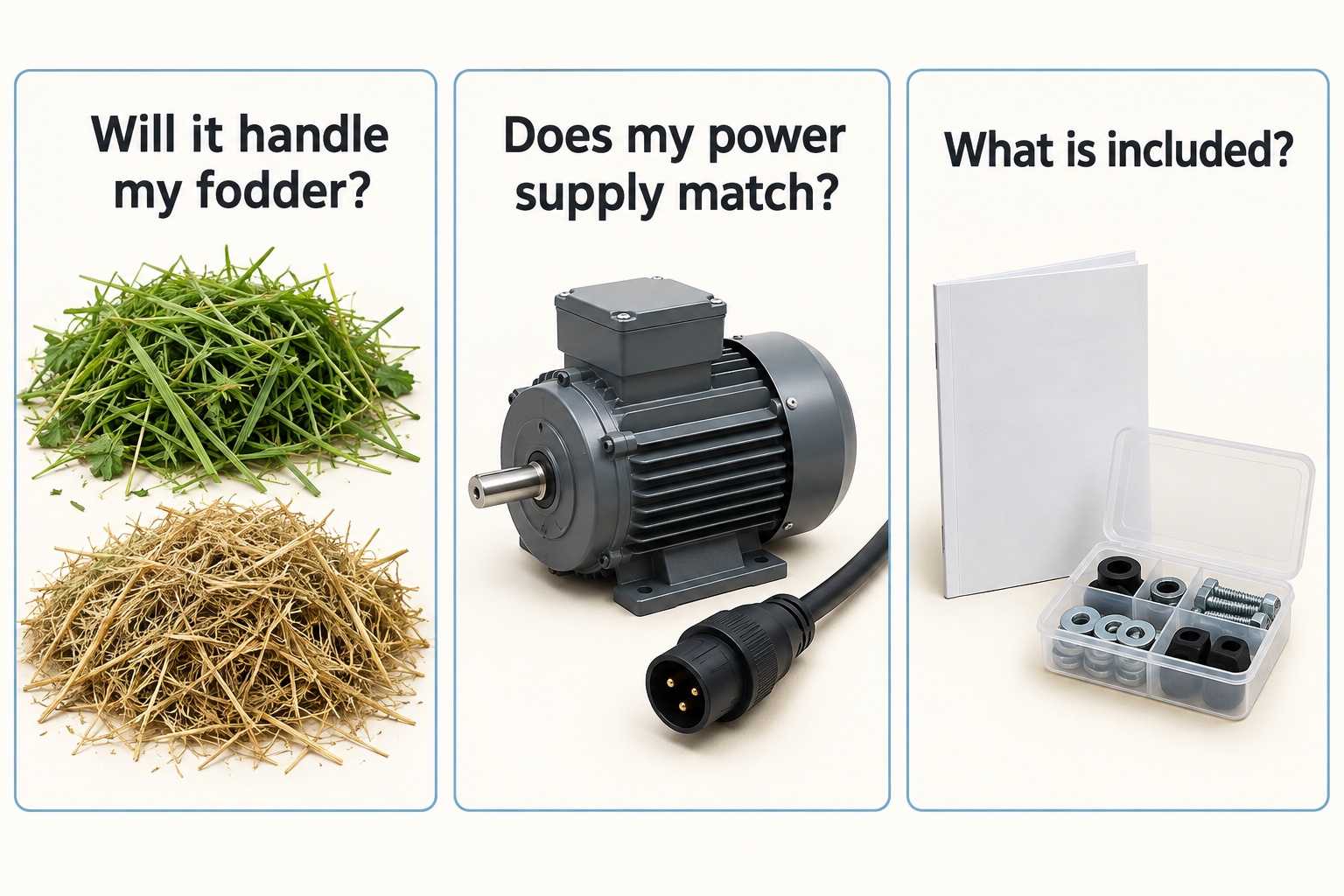
Confirm materials, power, demonstrated output, supplied equipment, and support before committing to a purchase. A Chaff Cutter machine proposal should answer these questions for the specific configuration you will receive.
Which practical questions clarify the final choice?
Keep the written configuration nearby. It helps you connect each answer with the exact equipment under discussion.
- Share representative crop and site information.
- Ask suppliers to explain exclusions clearly.
Q1: Can I use one machine for green and dry fodder?
Possibly, if the configuration is designed for both. Request separate trials because crop condition can change output, feeding behavior, and cut quality.
Q2: What’s the best capacity for my feeding schedule?
Use batch mass divided by net cutting time as a starting requirement. Then verify actual output and leave time for handling and cleaning.
Q3: How do I know if an electric model suits my supply?
Have a qualified installer check the proposed motor and installation requirements. Confirm voltage, phase, frequency, protection, and starting arrangements in writing.
Q4: Can I operate the machine alone?
Only when the approved operating procedure and site assessment support it. Staffing should follow safe handling and communication requirements, not convenience alone.
Q5: What’s the best way to compare supplier prices?
Compare equivalent complete packages. Include drive equipment, protection, accessories, delivery, installation, warranty scope, and parts support before judging the cheaper offer.
