
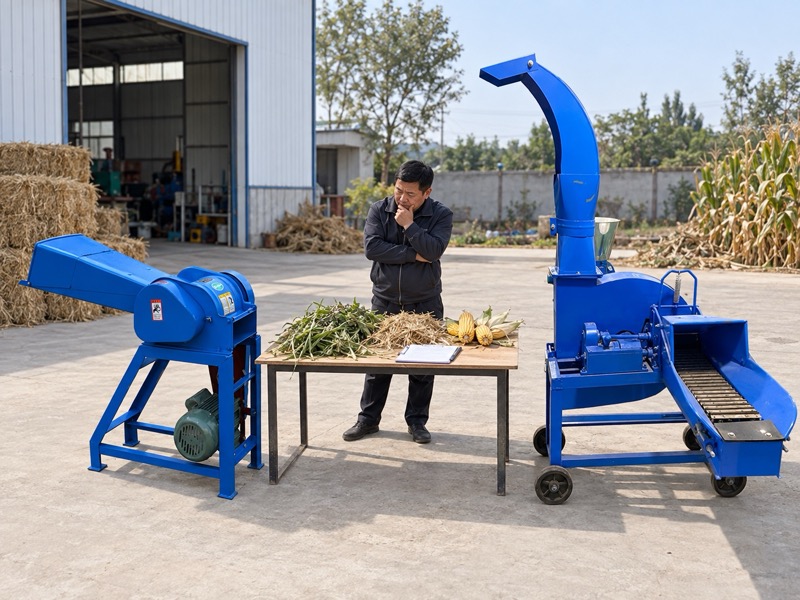
Best Chaff Cutter Machine: How to Make the Right Choice
Choose the best chaff cutter for your farm by checking crop suitability, safe operation, usable output, power compatibility, and ownership costs against real requirements. Two suppliers may offer similar-looking machines while quoting different capacities, accessories, and service terms. Picking from those headline claims can leave you with a cutter that needs unexpected installation work or struggles with your usual fodder. Compare a Chaff Cutter machine through documented requirements and matched trials before deciding which offer fits.
1. What makes a Chaff Cutter machine best for your farm?
A Chaff Cutter machine is a good choice when it completes your actual preparation job safely and meets an agreed output standard. Popularity, a large motor, or a low price cannot establish that fit independently. Begin with requirements that every candidate must satisfy before comparing optional features.
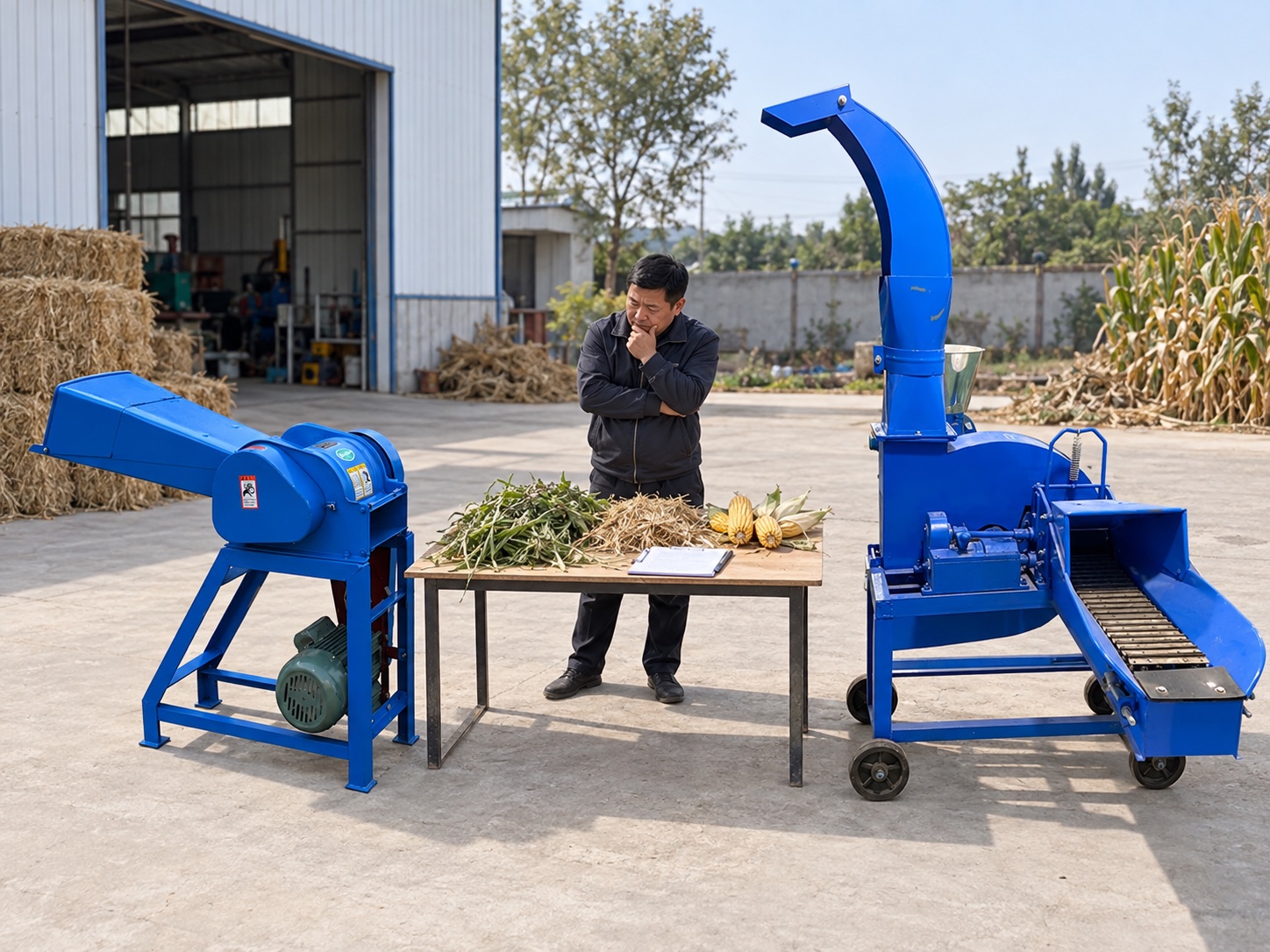
Which requirements should be non-negotiable?
List your crop range, power supply, working space, required output quality, and safe operating arrangements. Ask suppliers to address those conditions for a named configuration. Set your acceptance rules before collecting prices. This helps you reject unsuitable proposals without being distracted by attractive extras.
- State what material you need processed.
- Define acceptable output with your feeding adviser.
- Confirm installation and operator requirements.
How should you compare remaining preferences?
Once mandatory requirements are met, compare handling convenience, parts support, working time, and complete ownership cost. Give each preference a reason connected with your farm. A useful comparison explains why one candidate suits your routine instead of announcing a universal winner.
| Selection stage | Decision to make |
|---|---|
| Mandatory requirements | Can this configuration do your job safely? |
| Relevant trial | Does it meet your output requirement? |
| Preferences and cost | Which suitable option fits your operation better? |
Key Takeaway: Define suitability before ranking machines. This turns a broad search for the best model into a comparison you can verify.
2. Which crops must your Chaff Cutter machine handle?
Specify your normal forage, seasonal material, and most demanding approved batch before requesting a recommendation. A Chaff Cutter machine should be evaluated against that crop profile rather than a convenient demonstration sample. Green grass, dry straw, and maize stems can require different feeding and cutting arrangements.

What information should you send with crop photographs?
Describe moisture condition, stem size, daily batch mass, and whether material arrives loose, bundled, or already reduced in length. Include difficult material you genuinely expect to process. Show the awkward batch too. A short run using easy fodder may hide handling issues that appear during regular work.
- Separate ordinary and seasonal crop requirements.
- Ask whether each material is approved for that configuration.
- Keep stones, metal, and contaminated material out of trials.
Does a compact machine automatically fit a small farm?
Compare a mini chaff cutter with your material and schedule rather than animal count alone. A small farm can still have tough stalks or a short preparation window. Conversely, low daily utilization may make an unnecessarily large installation difficult to justify.
| Crop information | Why your supplier needs it |
|---|---|
| Material and condition | Check approved use and feeding behavior |
| Batch mass and timing | Assess required working output |
| Seasonal variation | Test beyond the easiest material |
Key Takeaway: Build a crop profile before choosing capacity or drive type. It gives each supplier the same practical problem to solve.
3. Which Chaff Cutter machine drive can your farm support?
Choose a drive that matches available power, installation conditions, and your expected workload. A Chaff Cutter machine powered by a tractor has different connection requirements from manual, electric, or independent-engine equipment. No drive category is automatically best for every farm size.
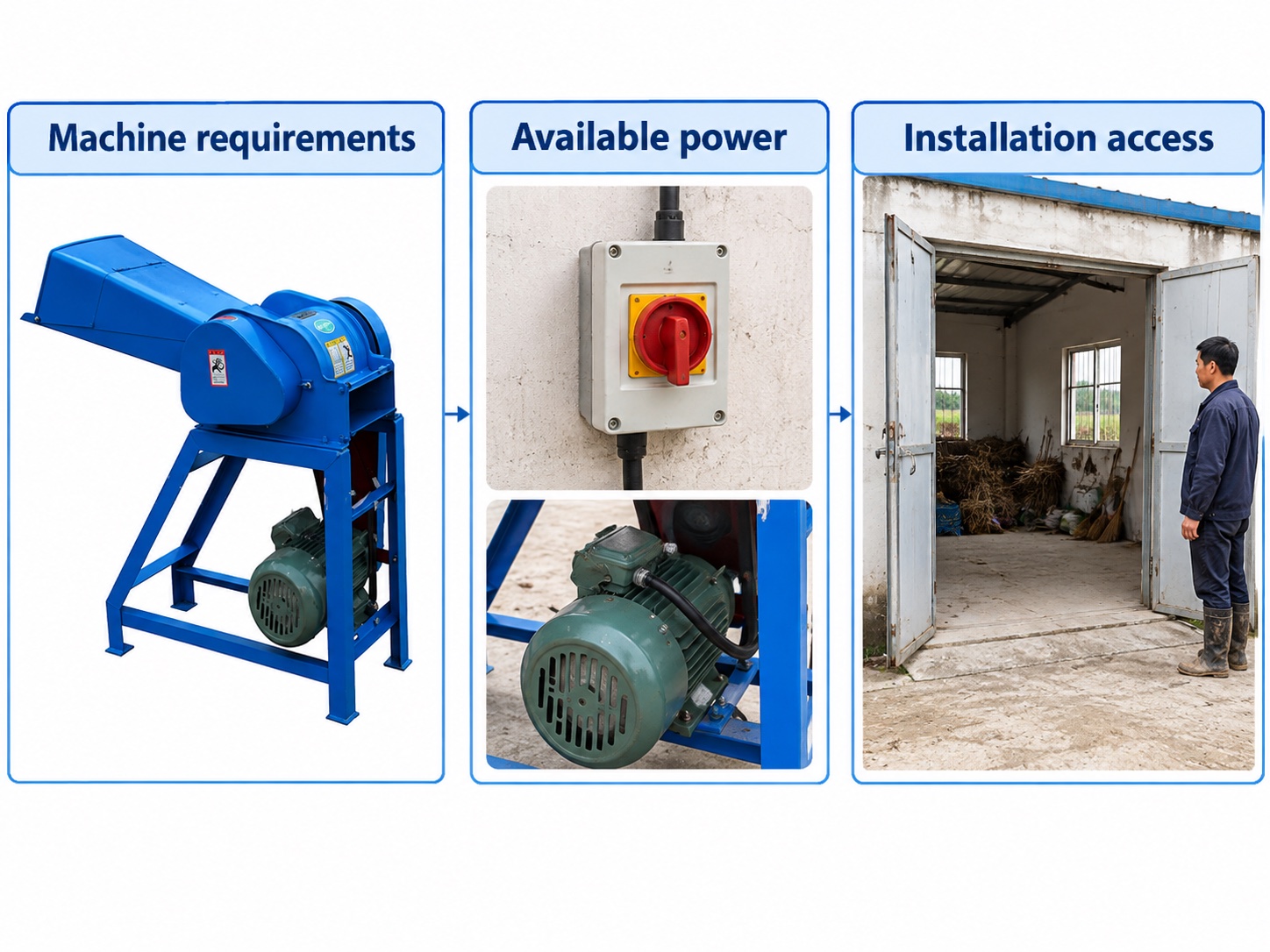
When does each drive type deserve consideration?
Manual equipment needs a realistic assessment of effort, capacity, and safe handling. An electric chaff cutter needs compatible service, while an engine or tractor arrangement brings different fuel, access, and maintenance requirements. Screen out incompatible proposals early. A suitable cutter cannot compensate for an unsuitable power connection.
- Confirm electrical requirements with a qualified installer.
- Check specified PTO speed and coupling where applicable.
- Include engine ventilation, fuel handling, and servicing needs.
What does a power rating fail to tell you?
Installed horsepower or kilowatts do not establish usable output across every forage type. Ask about loaded operation, crop condition, approved settings, and how material moves through the feeding system. Avoid a fixed horsepower recommendation based only on herd size or a general online buying rule.
| Drive option | Evidence before shortlisting |
|---|---|
| Manual | Suitable effort, time, and protection |
| Electric | Supply and installation compatibility |
| Engine or tractor | Approved connection and operating requirements |
Key Takeaway: Confirm compatibility before discussing claimed speed. This prevents a promising quotation from becoming an installation problem after delivery.
4. How should you test Chaff Cutter machine efficiency?
Compare usable output from equivalent batches while recording time, interruptions, staffing, and output quality. A Chaff Cutter machine should be judged under conditions close to your normal operation. A brief fast run cannot establish how efficiently you will prepare a full day’s fodder.
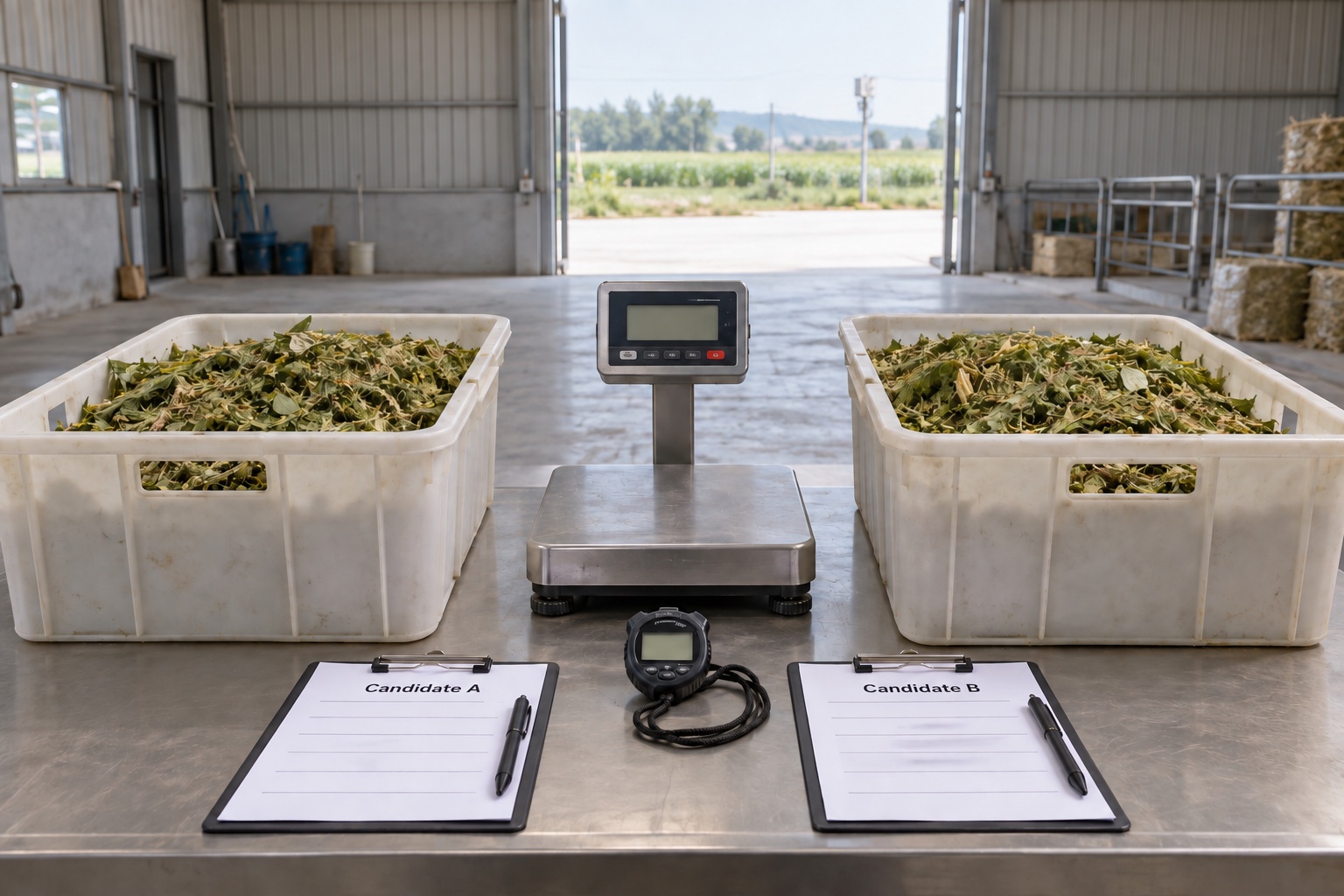
What should stay comparable between candidates?
Use similar forage type, moisture condition, batch mass, and an agreed cutting-quality target. Record each machine’s approved operating setup rather than forcing identical settings onto different designs. Compare the job completed. Output that needs further processing should not be counted as equivalent finished feed.
- Weigh material entering and usable material collected.
- Record feeding pauses and other interruptions.
- Take samples during several parts of the run.
When is a higher-capacity proposal useful?
Review an industrial chaff cutter when your measured workload and handling arrangements support that scale. Extra advertised output can remain unused if loading or collection limits the operation. For example, compare complete batch time as well as output during uninterrupted cutting.
| Trial record | What it helps establish |
|---|---|
| Usable mass and elapsed time | Practical batch output |
| Representative samples | Whether output meets your requirement |
| Interruptions and staffing | How the machine fits everyday handling |
Key Takeaway: Use a matched trial protocol. It gives competing suppliers a fair opportunity to demonstrate results under relevant conditions.
5. How can you assess Chaff Cutter machine quality and life?
Assess cutting results, component compatibility, documented construction, and service requirements together. A Chaff Cutter machine cannot be judged for durability from blade count, painted finish, or apparent weight alone. Ask what evidence supports claims about wear, material quality, and expected service needs.
Which Chaff Cutter machine details need evidence?
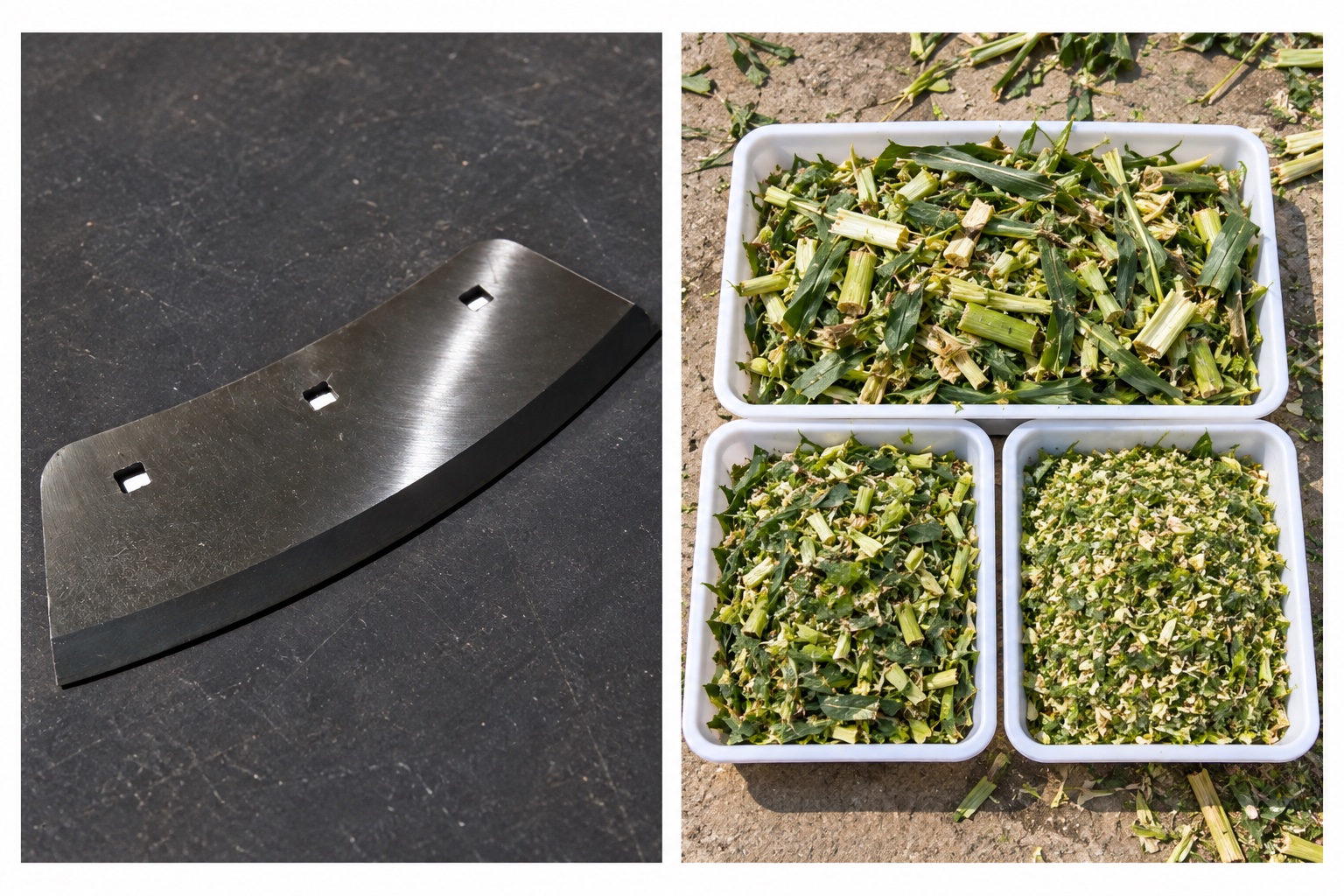
Request parts identification, approved blade geometry, replacement limits, and available material documentation for your proposed configuration. Check frame joints, fasteners, covers, and service access with competent personnel. Separate visible condition from claimed lifespan. A clean photograph does not establish how long components will last in your material.
- Confirm approved replacement parts and fasteners.
- Inspect representative output for long strips and excessive fines.
- Ask for service records relevant to comparable operating conditions.
How should you interpret a neat chopped sample?
Inspect particle distribution rather than assuming uniformly short feed is always preferable. Penn State’s particle-separator guidance explains why actual forage distribution matters during feeding assessment. Keep your nutrition and storage requirements separate from a supplier’s general claim about attractive-looking output.
| Quality question | Appropriate evidence |
|---|---|
| Does it cut suitably? | Repeated representative samples |
| Are components appropriate? | Configuration-specific documentation |
| What service life is plausible? | Relevant use and wear records |
Key Takeaway: Check what can be documented and demonstrated. Avoid assigning a lifespan or feeding benefit solely from construction claims or blade appearance.
6. What Chaff Cutter machine safety checks cannot wait?
Resolve guarding, controls, stable installation, training, and stopping arrangements before operating or accepting equipment for use. Your Chaff Cutter machine comparison should treat safety requirements as mandatory rather than optional features. A lower price cannot make an incomplete protective arrangement acceptable.
What should a safe demonstration include?
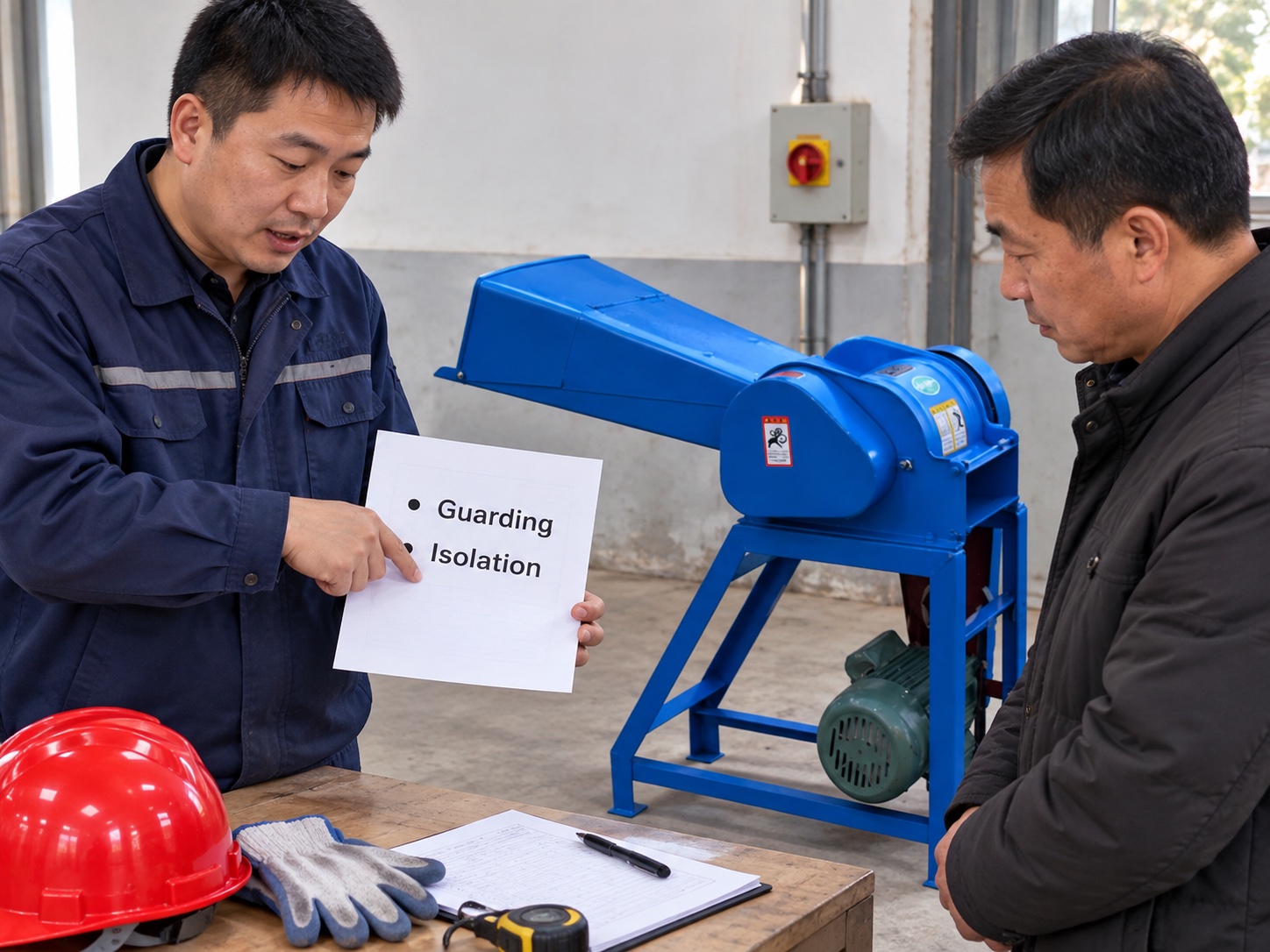
Ask the demonstrator to explain approved feeding, normal stopping, isolation, and fault-handling procedures for that model. The UK Health and Safety Executive’s machinery guidance describes checks and safe intervention principles. Confirm stopping procedures before your trial. Keep everyone clear of cutting, feeding, drive, and discharge hazards.
- Check that specified guards are fitted and sound.
- Stop, isolate power, and wait for movement to cease before intervention.
- Obtain understandable operating instructions and relevant training.
What Chaff Cutter machine protection should be documented?
List included guards, controls, and protective components in your quotation and delivery checks. Confirm any installation-level requirements with qualified local personnel. Do not assume every pictured feature belongs to your order or that a general certificate describes the delivered configuration.
| Safety requirement | What to confirm |
|---|---|
| Moving-part protection | Complete fitted components |
| Safe intervention | Model-specific stopping and isolation instructions |
| Operator readiness | Training and understandable guidance |
Key Takeaway: Set safety requirements before price comparisons. Resolve missing protection or unclear procedures before equipment enters service.
7. What will a Chaff Cutter machine cost to own?
Compare purchase, installation, operation, maintenance, and support costs for your expected use. Ask your Chaff Cutter machine supplier to itemize included equipment and exclusions so quotations describe equivalent packages. Avoid applying a universal annual repair percentage or an unsupported labor-saving estimate to every model.
Why should you estimate operating hours?
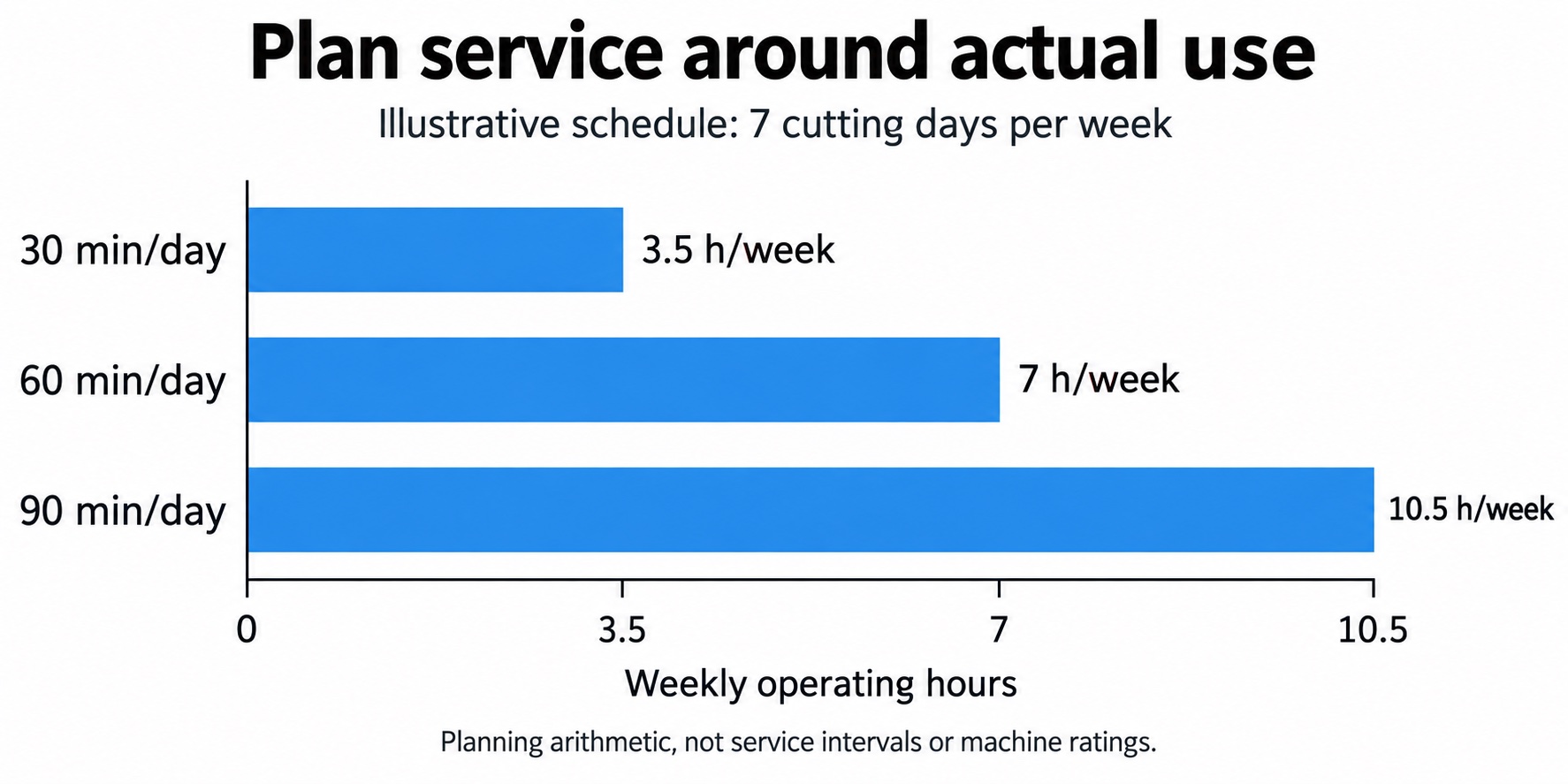
Workload helps you discuss service access, wear parts, staffing, and energy costs with your supplier. For example, seven cutting days at 30 minutes each equal 3.5 operating hours per week. Plan around your actual use. This arithmetic describes utilization, not a maintenance interval or a guarantee of component life.
- Record your expected daily cutting time and working days.
- Follow manufacturer maintenance instructions for that configuration.
- Include cleaning and routine inspection in staffing plans.
How do you compare savings without guessing?
Use measured preparation time, staffing, and operating costs from your current routine as a baseline. Compare a proposed machine under similar conditions before assigning financial value to changes. Keep financing, delivery, installation, and spare-parts terms explicit rather than hiding them inside a headline machine price.
| Illustrative daily use, seven days weekly | Weekly operating time |
|---|---|
| 30 minutes | 3.5 hours |
| 60 minutes | 7 hours |
| 90 minutes | 10.5 hours |
Key Takeaway: Build an ownership estimate from your schedule and documented costs. The chart illustrates use; it does not tell you when any particular machine needs servicing.
8. Which Chaff Cutter machine claims should you verify?
Verify model identity, test conditions, supplied components, and support arrangements before relying on a recommendation. A Chaff Cutter machine review becomes more useful when it describes material, settings, workload, and actual experience. Untraceable statistics and an impressive expert quotation cannot replace evidence about the equipment you plan to buy.
How can you judge whether a review applies to you?
Check whether it covers the same configuration, forage, and operating pattern. Ask what was measured and whether interruptions, unsuitable output, or repairs were included. Follow the claim back to its conditions. A positive account from a different job may still be a poor guide to your purchase.
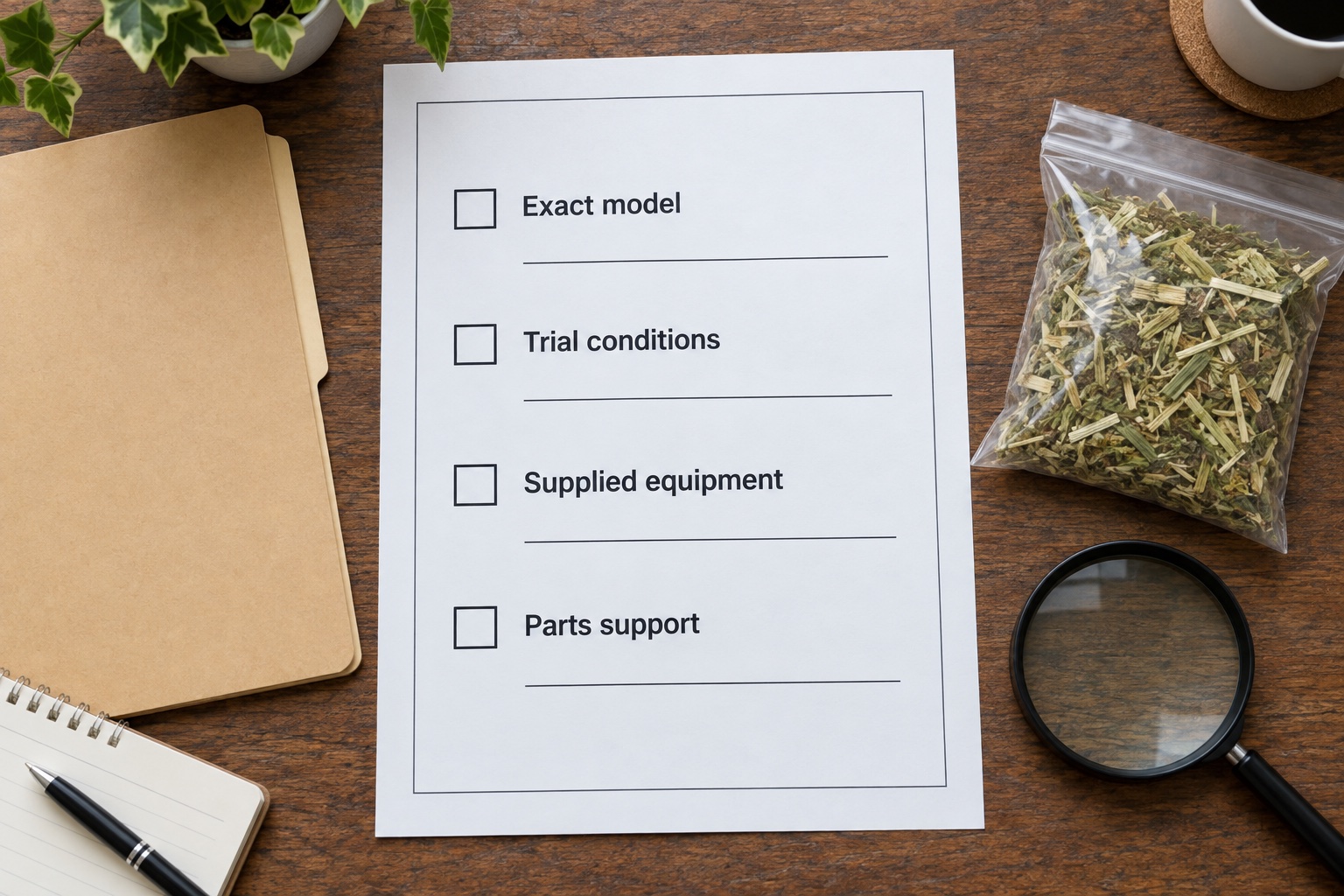
- Identify the exact model and drive package.
- Request trial records instead of isolated claims.
- Confirm how spare parts and service are obtained.
What should supplier documentation contain?
Request an itemized equipment list, operating instructions, parts information, warranty scope, and delivery responsibilities. Keep dated copies with your material-trial records. If a claim remains unresolved, record it as missing evidence rather than treating silence as confirmation.
| Evidence source | What it can establish |
|---|---|
| Model-specific documents | Configuration and approved requirements |
| Relevant recorded trial | Performance under stated conditions |
| Written support terms | Agreed responsibilities and exclusions |
Key Takeaway: Give documented evidence more weight than a broad endorsement. This reduces uncertainty without inventing a ranking between untested machines.
9. How do you choose between Chaff Cutter machine offers?
Choose among candidates that meet your mandatory requirements, then compare relevant trial results and complete ownership terms. Discuss your Chaff Cutter machine shortlist using a common written brief so each supplier addresses the same job. Keep unresolved requirements visible until evidence or an agreed correction settles them.

What should your final comparison sheet show?
Use three simple statuses: meets requirement, needs evidence, or does not meet requirement. Apply them to crop compatibility, output quality, power, protection, and support before considering preferences. Keep mandatory checks separate from nice extras. A convenient feature should not compensate for an unsuitable drive or incomplete protection.
- Attach your crop profile and trial conditions.
- Record included components and delivery scope.
- Confirm corrections and responsibilities in writing.
What should your purchase decision achieve?
This approach addresses mismatched crops, unclear output claims, unverified durability, and unexpected operating costs. We can review your material, workload, power, and service requirements to discuss appropriate configurations and trial questions. Our purchasing advice starts with whether equipment can complete your farm’s stated job under documented conditions.
| Candidate status | Practical next step |
|---|---|
| Meets requirement | Compare remaining preferences and terms |
| Needs evidence | Request a document, trial, or clarification |
| Does not meet requirement | Resolve the mismatch before shortlisting |
Key Takeaway: Choose a machine because its evidence fits your requirements. Share your comparison brief and contact us today to discuss a suitable configuration for your farm.
10. What should farmers ask before making the final choice? (FAQ)
Ask for clear answers on material suitability, power, capacity evidence, service, and the complete supplied package. A Chaff Cutter machine recommendation should explain its fit for your operation without relying on a universal best-model claim.
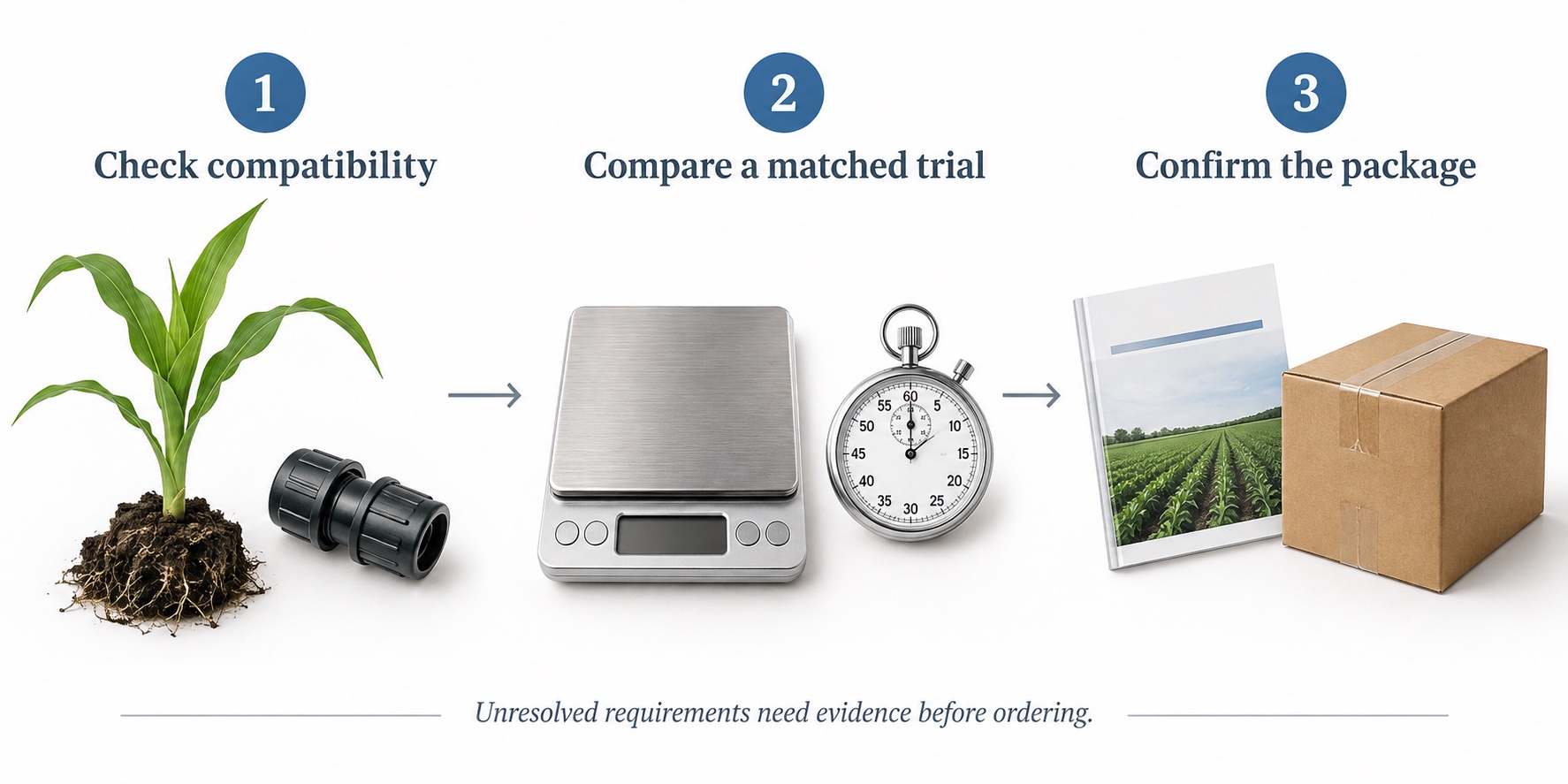
Which questions help you close the comparison?
Keep your requirement sheet beside the quotation. It makes omissions easier to identify before ordering.
- Check answers against a named configuration.
- Keep a written record of unresolved points.
Q1: Can I choose a machine from herd size alone?
No. Weighed fodder demand, material condition, preparation time, and handling arrangements provide a more useful basis than animal count alone.
Q2: What’s the best motor power for tough stalks?
There is no universal rating for every machine and crop. Confirm model-specific requirements and observe a representative loaded trial.
Q3: How do I know if a high-capacity claim is credible?
Request the test conditions and inspect usable output. Compare a full batch, including interruptions and sample quality, before accepting the claim.
Q4: Can a lower-priced model be the better purchase?
Yes, if it meets your requirements and has suitable support. Compare complete delivered and operating costs rather than assuming either price extreme is better.
Q5: What’s the best response to missing specifications?
Ask for written clarification before ordering. An unresolved requirement should remain open until the supplier provides relevant evidence or an agreed solution.
