
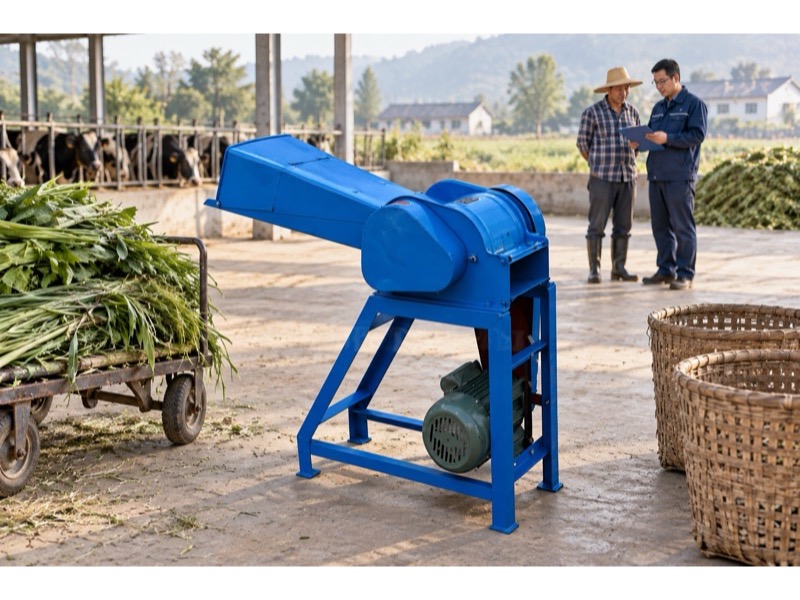
Chaff Cutter Machine: How to Make Farm Feeding Easier
Choose a Chaff Cutter machine around your forage, available cutting time, power supply, and daily handling routine. Those four checks matter more than buying whichever model carries the largest output figure.
Imagine morning feeding starts late because long stalks need another pass and full baskets block your working space. Buying more capacity can leave those delays untouched. A workable feeding plan starts with measured batches, a suitable cut, and room for people and material to move.
What should your Chaff Cutter machine do each day?
Your Chaff Cutter machine should prepare your usual forage batch within a feeding routine you can sustain. Write down whether you need daily fresh chopping, occasional dry-straw work, or seasonal silage preparation before comparing designs.
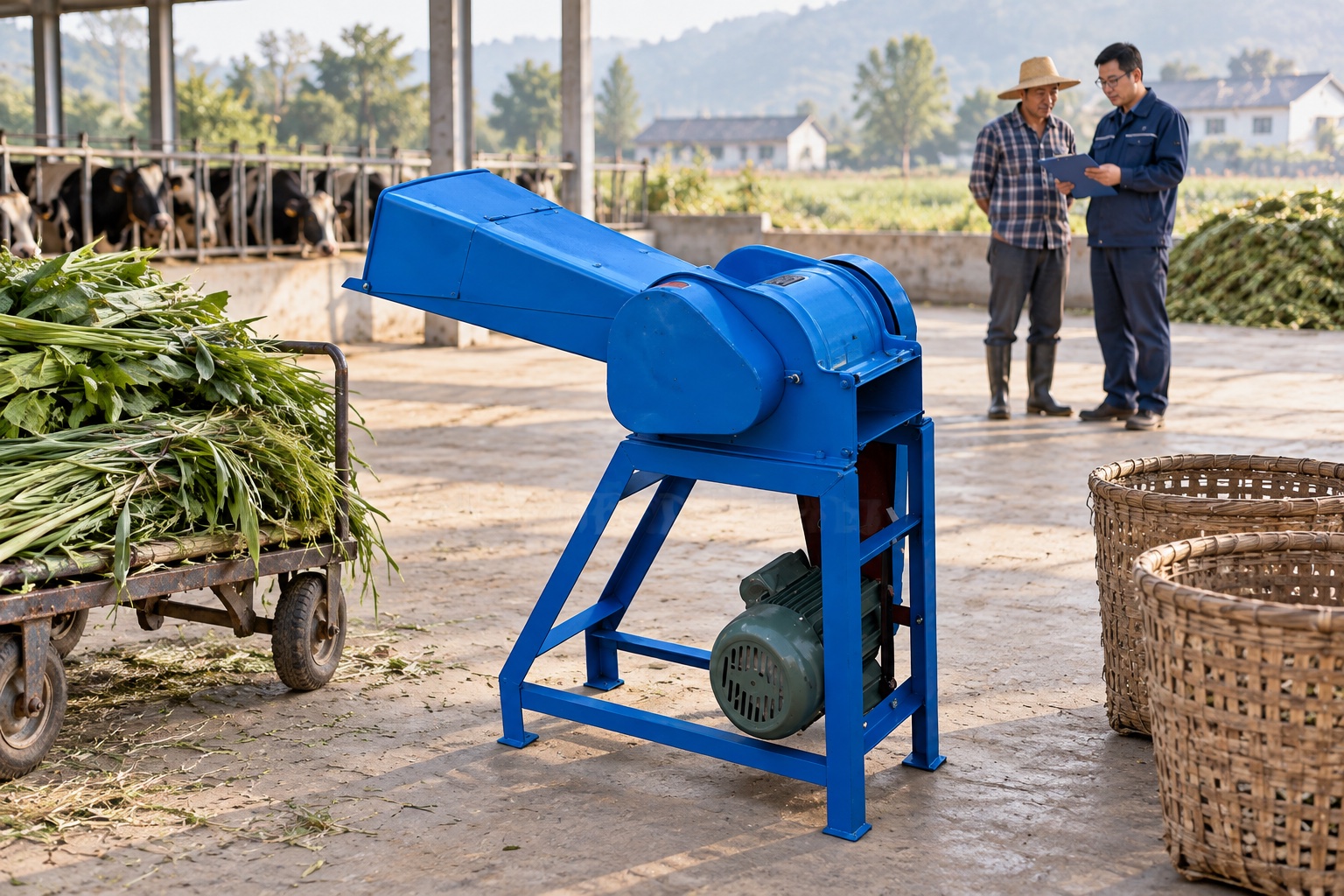
Where does your current routine lose time?
Start with one ordinary feeding shift. Time fetching forage, cutting, collecting, moving feed, and cleaning separately. You may find that carrying baskets consumes more time than chopping.
- Weigh forage actually sent through your cutter.
- Record how many people handle each stage.
- Note repeated stops and their causes.
- Separate routine feeding from harvest peaks.
What belongs in your Chaff Cutter machine brief?
Describe a normal day and your busiest realistic day using separate entries. This keeps an occasional surge from dictating every purchasing decision.
| Farm condition | Detail worth recording |
|---|---|
| Daily preparation | Forage mass and feeding deadline |
| Seasonal demand | Extra batches and working days |
| Labor availability | Operators and handling help |
Key Takeaway: A short written brief gives suppliers something concrete to match. Check your biggest recurring delay before asking for more machine capacity.
How much cutting time can your farm spare?
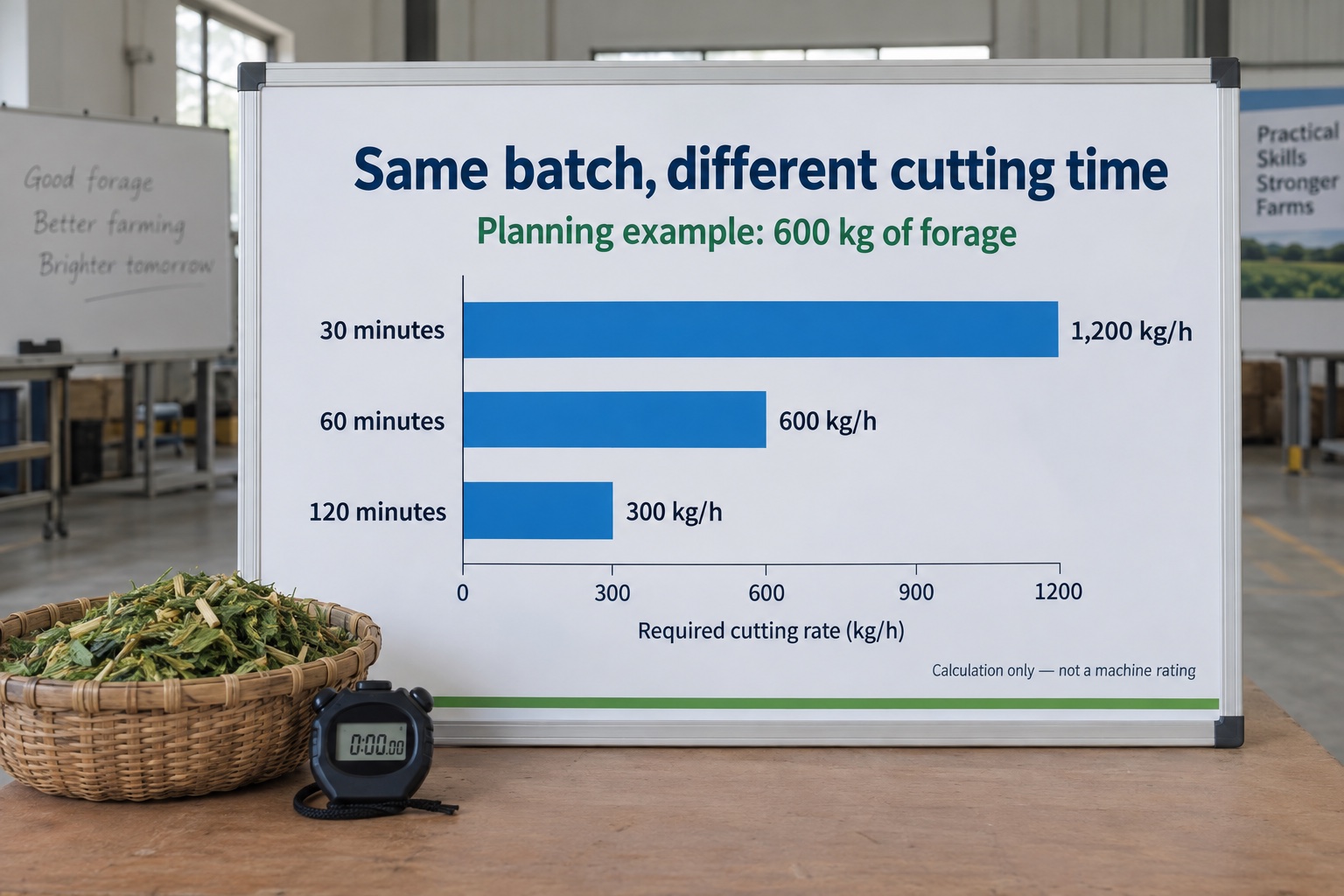
Your Chaff Cutter machine has only the cutting time left before feeding, after you allow for handling and cleanup. Divide forage mass by those cutting hours, then assess whether a demonstrated output rate can meet your schedule.
What does a simple capacity calculation show?
Give handling time its own line. For an illustrative 600 kg batch, one hour of cutting requires an average 600 kg/h. If loading and cleanup leave only 30 minutes, that requirement becomes 1,200 kg/h.
- Use fresh mass consistently when weighing batches.
- Exclude breaks from available cutting time.
- Ask for a sustained trial with comparable forage.
- Include ordinary interruptions when assessing practical output.
How much spare Chaff Cutter machine capacity should you buy?
Choose reserve capacity around known delays and credible expansion plans; no single percentage suits every farm. These arithmetic examples describe requirements, not ratings for any pictured model.
| Batch mass | Available cutting time | Required average rate |
|---|---|---|
| 600 kg | 30 minutes | 1,200 kg/h |
| 600 kg | 60 minutes | 600 kg/h |
| 600 kg | 120 minutes | 300 kg/h |
Key Takeaway: A shorter cutting window raises your required rate sharply. Compare trial results against your actual schedule before selecting a larger frame.
Which crops must your Chaff Cutter machine handle?
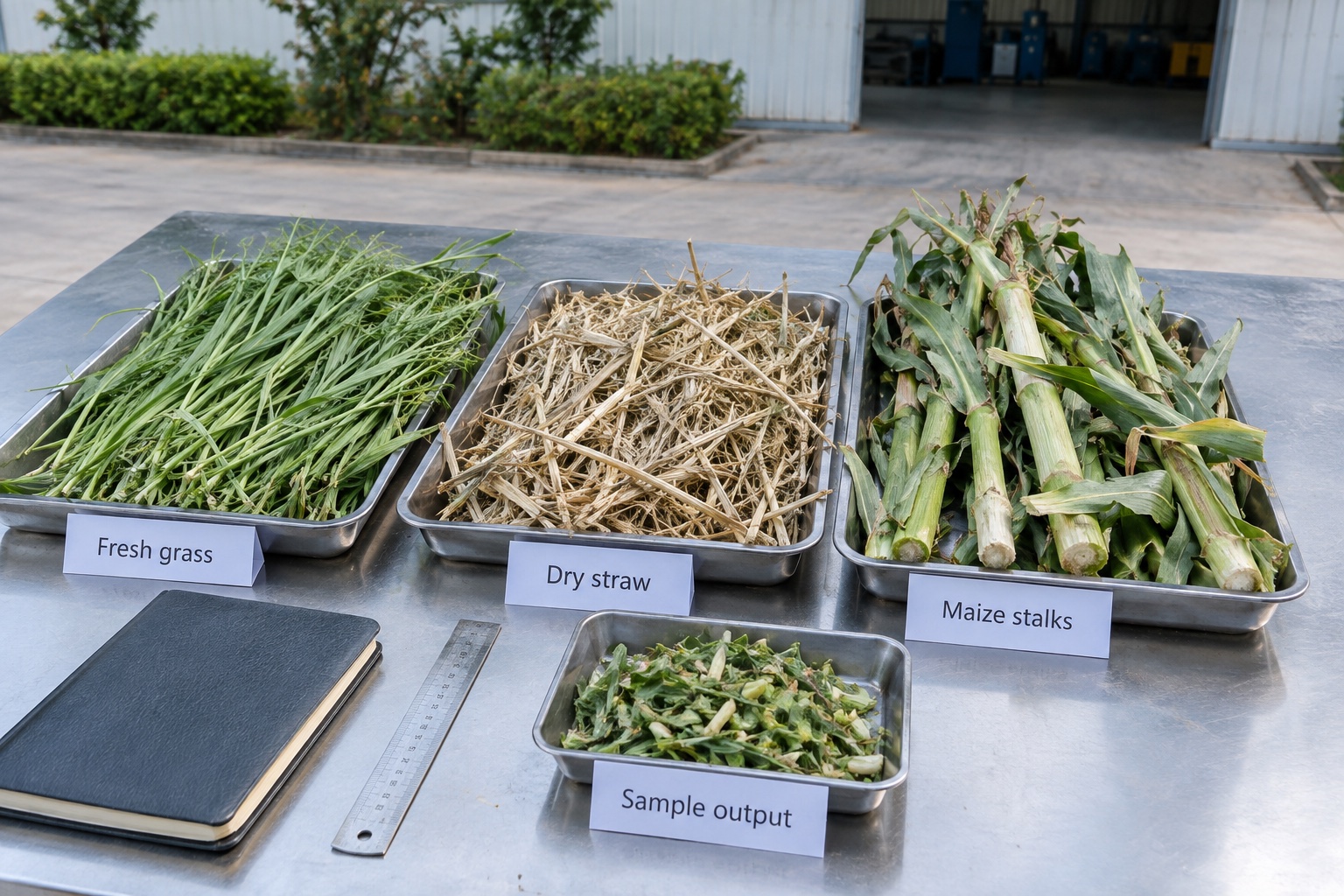
Your Chaff Cutter machine must handle your usual crop condition and produce a suitable feed sample. Fresh grass, dry straw, and mature maize stalks deserve separate checks because their texture and handling differ.
Is a shorter cut always better?
Look at what reaches your animals. Ask your nutrition adviser about suitable particle size for your ration. Penn State explains why forage particle distribution matters when evaluating feed; appearance alone cannot confirm nutritional suitability.
- Bring representative forage from your own supply.
- Inspect samples throughout a trial batch.
- Record long pieces, fines, and uneven material.
- Confirm which adjustments your selected model supports.
When do you need a different processing method?
Cutting stalks and softening fibrous material are different jobs. If you need substantial fiber disruption, compare a dedicated straw kneading machine using samples before assuming a cutter provides equivalent results.
| Material or goal | Question for your demonstration |
|---|---|
| Fresh leafy forage | Does feeding remain steady? |
| Dry fibrous stalks | Does output meet your handling needs? |
| Fiber softening | Is another processing method required? |
Key Takeaway: Buy for demonstrated crop compatibility and useful output. An attractive sample from different forage tells you too little about your daily workload.
Which power source fits your Chaff Cutter machine?
Your Chaff Cutter machine should use a power source that supports its specified drive requirements wherever you prepare feed. Compare electrical availability, tractor access, and engine service before deciding which arrangement suits your routine.
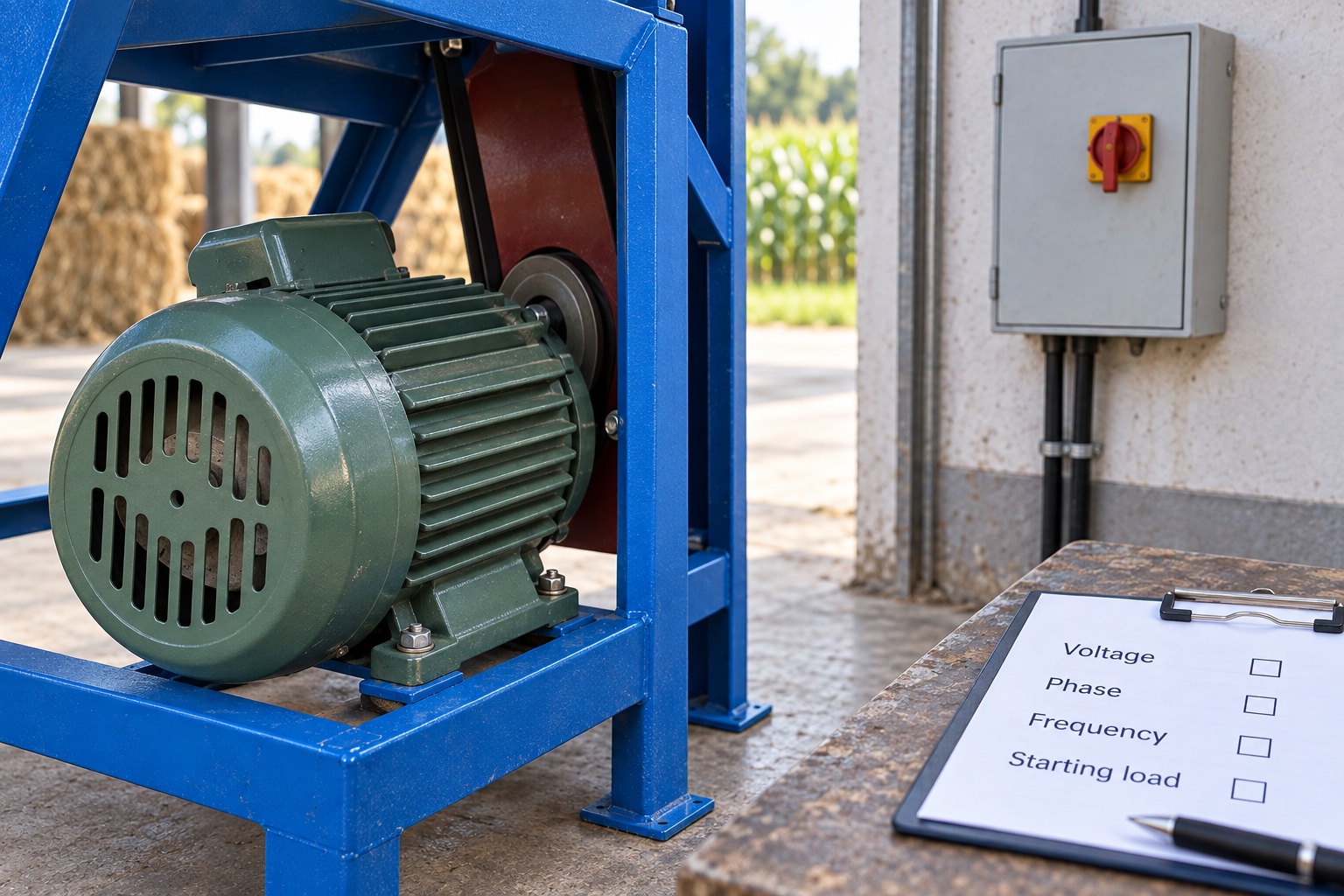
What must you confirm before choosing electric power?
Check the supply before ordering. Have a qualified electrician assess voltage, phase, frequency, starting demand, and protective equipment for your selected electric chaff cutter. A nearby socket does not establish compatibility.
- Obtain written motor and supply requirements.
- Confirm required installation work and its cost.
- Record how often outages interrupt feeding.
- Ask who commissions and services your drive system.
When might tractor or engine power make sense?
Consider tractor drive when a compatible tractor can be available during feeding; consider an engine where electrical supply cannot support your work. Neither option guarantees higher cutting output without matched specifications and testing.
| Power arrangement | Farm constraint to resolve |
|---|---|
| Electric motor | Supply compatibility and installation |
| Tractor drive | Availability, drive compatibility, guarding |
| Separate engine | Fuel, servicing, and exhaust management |
Key Takeaway: Compare a complete powered installation. A cheap bare machine can become expensive once your farm needs another motor, controls, or drive equipment.
How should you arrange your Chaff Cutter machine area?
Your Chaff Cutter machine needs a layout that keeps incoming forage, collected output, and foot traffic from obstructing each other. This matters whether you prepare feed in one sheltered bay or arrange work around a tractor.
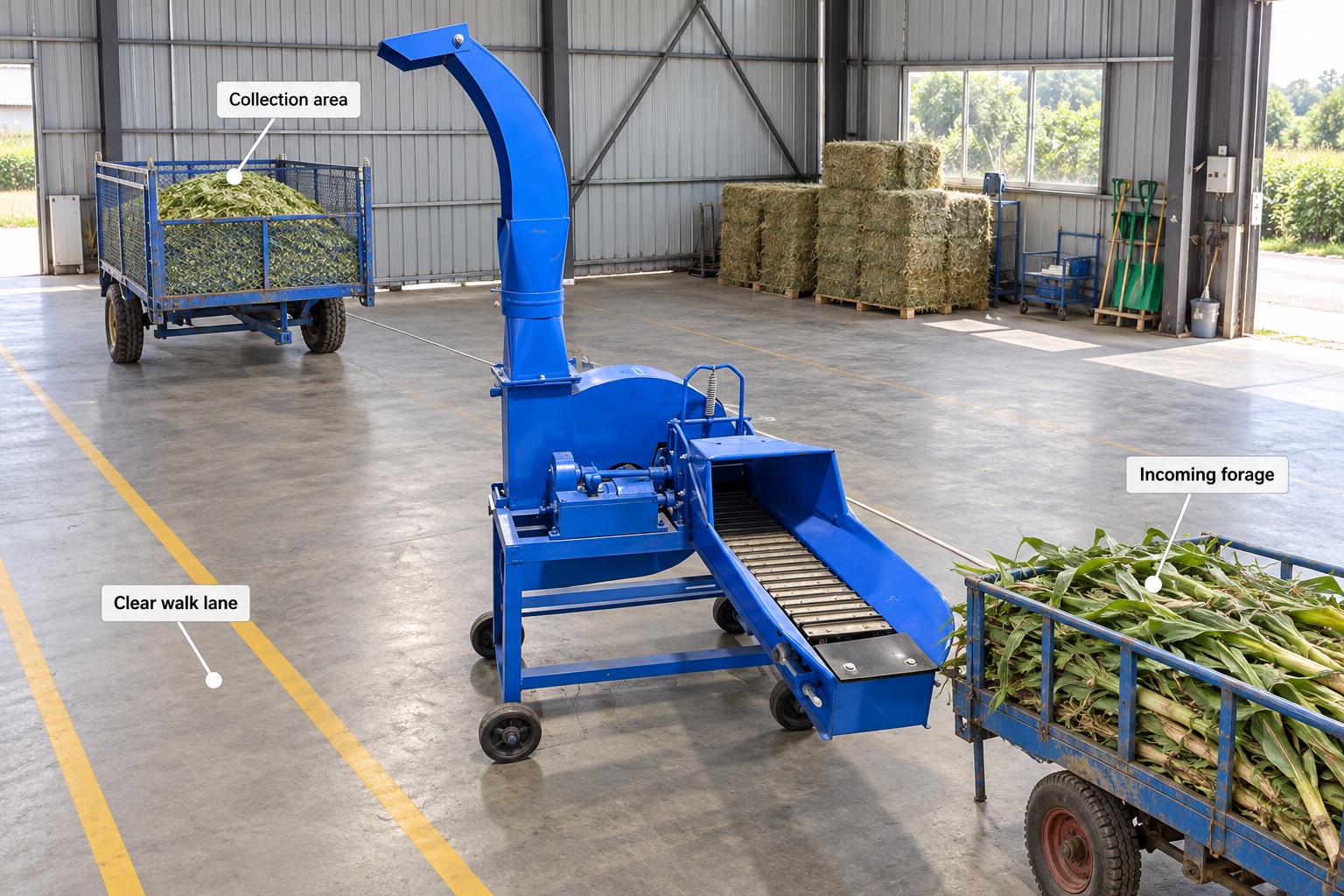
Can your workspace accommodate a complete machine?
Measure beyond the machine frame. Check overall dimensions with feed tray, discharge equipment, and service covers in their working positions. Allow the manufacturer’s required access and operating clearances around your actual setup.
- Confirm door width and available overhead space.
- Plan where full collection containers will stand.
- Keep ordinary walkways away from working machinery.
- Check floor stability and equipment positioning requirements.
Where does chopped forage go next?
Match discharge direction with your receiving method before choosing a tall spout or low outlet. A wheeled frame can help reposition equipment, but terrain suitability and safe movement still require confirmation.
| Layout decision | Practical check |
|---|---|
| Feed entry | Forage arrives without blocking access |
| Discharge | Receiving containers suit outlet position |
| Cleaning and service | Required access remains available |
Key Takeaway: Sketch material flow before delivery. If every full basket must cross your incoming forage route, revise that arrangement while changes remain inexpensive.
What controls make daily operation safer?
Your Chaff Cutter machine needs suitable guards, accessible controls, safe isolation, and trained operators before routine use. Inspect those features on your actual configuration rather than relying on a product photograph.
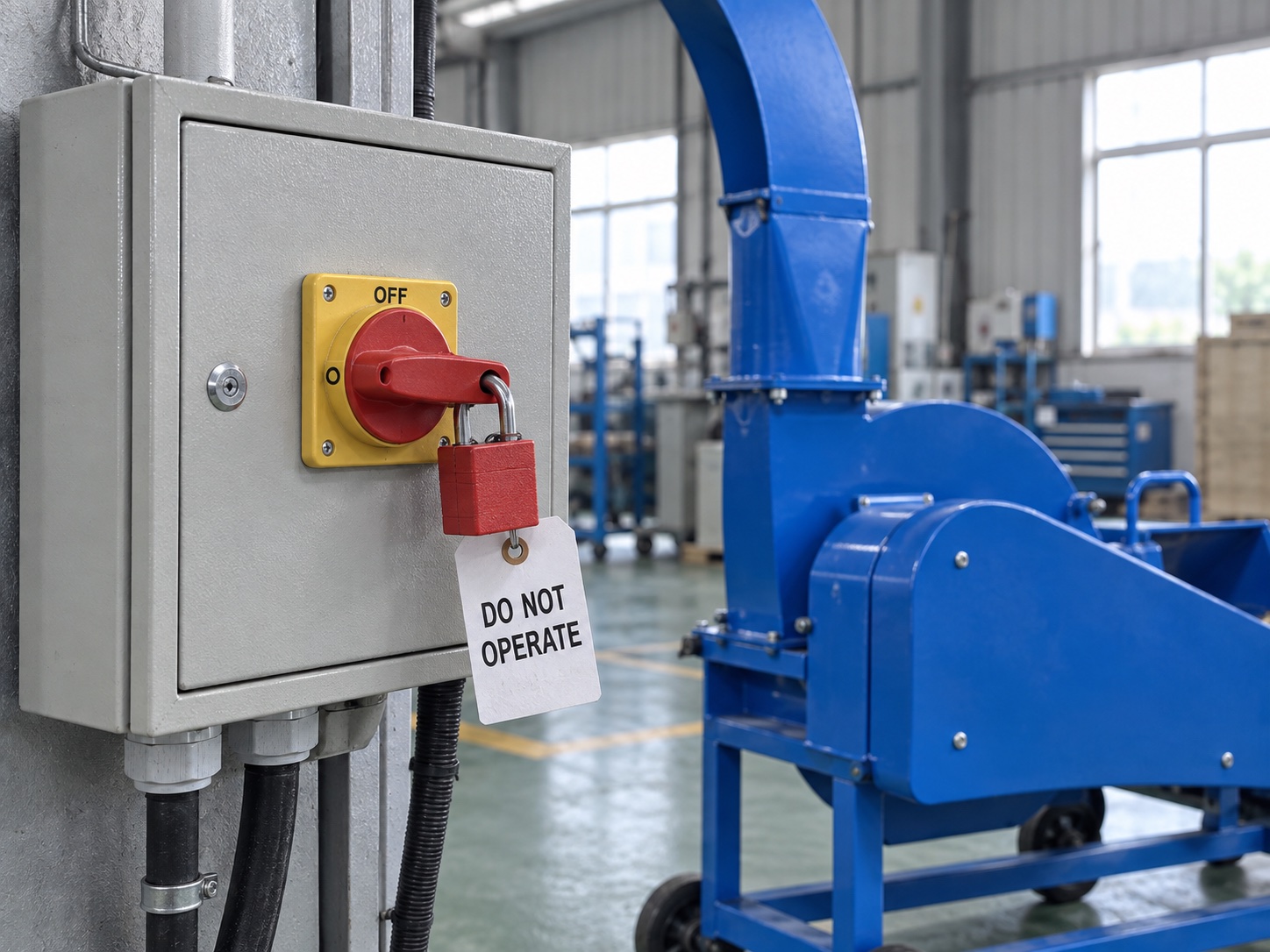
What should a Chaff Cutter machine demonstration cover?
Ask to see a complete shutdown. Follow the manufacturer’s procedure and agricultural machinery isolation guidance. Before clearing blockages or servicing, isolate power, prevent restart, wait for movement to stop, and address stored energy.
- Check guards over cutting and transmission components.
- Confirm operators can reach stopping controls safely.
- Obtain instructions for feeding and blockage handling.
- Keep loose clothing and bystanders clear.
Can a missing guard wait until later?
No; resolve missing or damaged protection before operating machinery. An emergency stop does not replace secure isolation during maintenance, and visible stillness does not prove stored energy has disappeared.
| Situation | Required next step |
|---|---|
| Damaged protection | Stop use and arrange repair |
| Blocked feed path | Follow shutdown and isolation procedure |
| New operator | Provide instruction and supervised training |
Key Takeaway: Treat safe operation as a delivery requirement. Clear instructions and functional protection matter on your first batch, not after a near miss.
How do you maintain your Chaff Cutter machine?
Your Chaff Cutter machine needs accessible service points and identifiable wear parts that you can obtain when required. Blade count alone tells you little about repair time, replacement availability, or cutting condition.
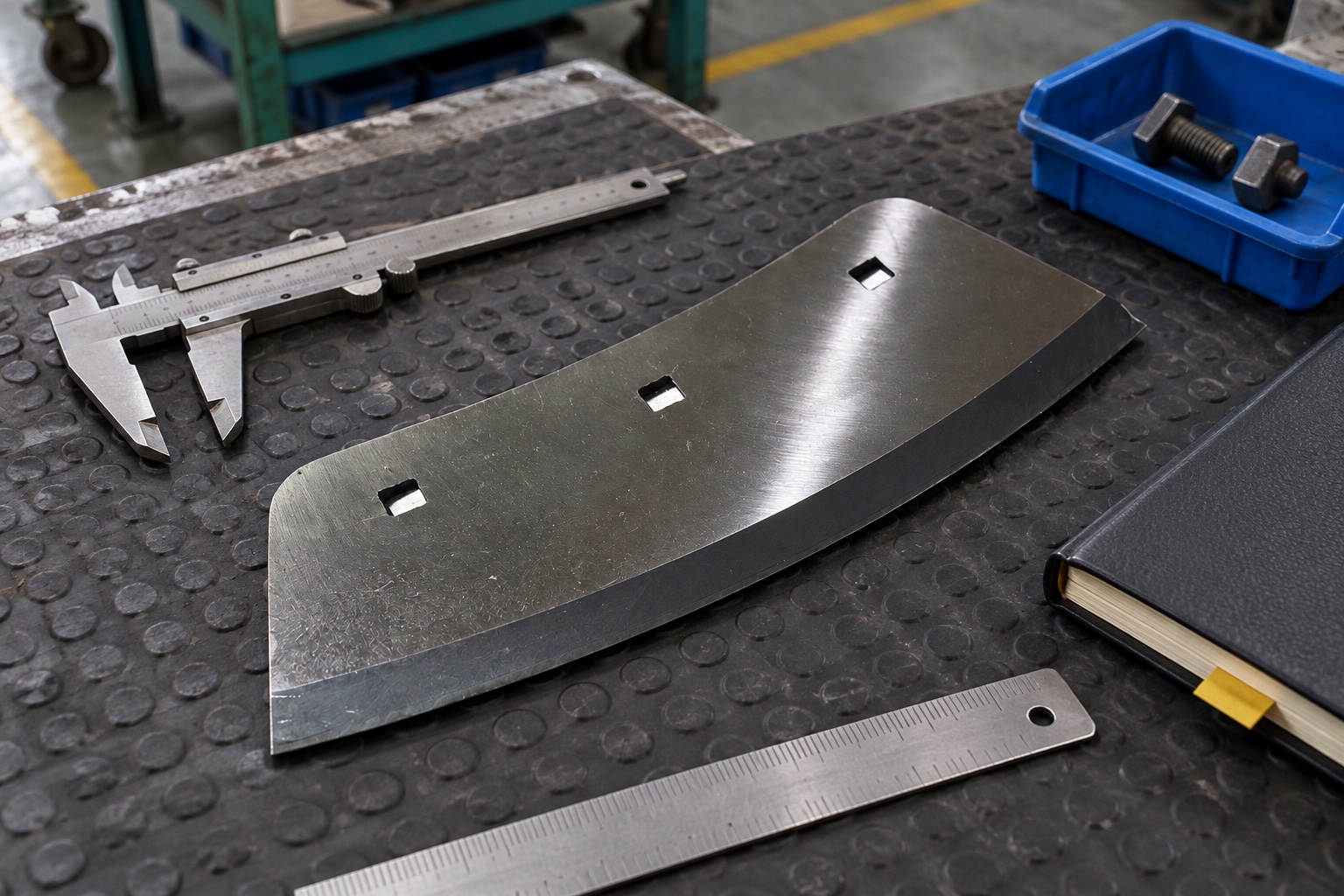
Which details prevent spare-part confusion?
Get part numbers while everyone is available. Ask for a manual, illustrated parts list, and maintenance schedule tied to your exact configuration. Record blade mounting details through supplier documents rather than matching appearance alone.
- Request blade and belt identification details.
- Confirm approved replacement fasteners and procedures.
- Ask about service access and required tools.
- Obtain current parts prices and delivery estimates.
What can a Chaff Cutter machine inspection reveal?
Check loose components, wear, damage, and abnormal vibration using approved procedures. Isolate machinery before opening covers; ask qualified service personnel about blade setting, sharpening, and rotating-assembly balance.
| Maintenance need | Evidence before purchase |
|---|---|
| Routine care | Model-specific schedule and instructions |
| Wear replacement | Part numbers and suitable replacements |
| Local support | Named service contact and repair process |
Key Takeaway: A parts list can be more useful than a broad durability claim. Confirm support for your exact machine before committing your feeding schedule.
What should your Chaff Cutter machine budget include?
Your Chaff Cutter machine budget should include purchase, installation, handling equipment, energy, labor, and planned maintenance. Keep those items visible when comparing quotations, especially if one supplier quotes a bare frame and another includes a drive.
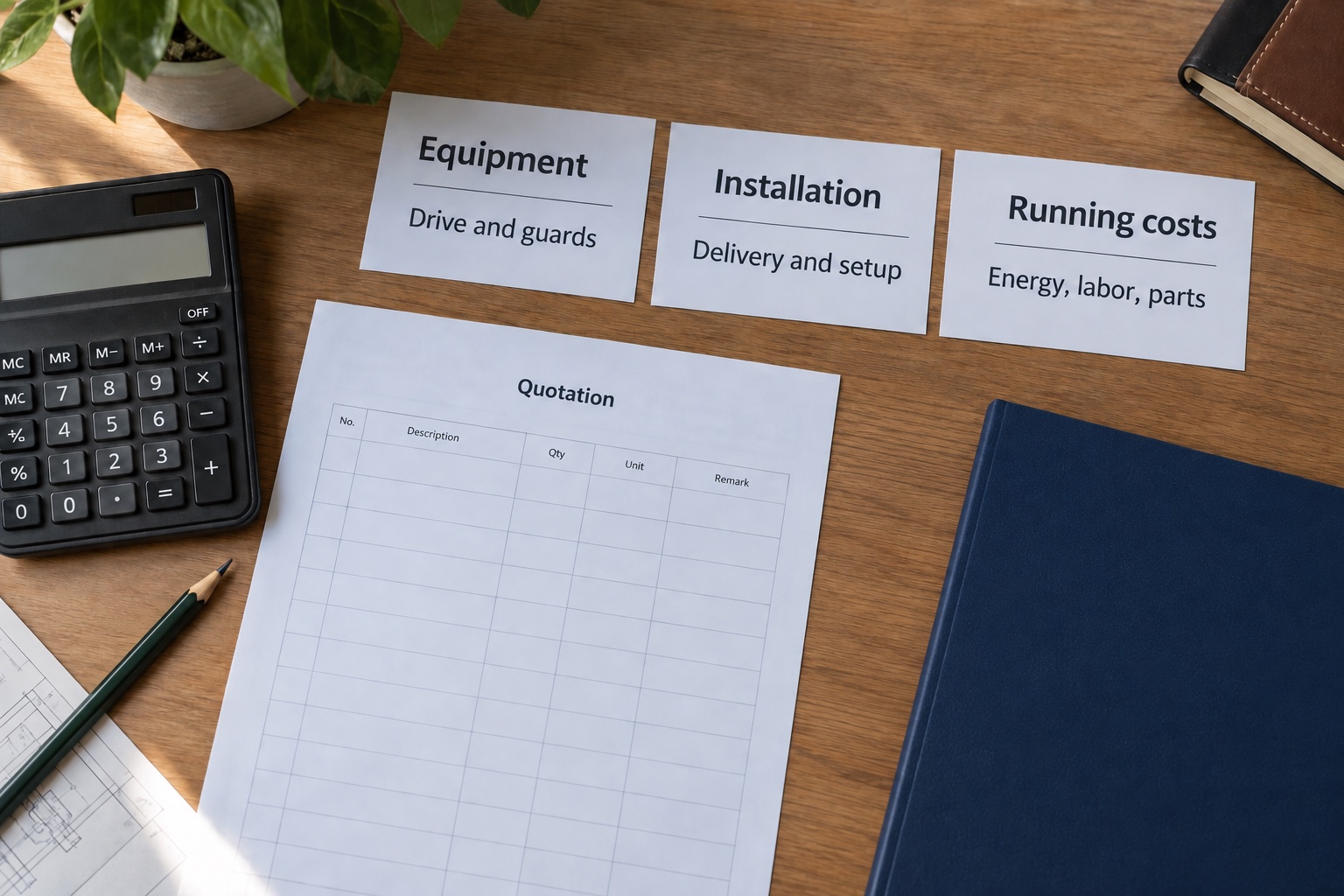
Which costs often sit outside a headline price?
Put every quotation on equal terms. Request an itemized offer with a clear delivery scope. Our farm comparison guide explains how trial evidence and complete quotations support a purchasing decision.
- Identify motor, controls, guards, and accessories included.
- Request freight and installation charges separately.
- Price an initial set of approved wear parts.
- Record ongoing labor and energy assumptions.
How should you estimate payback?
Use your own before-and-after labor records and measured operating costs. Do not count theoretical time savings as cash savings unless that time changes actual spending or useful farm work.
| Cost group | Input for your estimate |
|---|---|
| Upfront | Delivered equipment plus installation |
| Recurring | Energy, service, and replacement parts |
| Operational | Handling labor and interruption costs |
Key Takeaway: Compare complete costs over a stated working period. Uncertain assumptions should stay visible so a seemingly cheap offer cannot hide expensive omissions.
How do you specify your Chaff Cutter machine order?
Order a Chaff Cutter machine against a written farm brief, an agreed configuration, and a relevant demonstration. Include crop condition, cutting window, power arrangements, site access, and support requirements before finalizing your selection.
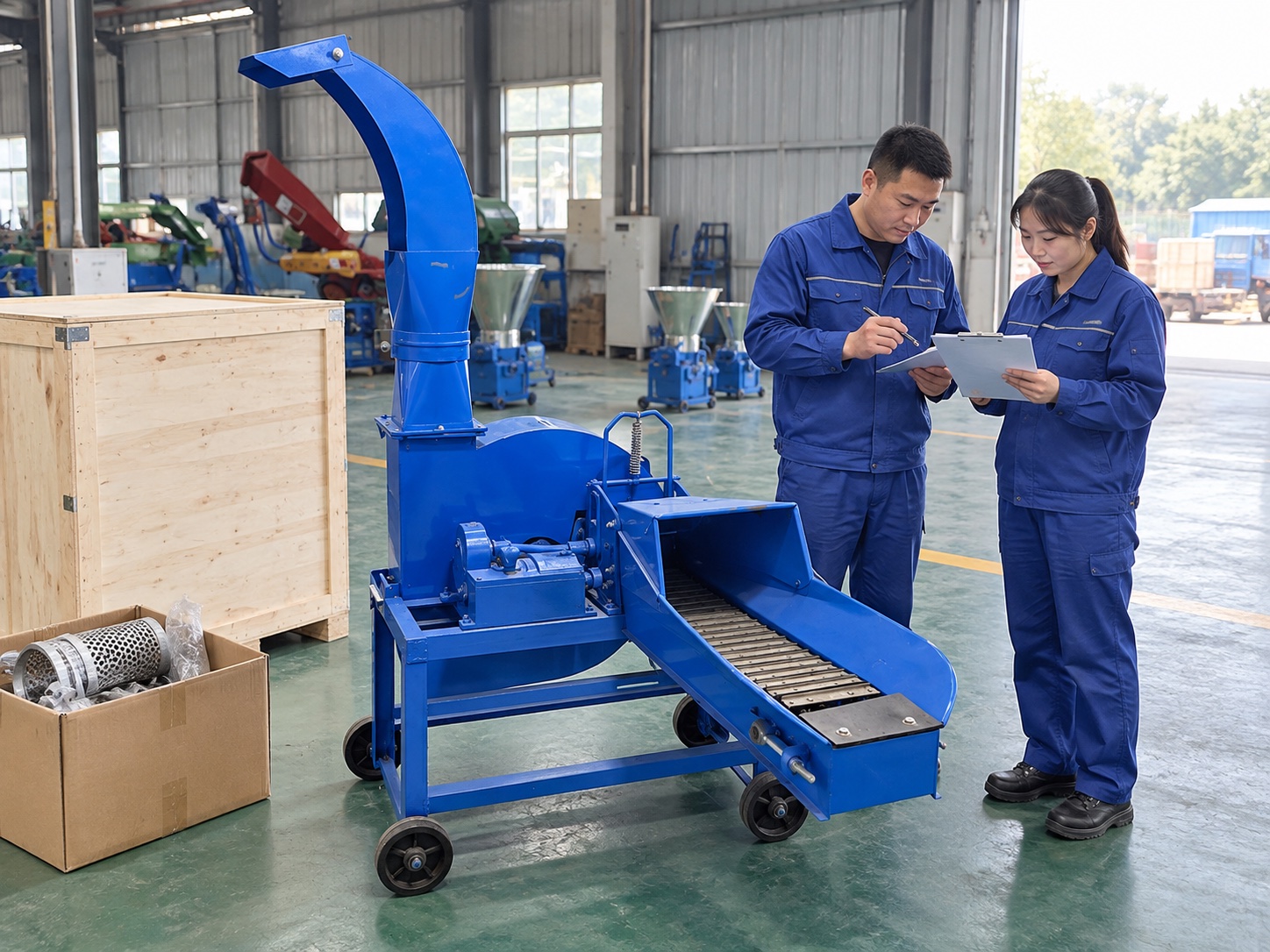
What should your supplier confirm in writing?
Bring your notes together now. Send a short brief with site photographs and representative forage details. Ask suppliers to identify any requirement their proposed configuration cannot meet.
- List usual and peak forage batches separately.
- State available cutting time and feeding deadlines.
- Attach power information and workspace measurements.
- Agree trial conditions, included parts, and support terms.
What does a workable buying decision look like?
| Farm requirement | Confirmation before ordering |
|---|---|
| Suitable feed output | Representative trial sample |
| Workable daily schedule | Demonstrated rate and handling plan |
| Ready installation | Confirmed power, space, and delivery scope |
| Continued operation | Manuals, parts details, and support contact |
Key Takeaway: You now have a way to connect batch size, crop suitability, workspace, and ownership cost. Resolve any gap before accepting a specification sheet as proof of farm suitability.
For help discussing a suitable configuration, contact us today with your forage details, daily quantity, and available power. We can review those requirements with you before preparing an equipment proposal. We believe farm machinery should fit your working day, with performance you can check.
What else should you know before choosing? (FAQ)
Your Chaff Cutter machine choice should remain conditional until essential details match your farm and your quotation. These common questions help you resolve uncertainties before paying for equipment.
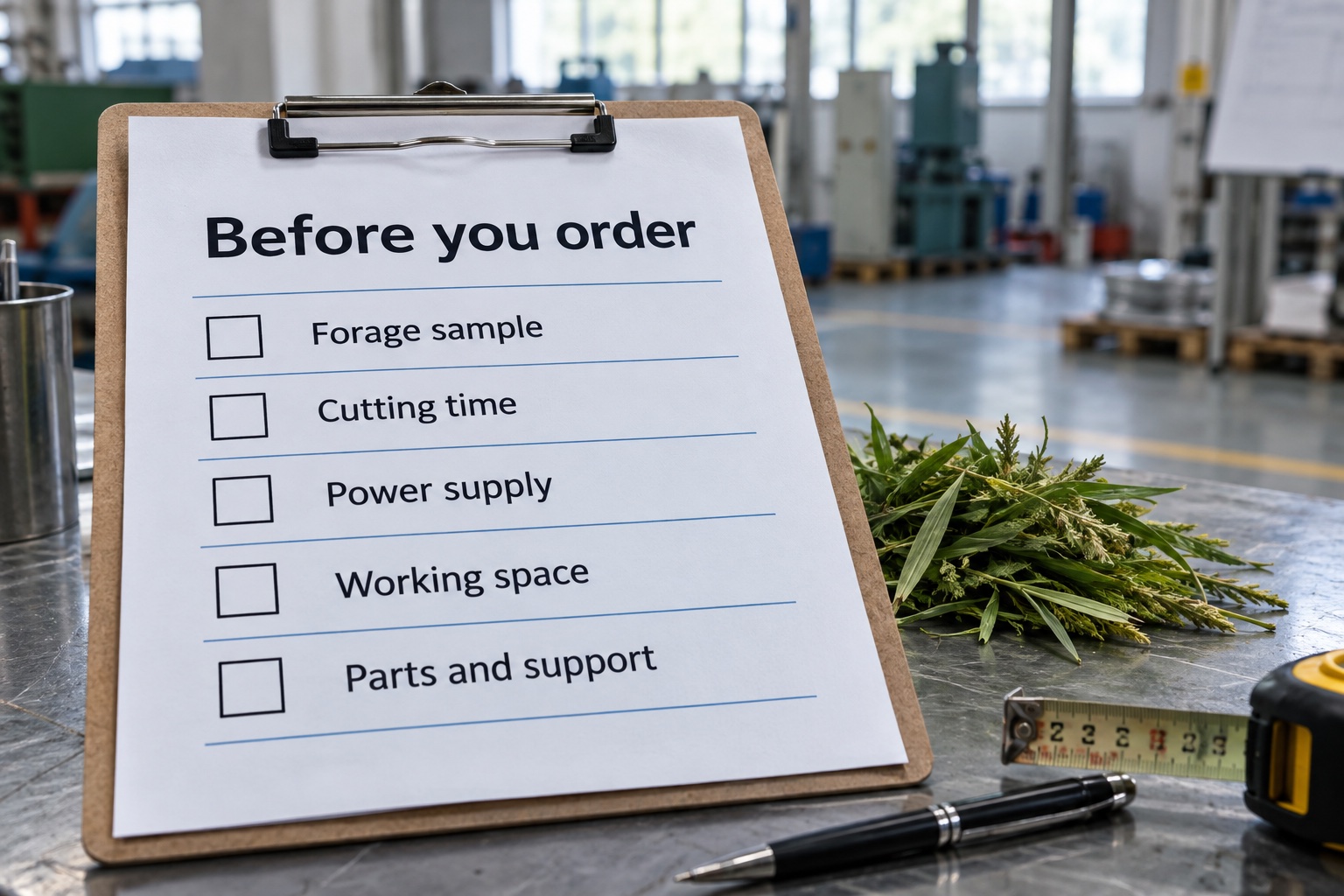
Which last checks deserve another look?
Keep these notes beside your quotation. A clear answer should refer to your crop, working conditions, and selected configuration.
- Confirm crop suitability and useful output.
- Verify power and installation requirements.
- Keep support and parts information accessible.
Q1: Can I size a machine from my herd count alone?
No; herd count alone leaves too much unknown. Use actual forage mass, ration needs, and available cutting time because feeding arrangements differ between farms.
Q2: What’s the best machine for a small farm?
A suitable compact model can work when trials confirm your crop and schedule requirements. Check collection space, electrical compatibility, and service access before treating a smaller frame as an automatic fit.
Q3: How do I know if quoted capacity suits my forage?
You need a representative trial or clearly documented comparable testing. Check forage condition, output quality, run duration, and interruptions behind any quoted figure.
Q4: Can I use one machine for grass and dry straw?
Possibly, if your selected configuration supports both materials and produces acceptable samples. Ask about adjustments, operating instructions, and any limits before ordering.
Q5: What’s the best way to prepare for farm expansion?
Plan from a realistic future workload and its timing. Compare modest reserve capacity with longer cutting hours or another workable feeding arrangement before paying for a larger machine.
