
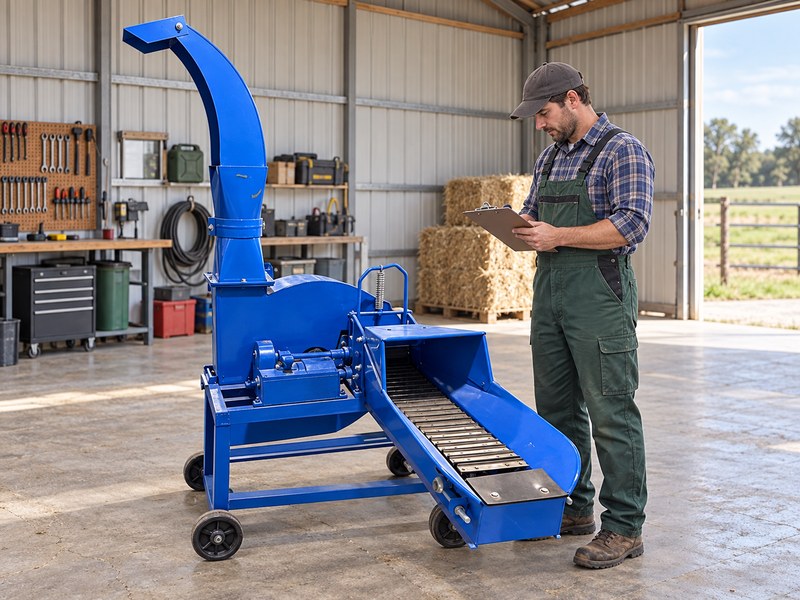
Forage Chopper Safety: How to Make Feeding Safer
Forage Chopper hazards sit close to everyday work: operators may push a hand toward the feed rollers, catch clothing in a belt, or approach a blade that keeps turning after power is cut. A published test of one modified fodder chopper found that protective barriers and stopping devices could reduce exposure, but its results do not prove that any machine is hazard free. Use this guide to inspect a machine, plan safer feeding, and decide when a retrofit needs an engineer’s review.
1. Where Does a Forage Chopper Put an Operator at Risk?
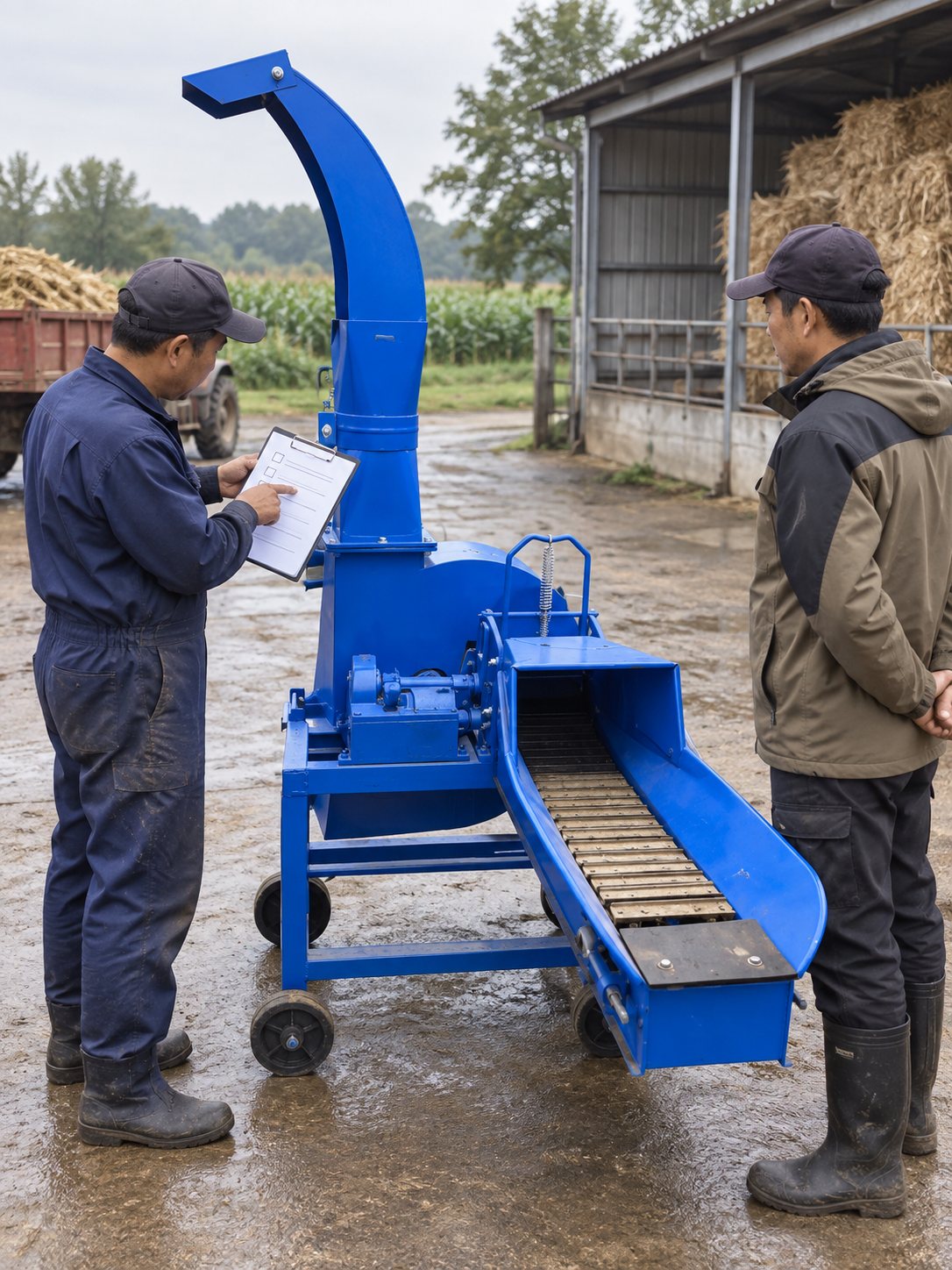
A Forage Chopper draws crop through a chute toward feed rollers and a cutting head. The operator may also approach belts, gears, a flywheel, discharge openings, and covers during cleaning. First map every place a person can reach moving parts in normal use and during a blockage; our harvest-method guide explains where chopping fits in the workflow.
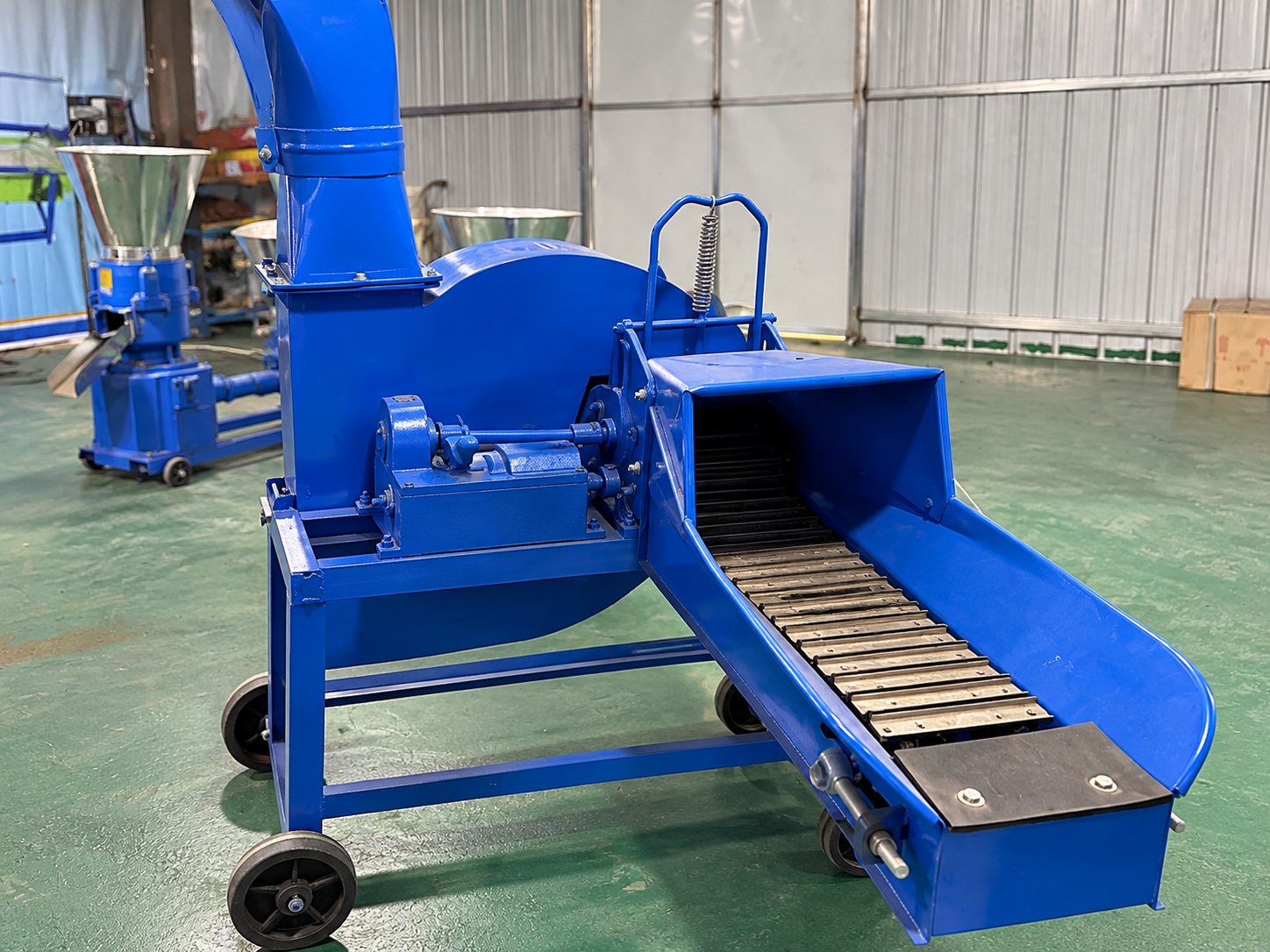
Map the Forage Chopper Feed Path
After isolating the machine, trace the route from the farmer’s hands to the rollers, blade and outlet. Include short stems and uneven bundles: these are the loads that tempt someone to reach farther into the chute. An open side or missing cover can create a separate access path even if the feed mouth seems long.
- Mark the normal operator position and any reachable openings.
- Check belts, pulleys, gears, shafts and flywheel from every side.
- Observe where bystanders could enter the work area.
Use the map to choose controls
The goal is to prevent contact before depending on a reaction to danger. Agricultural drawing-in and trapping guidance recommends designing intakes so moving parts cannot be reached or fitting fixed distance guards. Treat a stop control as an additional layer, never as permission to place a hand near a nip point.
| Hazard area | Typical exposure | First inspection question |
|---|---|---|
| Feed rollers and blade | Hand pulled inward | Can material be fed without reaching the rollers? |
| Drive transmission | Clothing or fingers caught | Are belts and gears fully covered? |
| Discharge and access doors | Contact with coasting parts | Is access blocked until motion ends? |
Key Takeaway: Inspect the whole machine, including cleaning and service positions, before choosing a guard.
2. How Should a Forage Chopper Feed Chute Protect Hands?
Forage Chopper feed safety starts with a chute that maintains a useful reach distance while allowing crop to enter. The research machine used a longer feed chute and a barrier in front of its rollers, but those dimensions describe only that design. A competent designer must check the reach path, crop range, and local requirements on the actual machine.
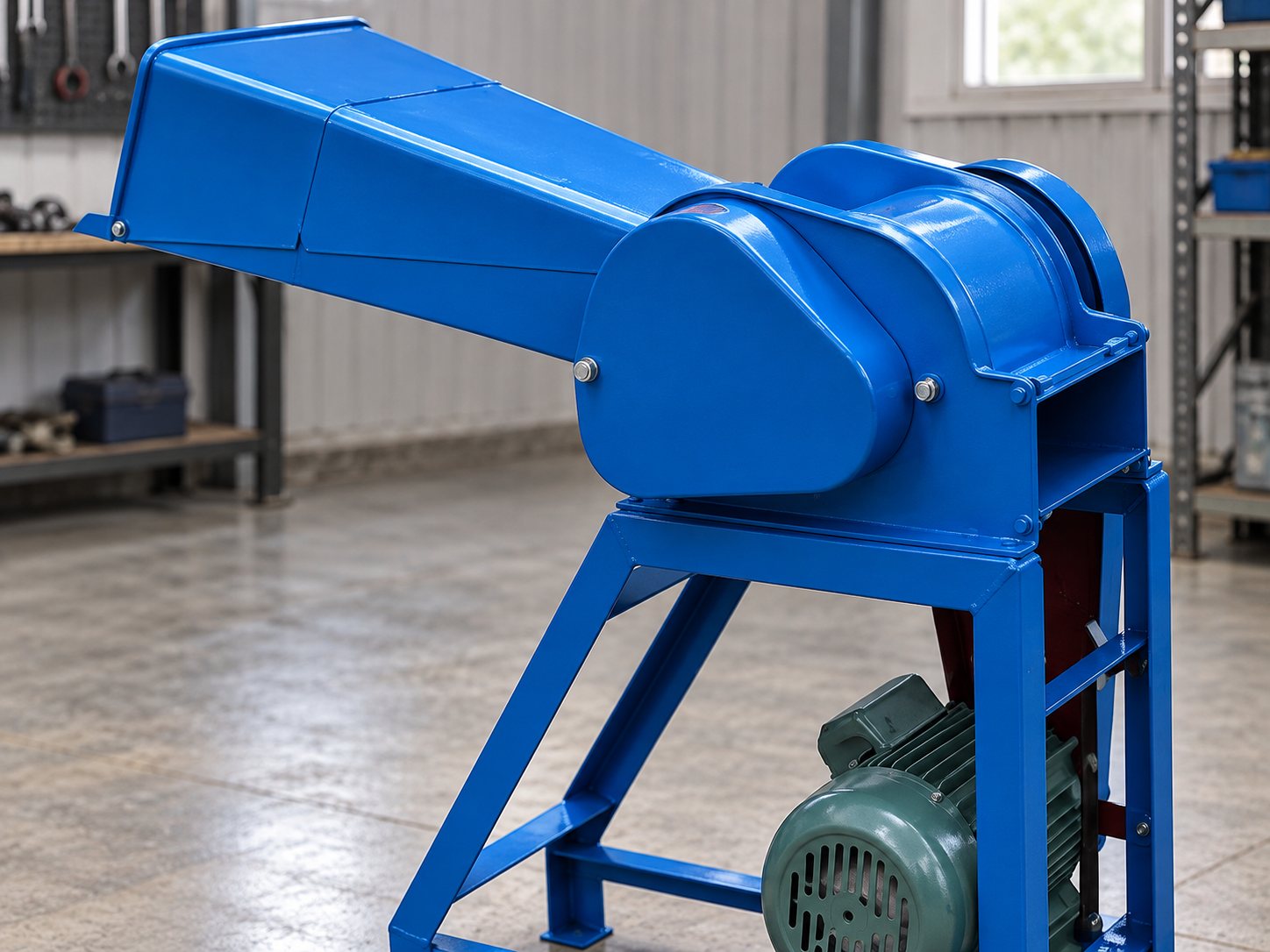
Keep feeding predictable
Lay stalks in the chute in manageable bundles and use the designed feed method. If short or wet forage slips, stop and correct the cause; never push it into the rollers with fingers. Compare the feed behavior of compact chaff cutters with larger conveyor-fed equipment before choosing a workflow.
- Keep chute sides and base sound, smooth and firmly attached.
- Remove loose debris only after isolation and full stop.
- Reject any setup that requires hands beyond the marked feed boundary.
Check the barrier as a system
A plate, grid or tunnel guard works only when its openings and position prevent reach to the danger point. An opening that looks small in a photograph may still allow contact at a different angle. Test access with approved methods, not a person reaching toward the cutter.
| Feed condition | Unsafe temptation | Safer response |
|---|---|---|
| Short stems | Push with fingers | Stop; use approved handling method |
| Wet crop bridge | Reach across chute | Isolate; clear with suitable tool |
| Uneven bundle | Hold near rollers | Resize bundle before feeding |
Key Takeaway: A usable feed chute must keep hands out of the roller path for the crops actually processed.
3. Which Guards Matter Around Blades, Belts, and Gears?
A Forage Chopper can expose people at the cutting head and at the power transmission. The paper described a front shield, blade guard, belt cover and gear cover on one modified machine. Their value depends on secure mounting, access resistance, maintenance and fit to the actual drive; compare the chaff cutter machine range for different layouts.
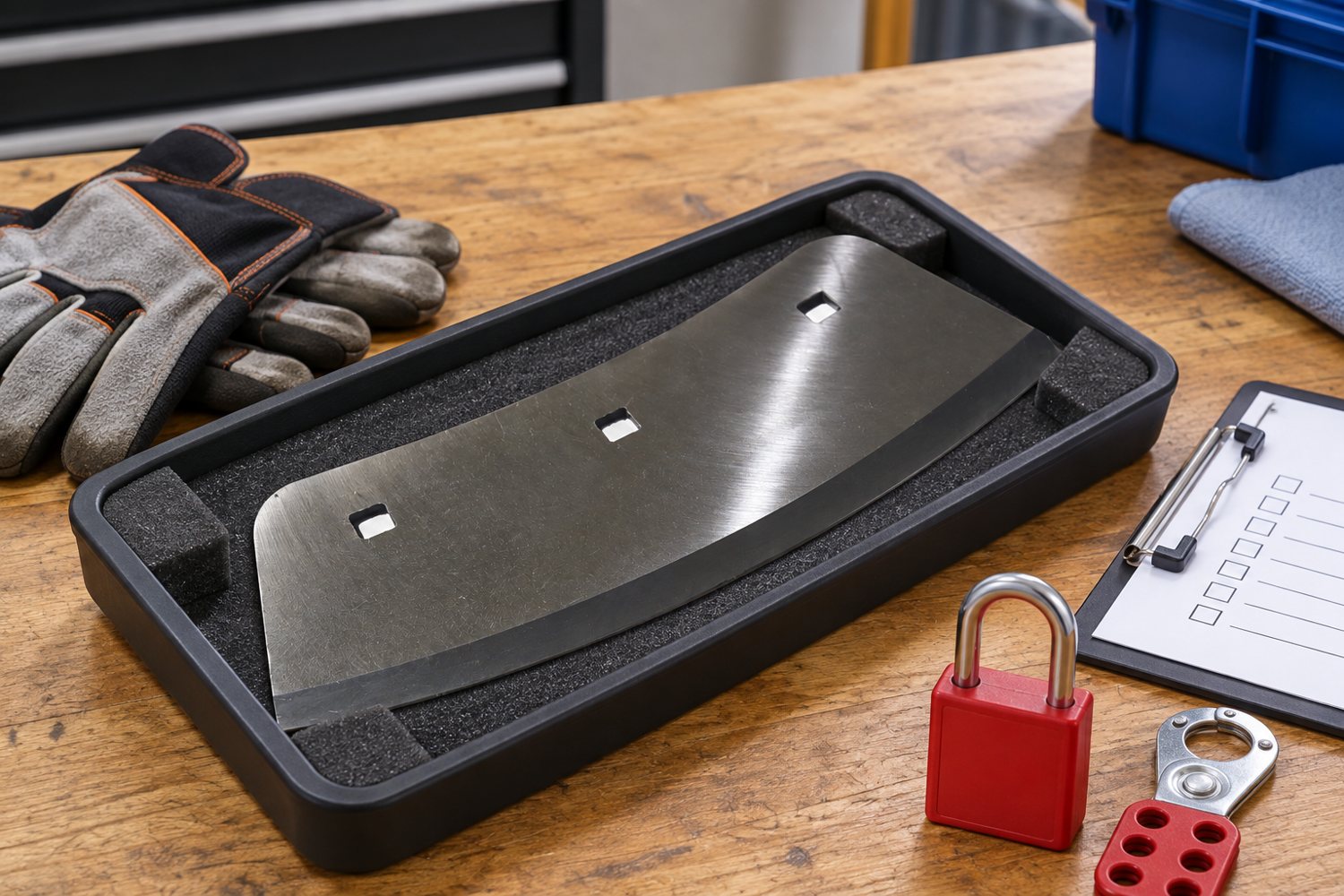
Inspect Forage Chopper Guards
Look for loose fasteners, gaps, corrosion and covers left open after service. A guard should prevent inadvertent contact and remain in place during use. Official agricultural guarding guidance recommends checking that guards are strong, securely attached, difficult to defeat and maintained.
- Inspect the feed opening, flywheel housing and discharge side.
- Verify that every drive cover is in place before starting.
- Stop use if a guard is missing or damaged.
Protect service access too
Even a disconnected drive may coast. Follow the machine’s instructions and verify the cutter has stopped before opening a cover. For electric chaff cutter machines, isolate the electrical supply before service; other drives require their own energy-control steps.
| Component | Guard function | Service check |
|---|---|---|
| Cutting head | Blocks blade contact | No access until motion ends |
| Belt and pulley | Blocks entanglement | Cover secure and aligned |
| Exposed gears | Blocks nip points | Cover intact and fastened |
Key Takeaway: Guard the blade and the transmission, then verify each cover after maintenance.
4. What Can a Forage Chopper Stop Switch Actually Do?
Forage Chopper stop devices can reduce motion after activation, but they do not replace guarding or isolation. In the research test, a warning roller triggered a limit switch to cut power to an electric motor. Cutting power did not make the feed mechanism stop instantly.
Distinguish stop from isolation
An accessible stop control is for immediate response. Electrical isolation, key removal or a documented lockout procedure is for cleaning and maintenance. Farm machinery cutting guidance also warns about flywheels and cutters that continue rotating behind removable guards.
- Identify the stop device before starting work.
- Verify its operation using the manufacturer’s safe test procedure.
- Wait for complete standstill before approaching an access point.
Validate any retrofit
An engineer must test the exact switch, actuator position and stopping behavior on the real machine. A simple power-off switch has no certified-interlock status without design evidence. Do not bypass a failed control to finish a load.
| Control | What it can do | What it cannot guarantee |
|---|---|---|
| Stop switch | Initiate shutdown | Instant blade standstill |
| Guard interlock | Stop or prevent motion on opening if designed correctly | Safe service without isolation |
| Lockable isolation | Prevent unexpected restart during service | Protection while machine runs |
Key Takeaway: A stopping device is one layer; moving parts can remain hazardous after it is pressed.
5. What Did the Fodder-Chopper Safety Study Actually Test?
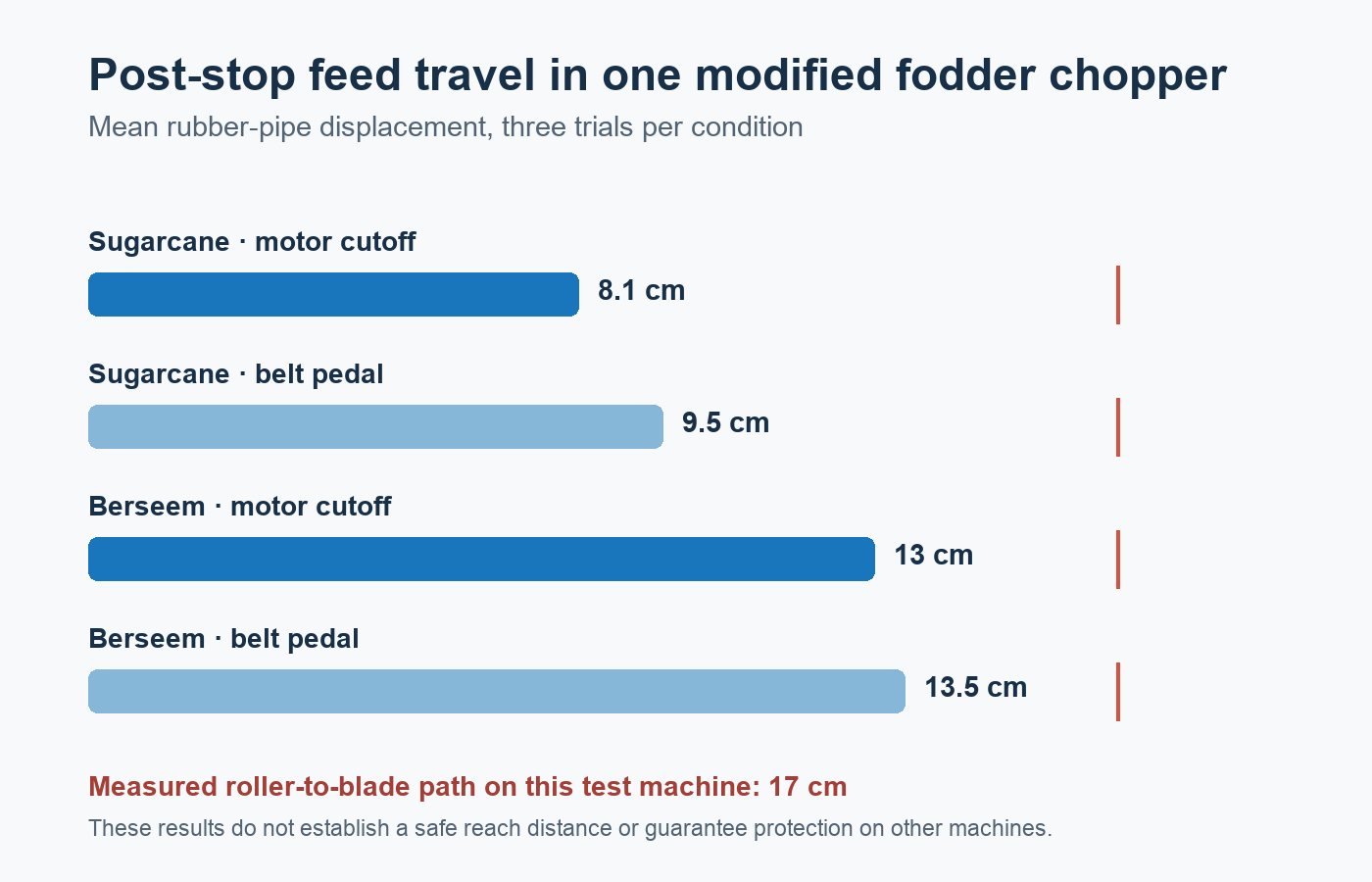
A Forage Chopper safety claim should name its test conditions. Researchers put a rubber pipe alongside crop in one modified machine, activated either a motor cutoff or belt-deflector pedal, and measured how far the pipe continued toward the blade. The feed-roller-to-blade distance on that machine was 17 cm; the basic cutting-process guide gives context for the mechanism.
Read Forage Chopper Test Results Narrowly
Across three runs per condition, the reported mean travel was 8.1 cm with sugarcane and 13 cm with Egyptian clover after motor cutoff. A belt-deflector pedal produced 9.5 cm and 13.5 cm, respectively. All four means were below that machine’s 17 cm path, but a pipe is not a human hand and four small test sets cannot establish universal protection.
- The crop, machine, speed and loading conditions affect run-down.
- Mean values can hide a longer individual run.
- The published mechanism is a prototype, not a retrofit specification.
Notice the report’s limits
The paper contains inconsistent crop labels in its discussion of the final data table, so the individual table headings and measured values should guide interpretation. Its reported efficiency figure also does not follow directly from the rounded capacity figures. Neither issue changes the practical lesson: verify stopping behavior locally and keep physical barriers in place.
| Test on one machine | Sugarcane mean travel | Egyptian clover mean travel |
|---|---|---|
| Motor cutoff | 8.1 cm | 13 cm |
| Belt-deflector pedal | 9.5 cm | 13.5 cm |
Key Takeaway: The trial supports further engineering assessment; it is not proof that any chopper is “hazard free.”
6. How Should a Forage Chopper Belt Pedal Be Evaluated?
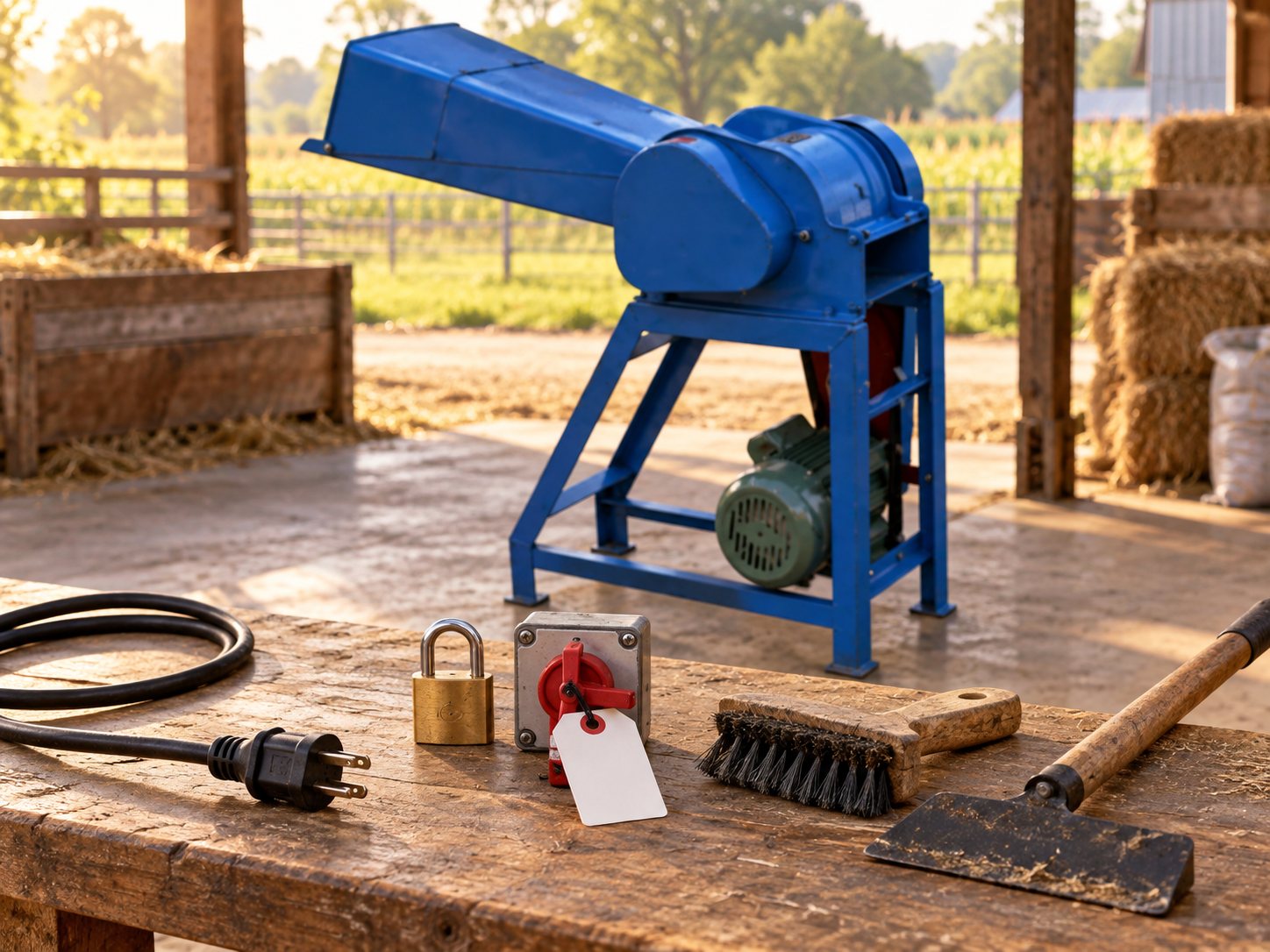
Forage Chopper drives may use belts, gears, electric motors or engines. The study’s spring-loaded pedal shifted a belt away from a flywheel to interrupt drive on one machine. This arrangement should be treated as a researched concept that needs specialist design review, not as a do-it-yourself installation guide.
Examine the full stopping sequence
A belt can disengage while the cutter continues to coast. A reviewer needs to assess actuation, belt travel, guarding around the moving belt, failure modes and restart behavior. Operators should not reach toward a belt or pulley to help it disengage.
- Keep the drive enclosure closed during operation.
- Check the pedal only by an approved test method.
- Record failed or delayed stops and remove the machine from service.
Compare alternatives by function
An industrial chaff cutter may need different controls from a small farm unit. Ask a qualified manufacturer or engineer for documented stopping tests, guard drawings and service instructions that match the machine and power source.
| Review item | Question for the supplier |
|---|---|
| Activation | Can an operator reach the control in time? |
| Run-down | How long do rollers and knives keep moving? |
| Restart | Can motion resume unexpectedly? |
Key Takeaway: Evaluate the complete drive and run-down behavior, not just whether a belt leaves a pulley.
7. How Do You Clear a Blockage Without Reaching In?
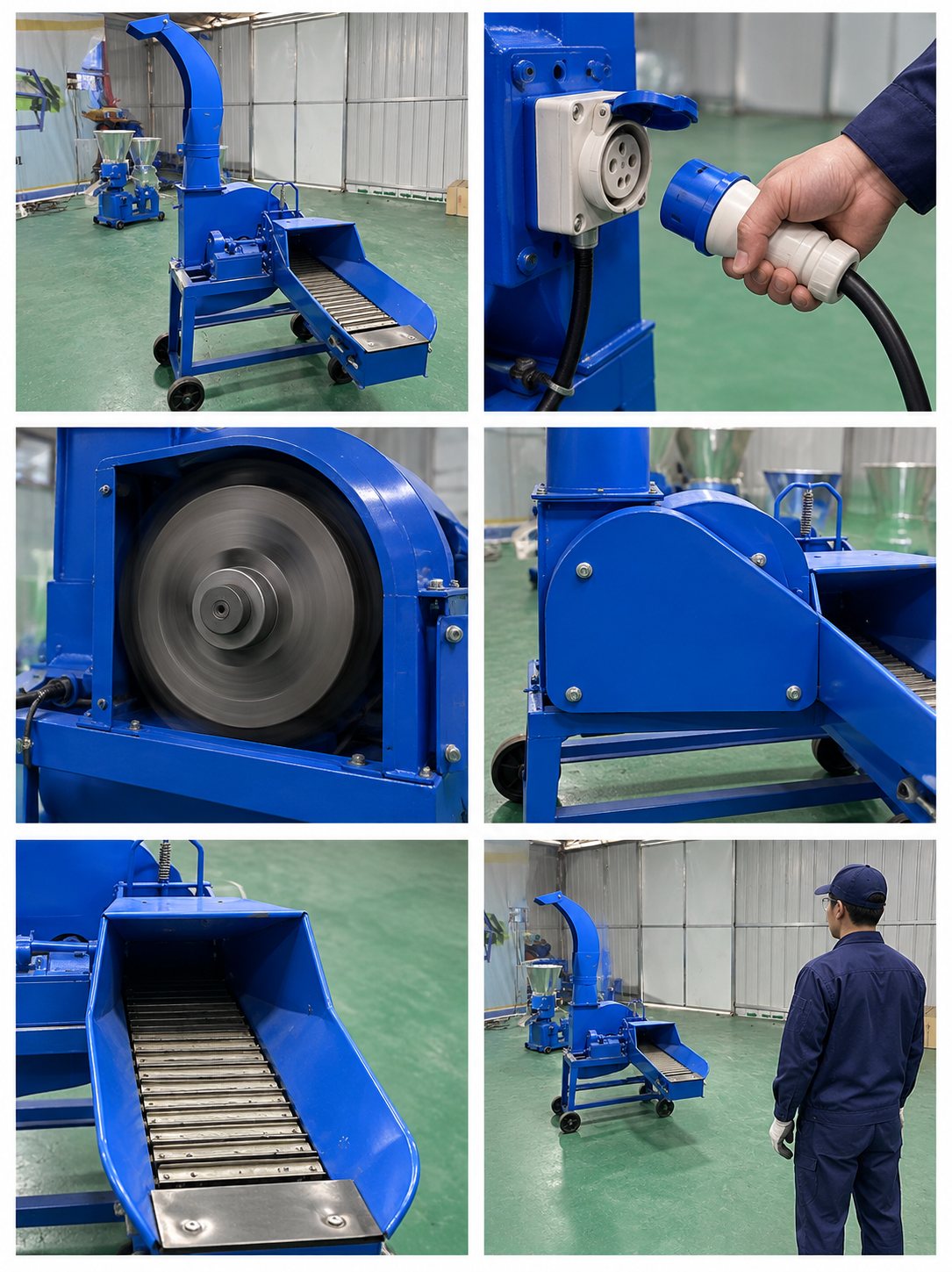
A Forage Chopper often blocks when a bundle is too large, wet or poorly aligned. A blocked machine can still hold stored motion or restart unexpectedly. Stop feeding, stop the drive, isolate all energy sources, wait for standstill, and follow the manufacturer’s clearing procedure; the four-blade cutting guide discusses why knife condition affects throughput.
Use a repeatable safe-stop sequence
Keep bystanders clear and identify who controls the restart. Use a suitable tool only after the machine has been secured and the access point is safe. Do not pull a blockage by hand through a feed mouth or discharge opening.
- Stop and isolate the drive using the machine procedure.
- Confirm all moving parts have fully stopped.
- Clear material with a suitable tool; refit guards before restart.
Prevent the next jam
Check knife condition, feed rate and crop preparation after a blockage. Use the chaff cutter buying guide to compare feed capacity against actual crop loads rather than forcing larger bundles through a small machine.
| Blockage cause | Corrective check | Do not do |
|---|---|---|
| Bundle too large | Reduce feed size | Force it by hand |
| Blunt knife | Service after isolation | Inspect while coasting |
| Poor chute flow | Clean and inspect chute | Bypass guard |
Key Takeaway: Clear jams only after isolation and full stop, then fix the cause before restarting.
8. What Should Forage Chopper Operators Check Before Each Shift?
Forage Chopper inspections should be short enough to repeat and detailed enough to catch a missing guard or failed stop. Use the manufacturer’s checklist as the controlling document. A farm-specific sheet can add crop, work-area and communication checks.
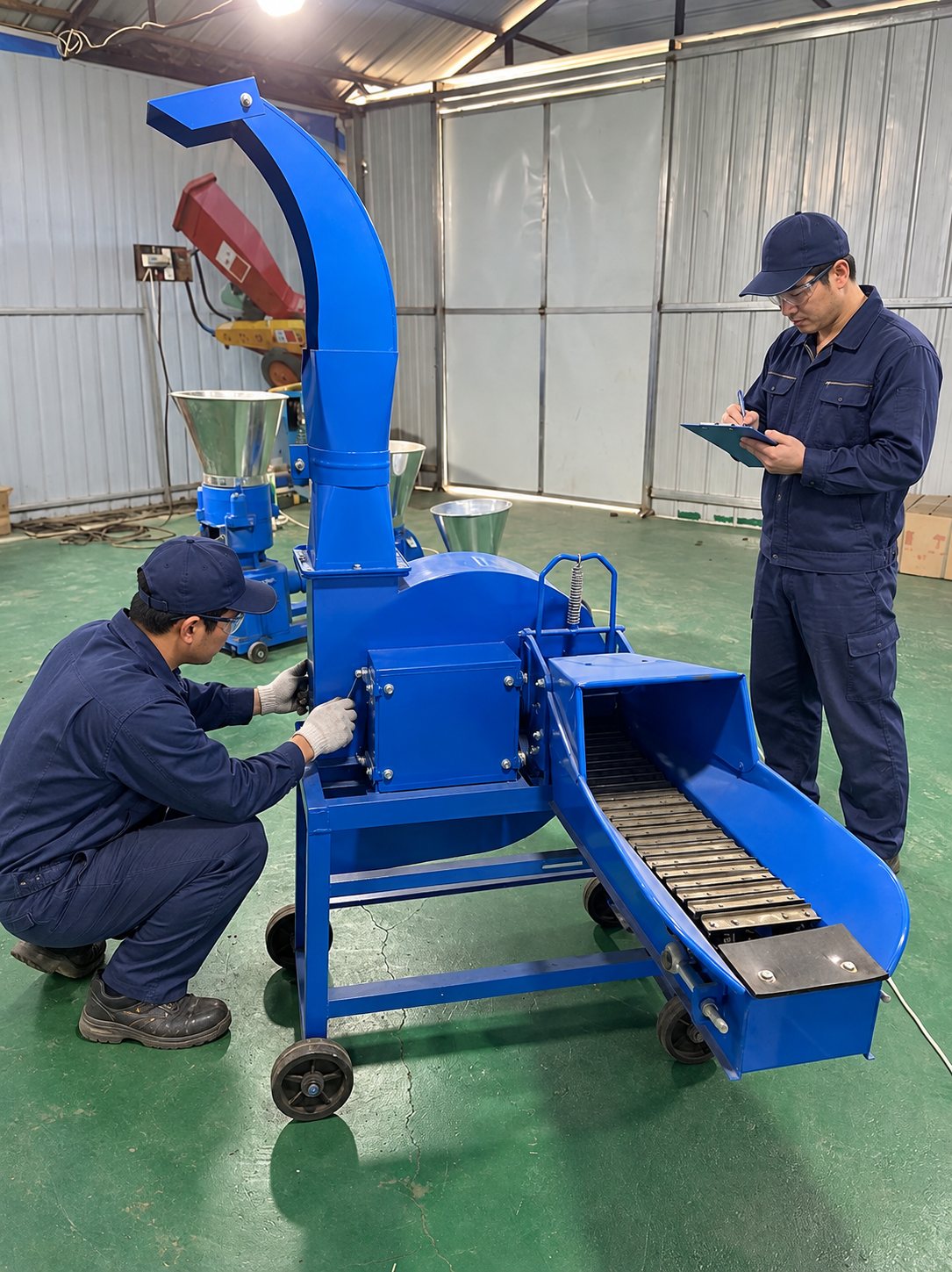
Walk around the machine
Start with guards, fasteners, cables, belt enclosure, feed chute and discharge direction. Check that the work zone is clear and that trained adults understand who may operate and restart the equipment. A loose sleeve, bag or rope can be drawn into moving parts.
- Confirm guards and covers are installed and secure.
- Check stop control and visible damage using approved procedures.
- Clear the area of people, tools and loose material.
Record defects, then act
Do not turn an inspection into a tick-box exercise. A failed stop, missing cover or unusual sound calls for shutdown and repair before use. If the machine is part of a silage harvesting workflow, make sure the feeder and collection team share the same stop signal.
| Before-start item | Acceptable condition | If not acceptable |
|---|---|---|
| Guards and chute | Secure and unobstructed | Stop; repair |
| Stop control | Passes prescribed test | Tag out machine |
| Work area | Clear with defined operator position | Reset area before start |
Key Takeaway: The checklist matters only when a failed item prevents operation.
9. When Does a Retrofit Need Professional Review?
A Forage Chopper retrofit changes more than one component. Extending a chute may change loading; fitting a switch may change wiring; adding a cover may affect inspection and cooling. Have a competent manufacturer or engineer review reach paths, stopping time, structural strength and maintenance access before use; forage harvester use cases show how the wider workflow affects equipment choice.
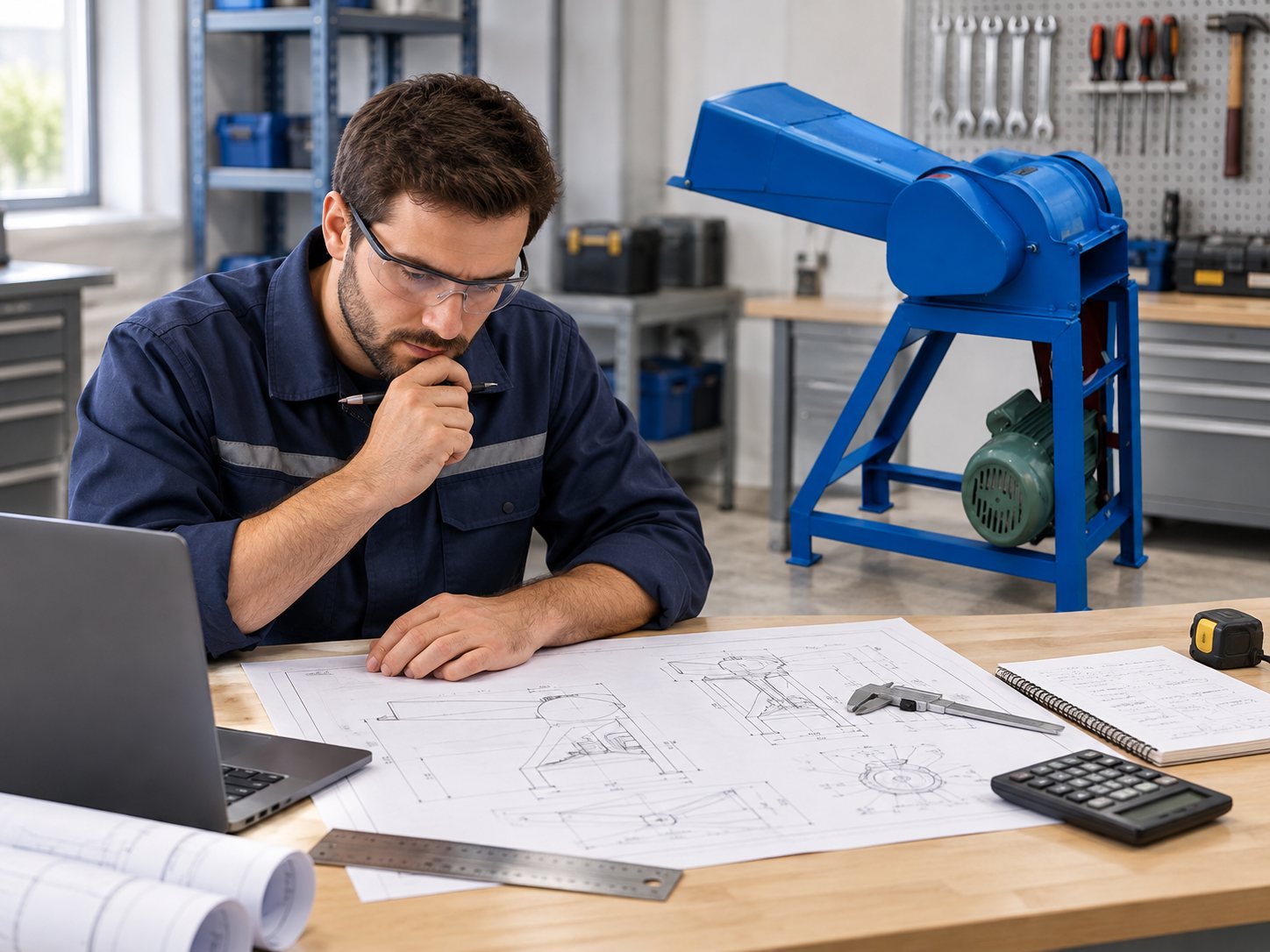
Review Forage Chopper Retrofit Evidence
Ask for drawings, test conditions, measured run-down time, instructions and a maintenance plan. A photograph of a guard or an unverified claim of “zero risk” is not enough. Consider the full machine type, whether stationary, motor-driven or tractor-powered.
- Document the starting configuration and proposed changes.
- Test every intended crop and relevant operating condition.
- Train users and update the machine instructions after approval.
Keep procurement claims precise
The published test reported a low-cost set of additions in its location and period, but that price cannot be transferred to another market or machine. Compare qualified suppliers on documented controls and service support, not only on purchase cost.
| Evidence to request | Why it matters |
|---|---|
| Guard drawing and reach assessment | Shows how contact is prevented |
| Stopping tests on actual machine | Captures run-down under load |
| Service and training instructions | Keeps the protection working |
Key Takeaway: A retrofit is complete only when its protection is tested, documented and maintainable.
10. What Are the Most Common Forage Chopper Safety Questions?
Forage Chopper safety depends on the full operating system: machine design, guard condition, crop handling and trained decisions. These answers address recurring questions after a first inspection.
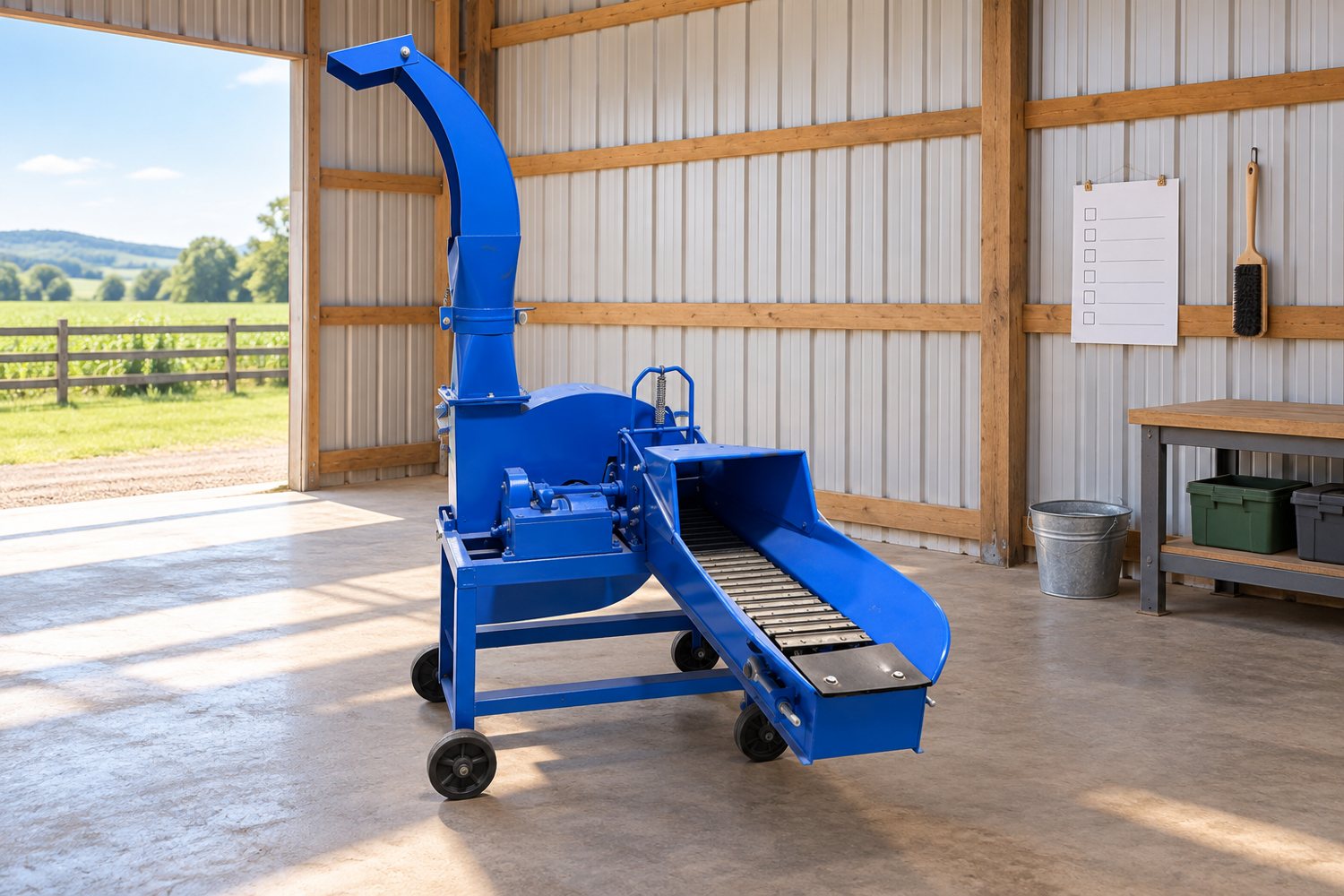
Practical answers for farm teams
- Use the machine manual to resolve any model-specific difference.
- Stop work when a protective device fails.
- Keep records of checks, repairs and training.
Q1: Does an emergency stop replace a feed guard?
No. A stop command starts shutdown, but the rollers and cutter may continue moving. Keep a physical barrier between the operator and the hazardous parts.
Q2: Can I use the study’s 17 cm distance as a universal rule?
No. That distance was measured on one research machine. Reach geometry and run-down need assessment on each actual design.
Q3: Is a belt-deflector pedal safe to add myself?
Do not treat the paper as an installation manual. A qualified engineer must assess the drive, guarding and restart behavior before a retrofit is used.
Q4: What if fodder will not enter the rollers?
Stop, isolate and wait for all motion to end. Clear the obstruction by the manufacturer’s procedure and correct the feed problem before restarting.
Q5: Is a chopper with these features hazard free?
No machine is made hazard free by a short test. Guards, effective stop functions, isolation, maintenance and operator training all remain necessary.
Conclusion
The strongest forage-chopper safety plan keeps hands away from the feed rollers and blades before a stop is needed. Use guards and sound feeding methods for normal work, isolate and wait for standstill during service, and test any new protective device on the real machine. The research trial shows why layered controls deserve attention; it does not replace a machine-specific risk assessment.
