
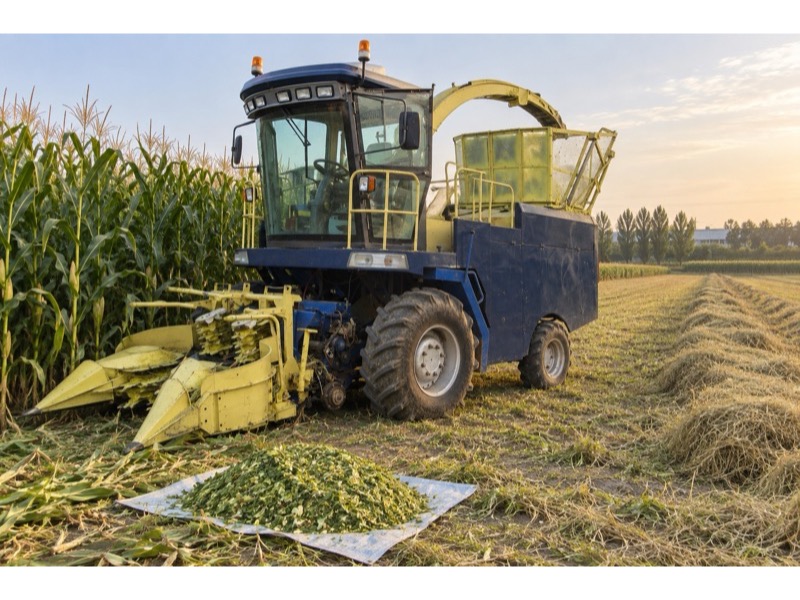
Forage Chopper: How to Make Better Harvest Decisions
Use a Forage Chopper when you need controlled chopped forage for silage, prompt fresh feeding, or coordinated transport to storage. Choose mowing and baling when dry hay is the intended product, and use residue equipment for non-feed crop management.
A wet crop can lose valuable time while workers wait for equipment designed around a different end product. Chopping every field also wastes effort when hay should cure before baling. Start with crop condition, storage, ration needs, and available weather before choosing a harvest method.
When should you use a Forage Chopper?
Use a Forage Chopper when forage must be collected and reduced into manageable particles before storage or prompt feeding. It makes the strongest case where chop consistency, field timing, and rapid crop movement affect your result.
Which goals point toward chopping?
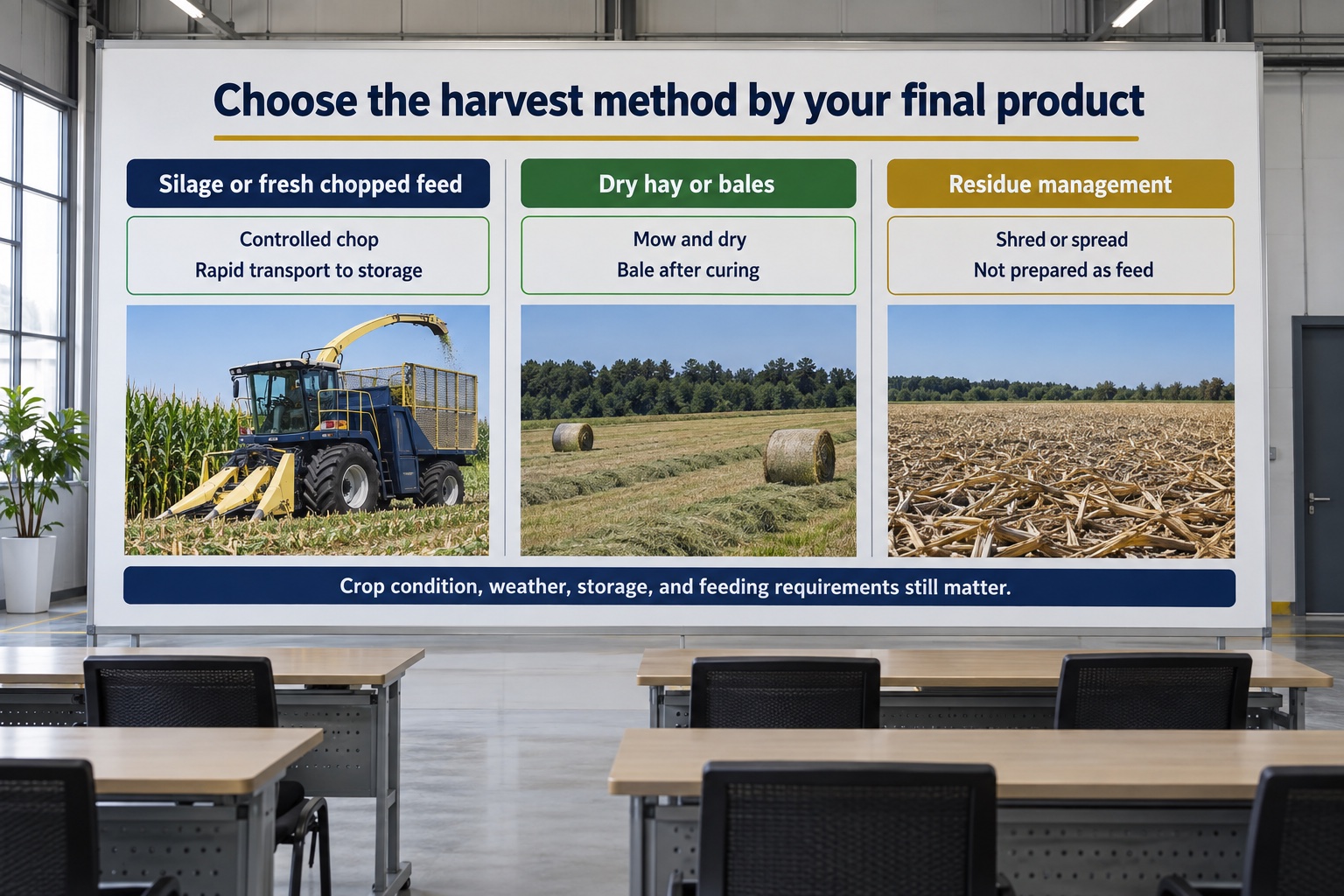
Begin with your finished feed or field product. Silage needs chopped forage that can move, spread, pack, and seal within a coordinated operation. Fresh chopped feed also needs prompt delivery before quality declines.
- Produce silage in a bunker, pile, bag, or approved structure.
- Prepare suitable forage for immediate livestock feeding.
- Move a high-moisture crop within a short harvest window.
- Supply consistent material for mixing and handling.
When does another harvest method fit better?
Dry hay still needs mowing, curing, and often baling before storage. Residue reduction may call for a shredder, while forage harvester applications focus on feed or silage rather than field cleanup alone.
| Intended product | Likely field pathway |
|---|---|
| Chopped silage feedstock | Harvest, chop, transport, pack, and seal |
| Dry hay | Mow, dry, rake, and bale or store loose |
| Crop residue management | Shred, spread, incorporate, or collect as specified |
Key Takeaway: Select equipment from your desired end product backward. A powerful chopper cannot turn poor timing or an unsuitable storage plan into good silage.
How does a Forage Chopper differ from mowing and baling?
A Forage Chopper reduces crop into shorter pieces during field collection or preparation. In contrast, a mower cuts plants and leaves them for later handling. A baler packages cured forage after enough drying for that storage method.
What happens after each field pass?
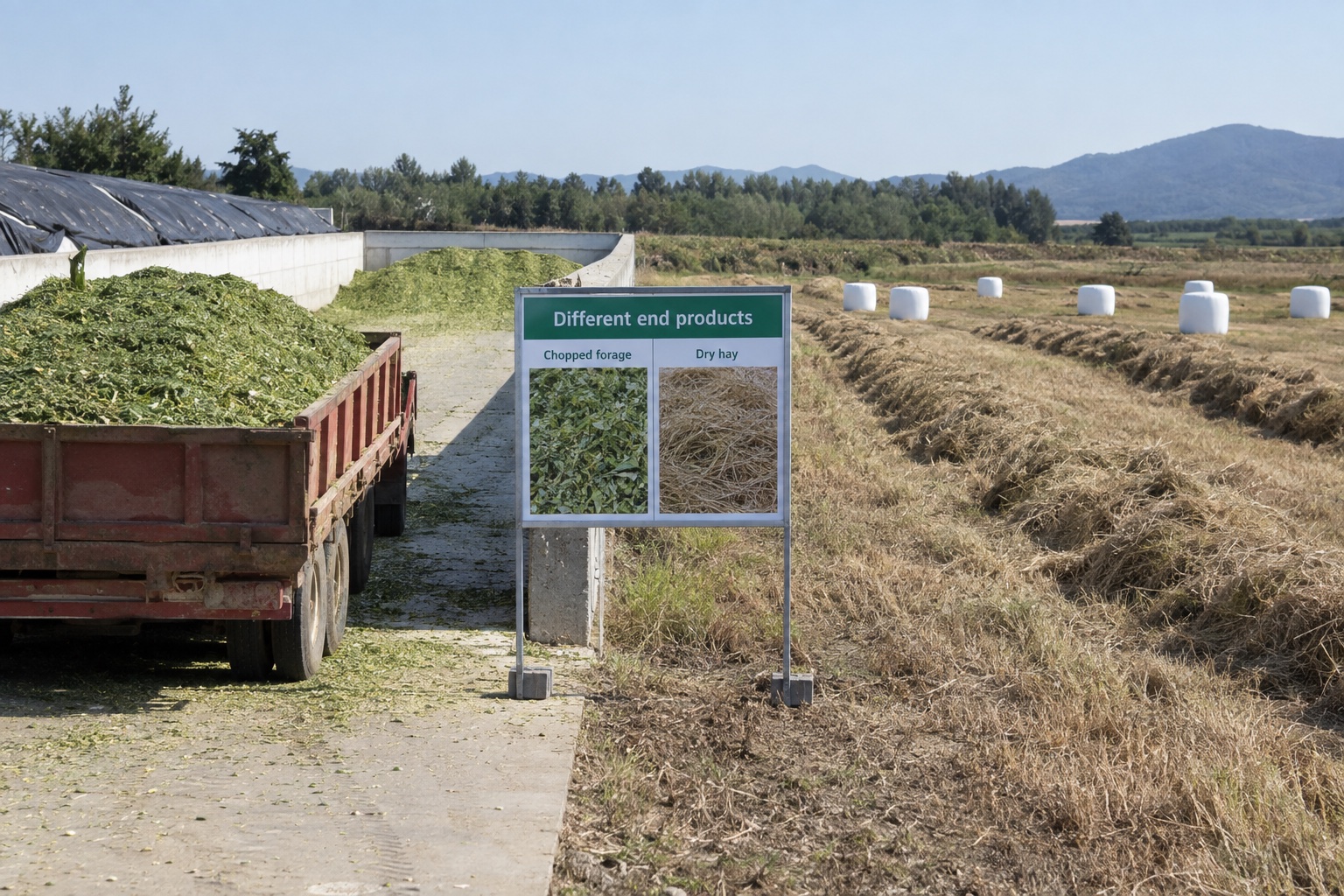
What happens next reveals the real difference. Chopped forage normally moves quickly toward storage or feeding. Mown material may remain exposed for wilting or hay curing before raking, baling, wrapping, or collection.
- Chopping creates material ready for the next handling stage.
- Mowing begins a drying or wilting pathway.
- Baling packages forage after crop preparation.
- Each pathway needs different labor and weather planning.
Can a stationary cutter replace field harvesting?
Only for crop already delivered to its intake. A basic chaff cutter can prepare forage in a yard, but it does not mow fields, collect swaths, or organize transport.
| Equipment | Primary action | Crop after one pass |
|---|---|---|
| Field chopper | Collects and chops forage | Chopped material ready for transfer |
| Mower | Cuts standing crop | Loose crop on field surface |
| Baler | Compresses prepared forage | Transportable bale |
| Stationary cutter | Chops delivered forage | Prepared feed near farmyard |
Key Takeaway: Compare complete work sequences rather than single machines. A cheaper individual tool can require more field passes, labor, drying time, or handling equipment.
Which crop conditions suit a Forage Chopper?
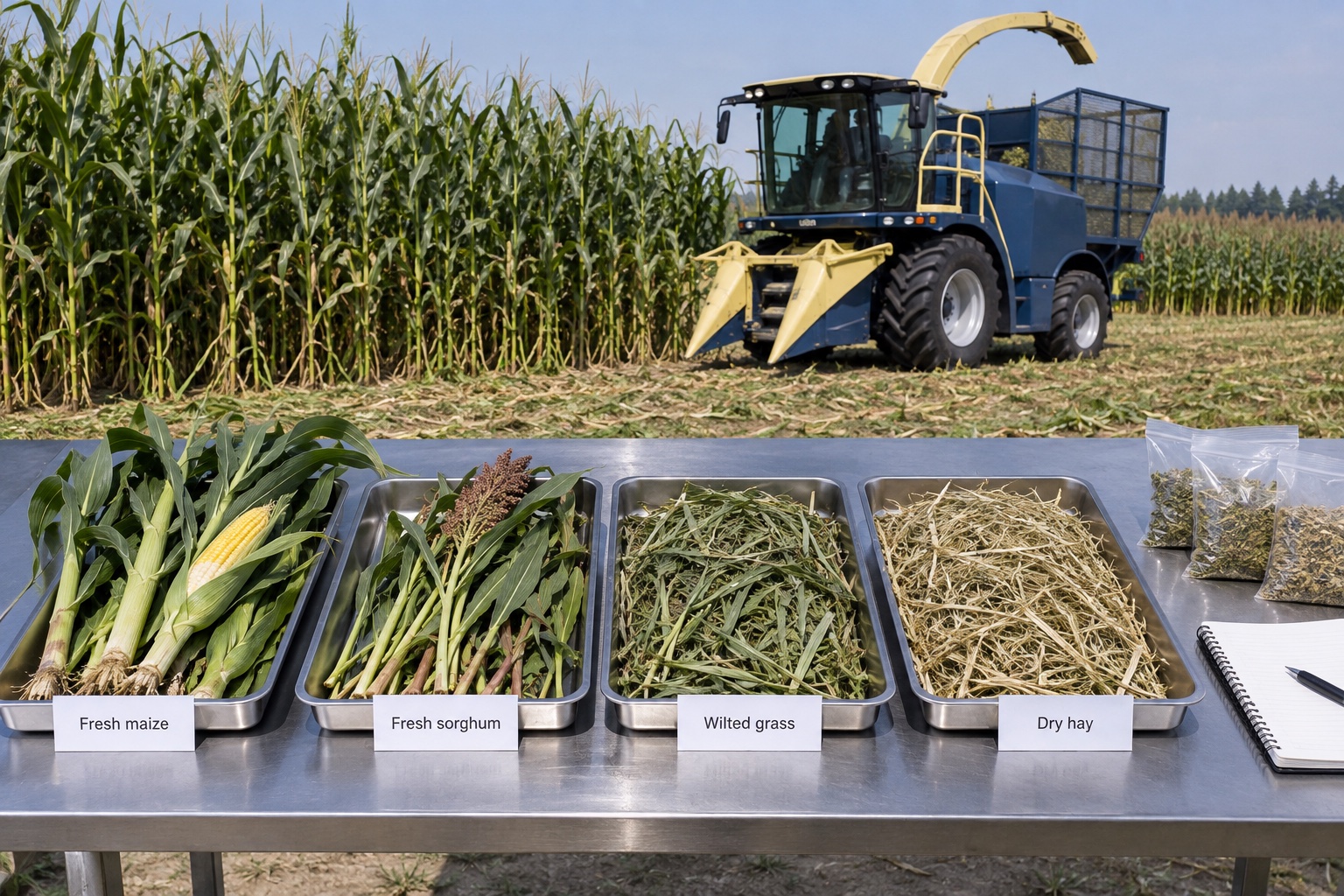
A Forage Chopper suits approved maize, sorghum, grass, alfalfa, and other forage when crop condition matches its header and processing path. Moisture, maturity, stem structure, and field presentation affect intake and chopped output.
Why does moisture change your decision?
Wet and dry crops behave differently. Moist forage may suit silage harvest after readiness checks, while hay needs further curing before safe dry storage. Extremely wet or dry material can create separate handling and preservation problems.
- Measure crop condition using a suitable method.
- Check maturity and stem strength across fields.
- Identify standing, lodged, or windrowed forage.
- Match each crop with an approved header or pickup.
Can one trial represent every crop?
No; tender grass does not demonstrate performance in mature sorghum or whole-plant maize. Request representative tests and document crop conditions, operating setup, interruptions, losses, and output samples.
| Crop condition | Decision question |
|---|---|
| High-moisture green crop | Are harvest timing and storage ready? |
| Wilted grass or alfalfa | Does pickup handle the prepared swath cleanly? |
| Dry forage or hay | Is chopping suitable for intended feed and dust control? |
Key Takeaway: Treat crop condition as part of your machine specification. Approval for one material or maturity stage cannot prove suitability for every field.
Why does Forage Chopper consistency matter for silage?
Forage Chopper consistency matters because particle distribution influences transport, spreading, packing, and later ration handling. Uniformity does not mean every piece must be identical, but large variation can complicate storage and feeding.
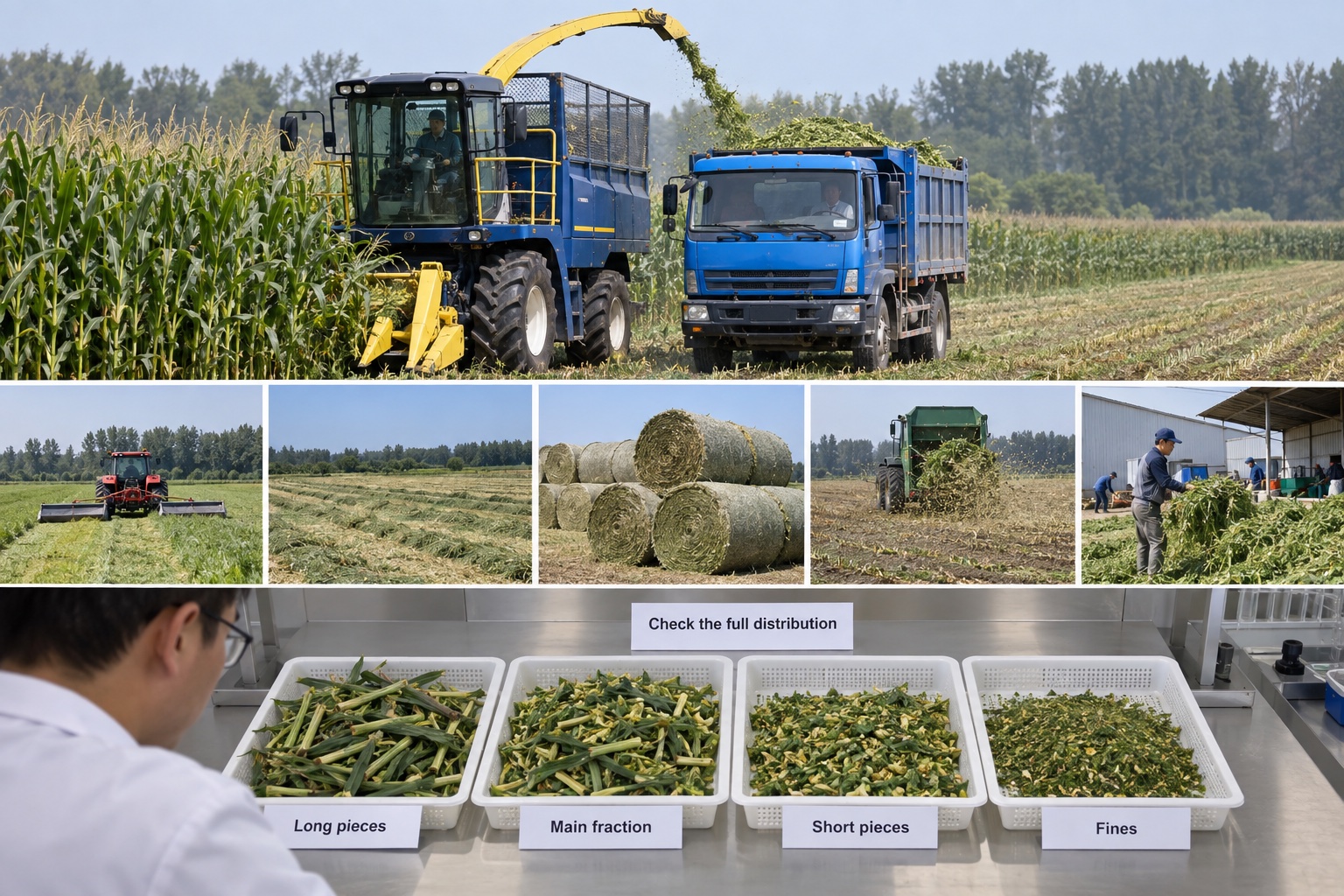
What should you inspect during harvest?
Check a distribution, not one neat handful. Separate representative samples into longer pieces, the main fraction, shorter material, and fines. Record crop condition and machine settings alongside each sample.
- Sample several loads or field areas.
- Look for remaining long stems and excessive fines.
- Inspect contamination and field losses separately.
- Recheck after crop density or moisture changes.
Does consistent chopping guarantee good silage?
No; packing, sealing, storage management, and crop chemistry still matter. Our silage-making guide explains why a suitable chop must enter a complete preservation process.
| Output observation | Question to investigate |
|---|---|
| Too many long pieces | Intake, knife condition, settings, or crop flow |
| Excessive fines | Processing intensity and feeding requirement |
| Wide variation between loads | Crop changes, wear, speed, or operator setup |
Key Takeaway: Consistency gives your storage crew a more predictable material. Use samples to guide adjustments instead of assuming one control setting remains correct all day.
How should storage affect your Forage Chopper choice?
Your Forage Chopper choice should fit the storage structure, packing resources, and rate at which crop can be sealed. Bunkers, drive-over piles, bags, and upright systems may need different handling and particle targets.
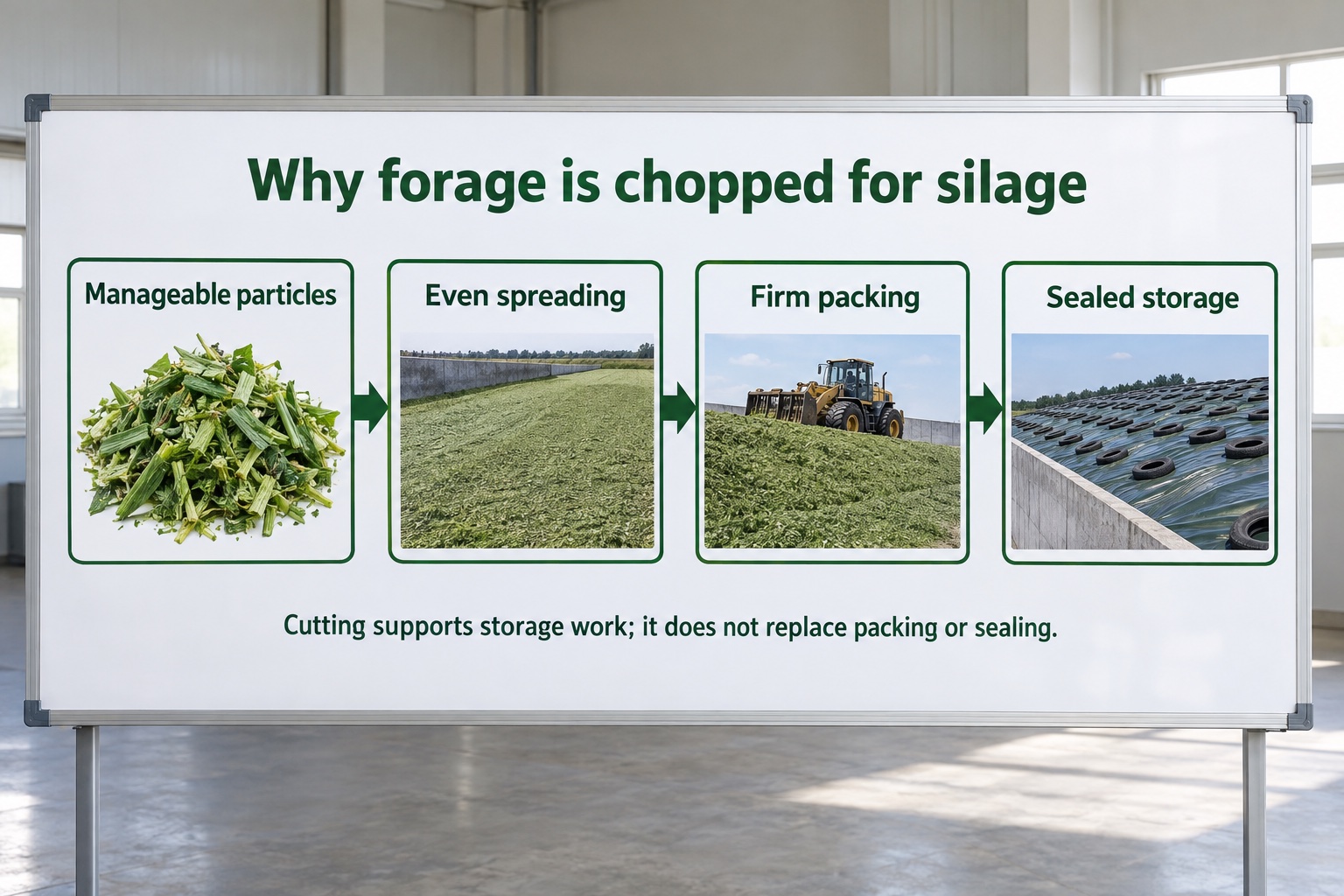
Why does storage design change chop requirements?
Air removal sets practical limits. Material must spread and compact within the chosen structure. Longer pieces can hinder packing, while excessive fines may weaken useful fiber or create handling problems.
- Confirm the target with nutrition and storage advisers.
- Match harvested output with packing capacity.
- Keep delivered layers manageable and continuous.
- Seal the structure using an approved method.
Can shorter particles fix slow packing?
No; storage equipment, labor, crop delivery, and surface management can remain limiting. Penn State silage guidance treats chop length as one part of oxygen exclusion and feed management.
| Storage method | Operational question |
|---|---|
| Bunker or drive-over pile | Can crop be spread and packed as fast as delivered? |
| Silage bag | Does output support consistent filling and density? |
| Upright structure | Do particle and unloading requirements match the system? |
Key Takeaway: Choose machine output around storage reality. Extra field capacity can raise losses when packing and sealing cannot keep pace.
When does a Forage Chopper support feeding and TMR work?
A Forage Chopper supports feeding and total mixed ration work when its output matches the physical ration specified for your livestock. Chopping can improve mixing and reduce very long selectable pieces, but it does not balance nutrients.
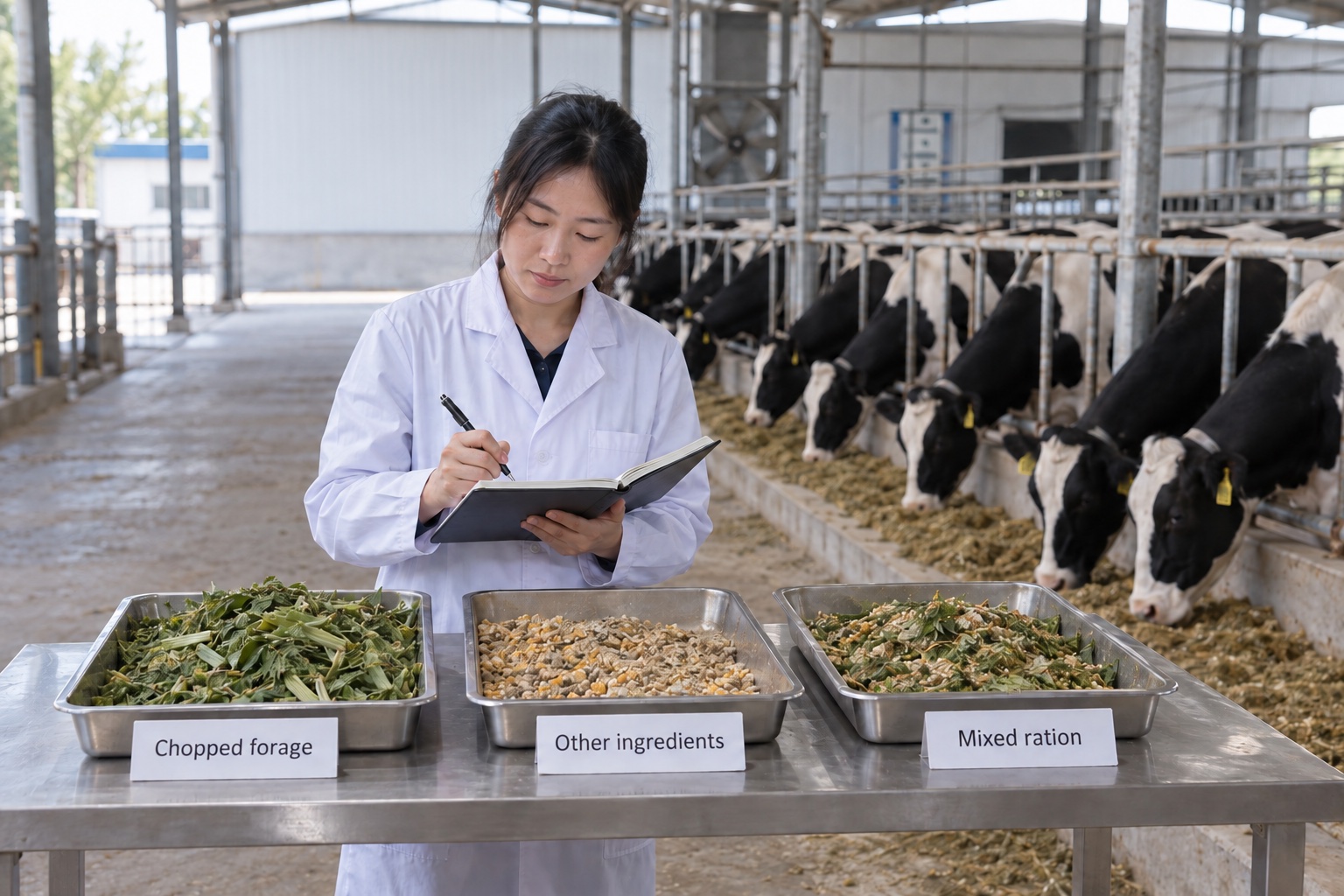
What does the mixer need from harvested forage?
Review the whole ration before changing cut length. Forage particle distribution affects mixing, sorting, rumination, and bunk behavior. Different animal groups can need different diet specifications.
- Agree physical targets with a qualified feeding adviser.
- Inspect forage before and after mixing.
- Watch for sorting and uneven feed distribution.
- Keep crop quality separate from particle size alone.
Can chopping replace ration formulation?
No; processing changes physical form rather than protein, mineral, or energy balance. A practical farm feeding plan should connect forage output, mixing, labor, delivery, and animal needs.
| Feeding concern | Chopper-related check |
|---|---|
| Mixing consistency | Particle distribution through a complete batch |
| Feed sorting | Long stems and changing bunk refusals |
| Effective fiber | Adviser-approved ration and forage targets |
Key Takeaway: Use chopping to deliver a defined physical ingredient. Treat ration formulation and animal response as separate professional decisions.
How do field capacity and conditions affect Forage Chopper use?
Field capacity determines whether a Forage Chopper can finish work within your crop and weather window. Effective capacity also depends on field shape, crop flow, turns, transport, interruptions, and storage handling.
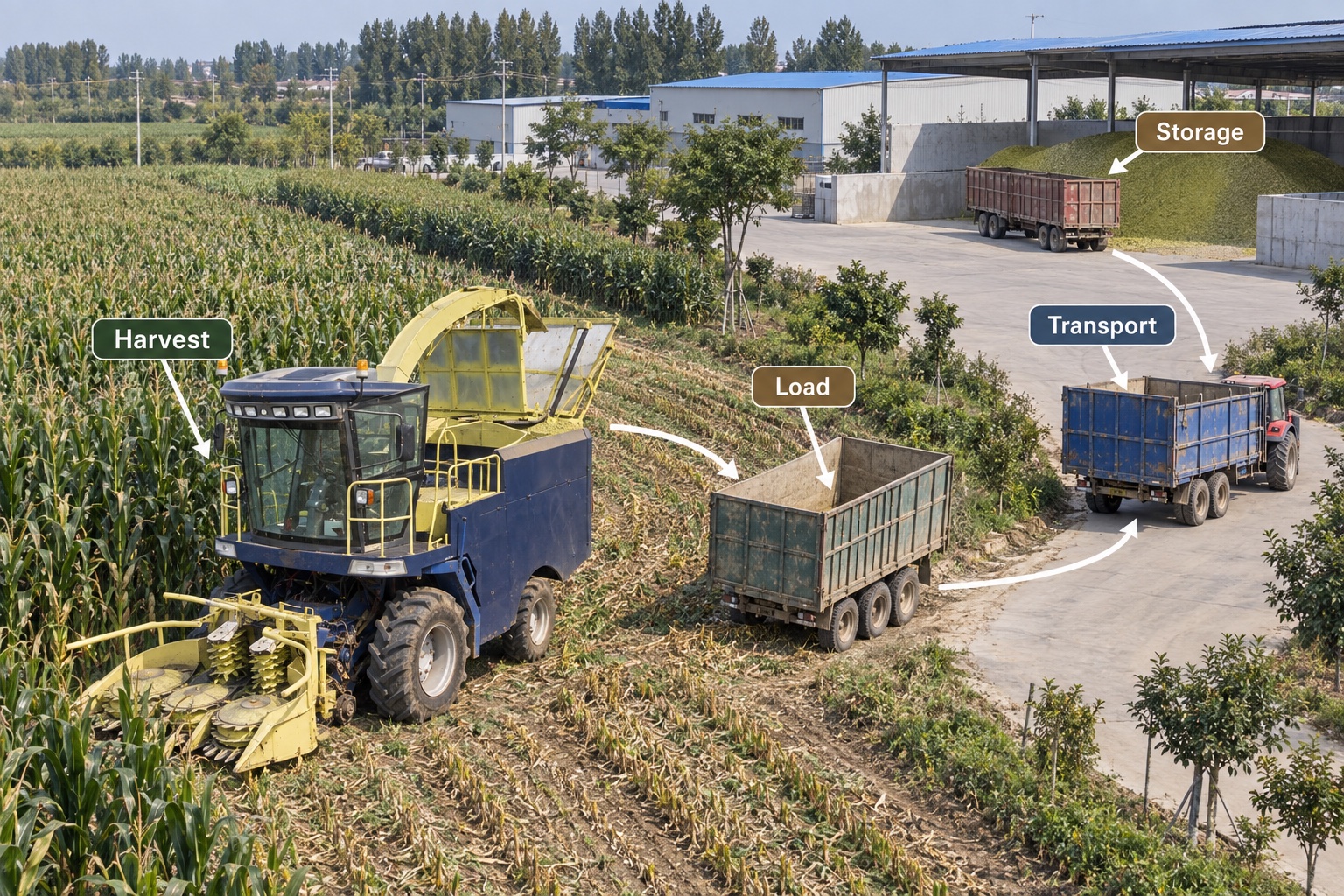
What should you time during a trial?
Measure completed work across normal delays. Record harvested area or delivered crop mass against actual field time. Keep transport waiting, blockages, turns, and output-quality checks visible.
- Use reliable field-area and crop-mass records.
- Separate active processing from waiting time.
- Note crop density, terrain, and headland turns.
- Compare usable output rather than raw speed alone.
When does traditional equipment remain practical?
Small annual workloads, generous hay-curing windows, easy contractor access, or existing baling systems can favor traditional methods. Ownership should solve a recurring bottleneck rather than add idle equipment.
| Farm condition | Method worth comparing |
|---|---|
| Tight silage harvest window | Dedicated or hired chopping capacity |
| Dry hay with suitable weather | Mowing, curing, and baling system |
| Limited seasonal area | Contractor, shared machine, or existing equipment |
Key Takeaway: Base capacity on completed, useful work. A machine that outruns trailers or storage may add waiting without improving harvested feed.
What costs and support should a Forage Chopper buyer compare?
A Forage Chopper buyer should compare installation, power or fuel, labor, wear parts, maintenance, transport, and ownership alongside purchase price. Service response matters because forage harvest windows rarely wait for delayed parts.
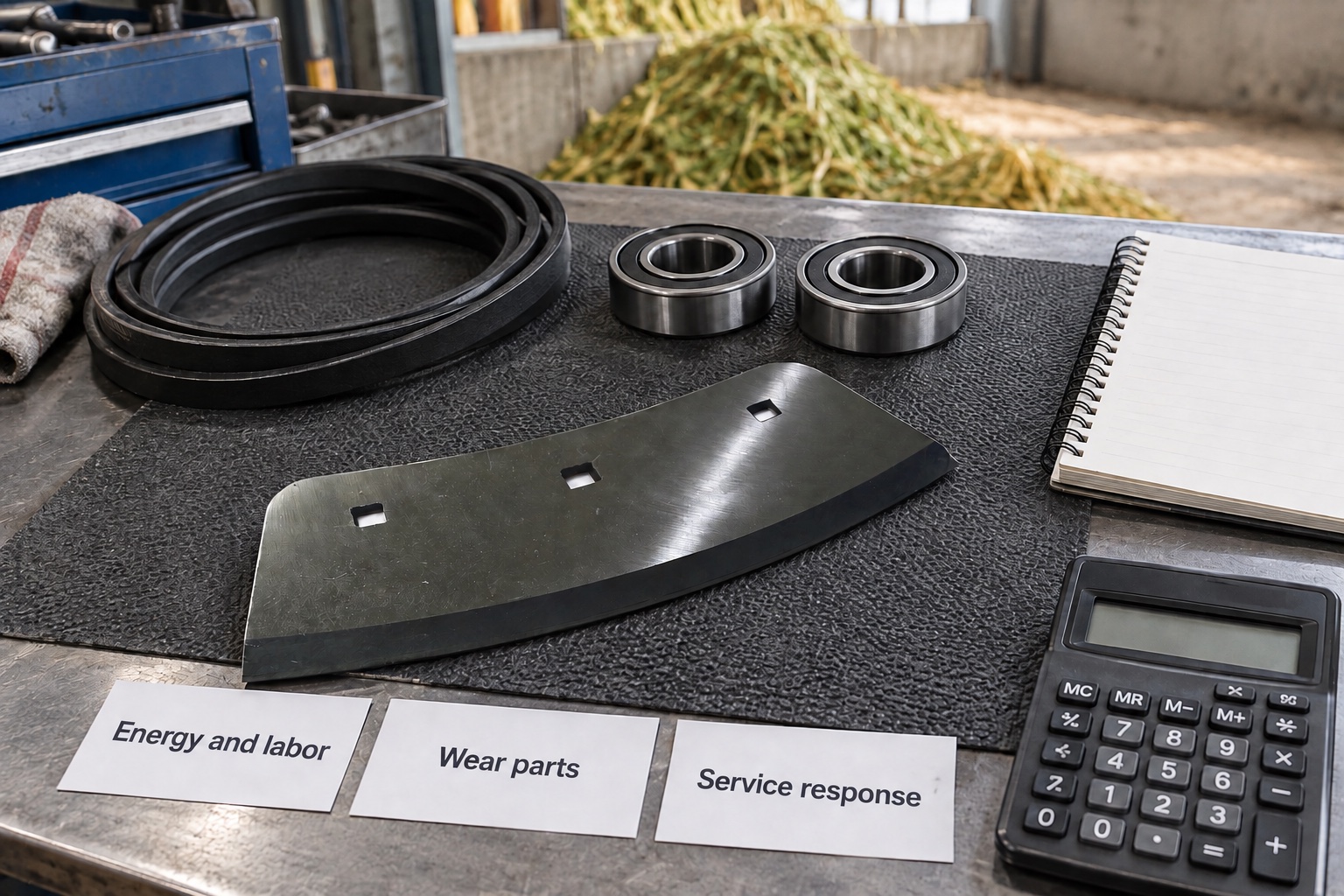
Which costs sit beyond the quotation headline?
Put every offer on the same basis. Identify included headers, drives, guards, controls, accessories, commissioning, and training. Add realistic energy, labor, servicing, and parts assumptions.
- Request an itemized delivered configuration.
- Price applicable wear and service parts.
- Record expected working hours and travel.
- Include transport and storage labor affected by capacity.
What support should be confirmed before purchase?
Ask who provides commissioning, operator instruction, troubleshooting, parts identification, and repairs. Obtain manuals plus current contact details for the exact configuration offered.
| Ownership area | Evidence to request |
|---|---|
| Running cost | Measured consumption under relevant work |
| Maintenance | Model-specific schedule and parts list |
| Downtime response | Named service process and parts availability |
| Operator readiness | Instructions and practical training |
Key Takeaway: A low purchase price cannot protect a short harvest window. Compare complete ownership and service evidence before choosing between machines or methods.
How should you choose between a Forage Chopper and other methods?
Choose a Forage Chopper when silage or fresh chopped forage, crop window, storage, feeding, and economics support it. Choose mowing, baling, hired work, or stationary preparation when those pathways fit your end product better.
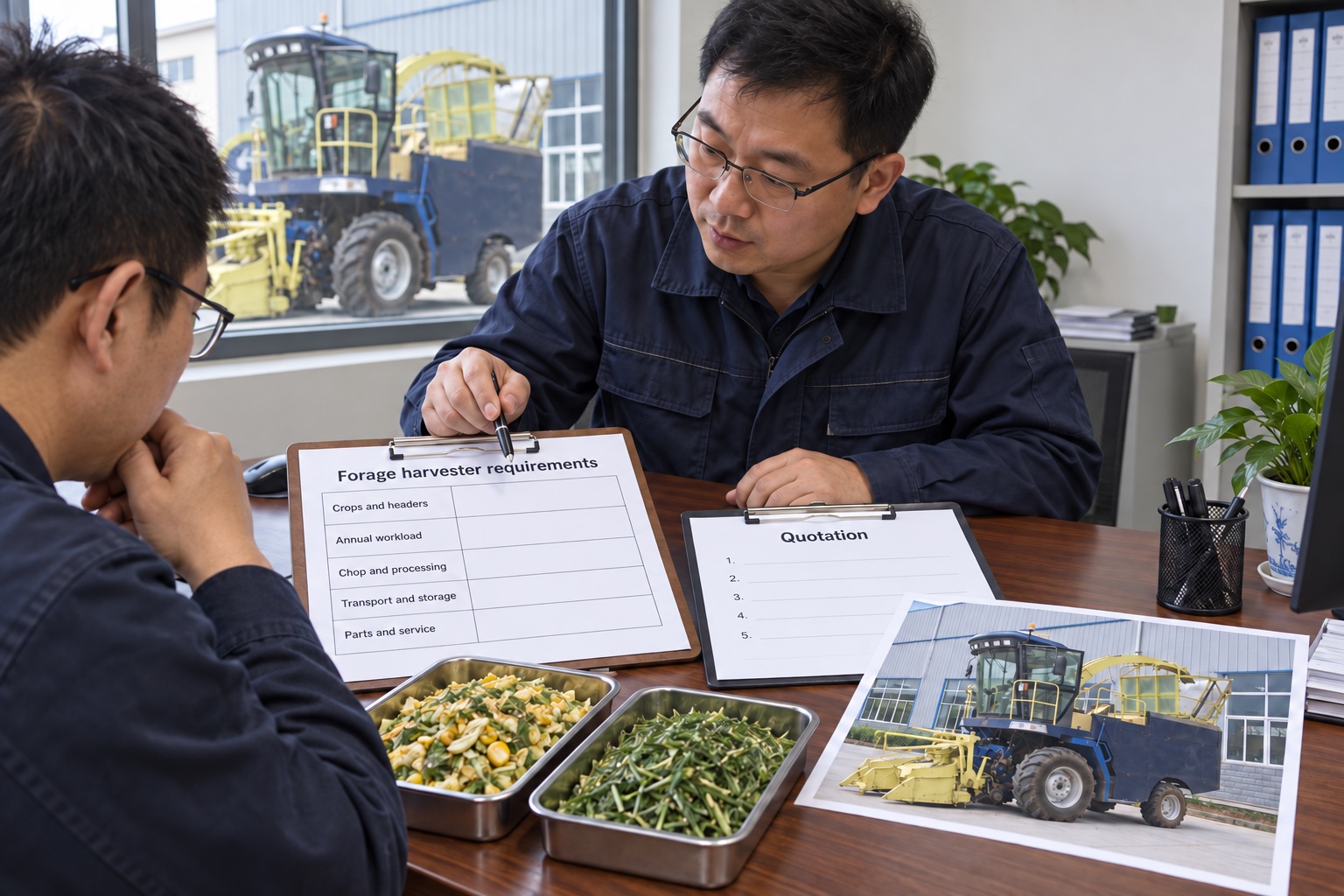
What belongs in your final decision sheet?
Use one page that exposes every assumption. State crops, area, moisture condition, final feed product, storage type, working days, trailers, labor, and existing equipment. Then compare those complete workflows.
- Define the intended end product first.
- Record representative crop and field conditions.
- Compare trial output with storage and ration needs.
- Calculate ownership against contractor or shared options.
What evidence should close the decision?
| Decision point | Evidence before commitment |
|---|---|
| Crop and field suitability | Representative field trial |
| Physical output | Samples checked against agreed criteria |
| Workable harvest chain | Timed field, transport, and storage plan |
| Sustainable ownership | Cost assumptions, manuals, parts, and support |
Key Takeaway: You now have a method for comparing chopping with traditional harvesting. Reject any option that solves cutting while leaving storage, feeding, or support unresolved.
For help comparing equipment around your crop and storage plan, contact us today with your forage, annual area, harvest window, and intended feed product. We can review the functions and trial evidence a proposal should include. We believe harvest equipment should earn its place through a complete, verifiable workflow.
What else should you ask before choosing? (FAQ)
Your Forage Chopper decision should follow the final product, crop condition, storage method, field logistics, and annual workload. These questions address common uncertainties before harvest planning begins.
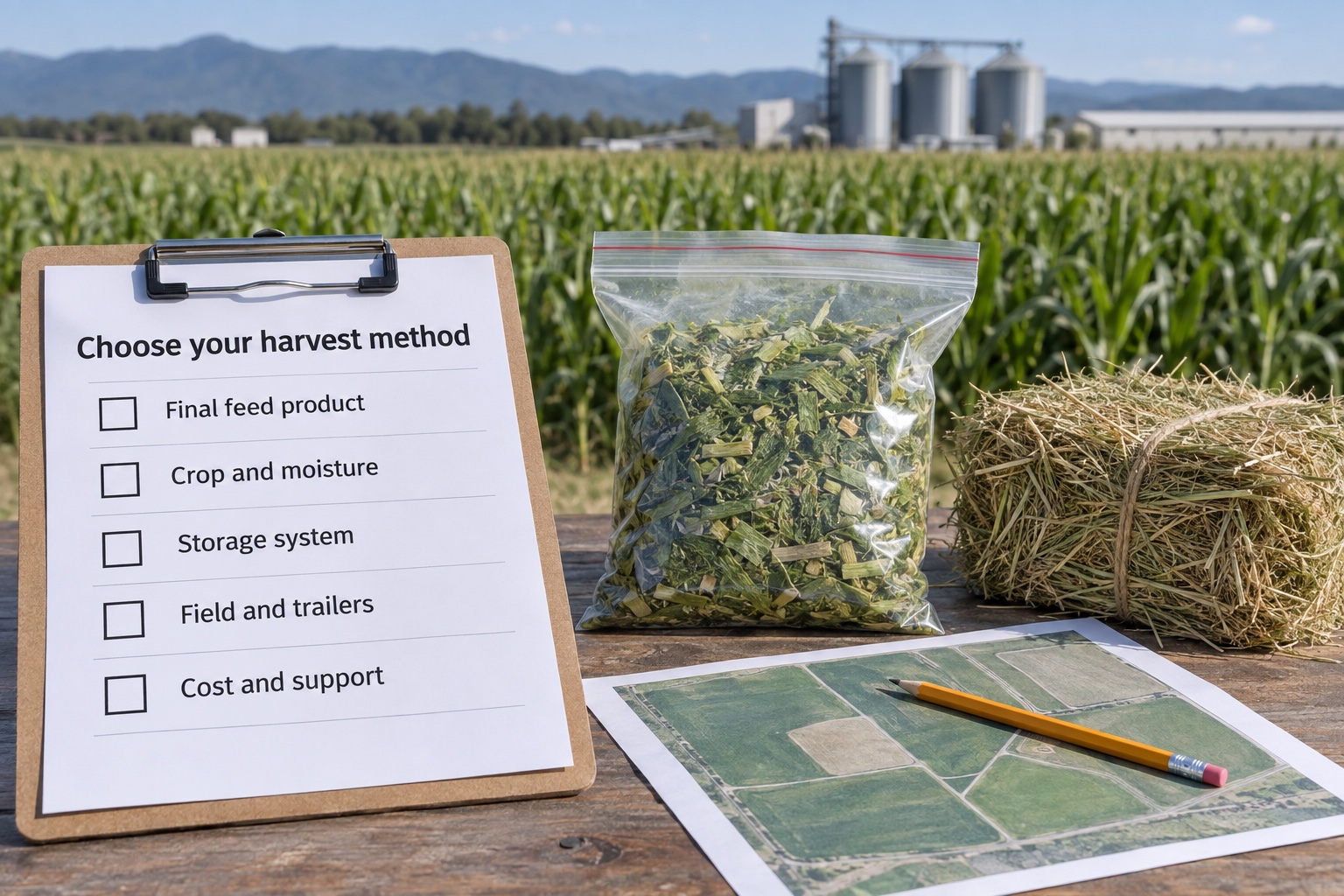
Which answers should stay with your harvest plan?
Keep these details in writing for every operator. Update them when crops, storage, customers, or equipment arrangements change.
- Confirm crop and header compatibility.
- Keep representative sample criteria available.
- Document safe operation and blockage procedures.
Q1: Can I use a Forage Chopper for dry hay?
Possibly, when your approved machine and feeding plan call for chopped dry forage. Hay intended for bales normally follows mowing, curing, and baling instead.
Q2: What’s the best method for high-moisture forage?
Choose a coordinated silage pathway with suitable crop timing, chopping, transport, packing, and sealing. Verify moisture and storage requirements before harvesting.
Q3: How do I know whether chop consistency is acceptable?
Collect representative samples across several loads and separate particle fractions. Compare results with crop, storage, and ration criteria agreed before work starts.
Q4: Can a residue shredder replace a Forage Chopper?
Not automatically, because residue reduction and feed preparation have different objectives. Confirm crop path, collection, particle result, contamination control, and intended use.
Q5: What should happen before clearing a blockage?
Follow the manual and forage-harvester safety guidance. Stop and isolate power, prevent restart, wait for run-down, secure stored energy, and use approved tools.
