
Forage Chopper: How to Make a Better Small-Livestock Feed Plan
A Forage Chopper may be one part of a small livestock feed system that combines pasture, hay, freshly cut forage, stored silage and trays of sprouted grain. These feeds do different jobs, and a chopper belongs only in some of the steps. The useful question is not how much equipment to buy, but how to deliver the right clean feed, in the right form, with a routine your farm can sustain.
1. What Belongs in a Small-Livestock Fodder System?
Forage Chopper decisions make sense only after you map the feed supply. Start with the animals, their existing balanced rations, the forage available by season, and the work needed each day. A sprout rack grows a small fresh supplement; a cutter handles harvested stems and leaves. Our harvest-method comparison helps place chopping within the wider feed plan.
Separate feed sources by purpose
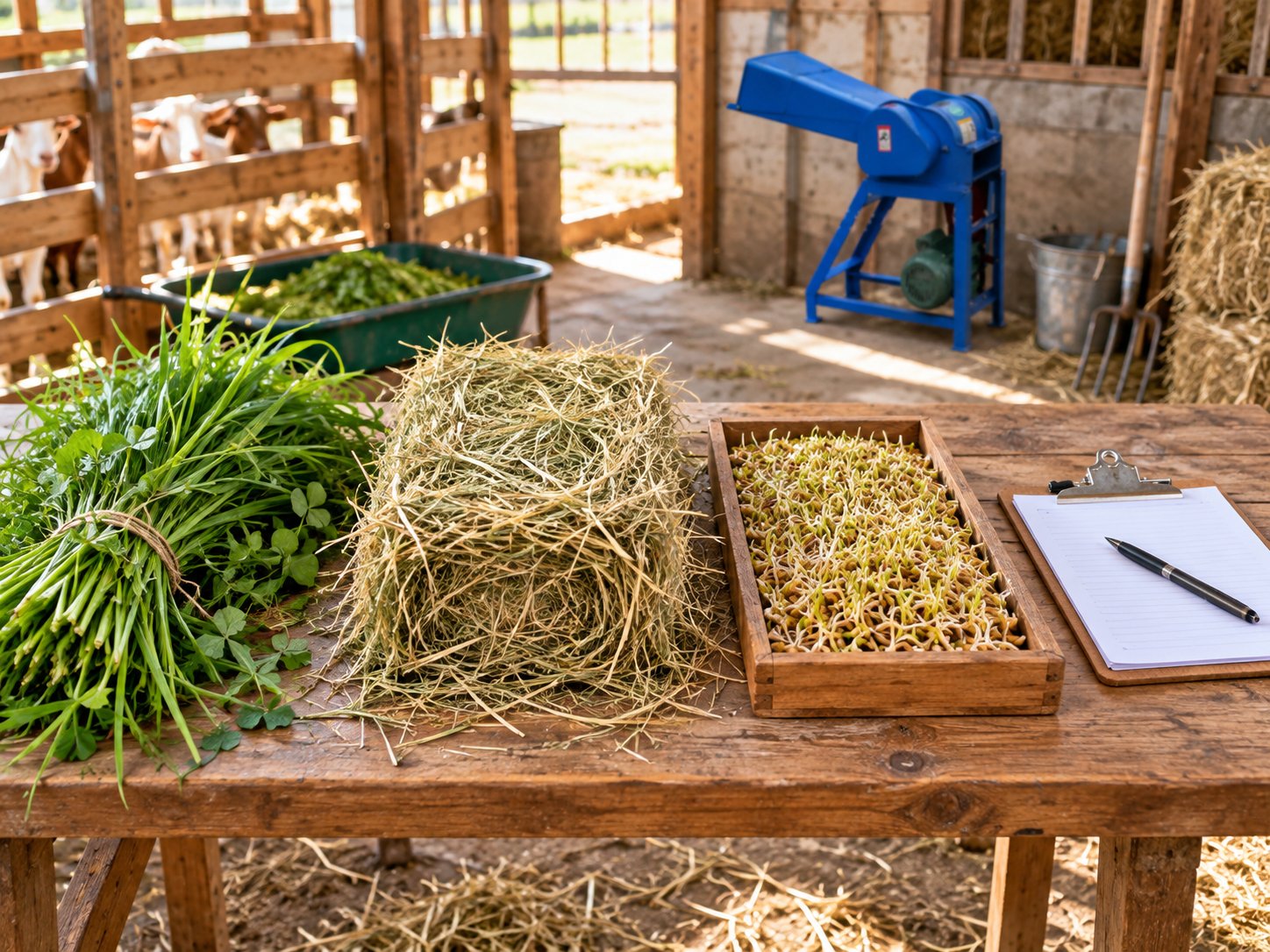
Pasture and hay supply roughage for ruminants, while a complete formulated feed serves a different role for poultry. Fresh cut-and-carry grass can supplement grazing when land or weather limits access. Sprouted grain mats are wet feed; they are not the same as field-grown grass or a replacement for a formulated diet.
- List every animal group and its current feed before buying equipment.
- Mark which feeds need growing, cutting, storing or daily preparation.
- Keep a fallback supply for crop gaps or equipment failure.
Draw the daily flow
A simple diagram can run from field or store, through preparation, to the feeder and waste collection. Put the sprout rack on its own clean-water path. This separation prevents a common mistake: treating an indoor seed tray as material that must pass through a forage chopper.
| Feed stream | Main task | Typical equipment |
|---|---|---|
| Pasture or hay | Provide roughage | Fencing or dry storage |
| Cut-and-carry forage | Cut and portion stems | Hand tools or chopper if justified |
| Sprouted grain | Germinate and drain seed | Trays, rack and clean water |
Key Takeaway: Design the ration and daily flow first; choose equipment for a specific bottleneck.
2. When Does a Forage Chopper Earn Its Place?
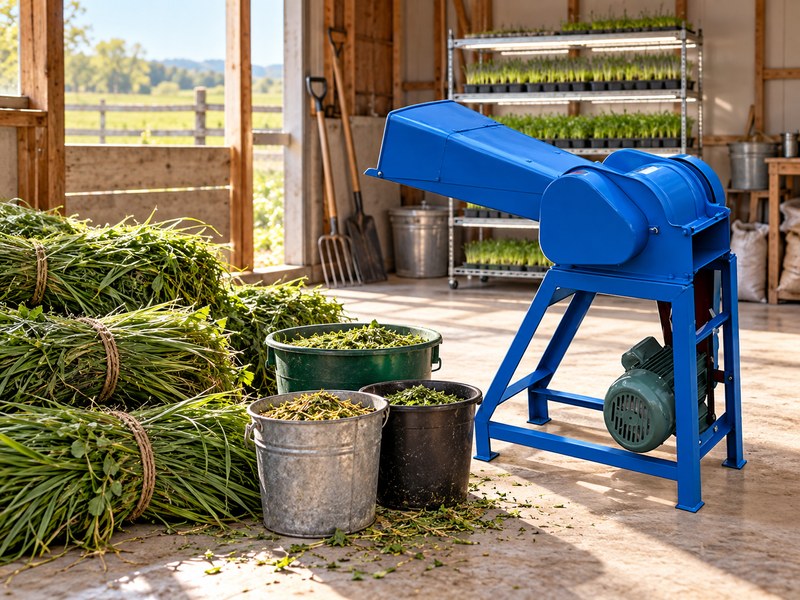
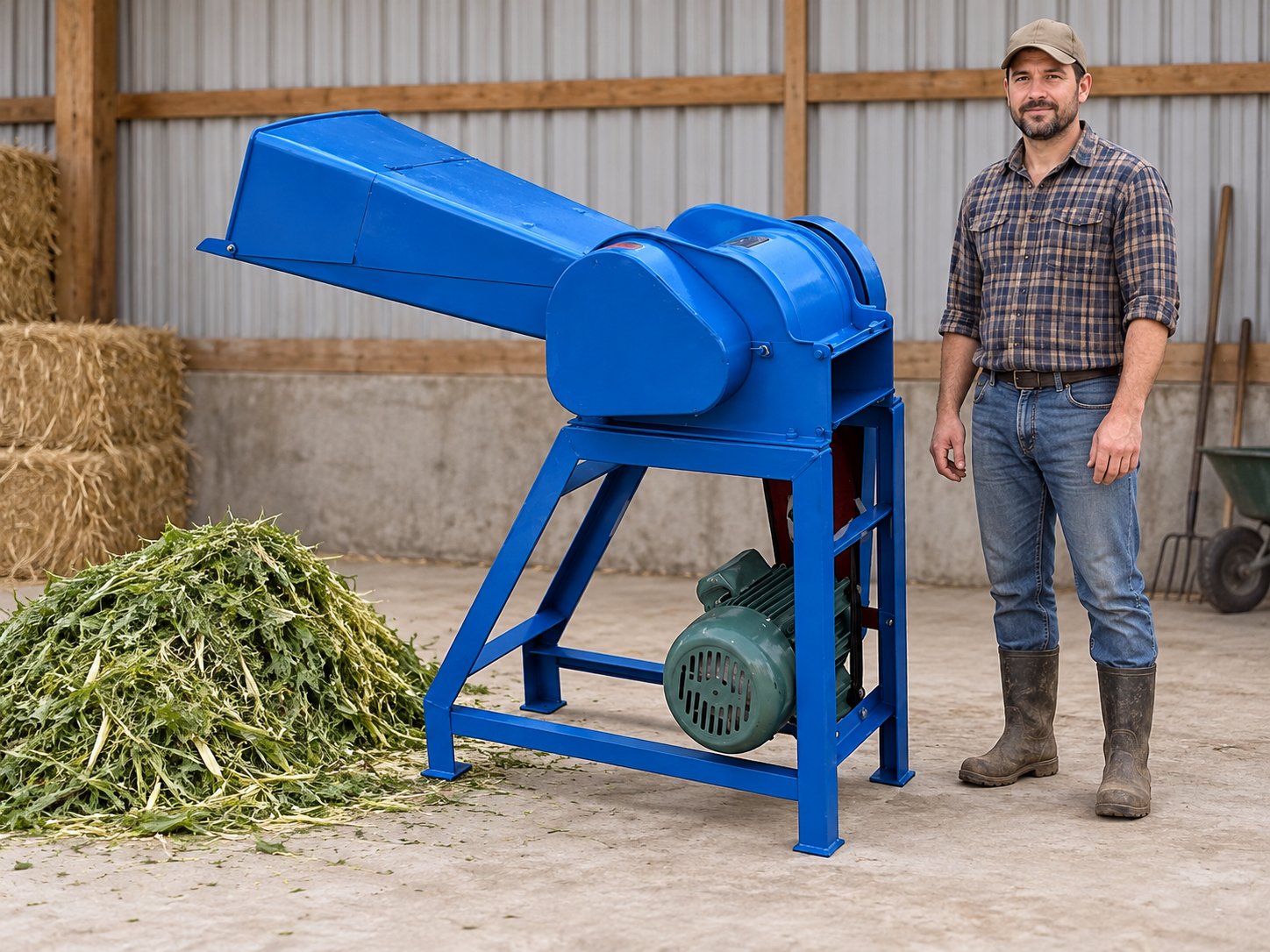
Forage Chopper equipment can help when a farm regularly cuts long grass, maize stalks or other suitable forage and needs consistent portions for feeding or storage. It adds purchase, power, cleaning and operator time, so very small operations may do better with hand cutting, grazing or purchased hay. Compare compact chaff cutter models against the actual volume and crop types you handle.
Measure the bottleneck
Time the whole task: harvest, transport, cutting, feeding, cleanup and maintenance. A machine that shortens only the cutting step may not save much labor if moving forage remains the main constraint. Ask whether you need fresh chopped feed, silage preparation, or merely a convenient way to portion long stems.
- Record daily kilograms of material presented to the cutter.
- Trial each crop with the supplier before committing.
- Check power supply, guards, spare parts and service access.
Keep sprouts on a separate path
Short, tender sprout mats from trays generally need inspection and portioning, not powered chopping. Do not feed trays, roots or wet mats into a machine unless its manufacturer explicitly approves that material. A chaff cutter machine overview can help compare inlet and drive designs for harvested forage instead.
| Situation | Likely better choice | Why |
|---|---|---|
| A few trays of sprouts | Hand portioning | Little stem length to reduce |
| Daily long field grass | Evaluate a small cutter | Repeated cutting may be the bottleneck |
| Seasonal silage crop | Plan full storage system | Chopping is only one stage |
Key Takeaway: Buy a chopper to solve repeated field-forage handling, not to make a sprout rack look complete.
3. Which Seeds and Crops Should You Grow or Cut?
Forage Chopper planning starts with two different material lists. For trays, select clean, viable seed intended for feed and test a small batch for germination and drainage. For cutting, check the machine’s approved forage list and the crop’s stem size and moisture. The materials guide covers why crop condition matters to a cutter.
Select tray seed for consistency
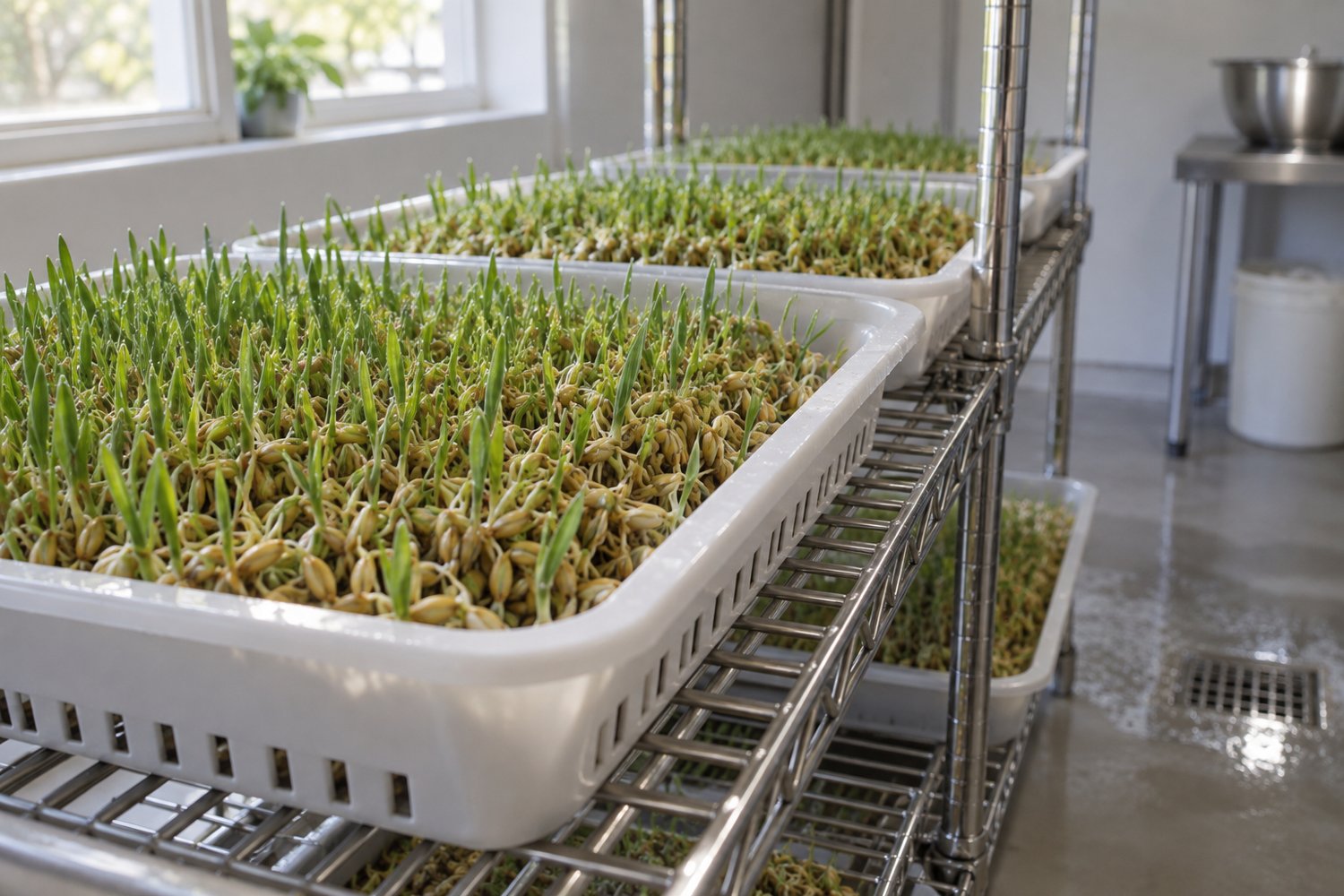
Barley, wheat and oats are common sprouting candidates; a seed choice should depend on local supply, germination quality, price and animal-ration advice. The example source also uses sunflower seed, but its successful tray does not prove identical performance for every seed lot or species. Discard seed that is damaged, treated with unsuitable chemicals or visibly moldy.
- Buy seed with a documented source and intended use.
- Keep batches labeled by seed lot and start date.
- Test drainage and germination before scaling up.
Match field crops to the machine
Fresh grass, legumes and stalks differ in fiber, moisture and cutting resistance. The cutter’s manual and supplier trial should decide which materials it can process. If you plan silage, align harvest timing, particle size and storage with the entire forage harvesting workflow, not with tray-growing advice.
| Material | Main check before use | Route |
|---|---|---|
| Tray grain seed | Clean, viable, feed suitable | Sprout rack |
| Fresh field grass | Condition and chop need | Fresh feed or storage |
| Fibrous stalks | Machine approval and power | Cutter trial |
Key Takeaway: Choose seed for a clean sprout system and field crops for an approved cutting process.
4. How Do You Set Up a Simple Sprout Rack?
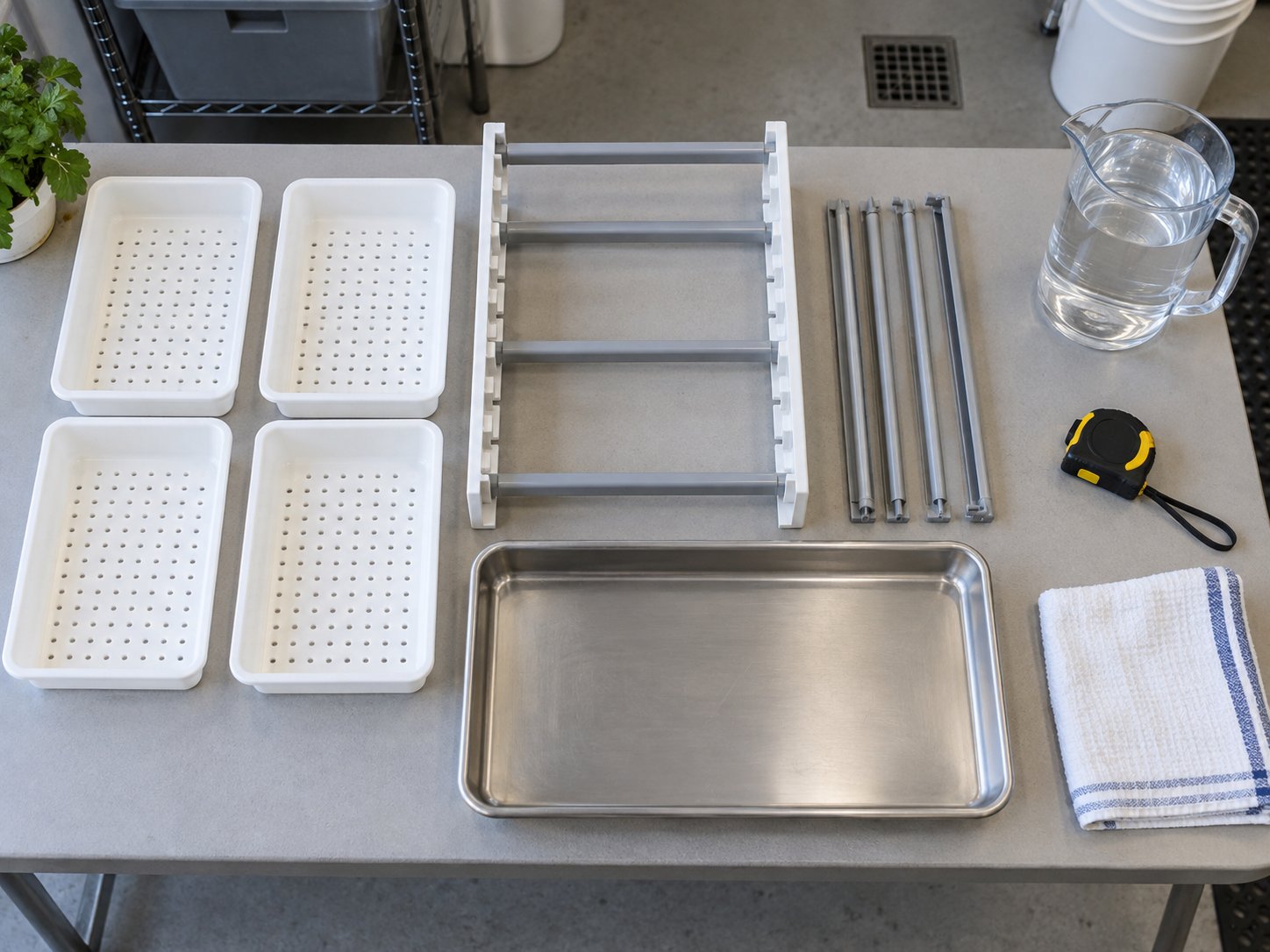
Forage Chopper equipment does not determine the size of a sprout rack. Size the rack from the daily amount of fresh sprouts the farm can actually use, then provide shallow food-safe trays, drainage, a catch pan, airflow and a washable work surface. A modular rack is useful because a small trial can expand only after the routine proves reliable.
Fit the trays to the space
Measure the available floor area and the clear height needed to remove each tray without spilling. Keep the rack away from dirty bedding, feed dust and direct contamination. Use materials that tolerate frequent washing; a catch pan must be emptied before stagnant water accumulates.
- Leave access to inspect every tray without moving the whole rack.
- Give each tray a stable support and reliable drainage route.
- Keep electrical equipment away from splash areas.
Start with a pilot batch
The example article describes a multi-tier PVC frame, but its cut lengths and tray size fit one particular setup. Make a small trial first and adjust tray spacing, seed loading and water flow to your space. Do not assume a quoted build cost still applies in another market or year.
| Rack feature | Question to test | Warning sign |
|---|---|---|
| Drainage | Does water leave each tray? | Pooled water |
| Airflow | Can leaves dry between watering? | Persistent damp odor |
| Access | Can trays be removed easily? | Spills or unstable shelves |
Key Takeaway: A rack succeeds when it drains, cleans and fits the daily labor available.
5. How Do You Run a Daily Tray Rotation?
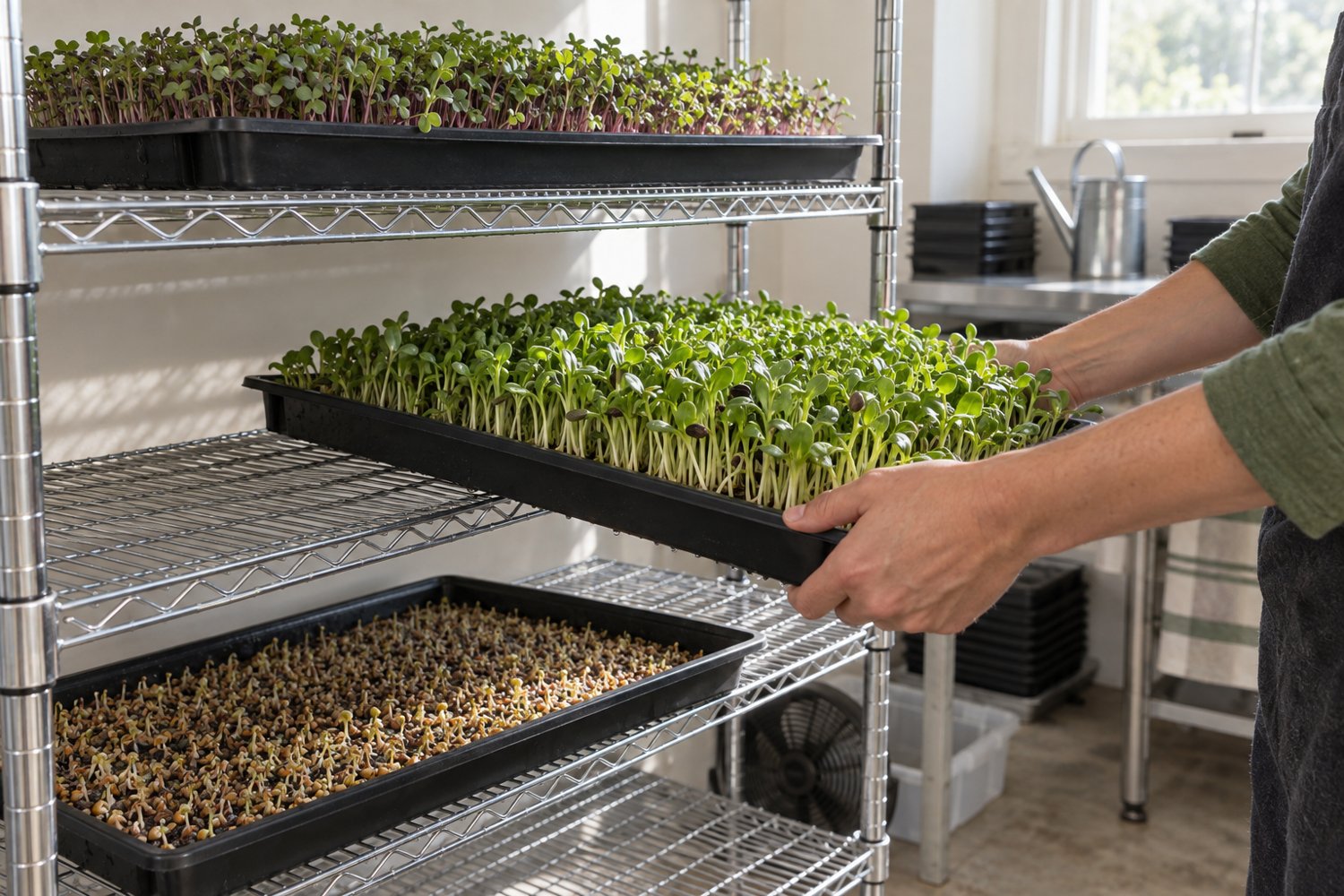
Forage Chopper work may be seasonal, but sprouts require a daily routine. Use dated trays so the oldest suitable crop moves to feeding while a clean tray begins the next batch. Soaking, rinsing and harvest timing vary by seed and room conditions, so record observations instead of adopting a fixed number of days from another farm.
Build a repeatable sequence
Schedule seed preparation, tray loading, watering, drainage check, harvest and washing at times the team can maintain. A simple log helps reveal whether a particular lot grows unevenly or develops odor. For livestock feed, the tray is only one step; clean handling at the feeder matters too.
- Date and label each tray before it enters the rack.
- Check drainage after watering, not just water added.
- Feed or reject each mature batch promptly; do not leave it sitting warm.
Scale only after measuring output
Record seed mass, fresh harvested mass, labor minutes and rejected trays. Fresh weight alone can rise because of water, so compare costs and feed contribution on a dry-matter basis later in the plan. The small-farm feeding guide offers a separate way to organize cut forage supply.
| Daily action | Record | Decision it supports |
|---|---|---|
| Load tray | Seed lot and mass | Germination comparison |
| Water and drain | Odor, pooling, appearance | Hygiene response |
| Harvest | Fresh mass and rejection | Capacity and cost check |
Key Takeaway: A dated rotation is more reliable than copying one farm’s watering timetable.
6. How Do You Keep Sprouted Fodder Clean?
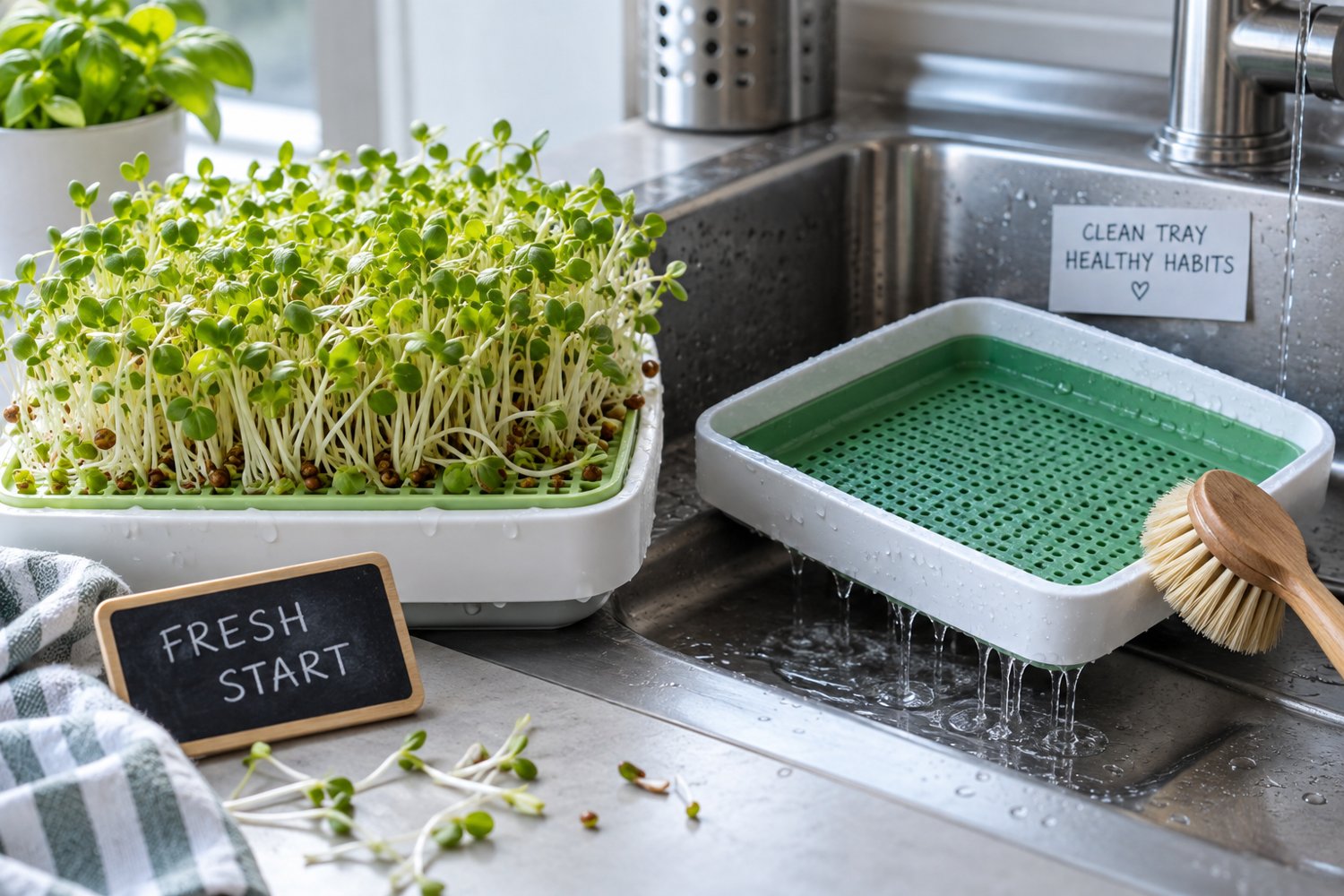
Forage Chopper maintenance and tray hygiene are separate tasks, but both protect feed quality. Sprout racks hold moisture and organic material, creating conditions where poor drainage and dirty pans can spoil a batch. Clean food-contact surfaces, inspect sprouts before feeding and discard suspect material rather than trying to salvage it with a rinse.
Control moisture and contamination
Empty the catch pan, wash used trays and let them dry as appropriate for the material. Keep seed storage dry and protect the rack from pests and dirty runoff. University farm research has found that mold, labor and seed costs can decide whether sprouted-feed systems remain worthwhile.
- Reject visible mold, off odors or slimy mats.
- Keep cleaning tools separate from animal-waste areas.
- Record recurring problems by seed lot and tray position.
Avoid improvised treatment claims
The example article suggests household rinses for mold control, but that is not proof that contaminated feed becomes safe. Do not offer moldy sprouts to animals. Ask a qualified nutrition or veterinary adviser about persistent feed-quality concerns.
| Observation | Immediate response | Follow-up |
|---|---|---|
| Pooled water | Stop using affected tray | Fix drainage |
| Musty or moldy mat | Discard batch | Clean rack and review seed |
| Uneven growth | Check seed and water | Adjust next trial |
Key Takeaway: Prevention and rejection protect feed quality better than attempting to rescue a spoiled tray.
7. How Should Cut Forage Be Chopped and Stored?
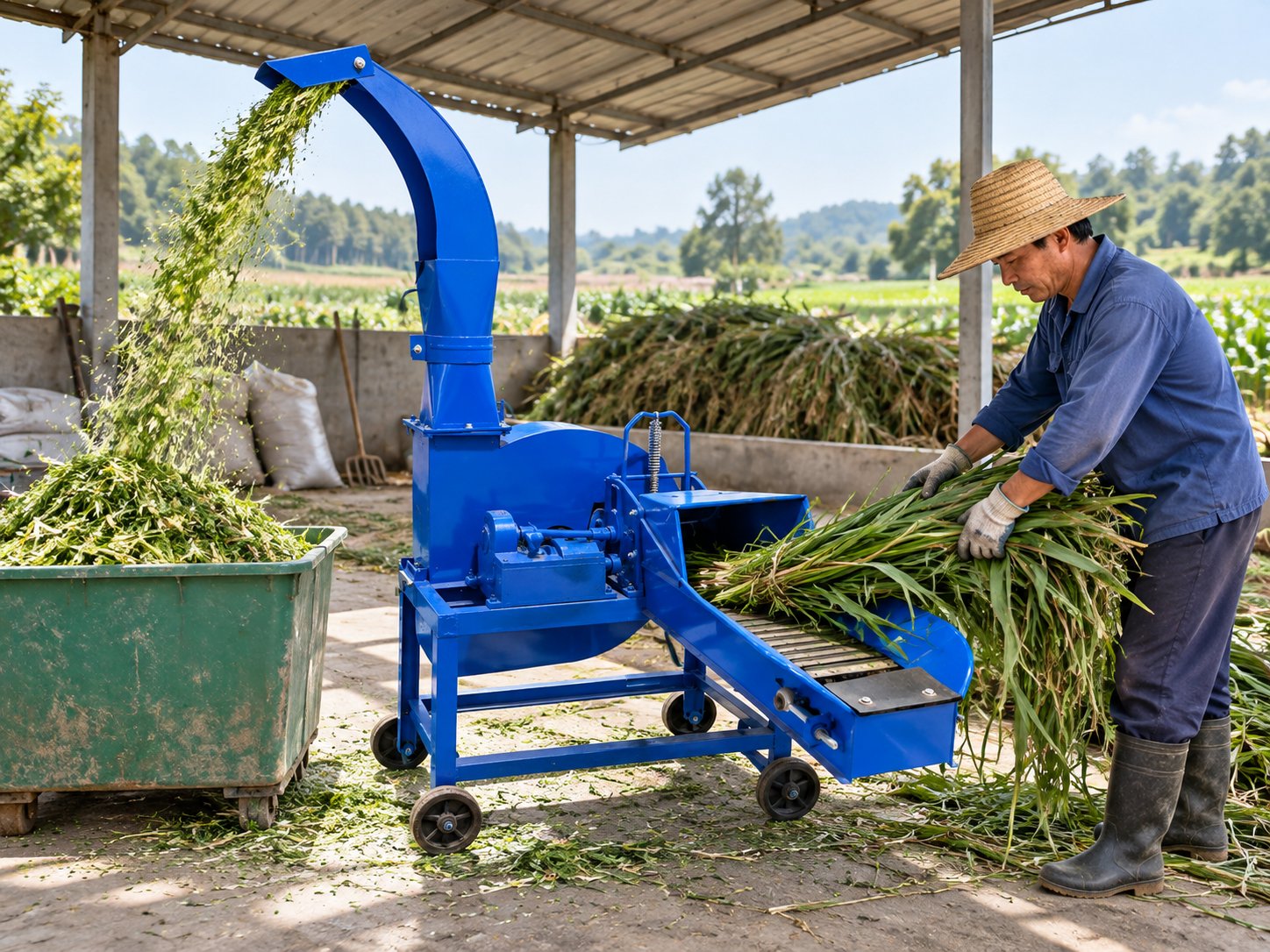
Forage Chopper work begins only after suitable field material has been harvested. Keep the feed chute and guards in place, use the maker’s approved crops and inspect output before scaling up. A small farm may feed chopped grass fresh or make silage, but each route needs a different timetable and storage plan. Review the machine safety checks before assigning operators.
Match particle size to use
Very long pieces can be hard to handle or pack; excessively fine forage can also reduce the physical fiber value of a ruminant ration. University silage guidance recommends checking actual particle size before processing an entire crop. Follow species-specific ration advice rather than treating one blade setting as universal.
- Trial a small sample and inspect the cut before full production.
- Stop and isolate the cutter before clearing a blockage.
- Keep sprouts and the dirty cutting area on separate work surfaces.
Decide fresh feed or preservation
Fresh green chop should move promptly from cutting to feeding. Silage also requires appropriate moisture, rapid packing and an airtight store. The silage preparation guide covers the storage side; chopping alone does not preserve feed.
| Use | Next step after cutting | Main risk to control |
|---|---|---|
| Fresh cut-and-carry | Prompt feeding | Heating and leftovers |
| Silage | Pack and seal correctly | Air entry and spoilage |
| Dry hay | Store dry | Moisture damage |
Key Takeaway: Chopping is a preparation step; feeding and storage determine the result.
8. How Should Feed Plans Differ for Goats, Rabbits, and Poultry?
Forage Chopper output cannot be assigned the same role in every animal’s diet. Goats need a ration built around suitable forage and balanced for their production stage; rabbits require consistent fiber; poultry depend on a complete diet formulated for their class. Sprouts or chopped greens may be supplements, not universal replacements. Seek local nutrition advice before changing feed amounts.
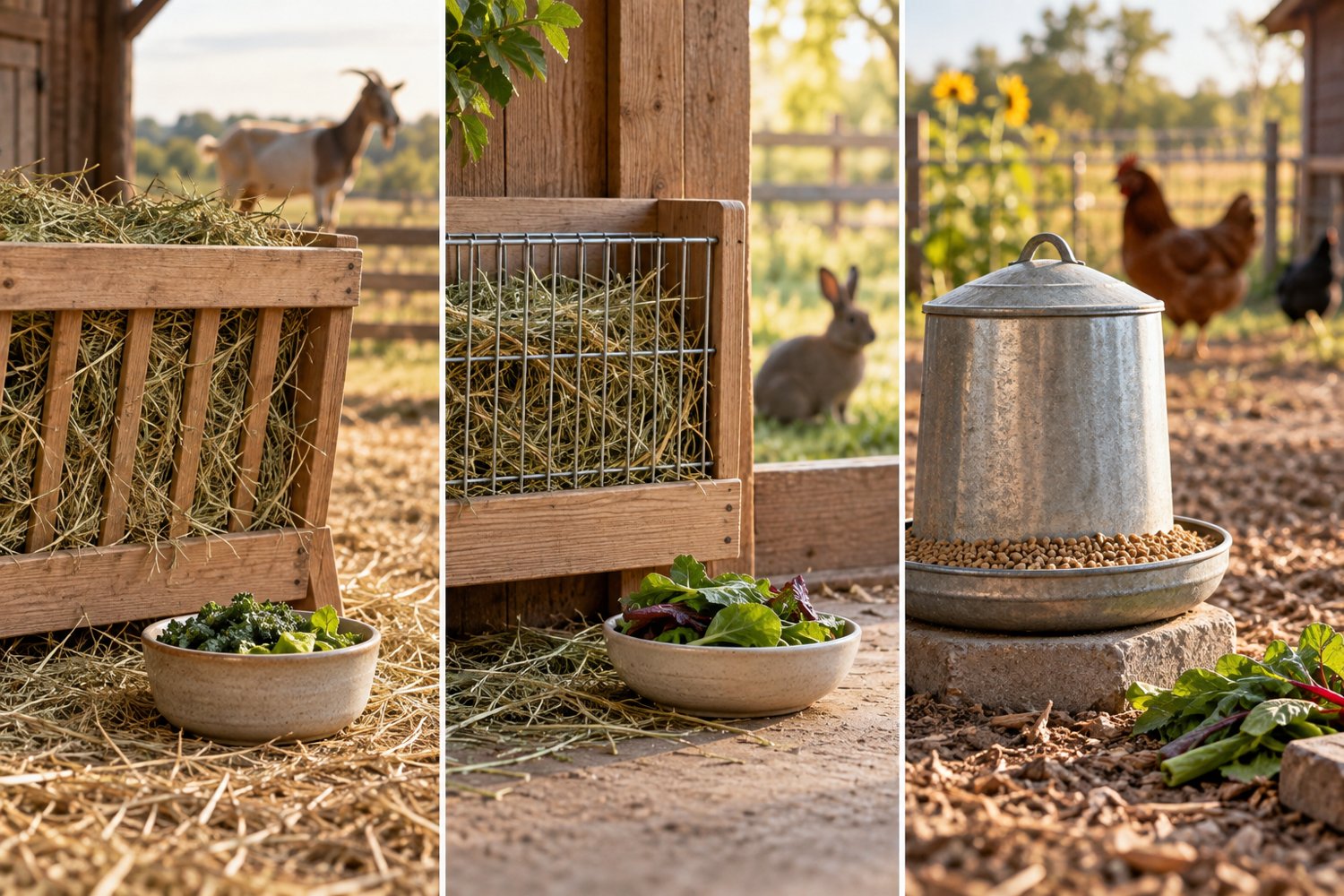
Keep the base diet intact
Dairy goat nutrition guidance places hay, silage or pasture at the center of the ration and cautions against excess grain with low fiber. For poultry, even attractive fresh greens can dilute a complete feed if substituted without formulation. Animal age, pregnancy, milk production and health status all change the plan.
- Introduce any new feed gradually and observe intake and manure.
- Keep clean water and the appropriate base feed available.
- Ask a qualified adviser to set species-specific amounts.
Measure what animals actually eat
Weigh feed offered and leftovers over several days. Separate rejected sprouts, unpalatable stems and spoilage so you know whether chopping or tray production solves the problem. The feed-cost guide can frame the wider labor and waste calculation without promising a fixed saving.
| Animal group | Base-feed priority | Supplemental-feed caution |
|---|---|---|
| Goats | Quality forage and balanced ration | Maintain effective fiber |
| Rabbits | Consistent fibrous diet | Avoid sudden changes |
| Poultry | Complete age-appropriate feed | Do not dilute nutrients heavily |
Key Takeaway: Prepare feed for each species’ ration, not for whichever machine happens to be available.
9. How Do You Compare Cost Without Being Misled by Water?
Forage Chopper and sprout-rack costs should be compared per unit of useful feed, not per kilogram of fresh output alone. Sprouted grain absorbs water; a heavier mat does not automatically contain more dry nutrients than its seed input. Include seed, crop, labor, power, water, cleaning, rejects and equipment in the calculation.
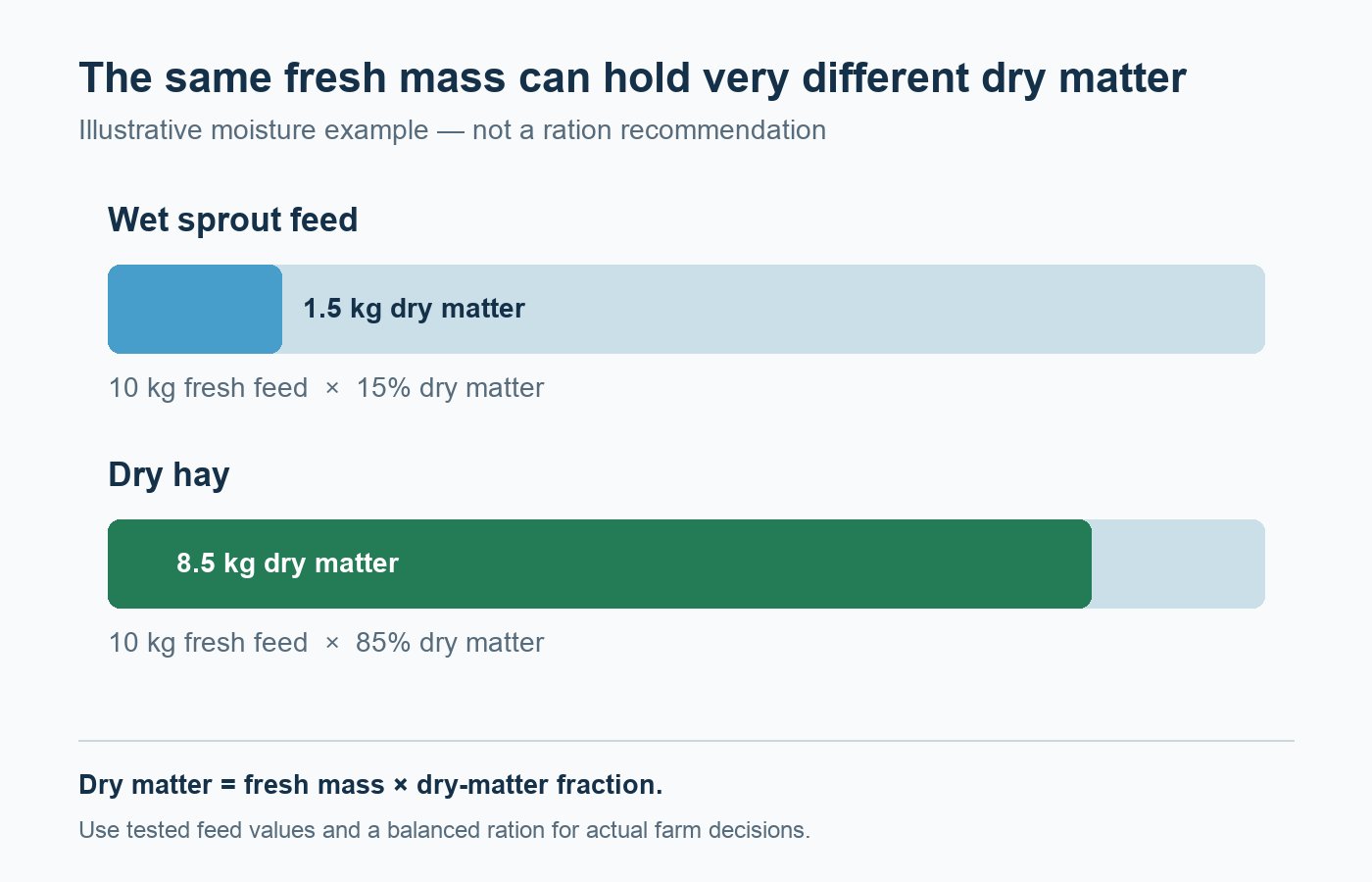
Put feeds on a dry-matter basis
Dry matter equals fresh mass multiplied by the dry-matter fraction. For an illustrative comparison, 10 kg of a wet feed at 15% dry matter contains 1.5 kg of dry matter, while 10 kg of hay at 85% contains 8.5 kg. These example moisture values do not say that the feeds are nutritionally interchangeable. Extension analysis of sprouted fodder emphasizes this fresh-weight trap.
- Obtain feed-analysis values rather than relying on a visual estimate.
- Price seed, electricity, water, labor and discarded batches.
- Compare alternatives at the same nutritional and time scale.
Add the operating cost of chopping
Record machine setup, fuel or electricity, knife service, cleanup and downtime. A cutter can be worthwhile if it reduces a repeated labor bottleneck or improves a necessary storage step, but it should not be credited with creating extra nutrients. The machine buying guide lists equipment questions to ask before ordering.
| Cost line | Sprout rack | Chopper workflow |
|---|---|---|
| Input | Seed and water | Harvested forage |
| Daily labor | Loading and cleaning | Cutting and cleanup |
| Loss to track | Failed or spoiled trays | Spillage or spoiled storage |
Key Takeaway: Use dry matter and full operating costs to test whether either system pays for itself.
10. What Should a Small Farm Ask Before Expanding?
Forage Chopper ownership should follow a proven feed routine. Start small, keep records for a trial period and confirm that the animals use the feed safely and consistently. These five questions catch the most common planning errors.
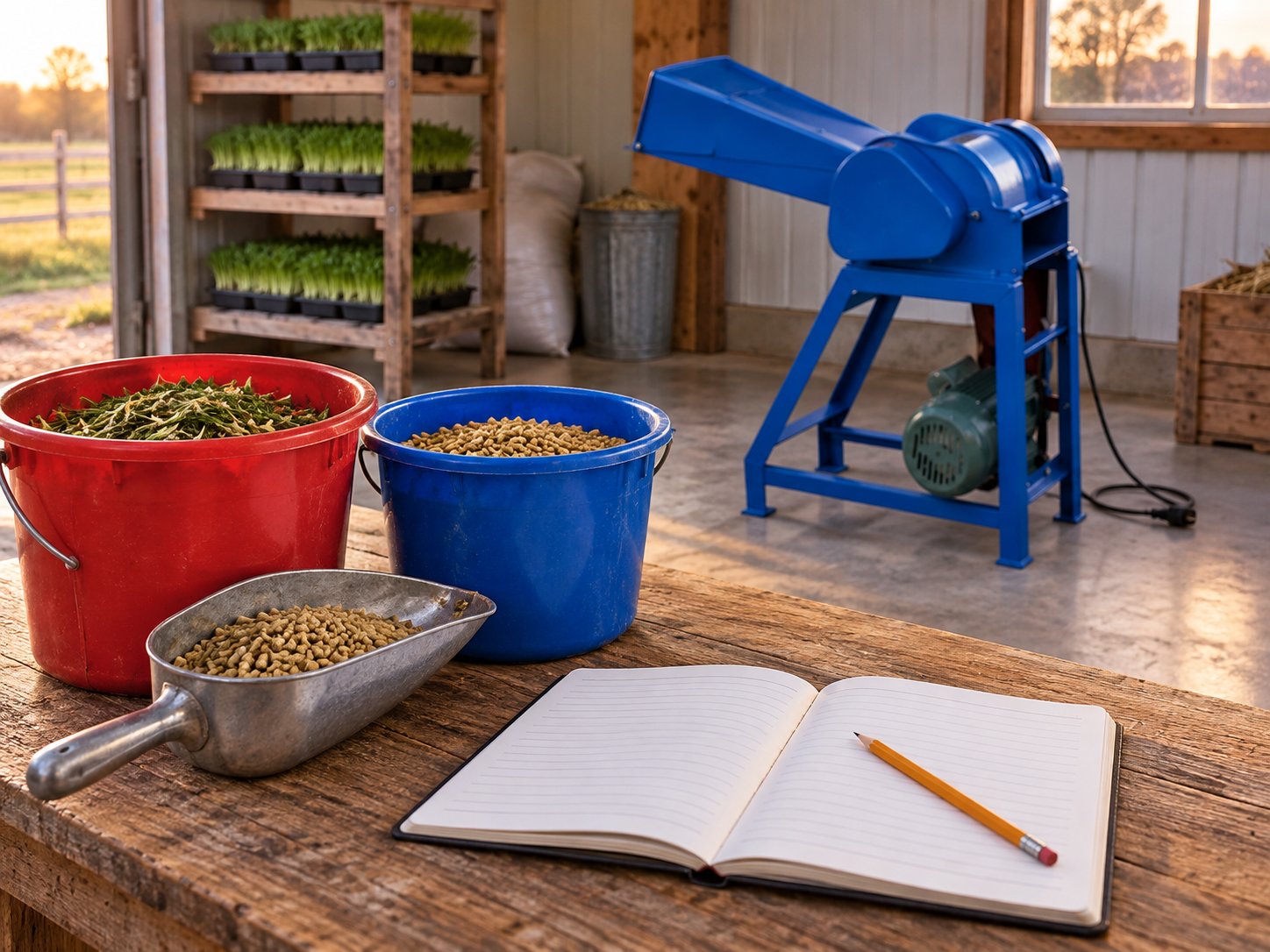
Practical answers
- Keep the rack, cutting station and feeder clean and distinct.
- Recheck the ration when livestock numbers or seasons change.
- Expand only the task that has become a measured bottleneck.
Q1: Do sprouted grain trays need a forage chopper?
Usually no. Mature tray mats can be inspected and portioned by hand. Use a chopper only for materials its manufacturer approves.
Q2: Will sprouting multiply the feed’s nutrients?
Fresh weight rises largely because of water uptake. Compare feeds on dry matter and nutrient analysis rather than using a wet-weight multiplier.
Q3: Is a seven-tier rack the right starting size?
That layout is one example. Begin with a small, well-drained trial sized to daily use and available cleaning time.
Q4: Can chopped forage or sprouts replace a complete ration?
Not by default. Animal species and production stage determine the base diet; consult a qualified adviser before substitution.
Q5: When is a small chopper worth buying?
When approved field forage is processed often enough that safe cutting is a repeatable bottleneck, and the total equipment and labor costs make sense.
Conclusion
A workable small-livestock fodder system has clear roles: trays produce a limited fresh supplement, fields and stores supply roughage, and a chopper processes suitable harvested forage when volume justifies it. Measure feed quality, dry matter, labor and waste before scaling either branch. The best layout is the one your farm can operate and clean every day.
