
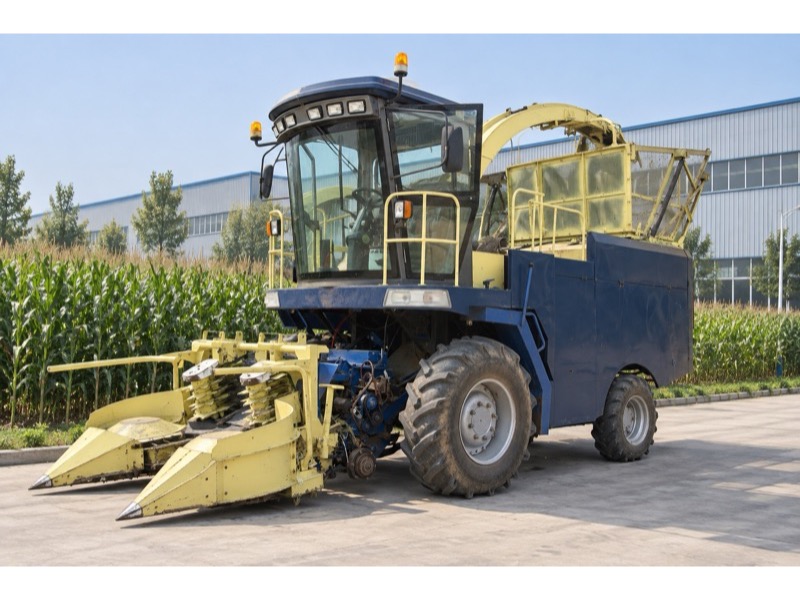
Forage Harvester Uses: From Crops to Better Silage
A Forage Harvester cuts or collects forage crops, chops them, and prepares material for transport, feeding, or ensiling. Its value depends on crop suitability, useful output, field logistics, and a storage plan waiting beyond harvest.
You may have plenty of maize or grass ready, yet an unsuitable header leaves crop behind while trailers wait. Another machine may harvest quickly but deliver particles that pack poorly. Matching each application with a suitable configuration turns harvesting equipment into part of a workable feed system.
What is a Forage Harvester mainly used for?
A Forage Harvester is mainly used to turn standing or mown forage into chopped material for livestock feeding or silage production. Depending on configuration, it may cut, collect, process, carry, or discharge crop during one mobile field operation.
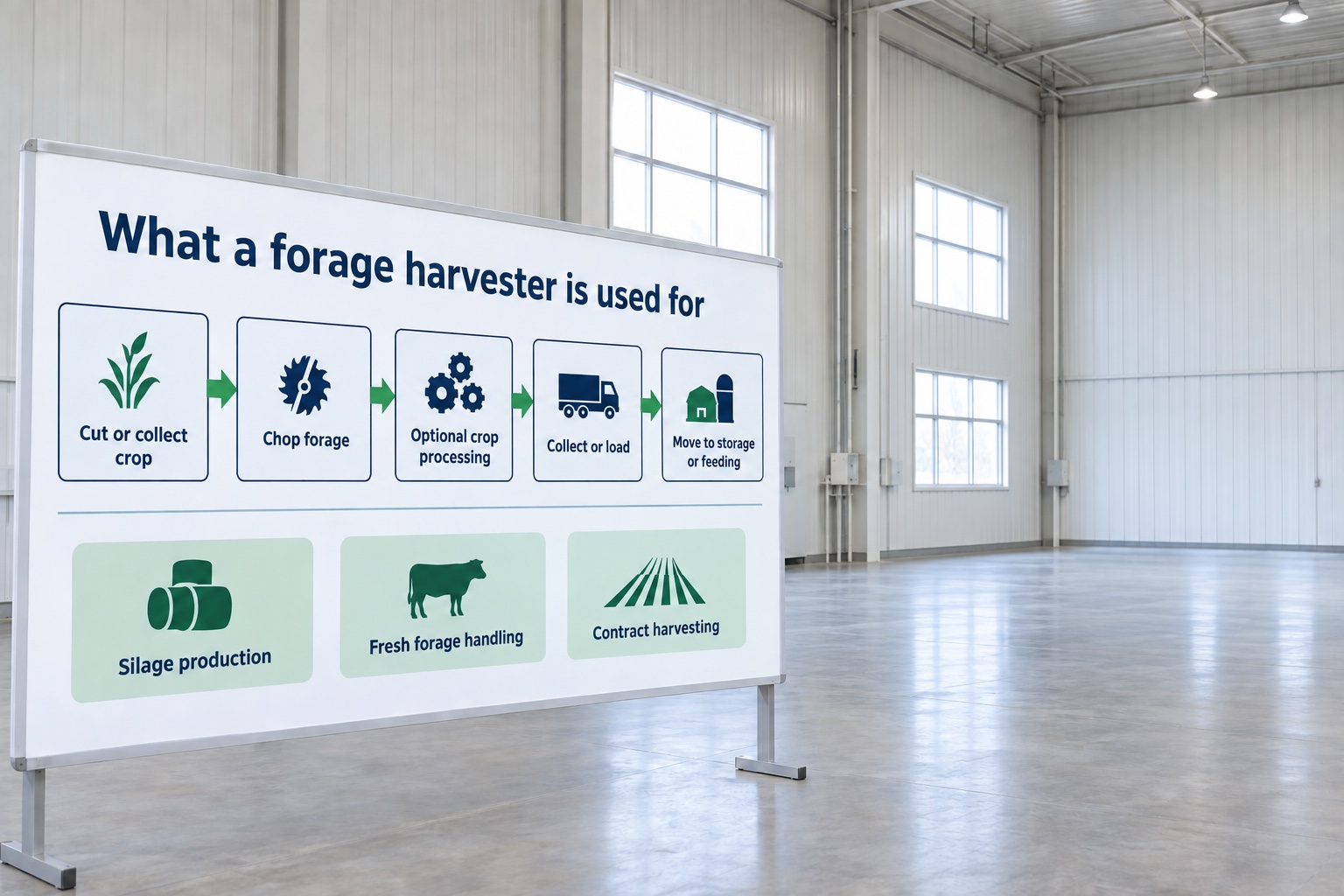
Which Forage Harvester field tasks can one machine combine?
Follow the crop through each practical job. A suitable header brings material into the machine, a cutting system reduces particle size, and collection or discharge equipment moves output onward. Installed options must support your chosen crop and destination.
- Cut standing forage or collect a prepared swath.
- Chop crop into a usable physical form.
- Process maize kernels when required.
- Load, carry, or discharge material for transport.
Is it different from yard-based forage preparation?
Yes; a field harvester moves through crop and handles collection before storage or feeding. A stationary chaff cutter processes forage that another system has already delivered to its feed opening.
| Field objective | Typical harvester role |
|---|---|
| Silage production | Collect, chop, and transfer forage |
| Fresh-feed preparation | Harvest suitable green crop for prompt use |
| Contract field work | Process crop across several customer farms |
Key Takeaway: Define where your crop starts and where chopped material must go. That route determines whether you need field harvesting, stationary preparation, or both.
Which crops can a Forage Harvester harvest?
A Forage Harvester can handle approved whole-plant maize, sorghum, grass, alfalfa, ryegrass, oat forage, and related green crops. Header type, crop presentation, stem structure, maturity, and moisture decide whether a particular configuration fits your application.
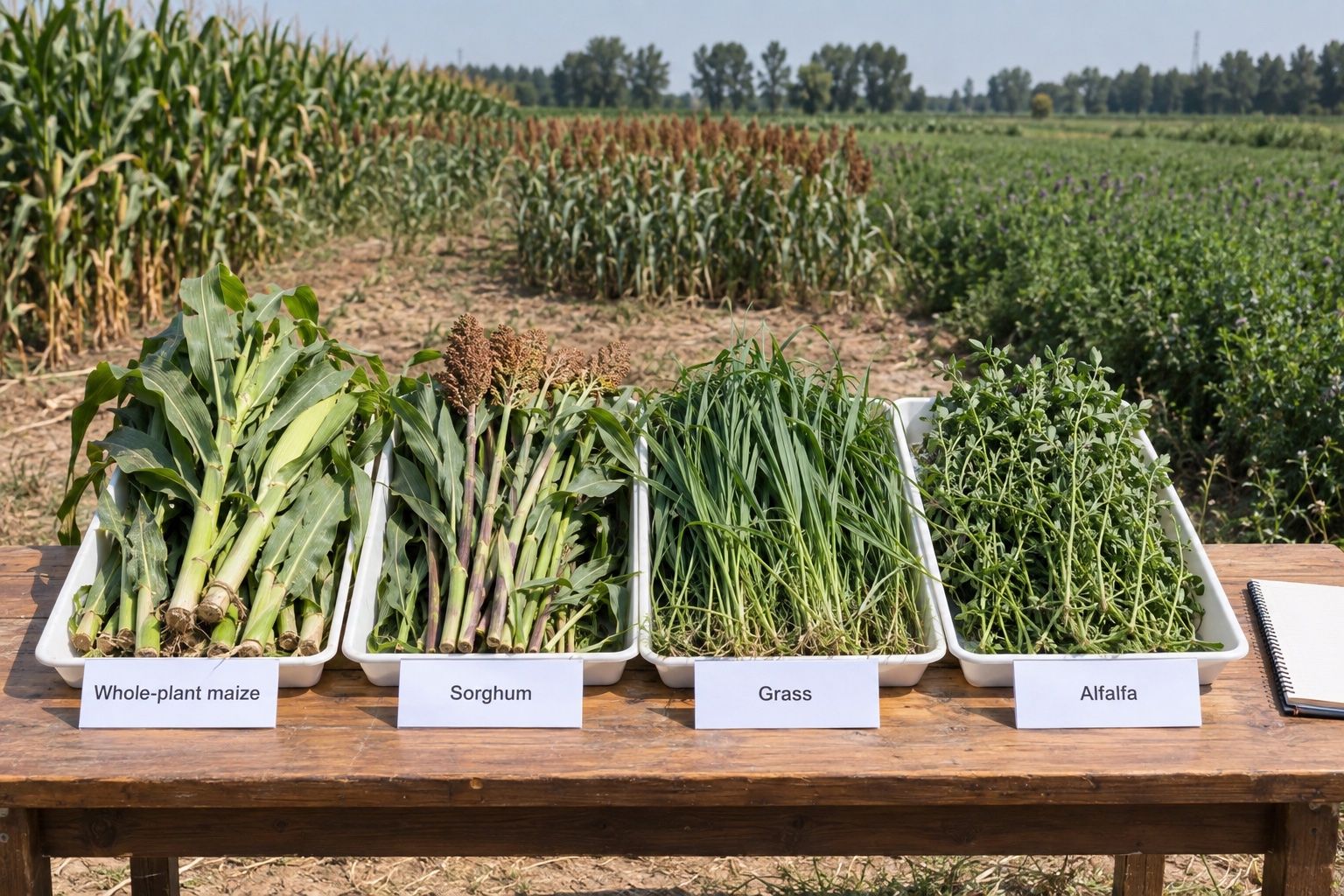
Why does the same crop need different setups?
Crop name tells only part of the story. Standing maize enters differently from mown grass, while lodged sorghum can challenge intake in another way. Record typical conditions before asking a supplier to recommend equipment.
- Identify standing, lodged, or windrowed material.
- Describe crop height, density, and stem strength.
- Record moisture and expected harvest stage.
- Note stones, wet ground, and uneven terrain.
What should a Forage Harvester crop trial prove?
It should show steady intake, acceptable field recovery, useful chopped output, and workable collection under representative conditions. Our forage-material guide explains why fresh and dry crop samples need separate checks.
| Crop group | Trial question |
|---|---|
| Whole-plant maize | Does intake handle stalks and ears consistently? |
| Sorghum | Does configuration suit height, stems, and density? |
| Grass or alfalfa | Can approved equipment collect crop presentation used on your farm? |
Key Takeaway: Ask for crop-specific approval and evidence. One clean demonstration in easy material cannot represent every harvest stage or field condition.
How is a Forage Harvester used for corn silage?
A Forage Harvester harvests much of the whole maize plant for silage rather than separating grain alone. It gathers stalks, leaves, cobs, and kernels before chopping and transferring material toward storage. See how this fits into a full maize silage harvesting and chopping setup, from field to sealed bunker.
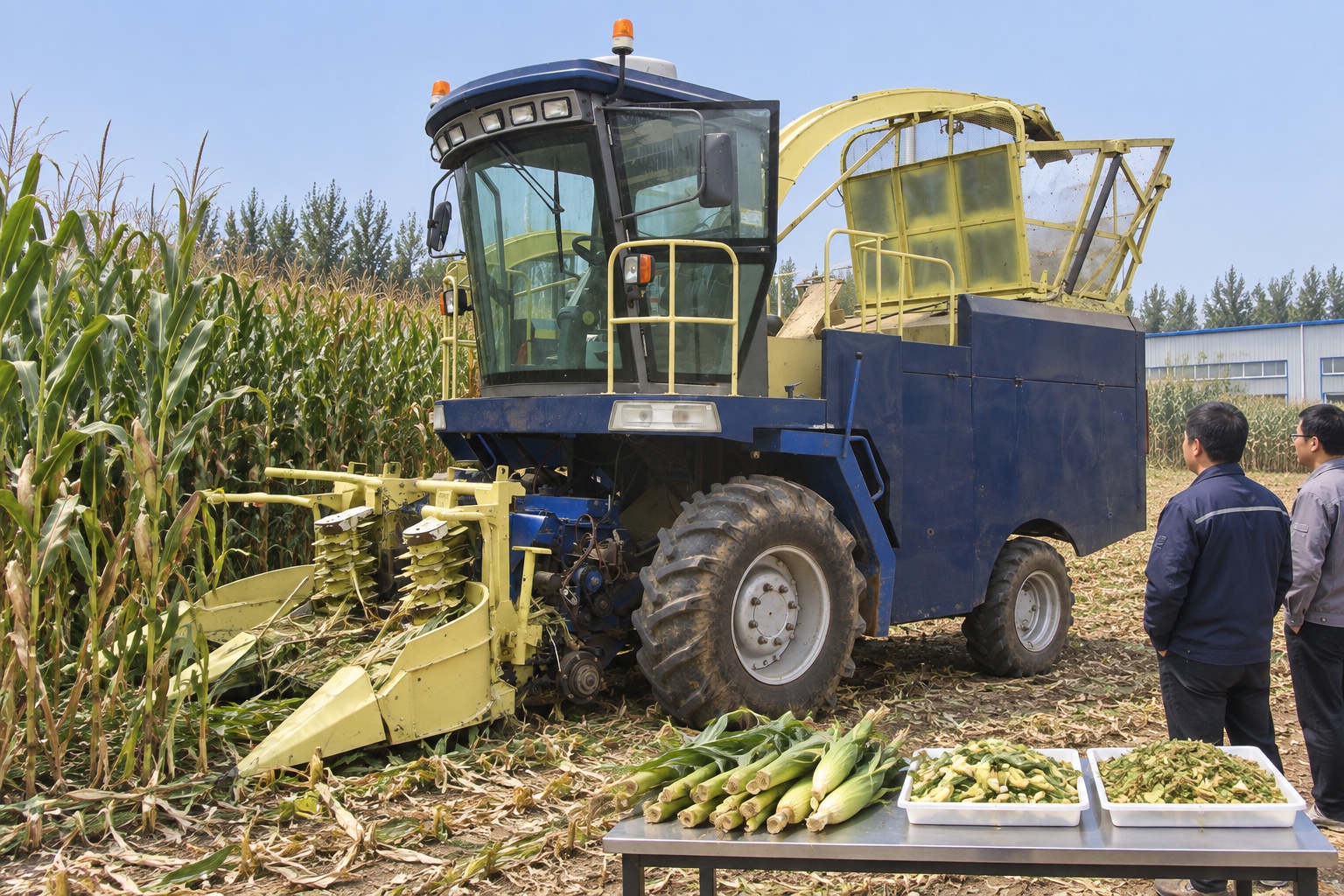
What happens after maize enters a Forage Harvester?
Keep cutting and crop quality connected. Feed components deliver a controlled crop mat, and knives create chopped material. For example, an optional processor may act on kernels before discharge when your required result justifies it.
- Check whole-plant moisture with a suitable method.
- Inspect particles from representative loads.
- Evaluate kernel and cob processing separately.
- Coordinate harvesting with transport and packing.
Does harvesting alone produce good corn silage?
No; crop readiness, processing, transport, packing, and sealing must work together. Our corn silage harvest guide connects those field and storage tasks. Penn State guidance also recommends measuring crop condition and reviewing processing throughout harvest.
| Corn-silage stage | Practical check |
|---|---|
| Crop harvest | Maturity and whole-plant moisture |
| Chopping | Representative particle distribution |
| Optional processing | Kernel and cob condition |
| Storage | Prompt delivery, packing, and sealing |
Key Takeaway: Use the harvester as one link in your corn-silage system. Good field output still needs compatible transport and disciplined storage work.
How is a Forage Harvester used for grass and alfalfa?
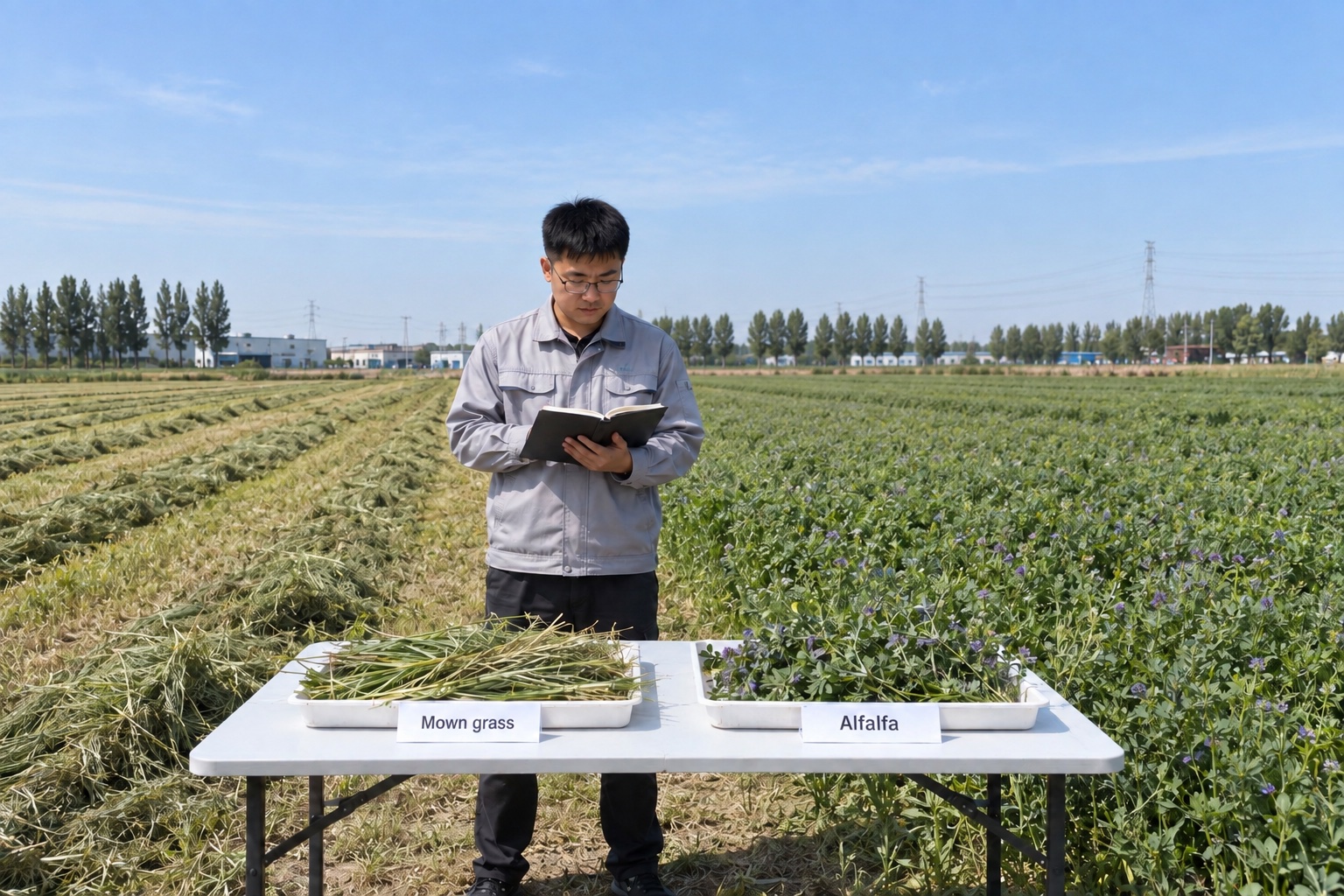
A Forage Harvester can collect approved grass or alfalfa after mowing and any planned wilting, provided its header suits the swath. Some configurations may direct-cut standing green crops, so confirm application and crop condition before use.
What changes between maize and grass work?
Header and crop presentation change the job. Maize may enter from standing rows, while grass or alfalfa often reaches a pickup as a prepared swath. Leaf retention, soil contamination, and moisture need attention during collection.
- Match pickup or cutting equipment with crop presentation.
- Keep swaths even enough for consistent feeding.
- Avoid collecting unnecessary soil and field debris.
- Check crop condition across wetter and drier areas.
Can one Forage Harvester setting suit every grass crop?
No; sward type, maturity, dry matter, storage method, and ration needs affect the required physical result. Inspect harvested material and follow machine instructions instead of copying a maize setting.
| Grass-forage condition | Decision to confirm |
|---|---|
| Freshly mown crop | Whether collection should wait for wilting |
| Prepared grass swath | Pickup compatibility and ground following |
| Leafy alfalfa | Leaf loss, contamination, and chop quality |
Key Takeaway: Treat grass and alfalfa as their own harvesting applications. A maize header or setting does not automatically transfer to a mown forage crop.
Why does a Forage Harvester chop silage crops?
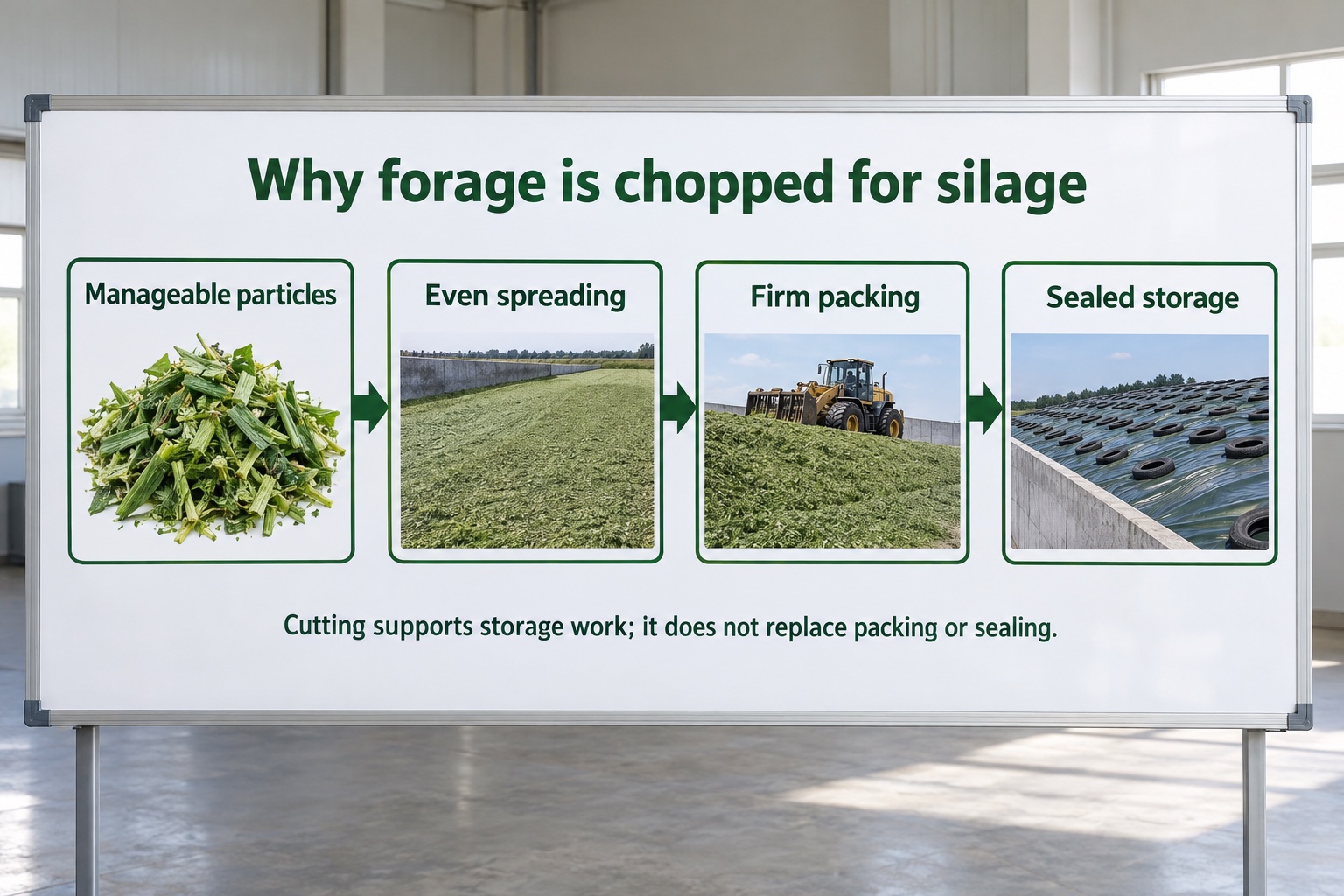
A Forage Harvester chops forage so material can be transported, spread, packed, stored, and later handled more consistently. Useful particle size must balance storage needs with livestock ration requirements.
How does a Forage Harvester support storage work?
Shorter pieces can make physical handling more manageable. Crop must spread in controlled layers and compact with limited trapped air. However, cutting alone does not remove oxygen or guarantee preservation.
- Inspect output before a full field is harvested.
- Match particle targets with crop and storage type.
- Keep trailers arriving at a workable pace.
- Pack and seal according to your storage plan.
Is the shortest possible chop always best?
No; excessively long particles can hinder packing, while excessive reduction may weaken useful fiber. Agree targets with advisers and check actual output because crop moisture and wear can change results.
| Chopping result | Possible consequence |
|---|---|
| Excessive long pieces | Difficult packing and ration sorting |
| Balanced distribution | More manageable handling and storage preparation |
| Excessive fines | Reduced effective particle length and handling issues |
Key Takeaway: Chop forage for a defined storage and feeding result. A smaller number on the control screen does not prove better silage.
When does corn need kernel processing?
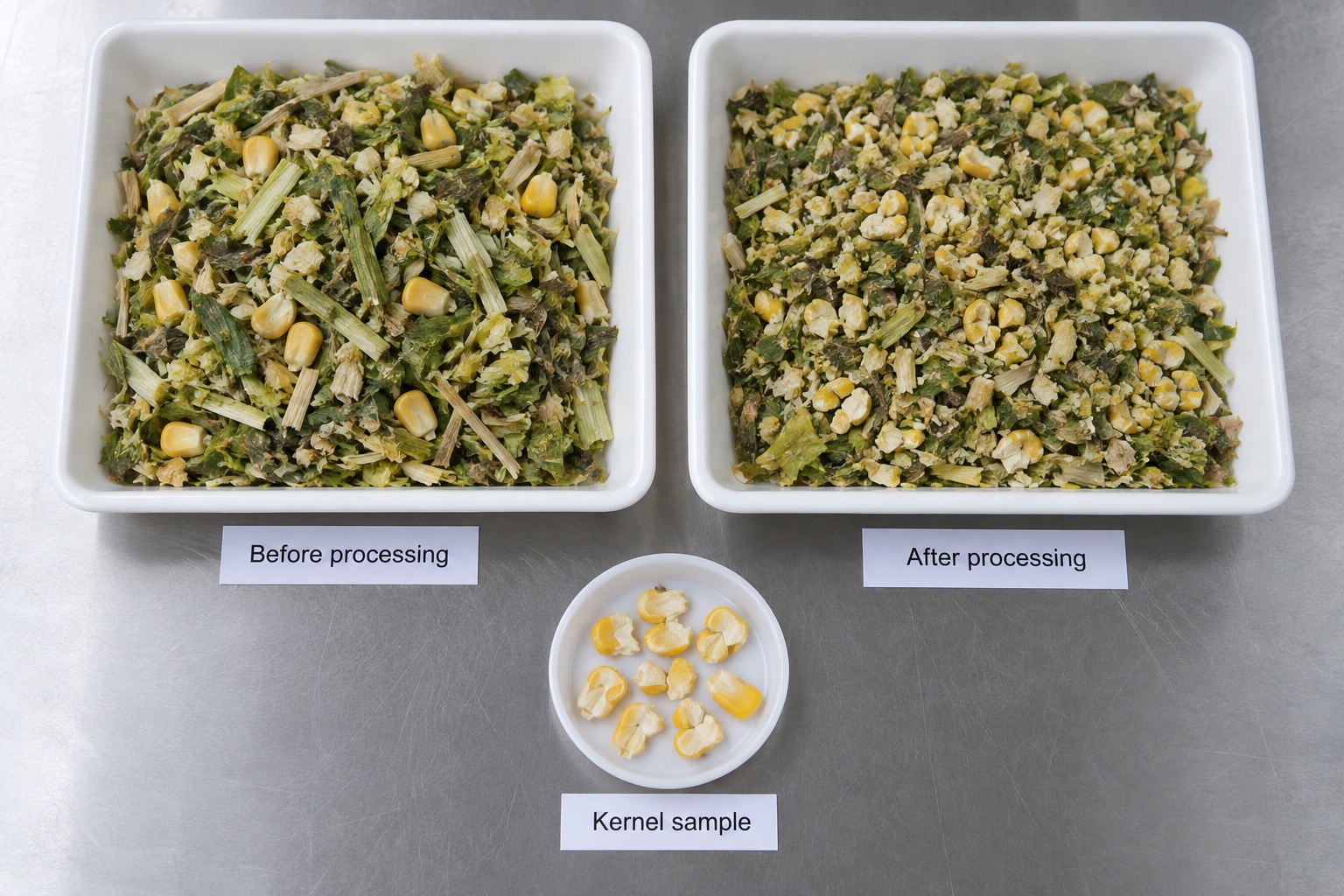
A Forage Harvester may use an optional processor when whole-plant corn contains kernels that should be cracked for the intended silage program. Grass, alfalfa, and other non-grain forage paths normally do not require maize-kernel processing.
What should you inspect after Forage Harvester processing?
Look beyond chopped leaves and stalks. Separate several representative samples and examine kernels plus cob fragments. Crop maturity, component wear, approved settings, and feed rate can change processing results during one season.
- Check samples from more than one trailer load.
- Record crop maturity and moisture condition.
- Follow manufacturer procedures for processor settings.
- Keep kernel checks separate from forage particle checks.
Can stronger processing solve poor harvest timing?
No; it cannot correct unsuitable whole-plant moisture, delayed storage, or poorly packed forage. Moreover, processing adds power demand and wear, so require a useful physical result.
| Crop situation | Processing decision |
|---|---|
| Whole-plant maize with mature kernels | Confirm processor need and inspect kernels |
| Immature maize | Review crop condition before increasing processing |
| Grass or alfalfa | Follow the approved non-kernel crop path |
Key Takeaway: Use kernel processing where crop and feeding requirements justify it. An optional component deserves separate sample evidence, not a general performance promise.
How is a Forage Harvester different from a combine?
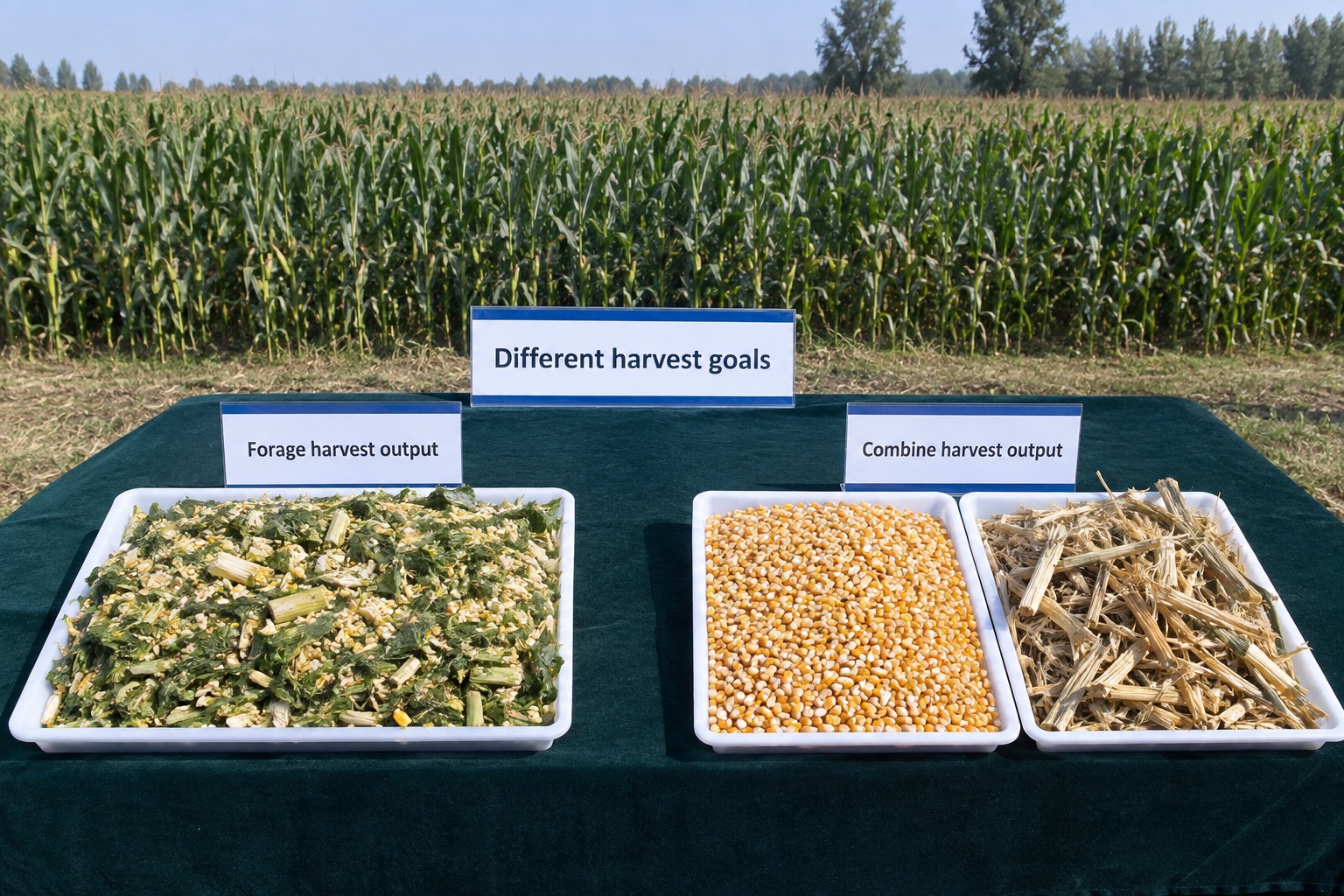
A Forage Harvester chops forage material for livestock feeding or silage, while a combine mainly separates grain from straw and chaff. Your desired farm product determines which machine fits each harvest.
What leaves each machine after maize harvest?
Start with the product you intend to store. Silage production uses much of the whole plant as chopped forage. Grain production keeps kernels as its principal output and leaves other plant material separate.
- Choose forage harvesting for chopped whole-crop feedstock.
- Choose combining when grain separation is the objective.
- Plan different transport and storage for each output.
- Do not compare capacity without matching end products.
Can a Forage Harvester substitute for a combine?
Not automatically; their headers, internal processing, outputs, and storage chains serve different goals. Confirm any additional function through machine-specific documentation rather than appearance.
| Comparison point | Forage harvester | Combine harvester |
|---|---|---|
| Primary goal | Chopped forage or silage feedstock | Separated grain |
| Crop material retained | Much of approved forage crop | Grain as principal product |
| Next handling stage | Trailer, packing, and ensiling or feeding | Grain transport, drying, and storage |
Key Takeaway: Buy around your finished product. Corn grain and corn silage come from the same crop, yet their harvesting systems solve different jobs.
Who benefits from using a Forage Harvester?
A Forage Harvester benefits livestock farms, silage producers, agricultural contractors, commercial forage operations, and machinery service providers with suitable annual workloads. Each user group needs a different balance of capacity, mobility, crop flexibility, and support.
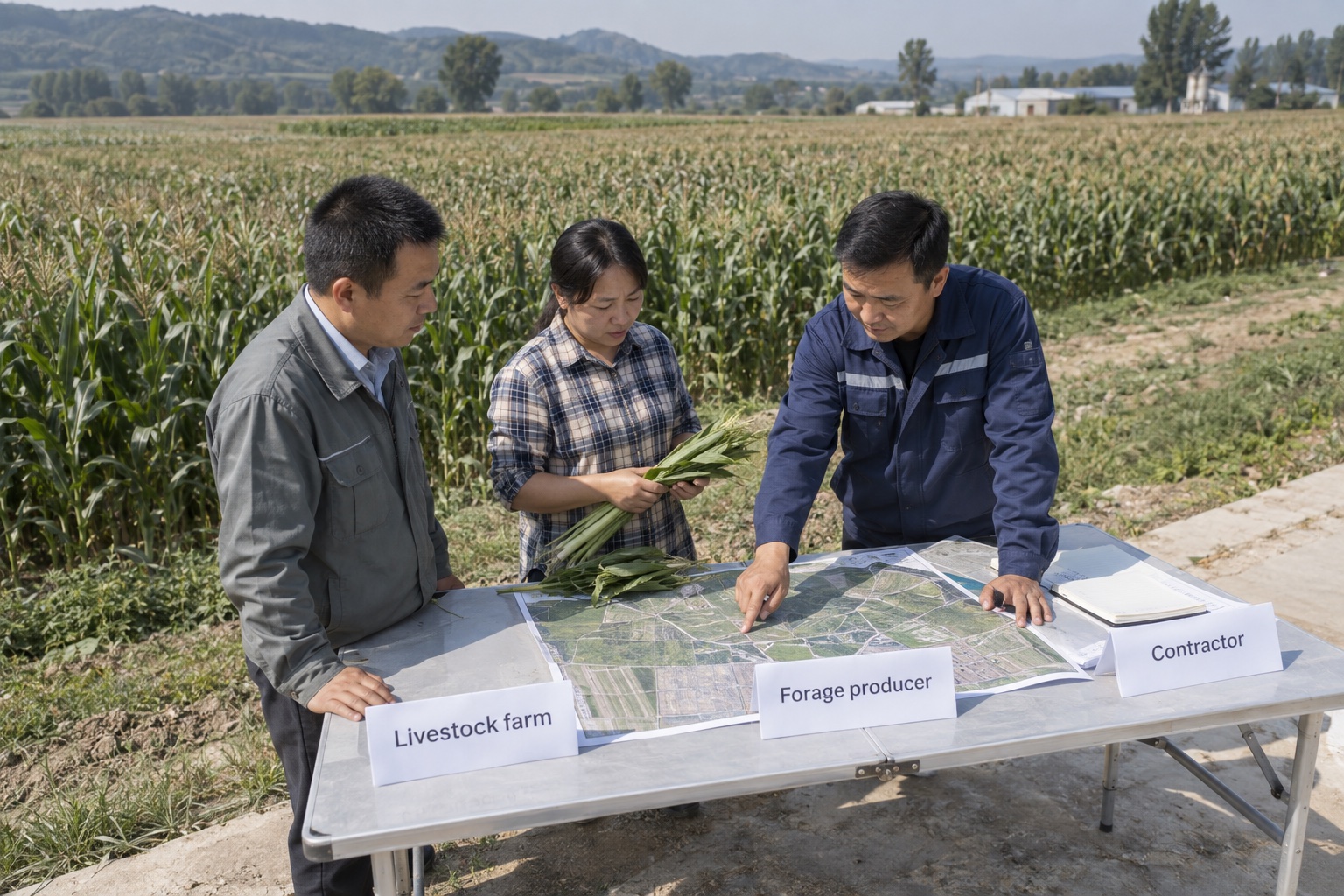
Why do Forage Harvester workloads change the buying case?
Annual crop volume spreads ownership costs differently. A dairy farm may harvest its own feed within a short window, while a contractor moves between customers. A forage grower may prioritize trailer coordination and delivery schedules.
- Record annual hectares and expected crop tonnage.
- Separate daily targets from whole-season totals.
- Count travel and setup between fields.
- Compare ownership with hired harvesting services.
Does a small farm always need a smaller machine?
No; field layout, harvest window, crop yield, transport, labor, and local contractor access also matter. Therefore, limited annual work may favor shared ownership or hired service even when a machine physically fits.
| User type | Leading requirement |
|---|---|
| Dairy or beef farm | Reliable feed harvest within crop window |
| Silage producer | Coordinated field, trailer, and storage throughput |
| Contractor | Crop flexibility, mobility, and service readiness |
Key Takeaway: Match ownership with an annual business case, not only field size. Available working days and support can matter more than headline capacity.
How should you choose a Forage Harvester?
Choose a Forage Harvester after matching crops, headers, processing functions, capacity, transport, terrain, and service. Require a written configuration and representative field evidence before comparing prices.
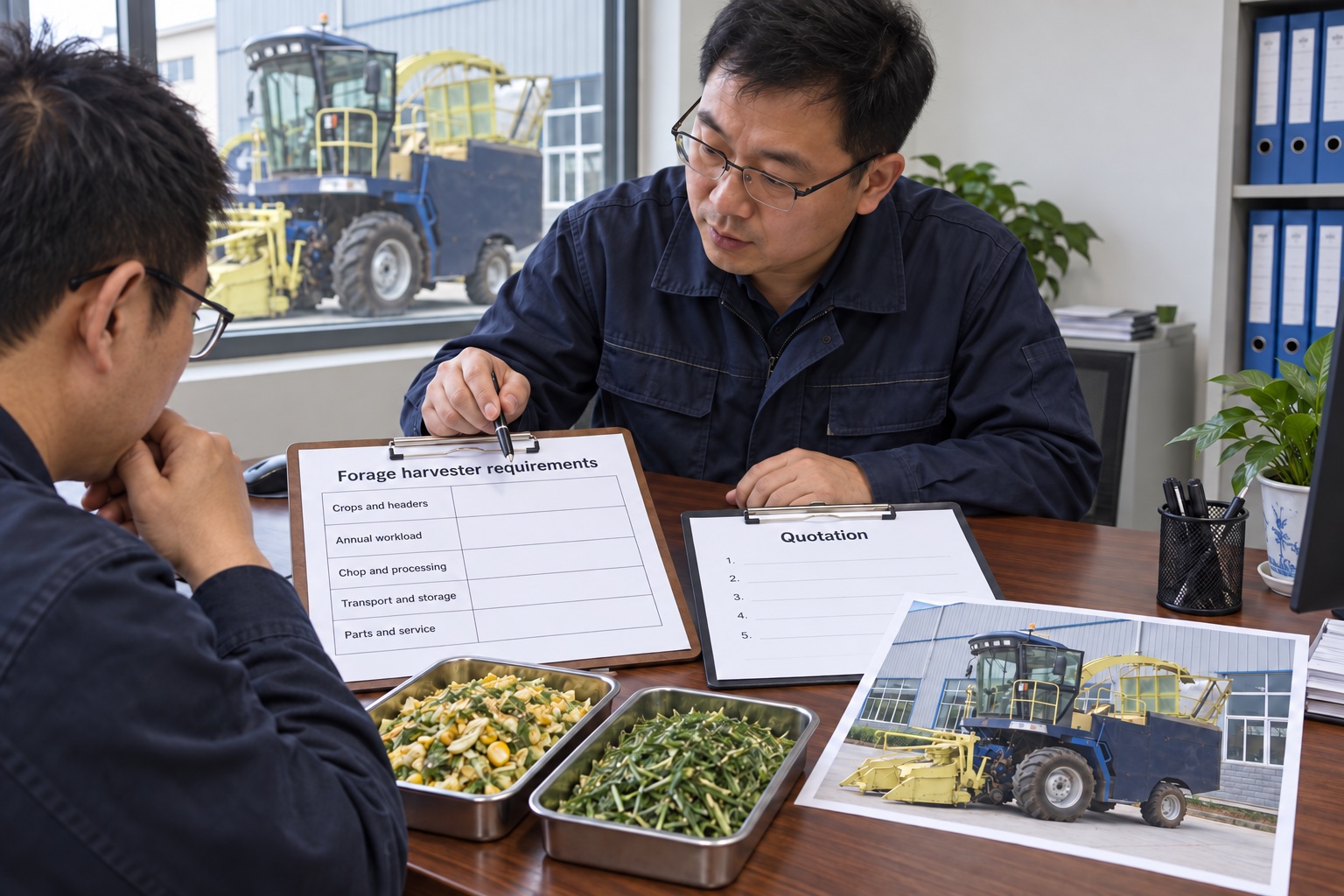
What belongs in a Forage Harvester equipment brief?
Give suppliers enough detail to rule out a poor fit. State crop types, annual area, likely harvest window, expected yields, field conditions, storage system, and available trailers. Include dealer or contractor requirements where relevant.
- List standing and mown crops separately.
- Provide photographs of typical field conditions.
- Define useful physical output and collection method.
- Request manuals, training, parts, and service terms.
What makes a final decision defensible?
| Requirement | Evidence before ordering |
|---|---|
| Crop suitability | Approved header and representative trial |
| Processing quality | Chopped forage and kernel samples where relevant |
| Practical capacity | Timed field work plus transport and storage plan |
| Ongoing use | Instructions, operator training, parts, and support |
Key Takeaway: You can now separate machine use, crop fit, output quality, and business need. Resolve missing evidence before treating engine power or price as proof of value.
For help discussing a suitable configuration, contact us today with your crops, field area, harvest window, and transport plan. We can review those details and identify the functions a proposal should cover. We believe forage equipment should be selected around usable crop delivered safely to its next stage.
What else should you ask before harvest? (FAQ)
Your Forage Harvester choice should reflect crop presentation, desired output, field logistics, and available support. These questions cover common application gaps before you organize a harvesting crew.
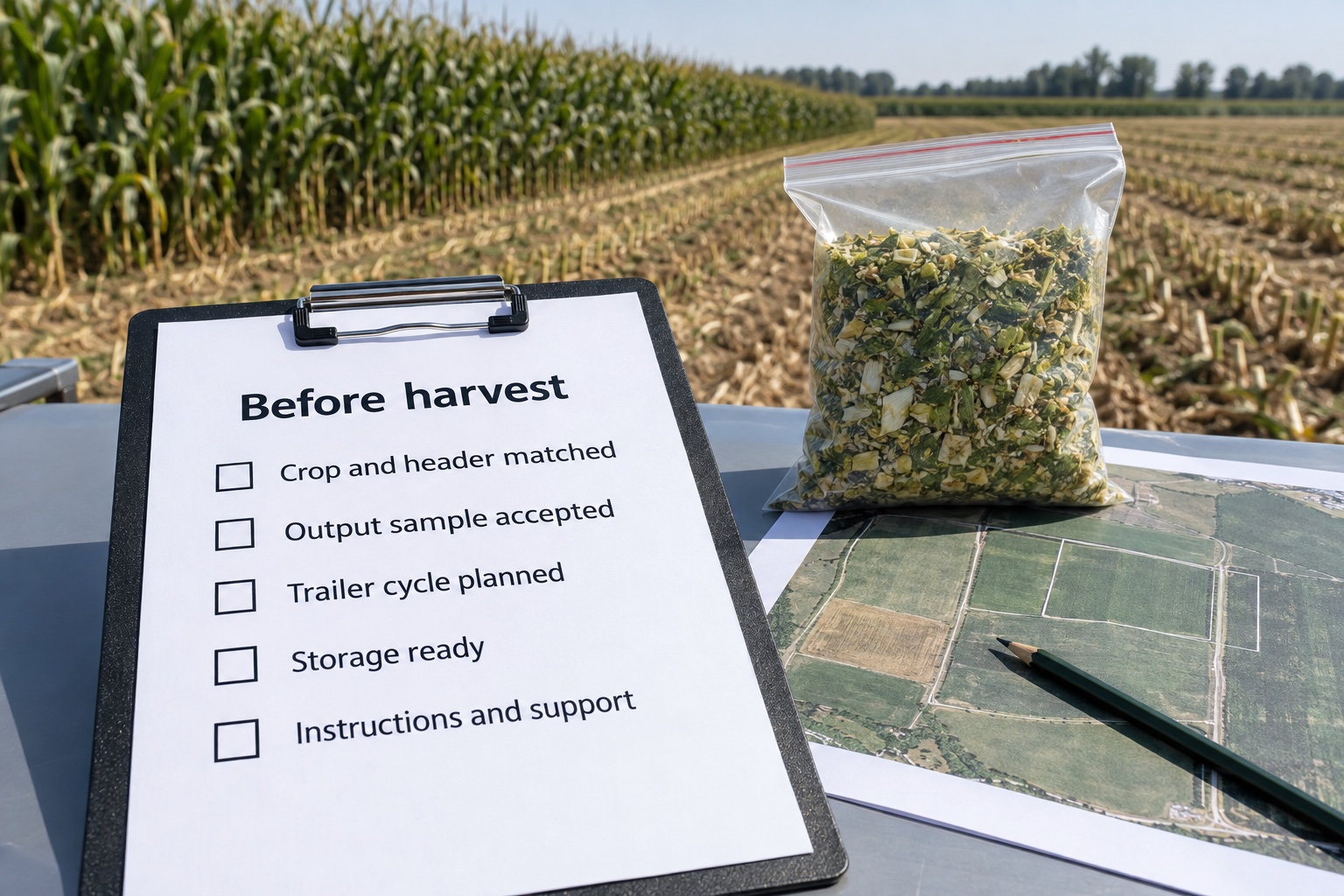
Which answers should stay in writing?
Keep these details with your quotation and field plan. Update them when crops, headers, storage, or customers change.
- Confirm approved crops and headers.
- Record representative sample checks.
- Keep operating and safe-stop procedures available.
Q1: Can I use a Forage Harvester for whole corn plants?
Yes, when its header and crop path are approved for whole-plant maize. Check chop quality, kernel processing where needed, transport, and storage readiness.
Q2: What’s the best Forage Harvester for grass silage?
Choose a configuration suited to your standing or mown grass presentation, crop condition, field access, storage system, and required daily work.
Q3: How do I know whether I need a self-propelled model?
Compare annual workload, harvest window, field logistics, contractor availability, and ownership cost. High capacity alone does not establish a sound investment.
Q4: Can the same machine replace a combine harvester?
Not automatically, because each machine produces a different primary output. Choose around chopped forage or separated grain, then verify any additional functions.
Q5: What should I inspect during a field demonstration?
Inspect crop intake, field losses, chopped particles, optional kernel processing, collection, trailer coordination, visibility, and ordinary delays. Follow forage-harvester safety guidance during demonstrations and interventions.
